
Solenopsis wolfi
- Sci. Name
- Solenopsis wolfi
- Tribe
- Solenopsidini
- Subfamily
- Myrmicinae
- Author
- Emery, 1915
- Distribution
- Found in 1 countries
Introduction
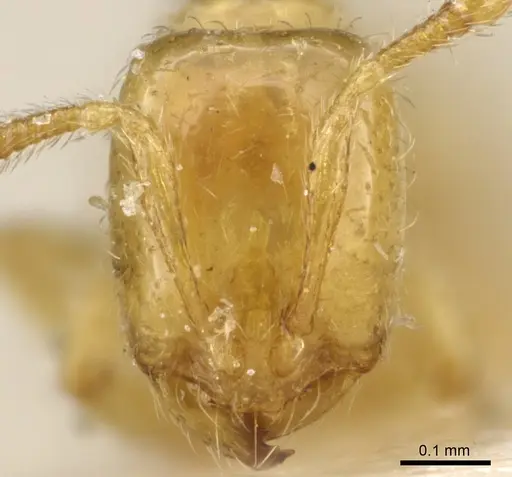
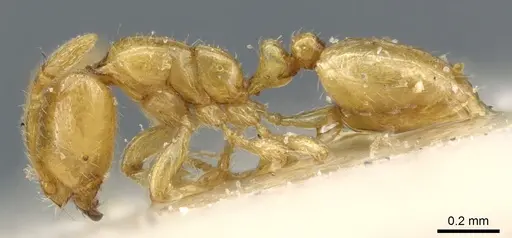
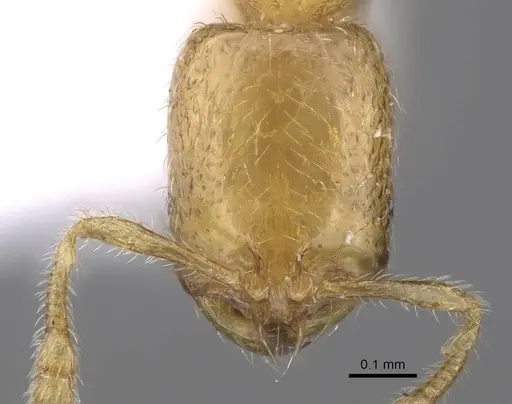
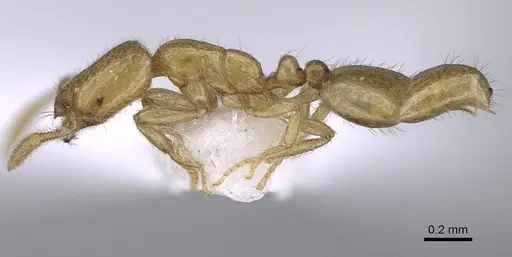
Solenopsis wolfi is a tiny ant species from the Mediterranean and Balkan regions. Based on related Solenopsis species, workers are roughly 2-3 mm long and queens around 4-5 mm (microgynes), though exact measurements haven't been published. They have a yellowish to light brown color and a smooth, glossy body. This species belongs to the Solenopsis lusitanica group, a complex of small ant species that are hard to tell apart . Their status, like other species with small gynes, needs revision . They nest in soil, often under stones, in warm, dry habitats across Croatia, Greece, Serbia, Slovenia, and as far east as Iran .
Quick Summary
- Difficulty: Easy
- Origin & Habitat: Mediterranean and Balkan regions including Croatia, Greece, Serbia, Slovenia, and Iran. They live in warm, dry, open areas with sparse vegetation, typical Mediterranean terrain. Recorded from sea level up to about 1000 m in Greece [2][3].
- Colony Type: Probably monogyne (single queen colony), based on patterns in most Solenopsis species, but this hasn't been confirmed for S. wolfi specifically.
- Size & Growth:
- Queen: Approximately 4-5 mm (microgynes), inferred from related Solenopsis species, exact size not published [2]
- Worker: About 2-3 mm, inferred from related Solenopsis species, exact size not published [2]
- Colony: Probably a few hundred workers at maturity, based on related species
- Growth: Moderate
- Development: Estimated 6-8 weeks at optimal temperature, using data from related Solenopsis (Development time hasn't been studied directly for this species)
- Antkeeping:
- Temperature: Keep at 24-28°C during the active season, this is a Mediterranean species that enjoys warmth. A gentle heat gradient in the nest is fine. Avoid going above 30°C.
- Humidity: Low to moderate. Keep the nest substrate slightly moist but let parts dry out. These ants come from dry habitats, so don't overdo the moisture.
- Diapause: Yes, probably needed. In their native range winters are mild but distinct. Cool them to 10-15°C for 2-3 months, typically from November to February.
- Nesting: Y-tong (AAC) nests with narrow chambers work well. You can also use a naturalistic setup with sandy soil and flat stones, this mimics their habit of nesting under stones. Keep the nest fairly dry.
- Behavior: These ants are relatively calm compared to tropical fire ants. Workers are small and usually non-aggressive. They are generalist foragers that collect nectar, small insects, and honeydew. Because they are tiny (2-3 mm), you need excellent escape prevention, they can squeeze through very small gaps. They are ground-nesting and may form small colonies under stones or in soil cavities.
- Common Issues: escape prevention is critical due to their tiny size, use fine mesh and tight lids, colony growth is slow at first, which can test beginner patience, winter diapause is likely required, don't skip it, small colony size makes them vulnerable, avoid frequent disturbance, limited research means many care details are based on related species
Housing and Nest Setup
For these tiny ants, a Y‑tong (AAC) nest with narrow chambers is a good choice, it matches their size and makes them feel secure. You can also use a naturalistic setup with a shallow layer of sandy soil and flat stones, which copies their natural habit of nesting under stones in Mediterranean areas. Because workers are only around 2-3 mm, escape prevention is essential. Use a barrier like Fluon on the rim of any formicarium, and make sure test tube plugs are tight. A small outworld gives them room to forage. Keep the nest fairly dry, these are not rainforest ants.
Temperature and Heating
Solenopsis wolfi comes from warm Mediterranean regions, so they do best at 24-28°C. In their native range (Greece, Croatia, etc.) they experience hot summers and mild winters [2]. During the active season, keep the nest warm. A small heating cable on one side creates a gentle temperature gradient. Don't let it go above 30°C. For winter, give them a cool period at 10-15°C for 2-3 months, this matches their natural cycle and keeps the colony healthy.
Feeding and Diet
These ants are generalist feeders. Offer sugar water or honey as a steady energy source, they'll drink it from a soaked cotton ball. For protein, give small live prey like fruit flies, pinhead crickets, or tiny pieces of mealworm. They hunt small insects in nature. Feed small amounts 2-3 times per week and remove leftovers after 24 hours to stop mold. A constant sugar source is good. Because workers are so small, prey needs to be tiny, fruit flies and springtails are perfect.
Colony Development
Colony growth is moderate but starts slowly. A newly mated queen probably seals herself in a chamber and lives off her stored reserves (claustral founding), this is inferred from related Solenopsis because it hasn't been directly observed in S. wolfi. The first workers (nanitics) appear after about 6-8 weeks at warm temperatures, based on related species. They will be smaller than later workers. Colonies likely reach a few hundred workers when mature. The slow start can test your patience, but once established the colony is quite hardy. Don't disturb the queen during founding, that's the most delicate time.
Seasonal Care and Overwintering
In their native Mediterranean habitat, these ants live through distinct seasons, warm summers and cooler but not freezing winters [2]. From late autumn to early spring, lower the temperature to 10-15°C to let them go dormant. This 2-3 month winter rest is probably important for their health and reproduction. During dormancy, cut back on feeding, the colony won't be active. Don't feed at all during deep dormancy. In early spring, warm them back up to 24-28°C to trigger normal activity and egg laying.
Frequently Asked Questions
How long does it take for Solenopsis wolfi to produce first workers?
Expect the first workers (nanitics) about 6-8 weeks after the queen lays eggs, if you keep them at 24-28°C. This is an estimate based on related Solenopsis species, the development time hasn't been studied directly for S. wolfi.
What size colony does Solenopsis wolfi reach?
Based on related species, colonies probably reach a few hundred workers when mature. They're not among the biggest ants, but an established colony can be quite full. Growth is moderate, expect several months to get 50+ workers.
Do Solenopsis wolfi ants need hibernation?
Yes, a winter diapause of 2-3 months is recommended. Cool them to 10-15°C during winter. This matches their natural Mediterranean cycle and helps keep the colony healthy.
Can I keep Solenopsis wolfi in a test tube setup?
Yes, test tube setups work well for founding colonies. Use a small test tube with a water reservoir and a tight cotton plug. Since workers are tiny (about 2-3 mm), make sure the cotton is packed tightly to stop escapes. When the colony passes 50 workers, think about moving them to a small formicarium.
What do Solenopsis wolfi ants eat?
They are generalist feeders. Always have sugar water or honey available, and give small live prey like fruit flies, springtails, or tiny crickets 2-3 times per week. Remove uneaten food after 24 hours to prevent mold.
Are Solenopsis wolfi good for beginners?
Yes, they count as an easy species. They are relatively docile, tolerate a range of conditions, and aren't demanding. The main challenges are their tiny size (good escape prevention needed) and slower colony growth. They are forgiving of minor mistakes.
How do I identify Solenopsis wolfi from similar species?
Workers are very small (about 2-3 mm) and yellowish to light brown. They belong to the Solenopsis lusitanica group [1]. A key trait is the queen size, microgynes at about 4-5 mm, unlike the larger sexual forms of related species like S. fugax [2]. For most keepers, focusing on general care is more practical than precise identification.
What temperature range is ideal for Solenopsis wolfi?
Keep them at 24-28°C during the active season. They are Mediterranean ants that love warmth. A slight temperature gradient in the nest lets them choose. Don't let it drop below 15°C except during winter dormancy.
Why are my Solenopsis wolfi escaping?
Their tiny size (about 2-3 mm) means they can slip through very small gaps. Put escape barriers like Fluon on all edges, use fine mesh for ventilation, and seal all connections between nest and outworld. Check every seam, if light can get through, they can probably squeeze through too.
Report an Issue
The current care sheet is based fully on literature. See inconsistencies, or something that's incorrect? Please , it will be resolved after review from an admin. Contributing to the blogs tab also helps providing information, to make us be able to further improve the caresheets. Thank you for your support!
References

This caresheet is licensed under CC BY-SA 4.0 .
Community Blogs
CASENT0904622
View on AntWeb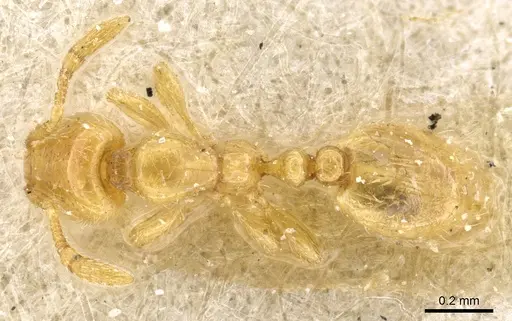
CASENT0914244
View on AntWeb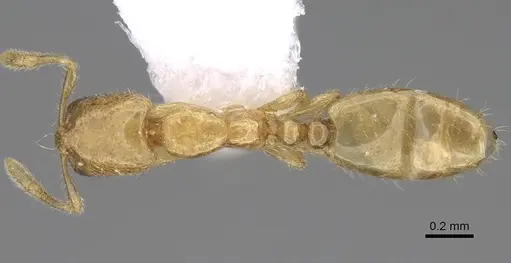
Literature
Loading distribution map...Loading products...