
Solenopsis tipuna
- Sci. Name
- Solenopsis tipuna
- Tribe
- Solenopsidini
- Subfamily
- Myrmicinae
- Author
- Forel, 1912
- Distribution
- Found in 2 countries
Introduction
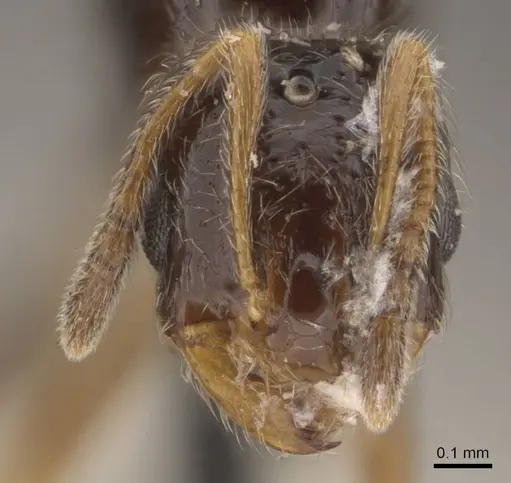
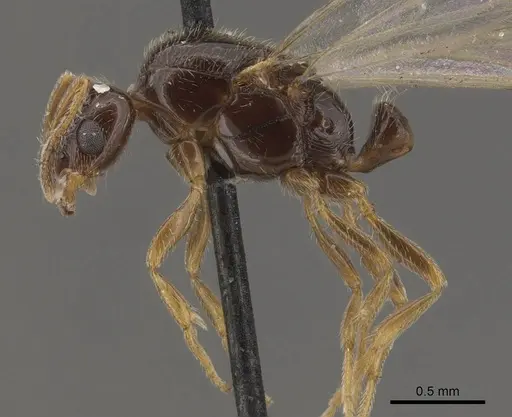
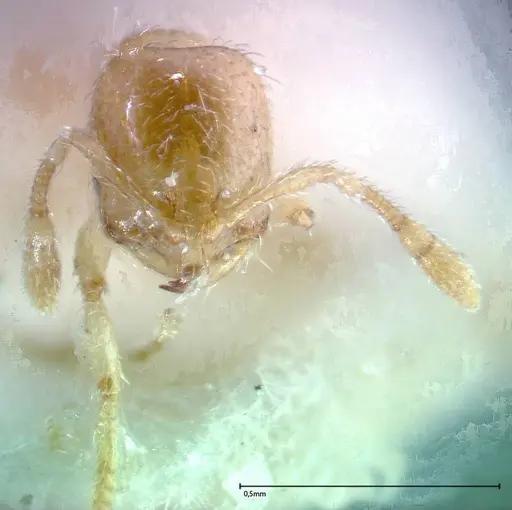
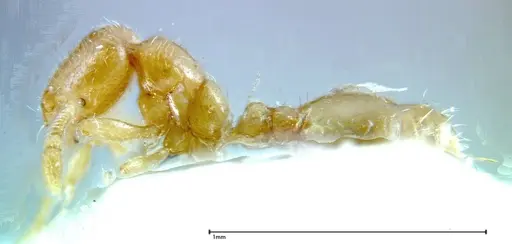
Solenopsis tipuna is a tiny yellow ant from East Asia, found across Japan (including the Nansei Islands and Amami Islands), Taiwan, and southern China . Workers are just 1.5-1.6mm long, making them one of the smallest ants you'll come across . They have pale yellow bodies, small eyes with only 2 to 4 lenses (facets), and a distinctly rounded propodeum . In the wild, they nest in soil or under stones . Colonies are polygynous – they contain multiple queens who cooperate . This species looks a lot like Solenopsis japonica, but you can tell them apart by the more strongly curved underside of the petiole and the rounder rear corners of the thorax .
Quick Summary
- Difficulty: Easy
- Origin & Habitat: Native to East Asia: Japan (Nansei Islands, Amami Islands), Taiwan, and southern China. They nest in soil or under stones in natural areas [1][3]. They show good adaptability to disturbed environments [4].
- Colony Type: Polygynous – colonies contain multiple queens working together [1][3]. This is unusual among many Solenopsis species and means your colony can grow faster with multiple egg-layers.
- Size & Growth:
- Queen: ~4-6mm (estimated from genus patterns – no direct measurements available)
- Worker: 1.5-1.6mm [2][1]
- Colony: Not documented for this species, but related small Solenopsis colonies can reach several hundred workers
- Growth: Moderate
- Development: 4-6 weeks at optimal temperature (estimated from similar small Myrmicinae, exact timeline not studied) (Development time depends on temperature and colony health)
- Antkeeping:
- Temperature: Keep around 20-26°C. Being from temperate to subtropical East Asia, they prefer moderate warmth. Room temperature (22-24°C) typically works well.
- Humidity: Moderate humidity. They nest in soil, so keep the nest substrate moist but not waterlogged. A damp test tube setup or plaster nest works well.
- Diapause: Likely yes – Japanese populations experience cold winters. Provide a cool period around 10-15°C for 2-3 months during winter (November–February). [3] (inferred from native range).
- Nesting: Test tubes, plaster nests, Y-tong (AAC) blocks, or 3D-printed nests with small chambers work well. Their tiny size means you need tight-fitting connections and excellent escape prevention. Avoid acrylic nests – they don't hold humidity well.
- Behavior: These are small, generally non-aggressive ants that focus on foraging for small prey and honeydew. They are not particularly defensive and rarely sting, though they do have a stinger as members of the Myrmicinae subfamily. Their tiny size (1.5mm workers) means escape prevention is critical – they can squeeze through remarkably small gaps. Colonies are polygynous, so multiple queens coexist peacefully.
- Common Issues: tiny size makes escape likely without fine mesh barriers and tight-fitting lids, small colony founding can be slow – polygynous colonies may take time to establish multiple queens, overfeeding can lead to mold in small nests – remove uneaten food promptly, cold temperatures will slow or stop brood development entirely, wild-caught colonies may have parasites that affect survival in captivity
Housing and Nest Setup
Because Solenopsis tipuna workers are only 1.5-1.6mm long [2][1], you need small-scale housing. Test tubes work great for founding colonies – use a standard setup with a water reservoir and cotton plug. For established colonies, choose Y-tong (AAC) nests with narrow chambers, plaster nests, or 3D-printed formicaria. Whatever you pick, escape prevention is absolutely critical. These ants can squeeze through gaps that seem impossibly small. Apply Fluon to potential escape points, use fine mesh on ventilation holes, and coat the rim of formicaria with a layer of baby powder mixed with glycerin. Check all connections regularly.
Feeding and Diet
Like other Solenopsis, Solenopsis tipuna is omnivorous and will accept a variety of foods. Offer sugar water or diluted honey as a constant energy source – they readily consume sweet liquids. For protein, provide small live prey like fruit flies, pinhead crickets, or chopped mealworms. Because they are so small, standard prey items may be too large – consider chopping prey into tiny pieces or offering flightless fruit flies. Remove any uneaten food promptly to prevent mold, which can be deadly in small enclosed nests. Feed every 2-3 days, adjusting based on colony size and consumption. [4]
Temperature and Seasonal Care
Solenopsis tipuna comes from temperate to subtropical East Asia [1][3], so they prefer moderate temperatures around 20-26°C. Room temperature (22-24°C) is typically ideal for keeping them active and developing brood. They will slow down below 18°C and may enter a semi-dormant state. For Japanese populations, you'll need to provide a winter diapause. During winter (roughly November–February in the Northern Hemisphere), move the colony to a cool location around 10-15°C. This mimics their natural seasonal cycle and helps maintain colony health long-term. Do not freeze them – a cool basement or refrigerator (not freezer) compartment works well.
Colony Structure and Growth
This species is polygynous – colonies contain multiple queens [1][3]. This lets your colony grow faster since several queens lay eggs at once. A founding colony might start with 2-3 queens, and the colony naturally regulates queen numbers over time. Do not try to separate queens unless you have experience – polygynous colonies are typically peaceful. Growth rate is moderate for a small ant. Expect the first workers (nanitics) within 4-6 weeks at optimal temperature, then gradual expansion over several months to a year before the colony reaches several hundred workers.
Handling and Temperament
Solenopsis tipuna is generally calm and not particularly aggressive. They are small and docile, making them a good choice for observing ant behavior without aggressive defense. That said, they do have a stinger (as Myrmicinae ants), but their tiny size means any sting would be minimal, and they rarely sting. The main concern is escape: their 1.5mm bodies can fit through unbelievably small gaps [2]. Always use multiple escape prevention methods: Fluon on rim barriers, fine mesh on openings, and check connections between nest and outworld regularly. A single escaped colony could establish in your home.
Frequently Asked Questions
How long does it take for Solenopsis tipuna to produce first workers?
Expect first workers (nanitics) to emerge 4-6 weeks after the queen lays eggs, assuming temperatures around 22-26°C. This is an estimate based on similar small Solenopsis species – the exact timeline for this species has not been directly studied.
Can I keep multiple queens together in one colony?
Yes, this is normal for Solenopsis tipuna – they are naturally polygynous [1][3]. Multiple queens can coexist peacefully and all contribute to egg production, helping the colony grow faster than single-queen species.
What do Solenopsis tipuna ants eat?
They are omnivorous. Offer sugar water or honey as a constant energy source, and protein sources like small insects (fruit flies, pinhead crickets, mealworm pieces). Remove uneaten food promptly to prevent mold.
What temperature do Solenopsis tipuna need?
Keep them at 20-26°C, with 22-24°C being ideal. They are from temperate to subtropical East Asia and prefer moderate temperatures. Room temperature typically works well.
Do Solenopsis tipuna need hibernation?
Yes, if your colony originated from Japanese populations. Provide a cool period around 10-15°C for 2-3 months during winter (roughly November-February). This mimics their natural seasonal cycle.
Why are my Solenopsis tipuna escaping?
Their tiny 1.5mm size allows them to escape through impossibly small gaps [2]. Use multiple prevention methods: apply Fluon to rim barriers, use fine mesh on ventilation, and check all connections between nest and outworld. Even a tiny crack is an escape route for these ants.
Are Solenopsis tipuna good for beginners?
Yes, they are considered easy to keep. They are small, docile, and polygynous colonies grow reasonably well. The main challenge is escape prevention due to their tiny size. If you can manage that, they are a rewarding species.
How big do Solenopsis tipuna colonies get?
Colony size is not directly documented, but related small Solenopsis species typically reach several hundred workers. Being polygynous helps accelerate growth compared to single-queen species.
When should I move Solenopsis tipuna from test tube to formicarium?
Move them when the colony reaches around 50-100 workers and the test tube shows signs of degradation (mold, water issues, or space constraints). Make sure your formicarium has appropriately small chambers and passages for their tiny 1.5mm workers.
Report an Issue
The current care sheet is based fully on literature. See inconsistencies, or something that's incorrect? Please , it will be resolved after review from an admin. Contributing to the blogs tab also helps providing information, to make us be able to further improve the caresheets. Thank you for your support!
References

This caresheet is licensed under CC BY-SA 4.0 .
Community Blogs
CASENT0908879
View on AntWeb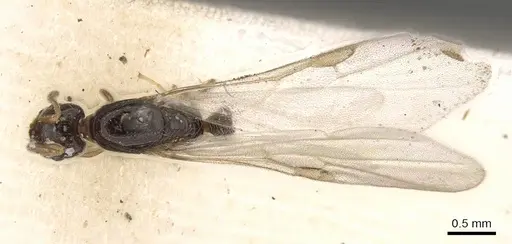
FOCOL0280
View on AntWeb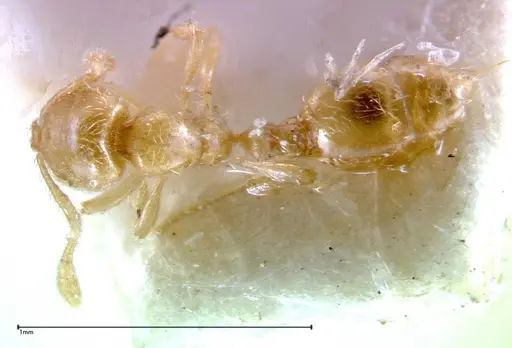
Literature
Loading distribution map...Loading products...