
Solenopsis tetracantha
- Sci. Name
- Solenopsis tetracantha
- Tribe
- Solenopsidini
- Subfamily
- Myrmicinae
- Author
- Emery, 1906
- Distribution
- Found in 3 countries
Introduction
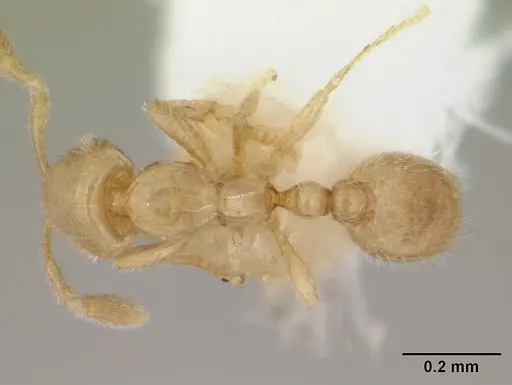
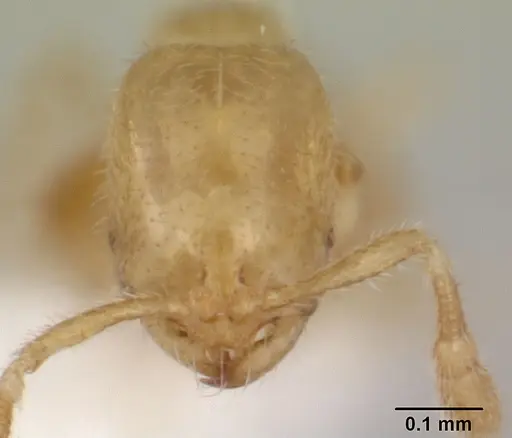
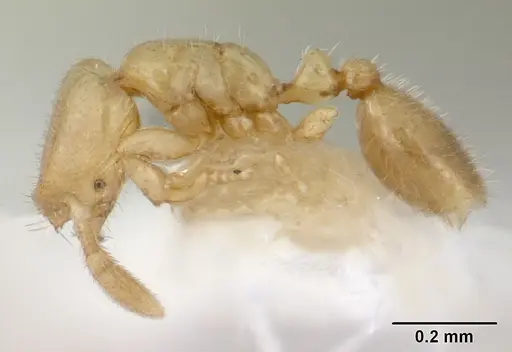
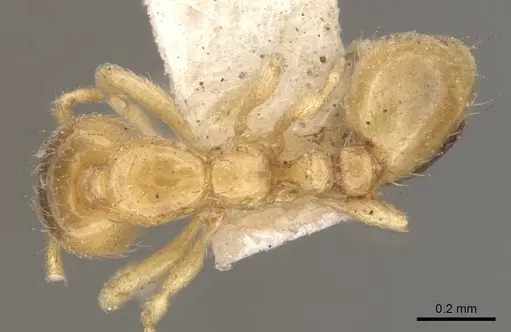
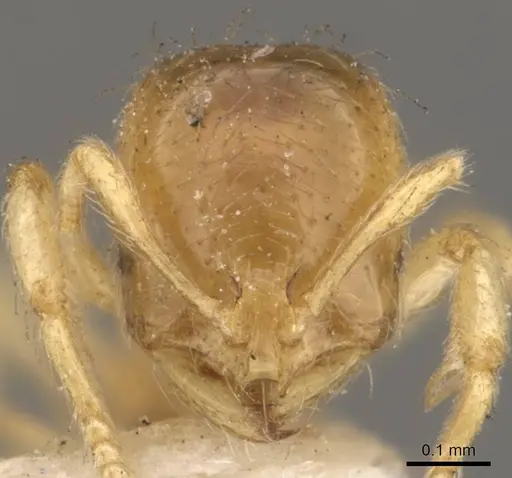
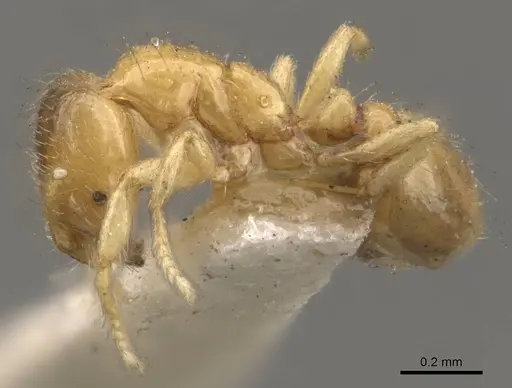
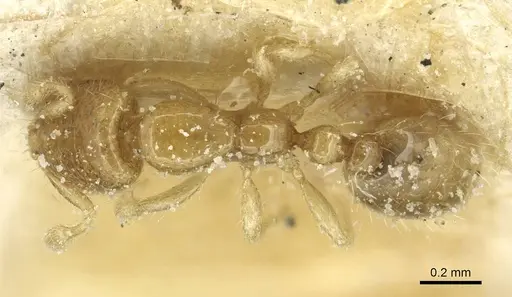
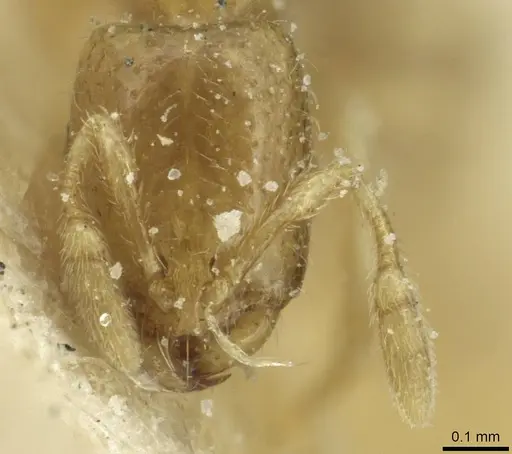
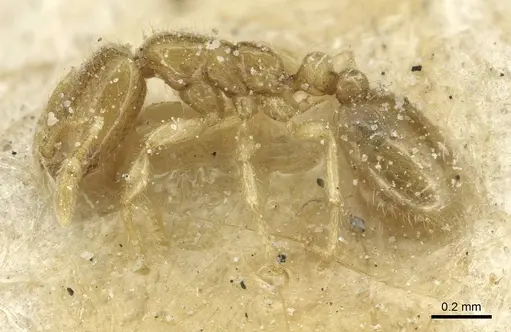
Solenopsis tetracantha is a small, dimorphic thief ant native to Argentina and Paraguay. Minor workers are golden yellow and 1.3-1.4 mm long; major workers are slightly larger (nearly 2 mm) and darker. Queens are medium brown, measuring 5.4-6 mm. The eyes are tiny (only 1-2 facets), a clear adaptation to their subterranean lifestyle. This species belongs to the Solenopsis fugax complex . It lives mainly underground and has been found in the nests of leaf-cutter ants (Acromyrmex lundii and Acromyrmex striatus), where it probably steals brood and food .
Quick Summary
- Difficulty: Medium
- Origin & Habitat: Native to Argentina and Paraguay (Neotropical region). Records from Buenos Aires Province (Núñez, La Plata), Santa Rosa in La Pampa Province, and Paraguay. Inhabits warm to temperate areas, including cool-temperate Patagonia. Lives subterraneanly, often in association with Acromyrmex ants [3][1].
- Colony Type: Unknown, likely single queen (monogyne) based on typical Solenopsis fugax complex patterns. The species is dimorphic with major and minor worker castes [2][4].
- Size & Growth:
- Queen: 5.4-6 mm [1][4]
- Worker: Minor: 1.3-1.44 mm, Major: ~1.92 mm [1][4]
- Colony: Unknown, likely up to several hundred workers at maturity (based on related species)
- Growth: Moderate (estimated from related Solenopsis)
- Development: 6-8 weeks (estimated from related small Solenopsis species) (Development times are unconfirmed for this species, estimate based on related species in the fugax complex.)
- Antkeeping:
- Temperature: 22-26°C (estimated from warm temperate range). Avoid prolonged exposure below 18°C or above 30°C.
- Humidity: Moderate to high. Keep the nest substrate moist but not waterlogged. As hypogean ants, they need dark, humid conditions. Provide a humidity gradient so ants can choose.
- Diapause: No (inferred from warm temperate South American range, no known diapause requirement).
- Nesting: Test tubes, Y‑tong (AAC), plaster, or soil nests. Provide dark, enclosed spaces with moist substrate. Use fine mesh (0.5 mm) for ventilation and escape prevention.
- Behavior: Timid and reclusive. Spend most time underground. Not aggressive, they will flee rather than fight. Major workers can deliver a mild sting, but the ants are too small to harm humans. Escape risk is very high due to their tiny size (1.3-2 mm).
- Common Issues: escape prevention is critical, their size (under 2 mm) lets them squeeze through tiny gaps., colonies may be difficult to establish in captivity due to their specialized association with Acromyrmex nests in the wild [3]., sensitivity to light, keep the nest area dark to prevent stress., desiccation risk, small colonies dry out quickly in low humidity., mold from overfeeding, feed only tiny amounts of protein and remove leftovers promptly.
Housing and Nest Setup
Solenopsis tetracantha is a hypogean (subterranean) species that prefers dark, enclosed spaces. Test tubes work well for founding colonies, use a standard setup with a water reservoir and cotton plug. For larger colonies, Y‑tong (AAC), plaster, or soil nests are suitable. Keep the nest chamber dark by covering it with an opaque material. The tiny worker size (1.3-2 mm) means you need very tight‑fitting connections and fine mesh (0.5 mm or smaller) on all openings, these ants can escape through gaps that seem impossibly small [3][1].
Feeding and Diet
As a member of the fugax complex, this species likely feeds on small arthropods and may steal brood from other ants in the wild. In captivity, offer tiny protein sources like fruit flies, small mealworms, or tiny cricket pieces. Sugar water or honey can be given occasionally. Feed small amounts 2-3 times per week. Remove uneaten protein after 24 hours to prevent mold. Their small size means even a single fruit fly is a large meal for a founding colony.
Temperature and Seasonal Care
Based on its natural range in Argentina and Paraguay (warm temperate to warm regions), maintain temperatures around 22-26°C [3]. Avoid prolonged exposure below 18°C or above 30°C. They do not require hibernation, keep temperatures stable year‑round. Place the nest away from direct sunlight and heating vents. Small colonies are especially sensitive to temperature swings, a gentle gradient created by a heating cable on one side can help.
Colony Establishment
Founding behavior for this species is unconfirmed. Based on typical Solenopsis patterns, founding is likely claustral, but this species' association with Acromyrmex nests suggests they may depend on host colonies in the wild. Captive establishment may be challenging and is not well documented. Once workers appear (likely after 6-8 weeks), they will gradually expand the nest. Growth is expected to be moderate, reaching several dozen to a few hundred workers over a year. [3]
Behavior and Temperament
This ant is timid and reclusive, spending most of its life underground. Workers rarely forage in the open and will flee from threats. Major workers have a functional stinger but pose no danger to humans, the sting is very mild. Their eyes are extremely small (1-2 ommatidia), an adaptation to life in darkness [1]. Keep the nest area dark to minimize stress. Defensive behavior is limited, they rely on subterranean hiding rather than aggression.
Escape Prevention
Escape prevention is absolutely critical. Workers are only 1.3-2 mm long, smaller than many mites. Use fine mesh (0.5 mm or smaller) on all openings. Check that test tube adapters, connectors, and outworld barriers have no gaps. Apply fluon or similar barriers to the edges of any lids. Even a tiny crack is an escape route. Inspect your setup daily, especially during the first few weeks [1].
Common Problems and Solutions
The main challenge is escape prevention, their tiny size makes them masters of squeezing through gaps. Colonies may be hard to establish because they are adapted to living with Acromyrmex queens and may miss something in captivity. Keep the nest dark at all times, bright light causes stress. Overfeeding leads to mold (feed only minute amounts). Balance humidity: too low causes desiccation (workers cluster at water source), too high promotes fungus. Monitor carefully. Not recommended for beginners, but experienced keepers can succeed with careful attention.
Frequently Asked Questions
Can I keep Solenopsis tetracantha in a test tube?
Yes, test tubes are ideal for founding colonies. Use a standard setup with a water reservoir and cotton plug. Cover the tube with an opaque material to keep it dark.
How long does it take for Solenopsis tetracantha to produce first workers?
Expect 6-8 weeks from egg to first worker under optimal conditions (22-26°C). This is estimated from related Solenopsis species in the fugax complex, actual data for this species is lacking.
What do Solenopsis tetracantha eat?
Offer small protein sources such as fruit flies, tiny mealworm pieces, or small cricket parts. Sugar water or honey can be given occasionally. Feed 2-3 times per week, removing leftovers after 24 hours.
Are Solenopsis tetracantha good for beginners?
No, this species is best for intermediate to experienced antkeepers. Their tiny size makes escape prevention challenging, and their possible dependence on host ants complicates establishment.
Do Solenopsis tetracantha need hibernation?
No, they do not require hibernation. As ants from warm temperate Argentina and Paraguay, they prefer stable temperatures year‑round [3]. Keep them at 22-26°C continuously.
How big do Solenopsis tetracantha colonies get?
Colony size is not well documented, but based on related species in the fugax complex, they likely reach several hundred workers at maturity. Growth is moderate.
Why are my Solenopsis tetracantha escaping?
Their tiny size (1.3-2 mm) means they can squeeze through gaps you cannot see. Use fine mesh (0.5 mm or smaller), apply fluon to barrier edges, and check all connections for gaps [1].
Can I keep multiple Solenopsis tetracantha queens together?
This has not been studied. Based on typical Solenopsis patterns, multiple queens are unlikely to coexist peacefully, the species is presumed monogyne. Keeping only one queen per colony is recommended.
When should I move Solenopsis tetracantha to a formicarium?
Wait until the colony has at least 50-100 workers before moving. Test tubes work well for smaller colonies. Use a Y‑tong, plaster, or soil nest with tight, dark chambers. Ensure similar humidity and darkness in the new nest.
Report an Issue
The current care sheet is based fully on literature. See inconsistencies, or something that's incorrect? Please , it will be resolved after review from an admin. Contributing to the blogs tab also helps providing information, to make us be able to further improve the caresheets. Thank you for your support!
References

This caresheet is licensed under CC BY-SA 4.0 .
Community Blogs
Literature
Loading distribution map...Loading products...