
Solenopsis salina
- Sci. Name
- Solenopsis salina
- Tribe
- Solenopsidini
- Subfamily
- Myrmicinae
- Author
- Wheeler, 1908
- Distribution
- Found in 2 countries
Introduction
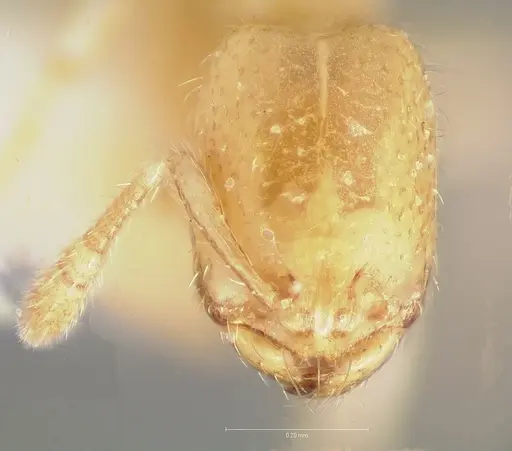
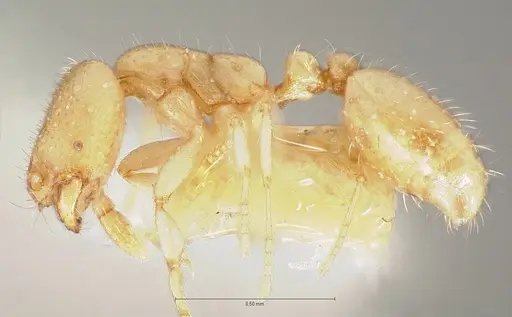
Solenopsis salina is a tiny thief ant belonging to the Solenopsis molesta species complex. Workers measure just 1.4-1.5 mm (total length) and are typically yellow to pale brown, making them one of the smaller ant species you'll encounter . Queens are larger at 4.9-5.2 mm, with a medium brown body and a darker brown head . The species gets its 'thief ant' name from habitually nesting near and raiding other ant colonies to steal brood and food - they are often found in close association with host species like Formica oreas and Pheidole porcula . Solenopsis salina occurs across the southwestern United States and into northern Mexico, with documented populations in Texas, Colorado, New Mexico, Nevada, and Chihuahua, Mexico . They nest under large stones in creosote desert scrub, grassland, grassland‑juniper transition, hardwood oak and pine forests, often in dark brown sandy or rocky loam soils . The workers can be identified by their blunt, inwardly curved clypeal teeth and coarse punctures on the head capsule - features that separate them from similar species like Solenopsis texana and Solenopsis molesta .
Quick Summary
- Difficulty: Easy
- Origin & Habitat: Southwestern United States and northern Mexico, Texas, Colorado, New Mexico, Nevada, and Chihuahua, Mexico. Nests under stones in desert scrub, grassland, and pine‑oak forests on dark brown sandy or rocky loam soils [2][3][4].
- Colony Type: Unconfirmed, no specific data on queen number or social structure.
- Size & Growth:
- Antkeeping:
- Temperature: No specific data. Inferred from range: keep at room temperature (20-25 °C). Avoid prolonged extremes.
- Humidity: Provide a gradient: most of the nest chamber dry, with one small moist area. They inhabit both dry desert scrub and mesic sites, so a gradient works best [1].
- Diapause: No specific data. Given the temperate range, a winter rest period is likely. If you observe reduced activity in winter, gradually lower temperature to 10-15 °C for 2-3 months, but monitor closely.
- Nesting: Test tube for founding. For larger colonies, use Y‑tong (AAC) or soil nests with narrow chambers. All connections must be escape‑proof due to the tiny worker size.
- Behavior: Thief ants by nature, they nest near other ant species and will attempt to raid neighboring colonies for brood and food [1]. Workers are active foragers that readily take protein and sugar. They possess a functional stinger (Myrmicinae subfamily) but due to their tiny size the sting is mild and rarely felt by humans. Escape prevention is critical, their 1.5 mm bodies can slip through the smallest gaps.
- Common Issues: escape prevention is your top priority, use fine mesh (≤0.5 mm) and seal all connections, growth rate is unknown, do not overfeed or disturb the nest frequently, patience is key, they may struggle in overly humid conditions, ensure ventilation and allow the nest to dry partially between waterings, wild‑caught colonies may carry parasites from their natural association with other ants, quarantine new colonies and watch for odd behavior
Housing and Nest Setup
Start a new colony in a simple test‑tube setup. Use a small‑diameter tube (workers are only 1.5 mm). Fill it about one‑third with water, plug with a tight cotton ball, and place the tube horizontally in a dark, quiet spot. Because founding behavior is unconfirmed, do not assume the queen will seal herself in, simply provide a dark, stable chamber and wait. Once you see workers (weeks to months later), you can connect the tube to a small outworld.
For larger colonies, Y‑tong (AAC) or soil nests with narrow chambers work well. All openings must be escape‑proof, use fine mesh (0.5 mm or smaller) on any ventilation holes. Avoid wide tunnels, these tiny ants prefer narrow passages. The outworld should be simple with minimal vertical space to prevent falls. [1]
Feeding and Diet
Solenopsis salina is a generalist feeder. In the wild it raids other ant colonies for brood and scavenges on various food [1]. Offer very small protein items: fruit flies, pinhead crickets, tiny mealworms, or commercial ant protein mixes. For sugar, provide a drop of sugar water or honey water, but remove it within 24 h to prevent mold. Portion sizes should be tiny, a single fruit fly or a speck of mealworm is enough for a small colony.
Feed every 2-3 days for established colonies, removing uneaten prey after 24 h. During the founding stage, do not feed, the queen probably survives on stored reserves (though this is unconfirmed).
Temperature and Seasonal Care
Keep your colony at room temperature, roughly 20-25 °C. This matches the cool‑to‑warm habitats of the southwestern US and Mexico [3]. No specific temperature preferences are published, so avoid extremes. During winter, a diapause period is likely for this temperate species. If you notice reduced activity, gradually lower the temperature to about 10-15 °C and maintain it for 2-3 months. Do not feed during this time, and disturb the nest as little as possible. In spring, slowly return to room temperature.
Behavior and Colony Dynamics
The defining behavior of Solenopsis salina is its 'thief ant' lifestyle, it naturally nests in close association with other ant species and will attempt to raid neighboring colonies [1]. Workers are active foragers and can quickly recruit nestmates to food sources. They possess a functional stinger but it is too small to be felt by humans.
Escape prevention is critical: their 1.5 mm bodies can squeeze through impossibly small gaps. Use a fluon barrier on outworld rims and inspect all seals regularly. The colony structure is unsudied, but like most ants the queen likely focuses on egg‑laying while workers handle foraging, brood care, and nest maintenance.
Frequently Asked Questions
How long does it take for Solenopsis salina to raise their first workers?
There is no published data for this species. For related claustral Solenopsis, the process typically takes 4-6 weeks at room temperature, but this is a guess. Do not be alarmed if it takes longer or if the queen behaves differently, her founding method is unconfirmed.
Can I keep Solenopsis salina in a test tube setup?
Yes. Use a small‑diameter test tube since workers are only 1.5 mm. Fill it one‑third with water, plug tightly with cotton, and keep it horizontal in a dark location. This works well for founding and early colony growth.
How big do Solenopsis salina colonies get?
Unknown, no published colony sizes exist. Based on similar small Solenopsis species, you might eventually see several hundred workers, but that is speculation.
Do Solenopsis salina need hibernation?
No specific data, but as a temperate species from the southwestern US, a winter diapause is likely. If your colony slows down in winter, gradually reduce temperature to 10-15 °C for 2-3 months. Resume normal temperatures in spring.
What do Solenopsis salina eat?
They are generalist feeders. Offer small protein items (fruit flies, pinhead crickets, tiny mealworms) and sugar water/honey water. Portions must be very small. Remove uneaten food after 24 h.
Are Solenopsis salina good for beginners?
Yes, they are considered easy because they are small, harmless, and tolerate a range of conditions. The main challenge is preventing escape due to their tiny size. If you are confident in your escape‑proofing, they are a good starter ant.
Why are my Solenopsis salina escaping?
Even microscopic gaps are enough for these 1.5 mm ants. Check all lids, connections, and barrier applications. Use fine mesh (≤0.5 mm) for ventilation. Apply fluon or petroleum jelly to rim surfaces. Inspect your setup daily until you find and seal the escape route.
When should I move my colony to a formicarium?
Move them when the test tube becomes crowded or you see workers constantly exploring the cotton. This typically happens once the colony reaches 20-30 workers. Use a Y‑tong (AAC) or small acrylic nest with narrow chambers. Ensure connecting tubes have small diameters to prevent escape during transfer.
How do I identify Solenopsis salina from similar species?
Workers are yellow to pale brown,1.4-1.5 mm, with blunt inward‑curving clypeal teeth and coarse head punctures. Their minor funicular segments are shorter than 0.12 mm. These features separate them from Solenopsis texana (straight teeth) and Solenopsis molesta (longer funicular segments) [1].
How often should I feed my Solenopsis salina colony?
Feed small amounts of protein every 2-3 days for established colonies. Remove uneaten prey after 24 h. Keep sugar water available but replace it every few days. During founding, do not feed, the queen likely does not eat until the first workers emerge (though this is unconfirmed).
Report an Issue
The current care sheet is based fully on literature. See inconsistencies, or something that's incorrect? Please , it will be resolved after review from an admin. Contributing to the blogs tab also helps providing information, to make us be able to further improve the caresheets. Thank you for your support!
References

This caresheet is licensed under CC BY-SA 4.0 .
Community Blogs
CASENT0005937
View on AntWeb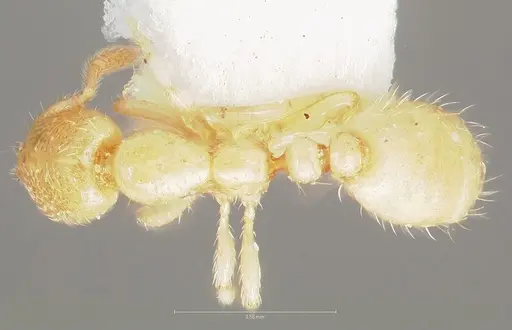
Literature
Loading distribution map...Loading products...