
Solenopsis photophila
- Sci. Name
- Solenopsis photophila
- Tribe
- Solenopsidini
- Subfamily
- Myrmicinae
- Author
- Santschi, 1923
- Distribution
- Found in 1 countries
Introduction
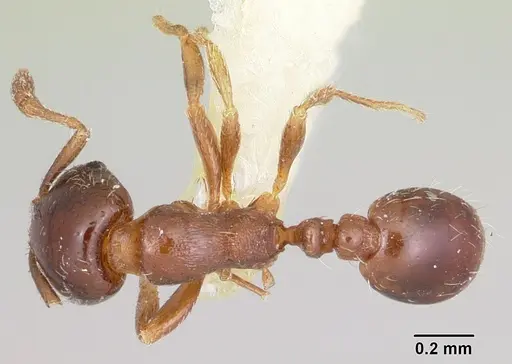
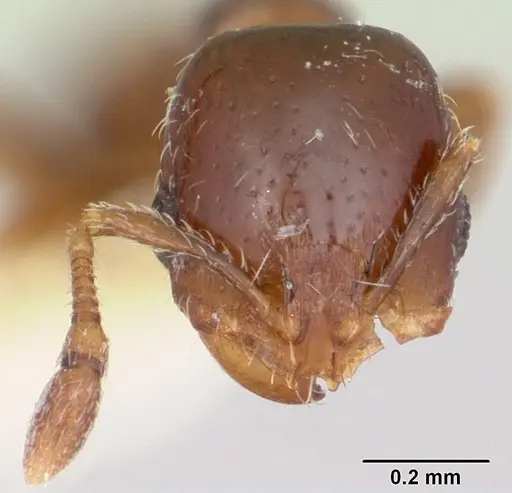
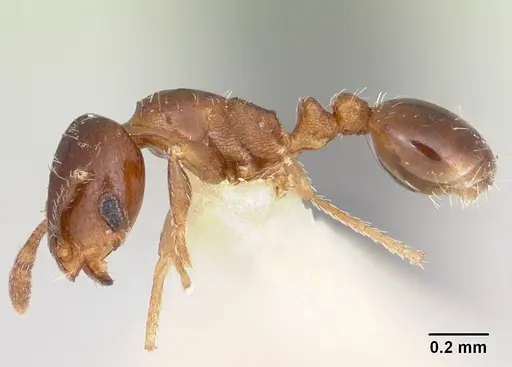
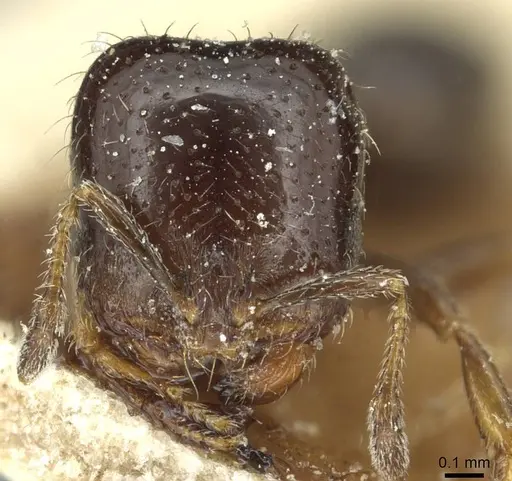
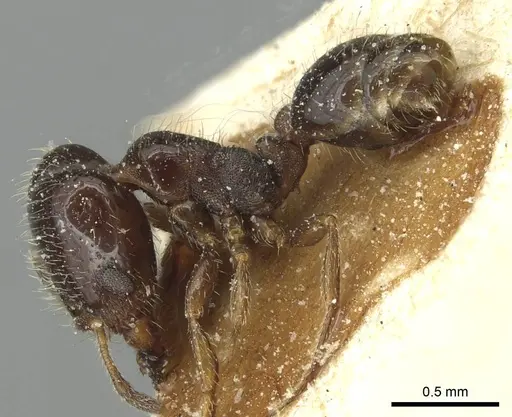
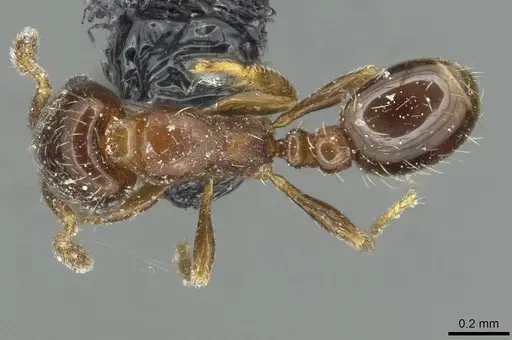
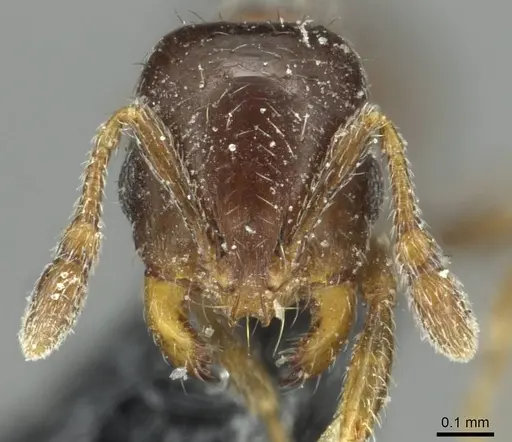
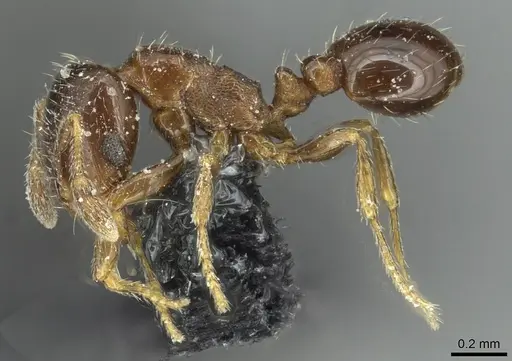
Solenopsis photophila is a tiny thief ant, with workers measuring just 1.44 mm in total length . They are uniformly brown with large kidney-shaped eyes that contain about 30 ommatidia, unusually big eyes for such a small ant . This species belongs to the Solenopsis nigella species complex and is native to central Argentina, where it lives in dry habitats like the Monte desert and Prosopis open woodland . Its most distinctive feature is those large eyes, which set it apart from most other Solenopsis. The only similar species is Solenopsis macrops, but S. photophila has smaller eyes and rougher sculpturing on the mesopleuron, propodeum, petiole, and postpetiole .
Quick Summary
- Difficulty: Expert
- Origin & Habitat: Native to central Argentina (Entre Ríos, Santa Fe, and Mendoza provinces). Found in Monte desert, Prosopis open woodland, and fine sandy soils in creosote bush scrub [1][2]. Assigned to the Tropical Climate Specialists (TCS) functional group, which means it prefers warm conditions [2].
- Colony Type: Only the worker caste has been collected and described. Based on typical patterns in the Solenopsis nigella complex, likely monogyne, but this is unconfirmed.
- Size & Growth:
- Queen: Unknown, the queen caste has not been described [1].
- Worker: 1.44 mm total length [1].
- Colony: Unknown, no colony size data available.
- Growth: Unknown
- Development: Estimated 4–6 weeks based on typical patterns of small Solenopsis at optimal temperature (24–28 °C). No direct data available. (Temperature dependent, development slows below 24 °C.)
- Antkeeping:
- Temperature: Keep at 24–28 °C. As a Tropical Climate Specialist from central Argentina, it prefers warm conditions [2]. Provide a gentle gradient with a small heating cable on one side if needed. Avoid temperatures below 20 °C for extended periods.
- Humidity: Low to moderate. The species lives in the Monte desert and sandy soils, so keep the substrate lightly moist but never waterlogged. Allow parts of the nest to dry out between watering. Good ventilation is important.
- Diapause: Likely not required. The species comes from a warm region with mild winters. A slight cooling period during winter may be optional but is not necessary.
- Nesting: Natural nesting occurs in fine sandy soils. In captivity, a test tube with sandy substrate works well. Make chambers tiny to suit their 1.44 mm workers.
- Behavior: These ants are tiny and secretive. As thief ants, they likely forage for small insects, honeydew, and food scraps. Their large eyes suggest they can see better than most Solenopsis. Workers can squeeze through extremely small gaps, you need excellent escape prevention: use fine mesh (≤0.5 mm), fluon barrier, and tight lids. They are shy and avoid confrontation.
- Common Issues: escape prevention is critical, their 1.44 mm size lets them slip through tiny cracks,, queen and founding behavior are unknown, making colony establishment difficult,, humidity must be controlled, too much moisture will harm them since their native habitat is dry,, limited information means you must experiment and observe closely,, colony size is unstudied, so start small and expand only as needed.
Appearance and Identification
Workers of Solenopsis photophila are just 1.44 mm long [1]. The most striking feature is their large kidney-shaped eyes, each with about 30 ommatidia [1]. The body is uniform brown. The head is roughly square with a nearly straight rear edge. The mesopleuron, propodeum, petiole, and postpetiole have heavy punctate (roughened) sculpturing [1]. The petiole has a triangular node with a ventral flange. This species is easily recognized by its eye shape, only Solenopsis macrops has similar eyes, but S. photophila has smaller eyes and rougher sculpturing [1].
Natural Habitat and Distribution
Solenopsis photophila is endemic to central Argentina: confirmed records come from Entre Ríos, Santa Fe, and Mendoza provinces [1][2]. In the Monte desert of Mendoza, researchers collected it using seed baits in Prosopis open woodland [1]. It also appears in fine sandy soils in creosote bush scrub, captured in pitfall traps [1]. The species is assigned to the Tropical Climate Specialists functional group, meaning it prefers warm conditions [2].
Temperature and Care
Because this ant is a Tropical Climate Specialist from central Argentina, it prefers warm conditions [2]. Keep temperature at 24–28 °C for best activity and brood development. A small heating cable on one side of the nest can create a gentle gradient, place it on top to avoid drying the nest too much. Room temperature within that range is fine. Avoid prolonged temperatures below 20 °C. The species likely doesn't need true hibernation, but a slight drop during winter is acceptable. Stability is more important than specific numbers.
Humidity and Nesting
In the Monte desert and sandy soils, these ants live in dry conditions. So keep humidity low to moderate: the substrate should be lightly moist but never wet. Allow parts of the nest to dry out between waterings. For nesting, replicate their natural fine sandy soil. A test tube with a small sand layer works well. Make the chambers narrow to suit their tiny 1.44 mm workers. Avoid compacting the soil too much, it could trap or drown the ants. Good ventilation prevents mold while maintaining the slight moisture they need [1].
Feeding and Diet
As a thief ant in the Solenopsis nigella complex, this species is probably omnivorous. Offer small protein sources like fruit flies, pinhead crickets, or tiny pieces of mealworm. Provide sugar sources like diluted honey or sugar water. Because the workers are only 1.44 mm, food must be very small. Remove uneaten food quickly to prevent mold. Feed small amounts every 2–3 days and adjust based on how much they eat.
Behavior and Temperament
This is a small, secretive ant. Their large eyes might mean they see better than typical ants, but the exact behavior is unclear [1]. As thief ants, they probably exploit tiny food sources and may raid other ant nests. Their 1.44 mm size lets them slip through nearly invisible gaps, you must use fine mesh (≤0.5 mm), fluon barriers, and tight lids. They are shy and not aggressive toward larger animals, preferring to hide. Their small colony stays inconspicuous in the setup.
Frequently Asked Questions
How long does it take for Solenopsis photophila to develop from egg to worker?
The exact timeline hasn't been recorded. Based on patterns of small Solenopsis, expect about 4–6 weeks from egg to first worker at 24–28 °C. Monitor your colony and adjust conditions if needed.
What size colony does Solenopsis photophila reach?
Colony size is unknown. As one of the smallest Solenopsis (workers only 1.44 mm), colonies may stay small, possibly under 100 workers, but no data exists [1].
Can I keep multiple queens together?
The social structure is unknown, only workers have been described. Most Solenopsis are monogyne, but without data it's safest to assume single-queen. Do not combine unrelated queens unless you are experimenting carefully [1].
What is the best nest type for Solenopsis photophila?
A test tube with fine sandy substrate works well. The chambers should be tiny, scaled to their 1.44 mm workers. A small formicarium with narrow passages is also fine. Ensure excellent escape prevention.
Do Solenopsis photophila need hibernation?
Likely not. They are Tropical Climate Specialists from a region with mild winters. A slight temperature drop in winter is optional but not required.
Are Solenopsis photophila good for beginners?
No, this species is rated Expert. While they are not aggressive, their tiny size makes escape prevention extremely difficult. Also, the queen has never been described, so obtaining a colony is very hard. Beginners should start with more forgiving species.
Why are my Solenopsis photophila escaping?
Workers are only 1.44 mm and can fit through gaps you can barely see. Use mesh with openings ≤0.5 mm, apply fluon to container walls, and seal all cracks. Even dust-cloth sized spaces can be an escape route.
What do Solenopsis photophila eat?
Likely small insects, honeydew, and food scraps, typical thief ant diet. Offer fruit flies, tiny mealworm pieces, and sugar water. Remove uneaten food quickly to prevent mold.
How do I establish a colony of Solenopsis photophila?
This is very challenging because only workers have been collected and the queen is unknown. You might need to collect many workers in hopes of raising a queen, or wait for a mated queen if one is ever found. Founding behavior is unconfirmed, so expect to experiment. Patience is essential [1].
Report an Issue
The current care sheet is based fully on literature. See inconsistencies, or something that's incorrect? Please , it will be resolved after review from an admin. Contributing to the blogs tab also helps providing information, to make us be able to further improve the caresheets. Thank you for your support!
References

This caresheet is licensed under CC BY-SA 4.0 .
Community Blogs
Literature
Loading distribution map...Loading products...