
Nickerson's Thief Ant
Solenopsis nickersoni
- Sci. Name
- Solenopsis nickersoni
- Tribe
- Solenopsidini
- Subfamily
- Myrmicinae
- Author
- Thompson, 1982
- Common Name
- Nickerson's Thief Ant
- Distribution
- Found in 1 countries
Introduction
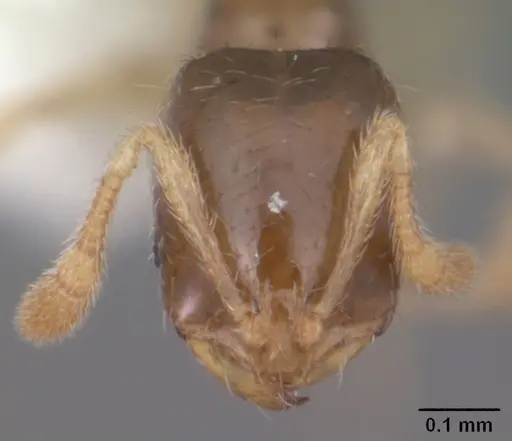
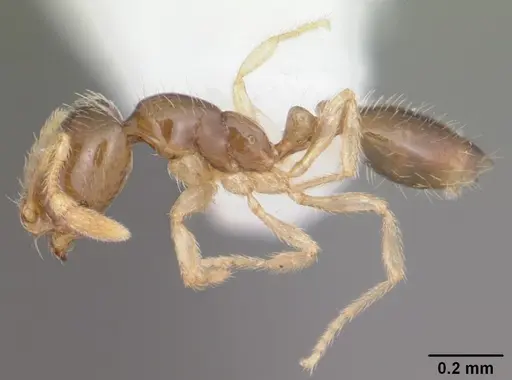
Solenopsis nickersoni is a tiny thief ant from Florida, part of the Solenopsis molesta complex. Workers are small,1.14 to 1.50 mm long, with a medium brown body and pale yellow legs and antennae. The whole body is smooth and shiny. Queens are larger but their total length isn't known – only thorax length has been measured . This species is almost identical to Solenopsis castor but is smaller and only occurs in Florida, while its relative lives in the Antilles, Mexico, and down to Bolivia . These ants spend most of their time underground, living in flatwoods and pine sandhills. They are one of the few ant species known to remove seeds, so they aren't just predators – they help spread seeds too . Mating flights probably happen in midsummer (two winged queen specimens were collected on July 2). No males have ever been found .
Quick Summary
- Difficulty: Hard
- Origin & Habitat: Endemic to Florida, USA, in oak-hickory scrub, pine flatwoods, and high pine sandhill habitats. Collected from underground traps at Gainesville Airport and other Florida sites [1][3].
- Colony Type: Unconfirmed – no wild colonies have been studied.
- Size & Growth:
- Queen: Size data unavailable – only thorax length (~1.2 mm) has been measured, not total body length [1].
- Worker: 1.14 to 1.50 mm total length [1].
- Colony: Unknown – no colony size data exists.
- Growth: Unknown – estimated moderate based on related thief ants.
- Development: Unconfirmed – based on typical Solenopsis patterns, expect 4–8 weeks at warm temperatures (around 26°C). (Development timeline has not been studied for this species.)
- Antkeeping:
- Temperature: Keep around 24–28°C. As a Florida species, they prefer warmth. Provide a gentle gradient so they can choose [3].
- Humidity: Keep the nest substrate consistently moist but not waterlogged. They live underground and need stable moisture.
- Diapause: Unconfirmed – Florida winters are mild, so they may slow down but won't need true hibernation. Keep at room temperature year-round.
- Nesting: Use a test tube setup or a small Y‑tong/soil nest with narrow chambers. Their tiny size means even a small crack is an escape route. Avoid open spaces – they feel safer in confined, dark areas.
- Behavior: Shy, secretive ants that stay underground. Workers are just over 1 mm, so escape prevention is extremely important. They can sting (like other Solenopsis) but it's very mild and they rarely use it – they prefer to flee. They accept seeds as food, so their diet is more varied than many small ants [2].
- Common Issues: escape prevention is critical – workers can squeeze through gaps you can't see. Use fine mesh (0.5 mm or smaller) and fluon/petroleum jelly barriers., no wild colonies have ever been studied – founding behavior is completely unknown, making them a risky species to try., males have never been collected – the reproductive biology is poorly understood., they are easily stressed by disturbance – keep the nest quiet and dark., availability is extremely limited – if you find a queen, you'll be pioneering their captive care.
Housing and Nest Setup
Because Solenopsis nickersoni workers are only about 1 mm long, escape prevention is your top priority. Use a test tube with a cotton plug for founding, or a small Y‑tong or plaster nest with very narrow chambers and tunnels. Never use open acrylic nests – these ants feel exposed in large spaces and will try to escape. The nest should be kept dark and humid. A test tube with a water reservoir at the back works well. Cover the tube with something dark (e.g., cardboard) and disturb it as little as possible. For the outworld, use a container with tight‑fitting lid and coat the rim with fluon or a thin layer of petroleum jelly [1].
Feeding and Diet
In the wild, Solenopsis nickersoni is known to remove seeds from the ground, which is unusual for a thief ant [2]. This means their diet is broader than just small prey. Offer tiny protein sources like fruit flies, pinhead crickets, or even small pieces of mealworm. You can also try finely crushed seeds (like sesame or poppy seeds) – scatter a few near the entrance. Sugar water or diluted honey is sometimes accepted, but protein should be the main food. Feed small amounts every 2–3 days and remove leftovers quickly to prevent mold in the humid nest [2].
Temperature and Seasonal Care
As a Florida species, Solenopsis nickersoni does best at 24–28°C. The nest should be kept warm, but a small temperature gradient (e.g., one side of the outworld cooler) lets workers choose. They have been collected from soil depths of 10–20 cm, where temperatures stay fairly steady [3][4]. Florida's winters are mild, so this ant probably doesn't need a cold diapause. If your room gets colder than 20°C in winter, you can use a small heat mat on one side of the nest to keep it warm. Avoid sudden temperature swings – they stress the colony.
Behavior and Observation
These are secretive, underground ants that rarely come to the surface. Workers forage mostly in the soil, so you'll see them only if you have an outworld where they can find food and water. They are not aggressive – when disturbed, they run away and hide. Their sting is weak and not a problem for humans. Because they are so small (1 mm), you'll need a magnifying glass or a macro lens to see them clearly. No males have ever been collected, so their mating system is a mystery [1]. Be patient – this is a species for keepers who enjoy watching cryptic, hidden colony life, not for those who want constant activity.
Colony Founding
Colony founding has never been documented for Solenopsis nickersoni. No one has ever found a queen after mating, and no captive colonies have been raised from a single queen. Related thief ants in the Solenopsis molesta group are claustral – the queen seals herself in a chamber and lives off her body fat until the first workers emerge. It's likely that S. nickersoni does the same, but this is guesswork. If you somehow get a queen, give her a small test tube with a moist cotton plug, keep her in total darkness, and don't disturb her for at least 6–8 weeks. Success with this species will probably require an already‑established colony, not a wild‑caught queen [1].
Frequently Asked Questions
How long does it take for Solenopsis nickersoni to produce first workers?
The exact development time isn't known, but based on other Solenopsis thief ants, expect about 4–8 weeks from egg to first worker at a warm 26°C. Keep the nest dark and stable during that time.
Are Solenopsis nickersoni good for beginners?
No – this is a very challenging species even for experienced keepers. Their tiny size makes escape prevention a constant battle, their colony founding is unstudied, and queens are almost impossible to find. Start with a more common species like Lasius niger or Camponotus.
What do Solenopsis nickersoni eat?
They are seed‑removers in the wild [2], so their diet includes seeds as well as small insects. Offer fruit flies, tiny crickets, or small pieces of crushed seeds. Protein should be the main food.
Can I keep multiple queens together?
We don't know if this species is monogyne or polygyne. No research exists. Don't try to combine unrelated queens – it's better to keep them separate until more is known.
How big do Solenopsis nickersoni colonies get?
Colony size is unknown. Related thief ants can reach a few hundred to a few thousand workers. Expect growth to be slow and gradual.
Do they need hibernation?
Probably not – Florida's climate is warm year‑round. They may slow down in winter but don't require a cold period. Keep them at room temperature all year.
Why are my ants escaping?
At just over 1 mm, these ants can walk through any gap you can see with your fingers, and even some you can't. Use fluon or petroleum jelly on the outworld walls, and make sure all connections are sealed with fine mesh (0.5 mm or smaller). Check regularly for tiny openings.
When do nuptial flights occur?
Two winged queens were collected on July 2 in Florida, so flights probably happen in midsummer. But males have never been caught, so the timing and location of flights are still a mystery [1].
Is this species invasive?
No – Solenopsis nickersoni is only found in Florida and has never been reported anywhere else. It is not invasive [5].
Report an Issue
The current care sheet is based fully on literature. See inconsistencies, or something that's incorrect? Please , it will be resolved after review from an admin. Contributing to the blogs tab also helps providing information, to make us be able to further improve the caresheets. Thank you for your support!
References

This caresheet is licensed under CC BY-SA 4.0 .
Community Blogs
CASENT0104505
View on AntWeb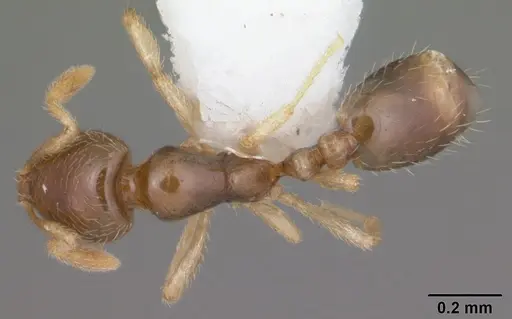
Literature
Loading distribution map...Loading products...