
Solenopsis macdonaghi
- Sci. Name
- Solenopsis macdonaghi
- Tribe
- Solenopsidini
- Subfamily
- Myrmicinae
- Author
- Santschi, 1916
- Distribution
- Found in 2 countries
Introduction
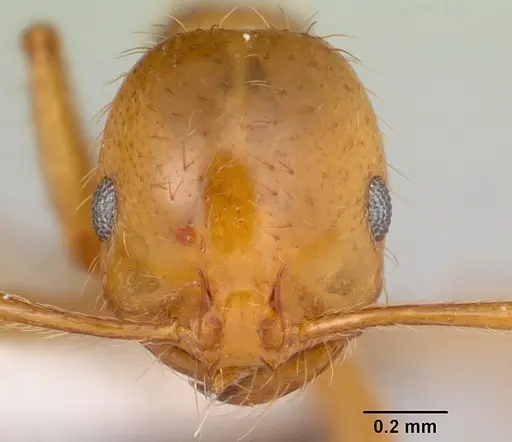
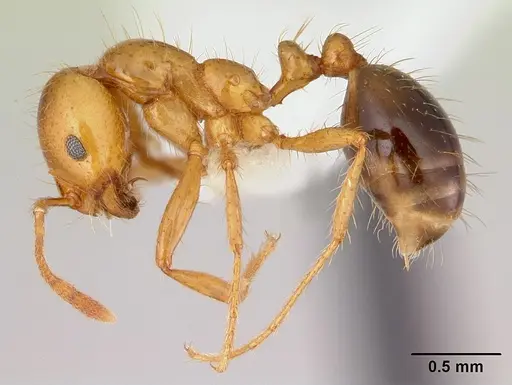
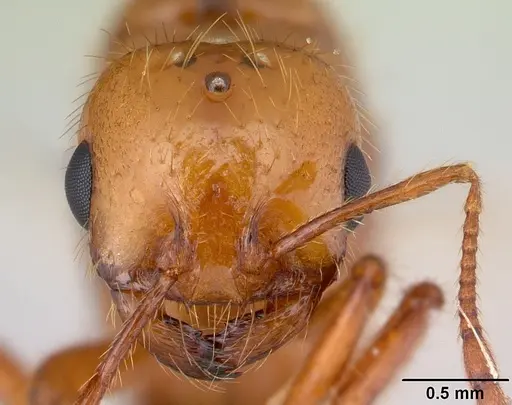
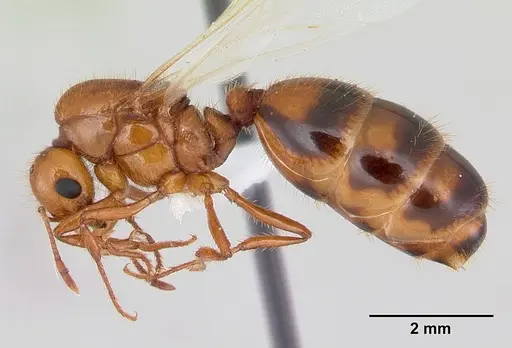
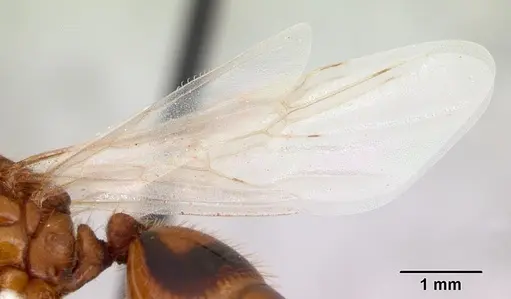
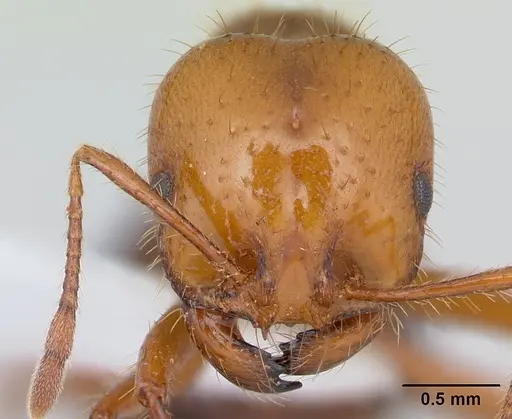
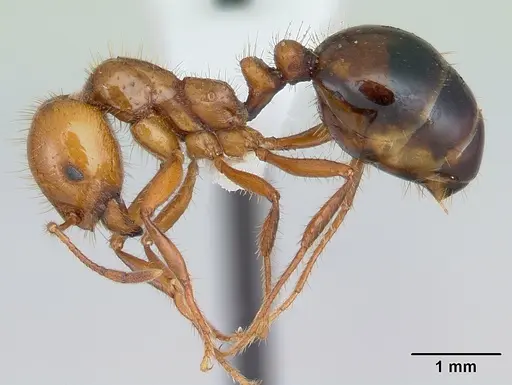
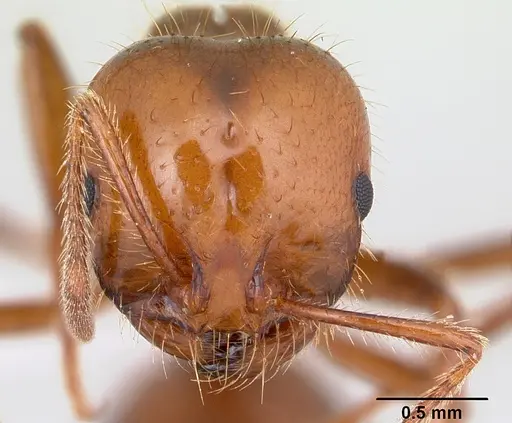
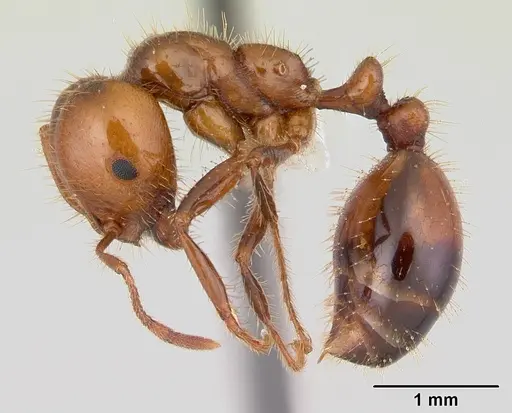
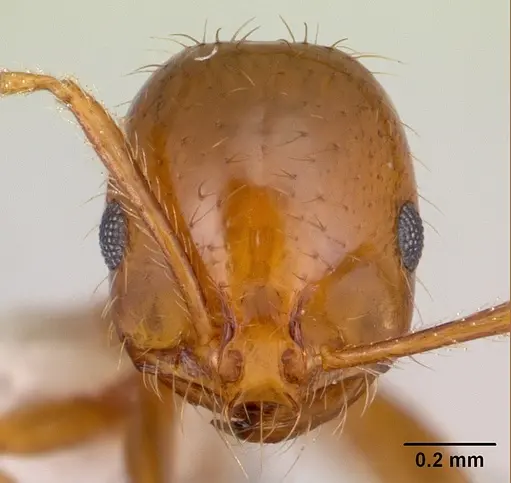
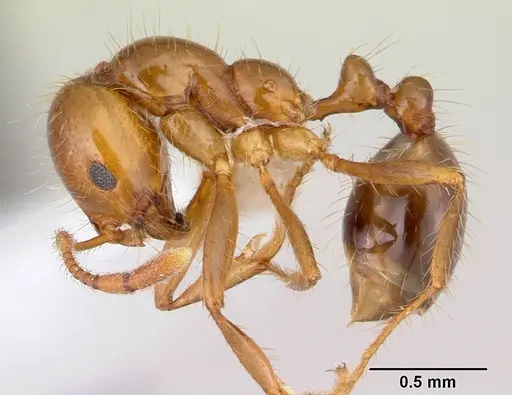
Solenopsis macdonaghi is a medium-sized fire ant native to the floodplains of eastern Argentina and western Uruguay, with records in Paraguay and a possible introduction in Bolivia . Workers are red-yellow to brown-yellow with a dark brown gaster (rear body section), while queens range from orange to dark orange with brown-tipped gaster segments . This species belongs to the Solenopsis saevissima group, which includes some of the most studied fire ants. What makes S. macdonaghi stand out is its social polymorphism - colonies can be either single-queen (monogyne) or multi-queen (polygyne), controlled by a specific gene variant . It also hybridizes with the invasive fire ant Solenopsis invicta, showing ongoing gene flow that mixes their social supergene .
Quick Summary
- Difficulty: Hard
- Origin & Habitat: Floodplains of eastern Argentina and western Uruguay, with records in Paraguay. Found at gallery forest edges and in open savanna (campo cerrado) [1][2].
- Colony Type: Socially polymorphic, colonies can be monogyne (single queen) or polygyne (multiple queens). The presence of b-like alleles in polygyne colonies shows genetic control of this trait [3][6].
- Size & Growth:
- Queen: 6.9-7.5 mm [1]
- Worker: Major workers are among the largest in the species group, along with Solenopsis megergates and Solenopsis quinquecuspis [7]. Body length of minor workers is not specifically documented.
- Colony: Tens of thousands of workers in mature colonies (inferred from related fire ants) [7]
- Growth: Moderate (inferred from related Solenopsis species)
- Development: Estimated 5-7 weeks at optimum temperature (inferred from related fire ants) (Development is temperature-dependent, warmer conditions speed it up.)
- Antkeeping:
- Temperature: Keep at 24-28°C. These ants come from subtropical floodplains and prefer warm conditions. Use a heating cable on one side of the nest to create a gradient [1].
- Humidity: Moderate. Keep the nest substrate slightly moist but not waterlogged. Good ventilation is important, these ants do not tolerate stagnant wet conditions [1].
- Diapause: No winter diapause required. Maintain warm conditions year-round. A slight seasonal temperature drop (to 18-22°C) is optional but unnecessary.
- Nesting: Use dry nest setups. Y-tong (AAC) or plaster nests work well. Avoid overly humid or wet setups. Fire ants are persistent escapers, seal all gaps and use fluon or PTFE barriers [1].
- Behavior: Fire ants are defensive and deliver a painful sting when threatened. Workers are aggressive foragers and will defend their nest. Their venom causes burning sensations and raised welts. Escape risk is high, they are small, active, and will find any gap. The colony can be monogyne or polygyne, affecting how they react to outsiders. Omnivorous: they accept protein and sugar sources.
- Common Issues: sting hazard, these ants can deliver painful stings, always use gloves and eye protection when handling, escape artists, seal all gaps and apply fluon/PTFE barriers to the outworld rim, pathogen susceptibility, wild colonies often carry microsporidian parasites Vairimorpha invictae and Thelohania solenopsae that can kill the colony [8][9], social parasitism by Solenopsis daguerrei, this ant can invade colonies and take over [10], social structure confusion, monogyne and polygyne colonies need different management, do not combine unrelated queens
Housing and Nest Setup
Solenopsis macdonaghi does well in standard ant-keeping setups. Use a test tube as a founding chamber (fill one-third with water and plug with cotton) until the colony outgrows it. For larger colonies, use Y-tong (AAC) or plaster nests. Avoid acrylic nests, they can overheat and lack proper water retention. Fire ants prefer drier conditions than many tropical species, so keep the nest substrate slightly moist but not wet [1]. Escape prevention is critical: these ants are small and persistent. Apply a fluon or PTFE barrier to the rim of the outworld, and seal any gaps with cotton or aquarium silicone.
Feeding and Diet
Solenopsis macdonaghi is omnivorous. Offer protein sources (mealworms, crickets, roach nymphs) two to three times per week. Provide constant access to a sugar source: honey water, sugar water, or commercial ant nectar. They will also forage for seeds and honeydew if available. Remove uneaten protein within 24-48 hours to prevent mold. Avoid overfeeding fatty foods, which can cause health issues. In the wild, they are generalist scavengers and predators [1].
Temperature and Seasonal Care
Keep the colony at 24-28°C for optimal brood development. Fire ants are adapted to subtropical floodplains with warm summers and mild winters [1]. Use a heating cable on one side of the nest to create a temperature gradient, letting the ants choose their preferred spot. During the cooler months, you can reduce the temperature to 18-22°C, but do not let it drop below 15°C for long. No true hibernation is needed. If activity slows, check temperature and humidity first.
Defense and Sting Hazard
Solenopsis macdonaghi has a potent sting. Like all fire ants, they inject alkaloid venom that causes burning pain and raised welts. This makes them unsuitable for keepers who want to handle their ants. Always wear gloves and eye protection when working on the outworld or nest. If stung, wash the area with soap and water and apply a cold compress. People with insect venom allergies should not keep this species. The sting also means they will defend their enclosure aggressively if disturbed.
Health and Pathogens
Wild-caught colonies often carry microsporidian parasites. Vairimorpha invictae and Thelohania solenopsae have been documented infecting Solenopsis macdonaghi in Argentina [8][9]. These pathogens can slowly weaken and kill the colony. Also, the social parasite Solenopsis daguerrei invades colonies and replaces the queen [10]. Quarantine any new wild-caught colony for at least a month and watch for signs: sluggish workers, unusual mortality, or too-small brood production. Buying from a reputable breeder who guarantees disease-free stock is strongly recommended.
Social Structure and Colony Dynamics
Solenopsis macdonaghi is socially polymorphic. Some colonies contain a single queen (monogyne), while others have multiple queens (polygyne). This is controlled by a genetic supergene, b-like alleles allow multiple queens to coexist [3][6]. The polygyne form also carries a different mitochondrial lineage [11]. Interestingly, this species shows evidence of past and ongoing gene flow with the invasive fire ant Solenopsis invicta, including introgression of the social supergene [4][5]. In practice, polygyne colonies are less aggressive toward nestmates but more aggressive toward outsiders. Monogyne colonies are typically more territorial. If you start with a single queen, she will not accept another, do not try to combine unrelated queens.
Legal and Ethical Considerations
Solenopsis macdonaghi is native to South America. Although it is not currently a major invasive pest, its close relative Solenopsis invicta is devastating in many parts of the world. Never release this species outside its native range (Argentina, Uruguay, Paraguay, southern Brazil). If you can no longer keep your colony, contact a local ant-keeping group or entomological society for responsible rehoming. Check your local regulations before acquiring, some regions prohibit fire ant species entirely. Always practice strict biosecurity. [1]
Frequently Asked Questions
How long does it take for the first workers to emerge?
Based on related Solenopsis species, first workers (nanitics) appear in about 5-7 weeks after egg-laying, assuming a temperature of 26-28°C. Colder conditions slow development significantly.
Can I keep multiple queens together?
This species is facultatively polygyne, meaning established colonies can have multiple queens. However, combining unrelated founding queens is risky, they will likely fight and kill each other. If you want a polygyne colony, start with a single queen and hope she produces daughter queens, or buy an established multi-queen colony from a breeder. Pleometrosis (multiple queens founding together) has not been documented [3][11].
Are Solenopsis macdonaghi good for beginners?
No. The combination of a painful sting, high escape risk, and the need for precise temperature control makes this species suitable only for experienced keepers. Their social polymorphism also adds complexity, you need to know whether your colony is monogyne or polygyne to manage it properly [1].
What do Solenopsis macdonaghi eat?
They are omnivorous. Offer insects (mealworms, crickets) two to three times per week and a constant sugar source (honey water or sugar water). They also forage for seeds and honeydew in the wild [1].
How big do colonies get?
While precise numbers are not recorded for this species, related fire ants in the saevissima group reach tens of thousands of workers. Expect a large, active colony with proper care [7].
Do they need hibernation?
No. They come from subtropical regions with mild winters, so they do not need a true hibernation period. Maintain warm conditions year-round. A slight cool-down to 18-22°C in winter is optional but not needed [1].
What temperature is ideal?
Keep them at 24-28°C. Use a heating cable on one side of the nest to create a gradient. Avoid prolonged temperatures below 20°C or above 32°C [1].
Why are my ants dying?
Common causes include: 1) pathogens from wild-caught colonies (Vairimorpha invictae or Thelohania solenopsae) [8][9], 2) social parasitism by Solenopsis daguerrei [10], 3) temperature stress (too cold or too hot), 4) excessive humidity, 5) mold from overfeeding. Quarantine new colonies and ensure proper conditions.
Report an Issue
The current care sheet is based fully on literature. See inconsistencies, or something that's incorrect? Please , it will be resolved after review from an admin. Contributing to the blogs tab also helps providing information, to make us be able to further improve the caresheets. Thank you for your support!
References

This caresheet is licensed under CC BY-SA 4.0 .
Community Blogs
CASENT0178137
View on AntWeb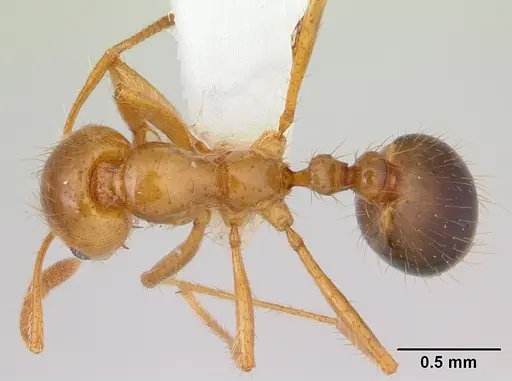
CASENT0178138
View on AntWeb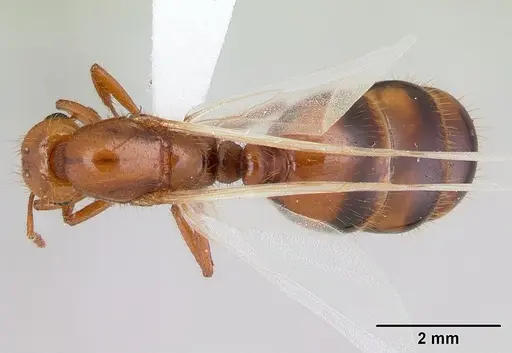
CASENT0178139
View on AntWeb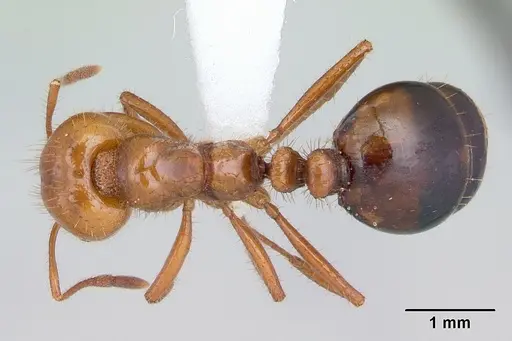
CASENT0178143
View on AntWeb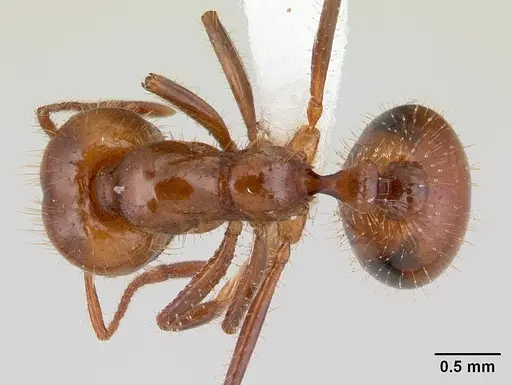
CASENT0178144
View on AntWeb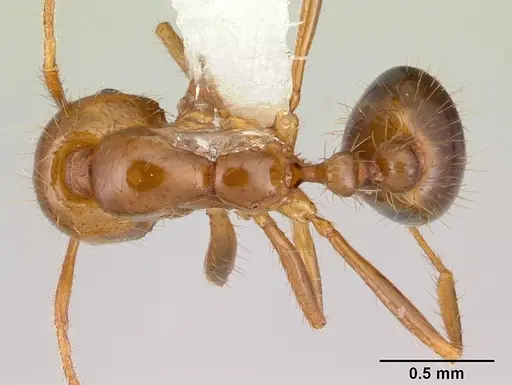
Literature
Loading distribution map...Loading products...