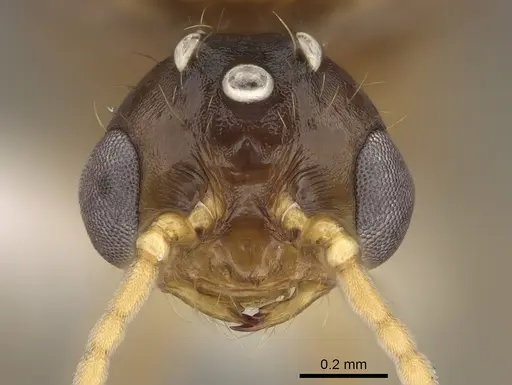
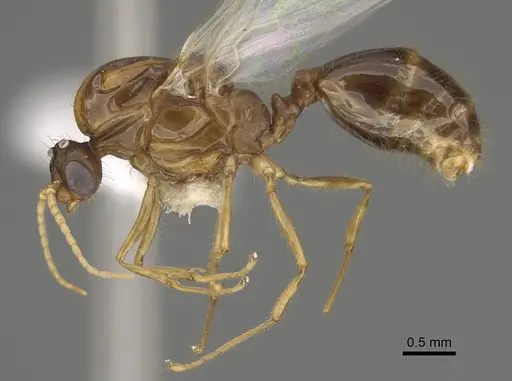
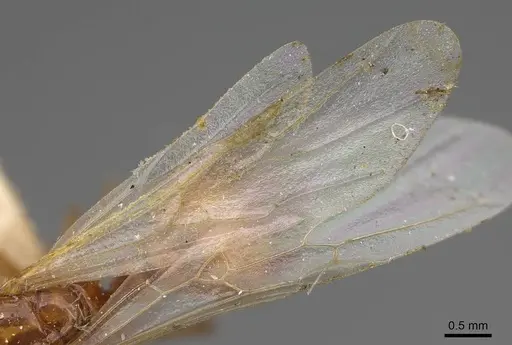
Solenopsis amblychila shows a June to September flight window. Peak activity occurs in August, with nuptial flights distributed across 4 months.

Solenopsis amblychila
- Sci. Name
- Solenopsis amblychila
- Tribe
- Solenopsidini
- Subfamily
- Myrmicinae
- Author
- Wheeler, 1915
- Distribution
- Found in 2 countries
- Nuptial Flight
- From June to September
- Peak flight Time
- 20:00
AI Identifiable
try →
Introduction
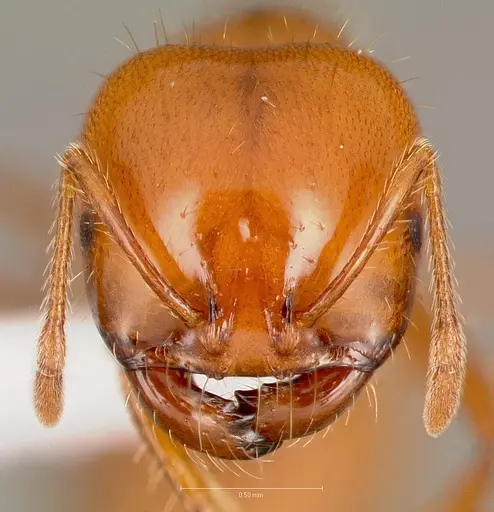
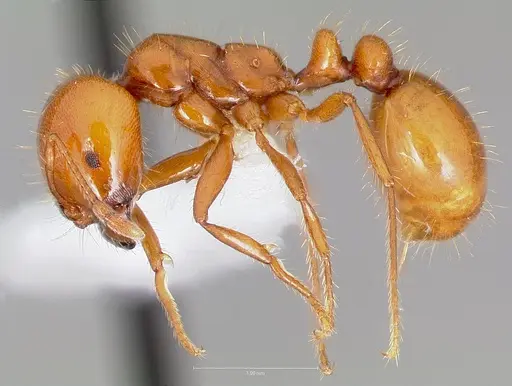
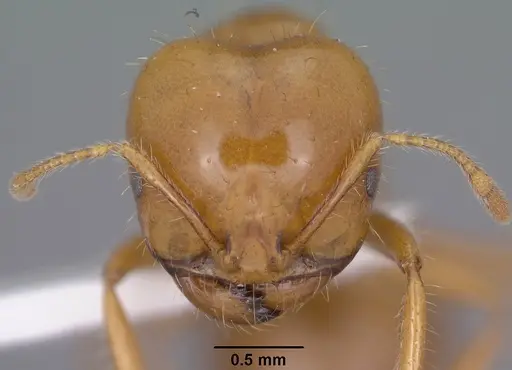
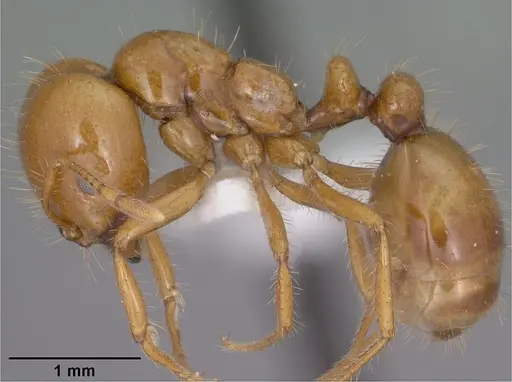
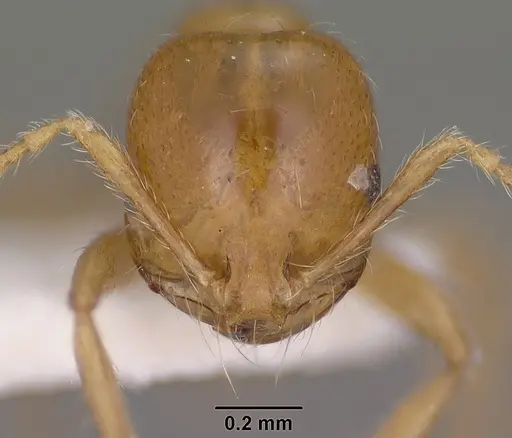
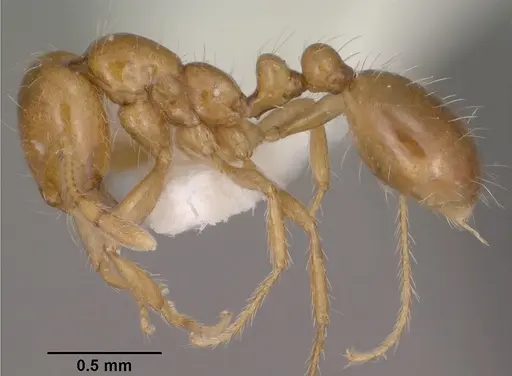
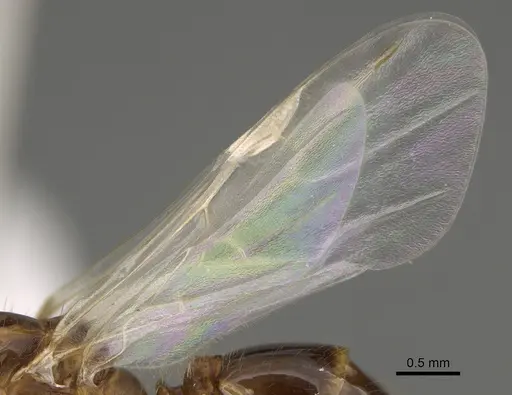
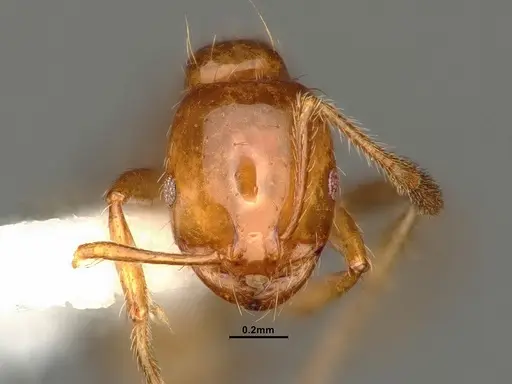
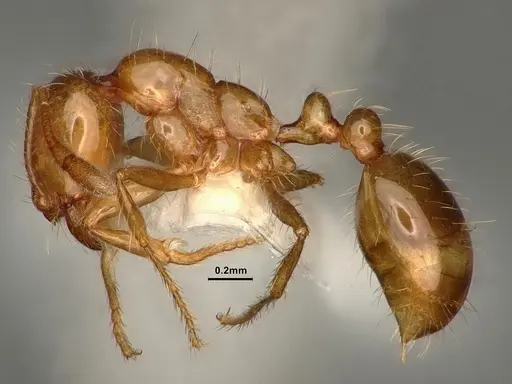
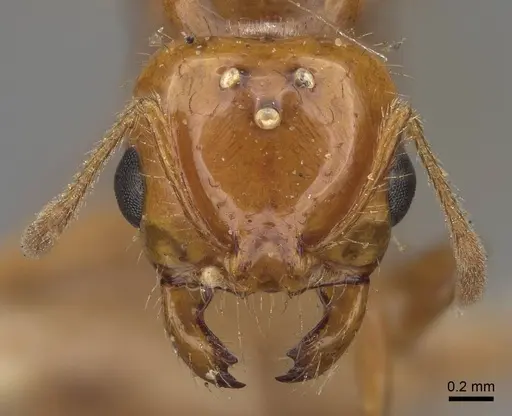
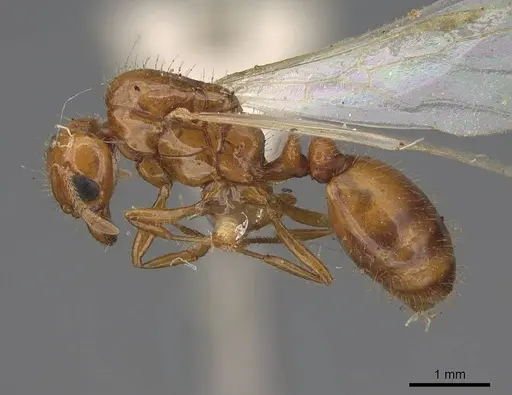
Solenopsis amblychila is a desert fire ant native to the southwestern United States and northern Mexico . It belongs to the Solenopsis geminata species group. Workers are small, with a stocky reddish-brown body typical of fire ants, exact measurements have not been reported in the literature. In the wild, colonies nest in soil under stones or wood and have been found alongside Camponotus festinatus . This species thrives in arid to semi-arid habitats at higher elevations (1,500-2,500 m), often in well-watered lawns, riparian zones, or chaparral . It is a hot climate specialist and inhabits areas too dry for direct competition with invasive imported fire ants . A known host for the histerid beetle Hippeutister californicus, the colony was found under a rock during the early winter rainy season in chaparral habitat .
Quick Summary
- Difficulty: Medium
- Origin & Habitat: Southern California, Arizona, New Mexico, western Texas, and northern Mexico (Baja California, Sonora, Durango, Nuevo León, Zacatecas) [2][5][6]. Found in well-watered lawns, riparian areas, chaparral, and sometimes dry habitats at elevations of 1,500-2,500 m [2][3][4].
- Colony Type: Colony structure is not well-documented. Based on related Solenopsis species, they are likely monogyne (single queen), but this is unconfirmed.
- Size & Growth:
- Queen: Size data unavailable. Based on Solenopsis genus patterns, queens are estimated around 6-8 mm.
- Worker: Size data unavailable. Inferred from Solenopsis genus, workers are small (estimated up to 6 mm).
- Colony: Unknown, not directly documented. Related fire ants range from hundreds to a few thousand workers.
- Growth: Moderate (inferred from genus)
- Development: Estimated 6-8 weeks at optimal temperature, based on related Solenopsis species. (Development time is inferred from genus-level data, no direct observations for this species.)
- Antkeeping:
- Temperature: Keep warm, roughly 25-30°C during active season, as they are a hot climate specialist [4]. Provide a temperature gradient so workers can self-regulate.
- Humidity: Low to moderate. Desert-adapted, keep the nest substrate mostly dry with a small moist area. Avoid waterlogging. Provide a permanent water source in the outworld (e.g., a shallow dish with cotton) [2].
- Diapause: Likely requires a winter dormancy period. Based on seasonality (reproductives collected in April), reduce temperatures to 15-18°C from November to February [2].
- Nesting: Soil-nesting species. Use a Y-tong (AAC), plaster, or soil nest with sand/soil substrate depth of 3-5 cm. Do NOT use acrylic nests. Provide digging opportunities [2].
- Behavior: Defensive and ready to sting when disturbed, typical fire ant behavior. Workers are aggressive toward threats and actively forage. They are small (under 4 mm) and excellent climbers, so escape-proofing is essential. This species is best observed from a distance using tools for maintenance.
- Common Issues: stinging, workers deliver a painful sting, handle with caution (use tools, not hands), escape prevention is critical due to small size and active climbing ability, overwatering is harmful, keep substrate mostly dry to match desert habitat, winter dormancy is likely required, sudden temperature drops can stress colonies, limited availability in the hobby, this species is not commonly kept
Nuptial Flight Activity Analysis 90 observations
Flight Activity by Hour 90 observations
Solenopsis amblychila nuptial flight activity peaks around 20:00 during the evening. Activity is spread across a 24-hour window (00:00–23:00). Times may be influenced by human observation patterns.
Housing and Nest Setup
Solenopsis amblychila is a soil-nesting species that does best in a naturalistic setup. Use a Y-tong (AAC), plaster, or deep soil nest rather than an acrylic one. Fill the nest with a sand/soil mixture that can hold tunnels, provide at least 3-5 cm depth for chambers. A test tube setup works for founding, but move the colony to a larger formicarium as it grows. The outworld must be escape-proof: these small ants are excellent climbers. Apply fluon to rim edges, seal all connections with cotton or barriers, and check for tiny gaps. Provide a thin layer of sand in the outworld for traction [2].
Temperature and Heating
These ants are hot climate specialists [4] and need warmer conditions than many common species. Maintain nest temperatures around 25-30°C during the active season. Use a heating cable or pad on one side to create a gradient. They can tolerate brief spikes into the low 30s but prefer stable warmth. In winter (roughly November through February), allow temperatures to drop to 15-18°C to simulate natural seasonal changes. This winter rest is inferred from their native range and is important for colony health [2].
Feeding and Diet
Solenopsis amblychila is omnivorous. In the wild, they probably feed on seeds and small insects [4]. In captivity, offer a varied diet: small protein sources (fruit flies, small crickets, or mealworms) 2-3 times per week, and a constant sugar source (sugar water, honey, or honeydew). They are enthusiastic foragers and will quickly take down prey. Remove uneaten food after 24-48 hours to prevent mold. Always provide a shallow water dish in the outworld.
Humidity and Water
As a desert-adapted species, S. amblychila tolerates dry conditions well. Keep the nest substrate mostly dry, only a small area should be slightly moist. Allow the substrate to dry out between waterings. Overwatering is more dangerous than underwatering. In the outworld, provide a constant water source like a shallow dish with cotton or pebbles. Avoid condensation in the nest, as excess moisture can lead to mold and colony stress. [2]
Behavior and Temperament
Like all fire ants, Solenopsis amblychila is defensive. When disturbed, workers swarm out and deliver painful stings. Use tools (forceps, aspirator) for maintenance, do not handle with bare hands. Workers are active foragers and will aggressively pursue prey. They are good climbers, so escape prevention is essential. Despite their small size, they are bold and will not back down from a threat. This makes them interesting to watch but less suitable for keepers who want hands-on interaction.
Seasonal Care and Winter Dormancy
In their native range, these ants experience distinct seasons with cool winters. From roughly November through February, reduce nest temperature to 15-18°C to allow the colony to enter a dormant state. During this period, reduce feeding to once every two weeks, the colony will be less active and require less food. Uneaten food molds quickly at low temperatures. In spring (around March-April), gradually increase temperature and resume normal feeding. Reproductives have been collected from nests in April in the wild, suggesting nuptial flights occur in spring [2]. Expect dealate queens and males in the spring months.
Frequently Asked Questions
Do Solenopsis amblychila ants sting?
Yes, they sting and it is painful. When threatened, workers swarm and deliver multiple stings with a burning sensation. Handle with caution using tools, never bare hands.
What do Solenopsis amblychila eat?
They are omnivorous. In captivity, offer small insects (fruit flies, small crickets, mealworms) 2-3 times per week and a constant sugar source like sugar water or honey. They also pick at seeds [4].
What temperature do desert fire ants need?
Keep them warm at roughly 25-30°C during the active season, as they are a hot climate specialist [4]. Use a heating cable to create a gradient.
Are Solenopsis amblychila good for beginners?
This is a medium-difficulty species. It is more challenging than Lasius or Camponotus due to its painful sting, small size (escape risk), and specific temperature needs. It is also rarely available. Experienced keepers interested in native southwestern ants will find it rewarding.
How big do colonies get?
Colony size is not documented for this species. Based on related fire ants, they likely reach several hundred to a few thousand workers, far smaller than invasive Solenopsis invicta.
Do Solenopsis amblychila need hibernation?
Yes, likely. They inhabit temperate regions with cool winters. From November to February, keep them at 15-18°C to simulate natural dormancy. This is inferred from their range and the fact that reproductives are collected in April [2].
What size are Solenopsis amblychila workers?
Exact measurements are not reported. Based on the genus, workers are small (estimated up to about 6 mm).
Where is Solenopsis amblychila found in the wild?
Native to the southwestern United States (Southern California, Arizona, New Mexico, western Texas) and northern Mexico (Baja California, Sonora, Durango, Nuevo León, Zacatecas). They prefer arid to semi-arid habitats at higher elevations (1,500-2,500 m) [2][1].
Can I keep multiple queens together?
This has not been documented. Most related Solenopsis are monogyne (single queen), so combining unrelated queens is not recommended and would likely lead to fighting.
How long does it take for the first workers to emerge?
Not documented for this species. Based on related Solenopsis, expect 6-8 weeks from egg to first worker at optimal temperature (~28°C).
What type of nest should I use?
Use a Y-tong (AAC), plaster, or soil nest with a sand/soil mix. Avoid acrylic nests. The nest should have at least 3-5 cm of substrate depth for tunnelling. Keep the substrate mostly dry with a small moist area.
Is Solenopsis amblychila invasive?
No, this is a native species to the southwestern US and northern Mexico. It is not invasive and occurs in habitats too dry for imported fire ants [1]. It plays a natural ecological role.
When is the nuptial flight of Solenopsis amblychila?
The nuptial flight of Solenopsis amblychila typically occurs From June to September.
What time of day does Solenopsis amblychila fly?
The nuptial flight of Solenopsis amblychila peaks around 20:00 during the evening, with most activity between 00:00 and 23:00. Times may be influenced by human observation patterns.
Report an Issue
The current care sheet is based fully on literature. See inconsistencies, or something that's incorrect? Please , it will be resolved after review from an admin. Contributing to the blogs tab also helps providing information, to make us be able to further improve the caresheets. Thank you for your support!
References

This caresheet is licensed under CC BY-SA 4.0 .
Community Blogs
CASENT0005802
View on AntWeb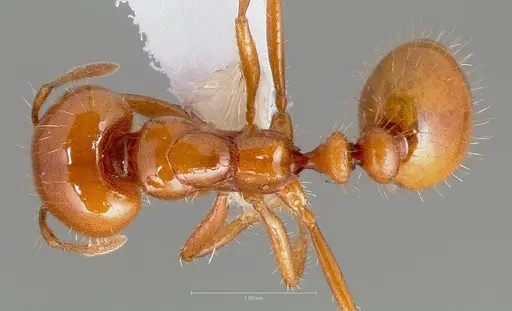
CASENT0102897
View on AntWeb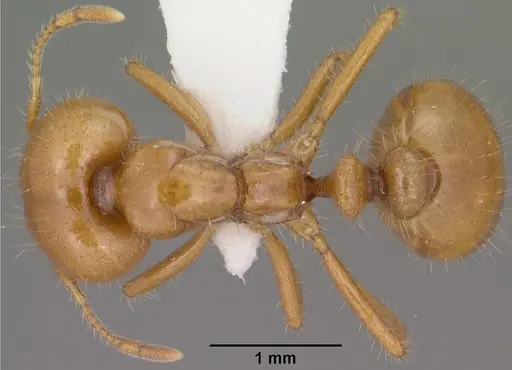
CASENT0102898
View on AntWeb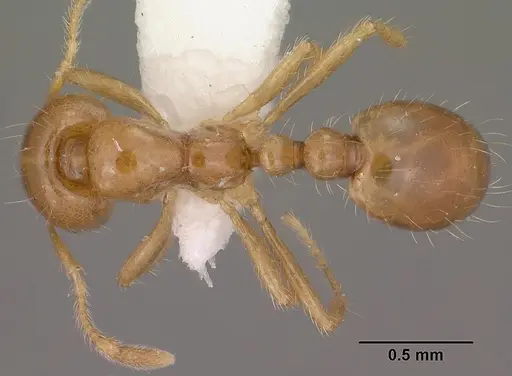
CASENT0863113
View on AntWeb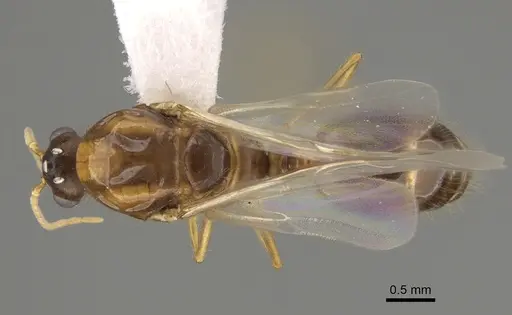
CASENT0884323
View on AntWeb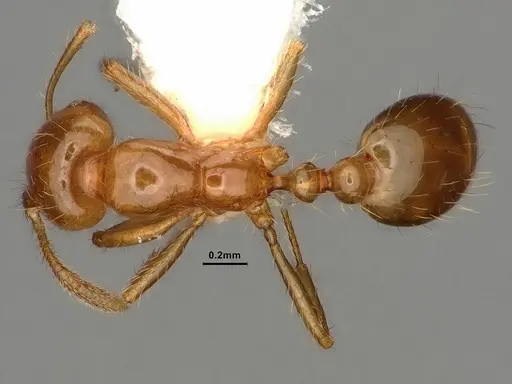
CASENT8368711
View on AntWeb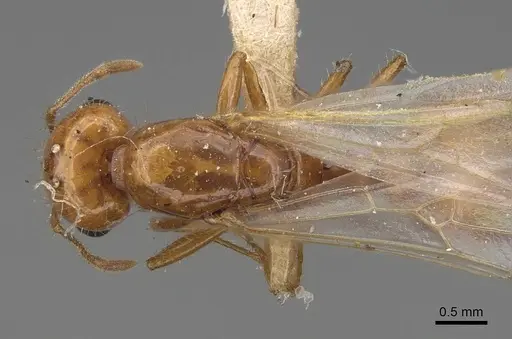
Literature
Loading distribution map...Loading products...