
Simopone annettae
- Sci. Name
- Simopone annettae
- Subfamily
- Dorylinae
- Author
- Kutter, 1976
- Distribution
- Found in 1 countries
Introduction
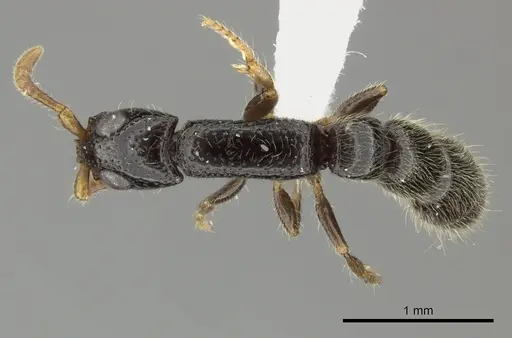
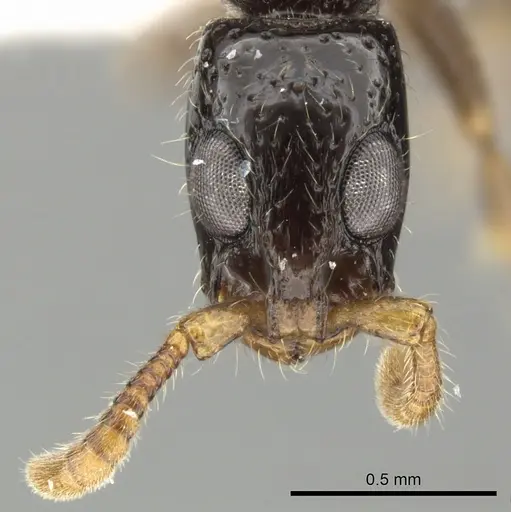
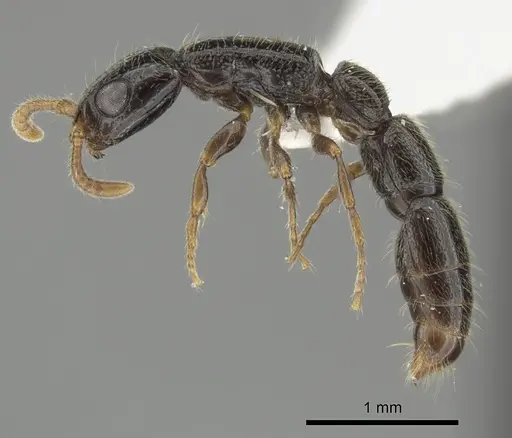
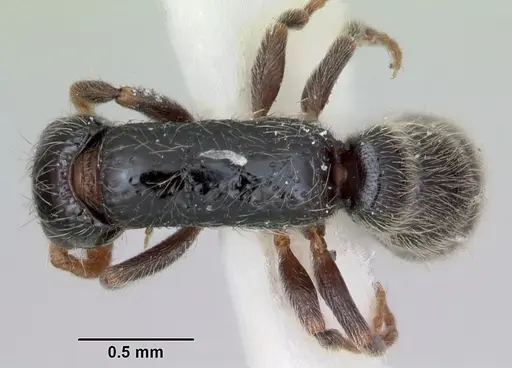
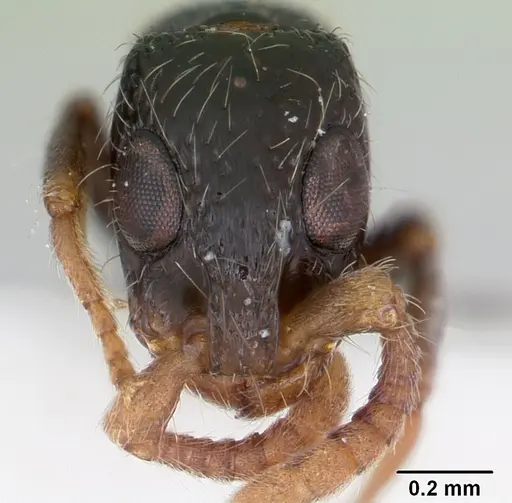
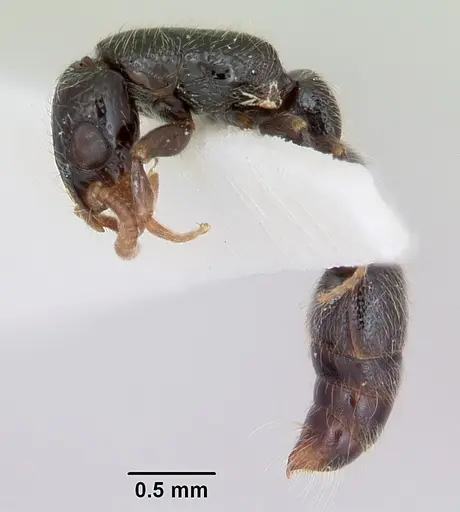
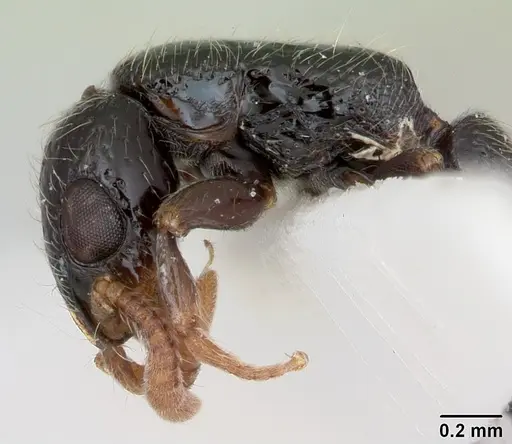
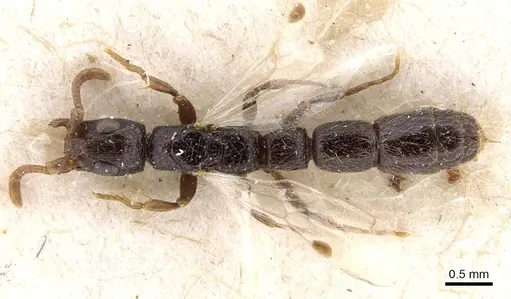
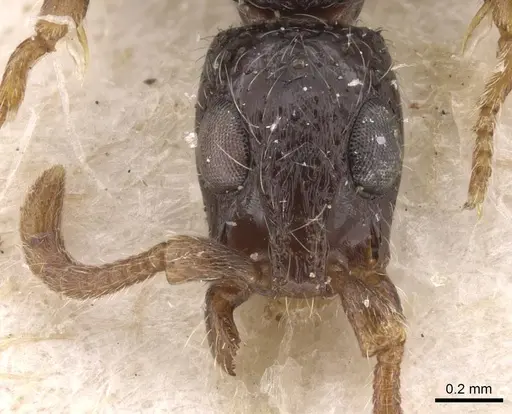
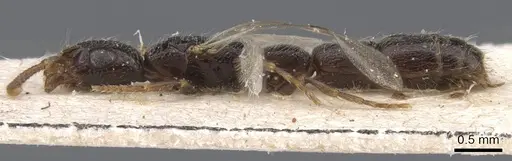
Simopone annettae is a small predatory ant belonging to the Dorylinae subfamily (army ants). They have a distinctive black body with light brown antennae and brown legs, and their eyes barely interrupt the sides of the head . Originally described from Cameroon in 1976 from a single queen, the worker caste was only described in 2012 . This species belongs to the schoutedeni species group and inhabits forest environments across Central and West Africa, including Cameroon, the Central African Republic, the Democratic Republic of Congo, Gabon, and Ghana . As a Dorylinae ant, Simopone annettae is predatory, hunting small invertebrates in the leaf litter of African forests. Their small size and specialized predatory lifestyle make them a challenging species for experienced antkeepers. They are rarely encountered in the antkeeping hobby due to their cryptic forest-floor lifestyle and limited distribution data.
Quick Summary
- Difficulty: Expert
- Origin & Habitat: Forest habitats in Central and West Africa, Cameroon, Central African Republic, Democratic Republic of Congo, Gabon, and Ghana [2]. They live in the leaf litter layer of tropical forests.
- Colony Type: Colony structure is unconfirmed. Based on related Simopone species, likely single-queen colonies, though this has not been directly documented.
- Size & Growth:
- Antkeeping:
- Temperature: Keep at 24-28°C, mimicking their tropical forest habitat. A slight temperature gradient is beneficial. Avoid temperatures below 20°C.
- Humidity: Keep the nest substrate consistently moist but not waterlogged. Provide a humidity gradient with both damp and slightly drier areas.
- Diapause: Unknown, likely no true diapause given their tropical distribution, but may show reduced activity during cooler periods.
- Nesting: In captivity, they do well in naturalistic setups with moist substrate (like a mixing bowl style with soil and leaf litter) or in tightly sealed nests with fine mesh for ventilation. They prefer tight, enclosed spaces scaled to their tiny size.
- Behavior: Predatory ants that hunt small invertebrates. They are likely nocturnal or crepuscular foragers, searching through leaf litter for prey. Due to their very small size, escape prevention is critical, they can squeeze through the tiniest gaps. They are not aggressive toward humans and cannot sting (Dorylinae have reduced stingers). Temperament is likely shy and cryptic, they avoid confrontation rather than engage.
- Common Issues: escape prevention is critical due to their tiny size, use fine mesh (at least 0.5 mm or smaller) and tight-fitting lids., wild-caught colonies may have parasites or pathogens that are difficult to treat in captivity., predatory diet requires constant access to small live prey, maintaining a steady supply is challenging., high humidity requirements can lead to mold if ventilation is inadequate., colony growth rate is unknown, so patience is essential.
Housing and Setup
Simopone annettae requires careful housing due to their extremely small size. A naturalistic setup works best, a mixing bowl style enclosure filled with moist soil and leaf litter mimics their natural forest floor habitat. Alternatively, a small nest with tight chambers and excellent escape prevention can work. The key is providing humidity while preventing escapes, even the smallest gaps will allow them to squeeze through. Use fine mesh (at least 0.5 mm or smaller) on any ventilation holes. Test tube setups are challenging due to their small size and predatory nature, they need more space to hunt. Do not use acrylic nests, instead, choose Y-tong, plaster, soil nests, or 3D-printed nests. [2]
Feeding and Diet
As a Dorylinae ant, Simopone annettae is predatory and needs live food. Offer small live prey such as springtails, fruit flies, tiny crickets, and other micro-arthropods. They are too small to take larger prey items. Sugar sources are unlikely to be accepted, these are obligate predators. Feed every 2-3 days, removing uneaten prey to prevent mold. A constant supply of small live prey is essential for colony survival. This makes them challenging to keep long-term, as culturing live prey becomes necessary.
Temperature and Humidity
Keep the colony at 24-28°C, mimicking their tropical forest habitat. A slight temperature gradient allows the ants to regulate their body temperature. They need high humidity, the substrate should feel consistently damp but never waterlogged. Mist the enclosure regularly and consider using a water reservoir in the nest setup. Avoid both drying out and stagnant, mold-prone conditions. Good ventilation is essential to prevent mold while maintaining humidity.
Behavior and Temperament
Simopone annettae is a cryptic, secretive ant that prefers to stay hidden. They are not aggressive and will not sting, Dorylinae ants have reduced stingers. Workers forage through leaf litter searching for small invertebrates. Due to their tiny size, they are rarely seen outside the nest except during hunting. They are not suitable for keepers who want to observe active, visible ants. Their cryptic behavior can be rewarding in a naturalistic setup. [2]
Colony Development
Colony development is unknown for this species. No studies have documented the timing from egg to worker, colony growth rate, or mature colony size. Expect slow progress and do not disturb the queen during founding. Keep her in a dark, quiet location. The worker caste was only described in 2012 [1], and colony biology remains unstudied.
Frequently Asked Questions
How long does it take for Simopone annettae to produce first workers?
The development timeline has not been studied for this species. It is unknown.
What do Simopone annettae ants eat?
They are obligate predators that need live small invertebrates. Offer springtails, fruit flies, and other micro-arthropods. They are too small to take larger prey. Sugar sources are unlikely to be accepted. A constant supply of live prey is essential.
Can I keep Simopone annettae in a test tube?
Test tubes are not ideal due to their small size and predatory nature. A naturalistic setup with moist substrate and leaf litter works better, or a small nest with tight chambers. Escape prevention is critical, they can squeeze through tiny gaps.
How big do Simopone annettae colonies get?
Colony size is unknown. There are no published records of colony sizes for this species.
Are Simopone annettae good for beginners?
No. This is an expert-level species due to their tiny size, specific predatory diet requirements, high humidity needs, and escape risk. They are also rarely available in the hobby. For experienced antkeepers only.
Do Simopone annettae need hibernation?
Probably not, they come from tropical African forests and likely do not require a diapause period. However, they may show reduced activity during cooler periods.
Why are my Simopone annettae escaping?
Their tiny size means they can squeeze through gaps you might not notice. Use fine mesh (0.5 mm or smaller), check all lid seals, and ensure any ventilation holes are small enough. Even a tiny crack is an escape route.
What temperature should I keep Simopone annettae at?
Keep them at 24-28°C, mimicking their tropical forest habitat. A slight gradient allowing cooler areas is recommended. Avoid temperatures below 20°C.
Can I keep multiple queens together?
Not recommended. Combining unrelated queens of this species has not been documented, and doing so would likely result in aggression. Keep colonies with a single queen.
Why is my colony declining despite proper care?
Wild-caught colonies may carry parasites that are difficult to treat in captivity. Also ensure you are providing enough live prey, without constant small prey, the colony will starve. Check for mold issues from overfeeding or poor ventilation.
What humidity level do Simopone annettae need?
Keep the substrate consistently moist but not waterlogged. Provide a humidity gradient with both damp and slightly drier areas so the ants can choose.
Report an Issue
The current care sheet is based fully on literature. See inconsistencies, or something that's incorrect? Please , it will be resolved after review from an admin. Contributing to the blogs tab also helps providing information, to make us be able to further improve the caresheets. Thank you for your support!
References

This caresheet is licensed under CC BY-SA 4.0 .
Community Blogs
Literature
Loading distribution map...Loading products...