
Simopelta jeckylli
- Sci. Name
- Simopelta jeckylli
- Tribe
- Ponerini
- Subfamily
- Ponerinae
- Author
- Mann, 1916
- Distribution
- Found in 1 countries
Introduction
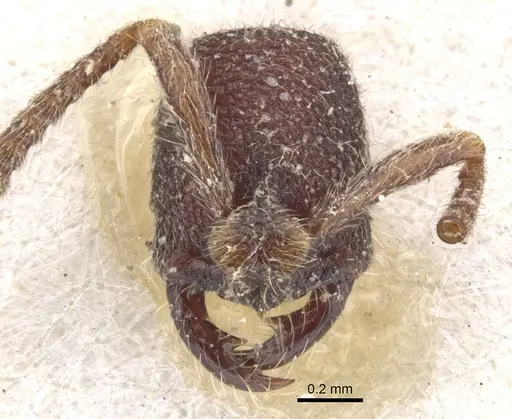
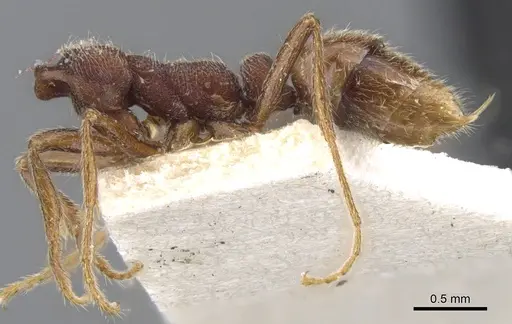
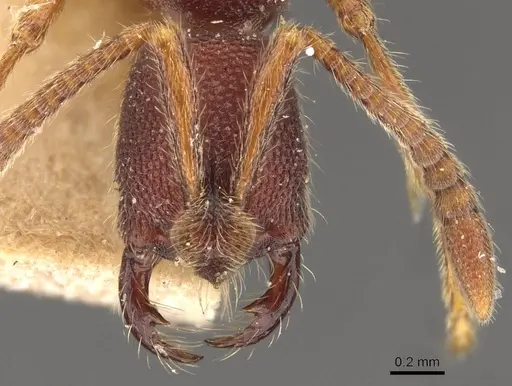
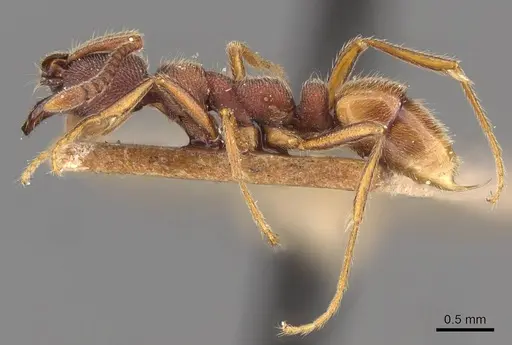
Simopelta jeckylli is a medium to large Ponerine ant, with workers measuring 4–5 mm in total length . They are dark reddish-brown to black, typically with a reddish-brown abdomen and lighter legs and antennae . Their most striking feature is the head, which is covered in large, coarse punctures (pits) that are actually bigger than the tiny eyes. A forward-pointing spine projects from the front of the clypeus (the plate above the mandibles), helping distinguish them from similar species . The body has a rough, pitted texture on the head, thorax, and petiole, while the abdomen is smooth and glossy . This ant is extremely rare in the wild, with only a handful of workers ever collected from scattered sites across the Amazon basin in Brazil and Ecuador . Observations suggest they move in organized foraging columns under forest litter, rather than wandering randomly . As a Ponerine ant, they carry a functional stinger and are predatory.
Quick Summary
- Difficulty: Expert
- Origin & Habitat: Found in the Neotropical region of South America – specifically Brazil (Rondônia, Pará, and Mato Grosso states) and Ecuador (Orellana province) at low elevations around 250 m [1][2][4]. They live under forest litter in humid tropical rainforest.
- Colony Type: Unknown colony structure. Only the worker caste has been described, queens and males remain undescribed in scientific literature [3].
- Size & Growth:
- Queen: Unknown – queen caste has not been described [3]
- Worker: 4–5 mm total length [1]
- Colony: Unknown – only small numbers of workers have ever been collected (maximum 13 workers in a single sample) [2]
- Growth: Unknown
- Development: Unknown – direct data not available, related Ponerine ants typically take 2–4 months from egg to worker at warm temperatures (No data exists on development time for this species.)
- Antkeeping:
- Temperature: Estimated 22–26 °C based on its tropical lowland rainforest habitat. Provide a temperature gradient within the nest so workers can choose their preferred zone.
- Humidity: High humidity required – think of a rainforest floor. Keep the nest substrate consistently moist but not waterlogged, and ensure good ventilation to prevent mold growth.
- Diapause: Unlikely – as a tropical species from the Amazon basin, it probably does not require a diapause period. Maintain warm conditions year-round.
- Nesting: Natural nests are under forest litter. In captivity, provide a dark, humid setup with a plaster or natural soil nest that holds moisture well. Avoid acrylic nests – use Y-tong, plaster, or 3D-printed alternatives.
- Behavior: Likely active foragers that hunt small invertebrates. Ponerine ants are typically predatory and will actively search for prey. They possess functional stingers and may use them defensively. Workers are medium-sized and likely capable of escaping enclosures – use standard escape prevention. Their tiny eyes suggest they rely more on chemical cues than vision for navigation.
- Common Issues: very limited availability – this species is essentially unavailable in the antkeeping hobby, no established captive breeding protocols exist because the queen has never been described, lack of baseline care information makes successful keeping extremely challenging, wild-caught workers may carry parasites or diseases, with no knowledge of how they adapt to captivity, high humidity can lead to mold problems if ventilation is poor
Species Identification and Appearance
Simopelta jeckylli workers stand out from other Simopelta species mainly because of the large, coarse punctures on the head – these pits are bigger than the tiny eyes [1]. A forward-pointing spine on the clypeus (the plate above the mandibles) also helps separate them from look‑alikes such as Simopelta oculata [1].
Workers are 4–5 mm long (medium to large for the genus). Their colour ranges from dark reddish‑brown (with a reddish-brown abdomen and lighter legs and antennae) to nearly black [1]. The head, thorax, and petiole are covered in coarse punctures, while the mandibles, antennae, and gaster (abdomen) are moderately to strongly shiny – the gaster is smooth and glossy [1]. Short, erect hairs are present on the head, antennae, body, legs, and abdomen.
The eyes are extremely small, only 0.02 mm in diameter, about the same size or slightly smaller than the surrounding punctures [1]. This suggests the ants rely more on chemical and touch cues than on vision for foraging and navigating.
Distribution and Habitat
Simopelta jeckylli is known from a very small number of collections scattered across the Neotropics. The original type specimens came from Brazil's Rondônia state (formerly Mato Grosso) at the Madeira‑Mamoré train line [1]. Other records include Ecuador's Orellana province (Yasuni area) [1].
More recent sampling has turned up a few more workers: 13 workers were collected in 2014 near Porto Velho, Rondônia, a single worker was found in Tailândia, Pará state (eastern Brazilian Amazon), and one worker was collected in Juara, Mato Grosso, Brazil in 2015 [2][4]. These scattered finds confirm the species is extremely rare across its range [2].
All collections come from lowland tropical rainforest at roughly 250 m elevation [1]. Workers were found under forest litter, moving in what appeared to be organised foraging columns – heading in a definite direction rather than wandering randomly [1][3].
Challenges in Captive Care
Simopelta jeckylli is an extremely challenging species to keep – mostly because we know almost nothing about its basic biology. The queen caste has never been described, so there is no known method for breeding or establishing a colony in captivity [3]. All the specimens that exist are wild‑caught workers.
Without any information about the queen, we can't say whether colonies have one queen or many, how queens found new colonies (whether they seal themselves in or need to forage during founding), or what typical colony size looks like. The very small numbers of workers collected in any one sample hint that colonies may be small, but that's only a guess.
For these reasons, Simopelta jeckylli is not recommended for antkeepers. It is essentially unavailable in the hobby, and even if you managed to collect workers, we lack the fundamental knowledge needed to keep them alive and reproducing. General Ponerine biology can offer rough guidance, but this species remains a complete mystery in captivity.
Taxonomic History
The species was first described as Simopelta jeckylli by William Mann in 1916,based on workers collected from Brazil's Madeira‑Mamoré region [3]. The type series consisted of workers gathered under forest litter in 1911.
Over time, the species was moved between genera. Mann himself transferred it to the subgenus Simopelta in 1922,and Baroni Urbani later placed it back in Belonopelta in 1975. Finally, Bolton's 1995 catalogue settled it in the genus Simopelta, where it remains today [3].
Mackay and Mackay (2008) gave a full redescription, designating a lectotype and 48 paralectotypes from the original series [1]. Their work highlighted the large head punctures that set this species apart from other Simopelta. So far, only the worker caste has been found – no queens, males, or other reproductives have ever been described.
Frequently Asked Questions
Can I keep Simopelta jeckylli ants?
This species is not recommended for antkeepers. The queen has never been described, so no captive breeding protocol exists. It's also extremely rare in the wild, with only a handful of records across the Amazon – collection would be impractical and could harm wild populations. Unless you're a researcher with permits, this ant is essentially unavailable.
What do Simopelta jeckylli eat?
Their exact diet is unknown, but as a Ponerine ant they are predatory and likely hunt small invertebrates. Related species in the genus probably accept small live prey such as fruit flies, pinhead crickets, and other tiny arthropods. Without confirmed records, offer small live prey and observe acceptance.
How big do Simopelta jeckylli colonies get?
Unknown. Only small numbers of workers have ever been collected (maximum 13 in one sample), which suggests colonies may be small. Without queen information, we cannot determine typical colony size or growth patterns.
What temperature do Simopelta jeckylli need?
Estimated 22–26 °C based on their tropical lowland rainforest habitat in Brazil and Ecuador. This is an educated guess – no specific temperature data exists. Provide a temperature gradient so workers can self‑select their preferred zone.
Are Simopelta jeckylli good for beginners?
No. This species is not suitable for beginners or even experienced antkeepers because of the complete lack of basic biological information. The queen has never been described, so captive breeding is impossible. All known specimens come from wild sampling, not from captive colonies.
Where is Simopelta jeckylli found?
They live in the Amazon basin of South America – specifically Brazil (Rondônia, Pará, and Mato Grosso states) and Ecuador (Orellana province). All collections come from lowland tropical rainforest at around 250 m elevation, under forest litter.
Why is Simopelta jeckylli so rare?
This species appears genuinely uncommon in the wild. Despite targeted ant surveys throughout the Amazon, only a handful of workers have ever been collected across multiple decades and locations. This could mean they have very small, localized populations, or they live in microhabitats that are hard to sample (deep leaf litter, underground).
Report an Issue
The current care sheet is based fully on literature. See inconsistencies, or something that's incorrect? Please , it will be resolved after review from an admin. Contributing to the blogs tab also helps providing information, to make us be able to further improve the caresheets. Thank you for your support!
References

This caresheet is licensed under CC BY-SA 4.0 .
Community Blogs
CASENT0902466
View on AntWeb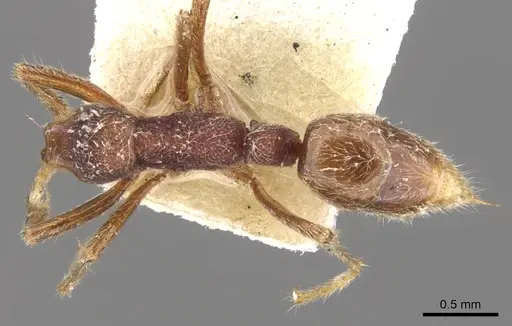
CASENT0907295
View on AntWeb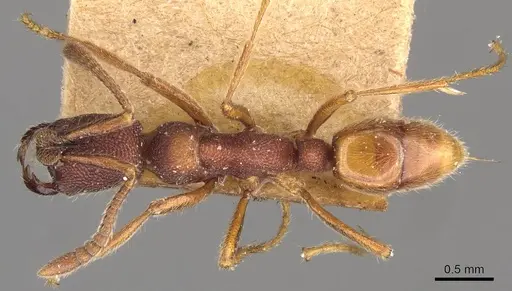
Literature
Loading distribution map...Loading products...