
Rostromyrmex pasohensis
- Sci. Name
- Rostromyrmex pasohensis
- Tribe
- Crematogastrini
- Subfamily
- Myrmicinae
- Author
- Rosciszewski, 1994
- Distribution
- Found in 2 countries
Introduction
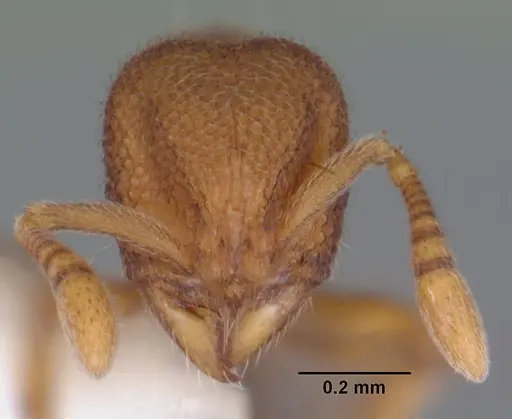
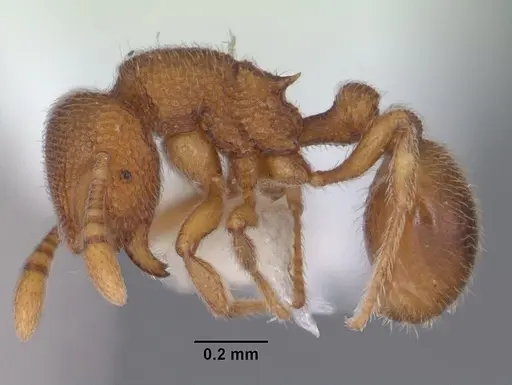
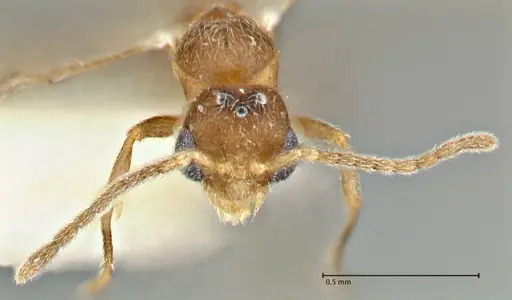
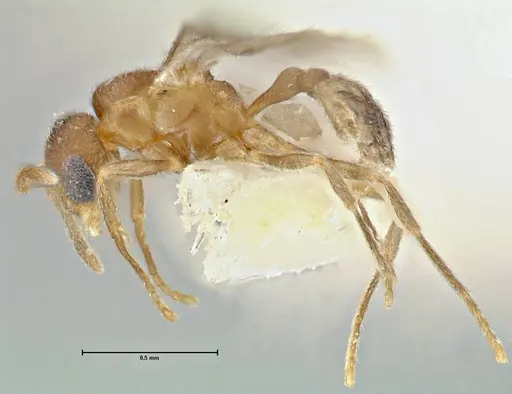
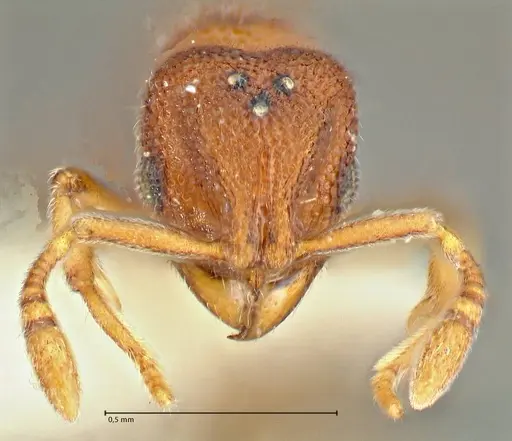
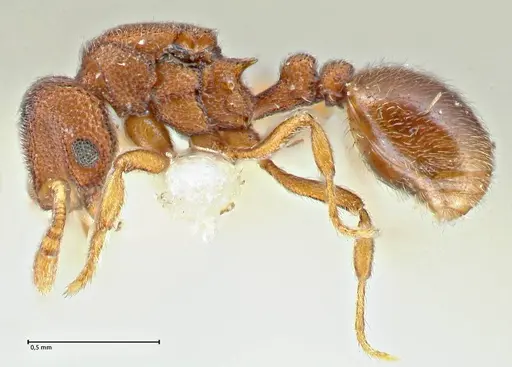
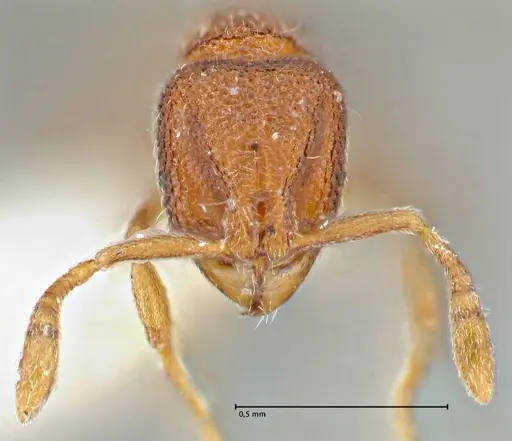
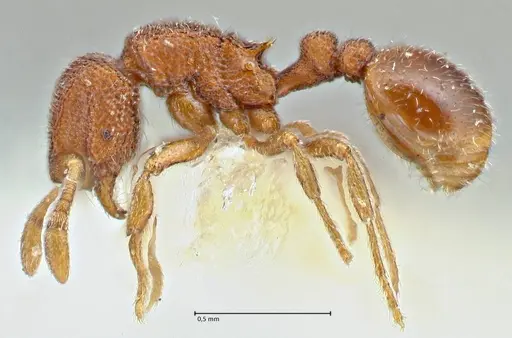
Rostromyrmex pasohensis is a rare ant from the rainforests of Malaysia and Singapore. Workers measure 2.10-2.17 mm, queens 2.34 mm, and males 1.74 mm . They have a uniformly dull red color and blend into the forest floor. This species is the only member of the genus Rostromyrmex and is the sister lineage to all other Crematogastrini ants, making it evolutionarily important . They live in the leaf litter layer and nest in strongly rotten wood on the ground, forming very small colonies of fewer than ten workers and one queen . Their eyes are strongly reduced, and they move slowly, so they are easily overlooked.
Quick Summary
- Difficulty: Expert
- Origin & Habitat: Lowland rainforests of Malaysia and Singapore (Indomalaya region). Found in the leaf litter layer on the forest floor, nesting in strongly rotten wood [1][2].
- Colony Type: Small monogynous (single-queen) colonies. Typically contain 3-6 workers plus a queen and some brood [1].
- Size & Growth:
- Antkeeping:
- Temperature: Tropical rainforest species, keep warm at 24-28 °C. Maintain stable temperatures without major fluctuations.
- Humidity: Requires high humidity consistent with rainforest leaf litter. Keep the nest substrate consistently moist but not waterlogged.
- Diapause: Unknown, as a tropical species, they likely do not require formal hibernation but may have seasonal activity patterns.
- Nesting: In nature, they nest in strongly rotten wood on the forest floor. In captivity, use plaster, Y‑tong (AAC), soil, or 3D‑printed nests with very narrow chambers scaled to their tiny size. The nest must retain moisture well. Avoid acrylic nests.
- Behavior: Extremely cryptic and slow‑moving. Workers have strongly reduced eyes, so they rely on chemical cues rather than vision. They are peaceful and non‑aggressive. Their primary defense is smearing venom with a modified stinger, not piercing. Escape prevention is critical due to their tiny size (under 2.5 mm), they can slip through standard mesh barriers.
- Common Issues: no established feeding protocol, captive ants refused both honey and dead insects, colony sizes are extremely small in the wild, making establishment difficult, tiny size means excellent escape prevention is essential, the single documented captive colony died, indicating significant husbandry challenges, very poorly known species with no established care guidelines
Discovery and Taxonomy
Rostromyrmex pasohensis was described in 1994 by Rosciszewski from specimens collected in the Pasoh Forest Reserve in Negeri Sembilan, West Malaysia [1]. The genus is monotypic, it contains only this one species. Phylogenetic research shows that Rostromyrmex is the sister lineage to all remaining Crematogastrini, meaning it split off before the tribe diversified into hundreds of other species [2]. The genus name means 'beak ant' (rostro = beak, myrmex = ant), referring to the distinctive rostrum (snout‑like projection) on its head.
Natural History and Nesting
In the wild, these ants live exclusively in the leaf litter layer of lowland rainforest. They nest in strongly rotten wood pieces on the ground. The original specimens were collected from beneath dead wood, with one colony containing 2 workers and 1 queen, and another containing 5 workers,1 queen, and some brood [1]. Workers have strongly reduced eyes located about one‑third of head length from the mandibles, suggesting they rely mainly on chemical and tactile senses, typical for cryptobiotic leaf litter species. The colony appears monogynous, with a single queen per nest [1].
Feeding Challenges
The diet of Rostromyrmex pasohensis is completely unknown, which is one of the biggest obstacles to keeping this species. In the only documented captive attempt, the colony died during the author's absence and specimens were partially destroyed by mold. Worse, the ants refused both honey and dead insects when offered [1]. This suggests they may have an extremely specialized diet, possibly tiny soil micro‑arthropods or fungi. Given the lack of feeding data, any attempt to keep this species is experimental and should be considered extremely advanced husbandry.
Housing and Care
To mimic their natural habitat, damp, dark rainforest leaf litter, use plaster, Y‑tong (AAC), soil, or 3D‑printed nests with chambers scaled to their 2 mm size. Standard test tubes may be too large, consider narrow chambers. The nest must hold high humidity without waterlogging. Temperature should be 24-28 °C. However, until a reliable feeding method is found, this species cannot be kept responsibly. The complete lack of information on what they eat makes husbandry impossible at this time. [1]
Frequently Asked Questions
What do Rostromyrmex pasohensis ants eat?
Their diet is completely unknown. In the only documented captivity attempt, they refused both honey and dead insects [1]. They may need tiny prey or fungi not yet identified.
How big do Rostromyrmex pasohensis colonies get?
Colonies are very small in the wild, typically containing 3-6 workers plus a queen and brood [1]. Even established colonies likely stay under 10 workers.
Can I keep Rostromyrmex pasohensis as a pet?
This species is not recommended for antkeeping. It is extremely difficult, the only documented captive colony died, and no feeding protocol exists [1]. Also, it is rare in the wild and export may be restricted.
Where does Rostromyrmex pasohensis live?
It is found only in Malaysia and Singapore, in lowland rainforest leaf litter, notably in the Pasoh Forest Reserve and surrounding areas [1][2].
How big are Rostromyrmex pasohensis ants?
Workers measure 2.10-2.17 mm, queens 2.34 mm, and males about 1.74 mm [1].
Do Rostromyrmex pasohensis ants sting?
They have a modified stinger used to smear venom, not to inject it, so they are not aggressive and rarely cause a sting. They are docile and avoid confrontation [1].
How many queens does a Rostromyrmex pasohensis colony have?
They appear to be monogynous, each nest contains one queen [1].
What temperature do Rostromyrmex pasohensis need?
As a tropical rainforest species, they likely need warm temperatures around 24-28 °C. No specific requirements have been documented.
Why is Rostromyrmex pasohensis important?
It is evolutionarily significant, the sister lineage to all other Crematogastrini ants, representing an ancient branch [2]. It is also monotypic, with only one species in the genus.
Are Rostromyrmex pasohensis endangered?
Their conservation status has not been assessed. They are known from few locations in Malaysia and Singapore and live in rainforest habitats facing deforestation pressure [1].
Report an Issue
The current care sheet is based fully on literature. See inconsistencies, or something that's incorrect? Please , it will be resolved after review from an admin. Contributing to the blogs tab also helps providing information, to make us be able to further improve the caresheets. Thank you for your support!
References

This caresheet is licensed under CC BY-SA 4.0 .
Community Blogs
CASENT0106221
View on AntWeb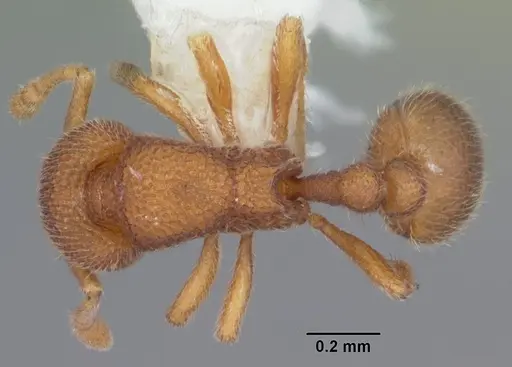
CASENT0106343
View on AntWeb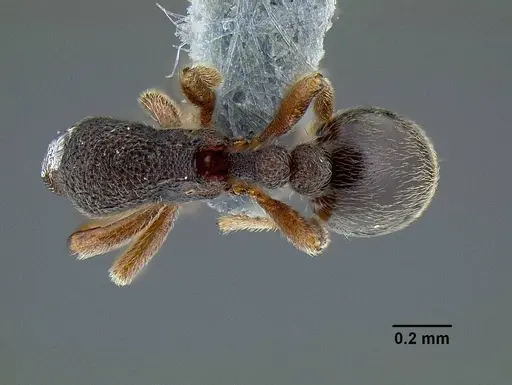
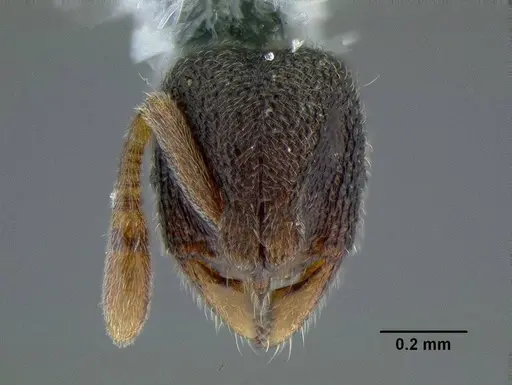
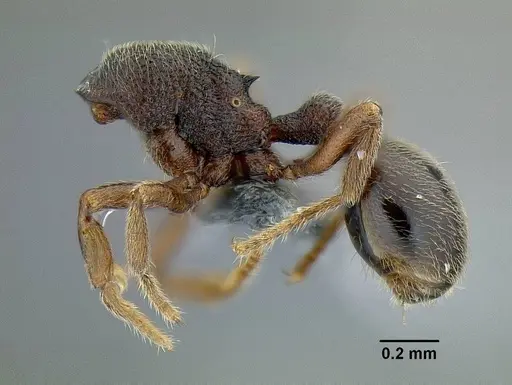
FOCOL2979
View on AntWeb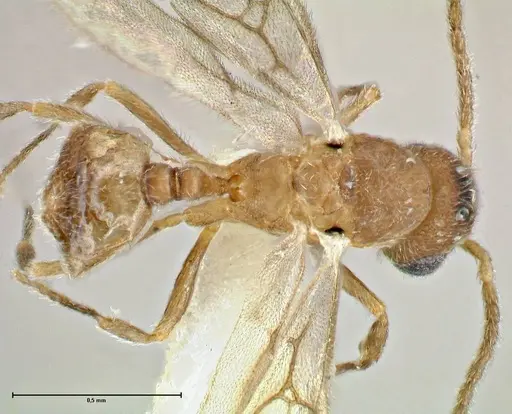
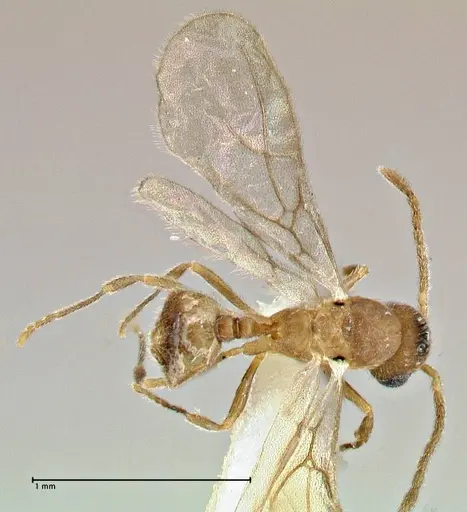
FOCOL2980
View on AntWeb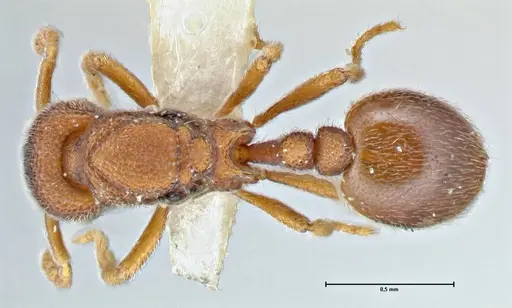
FOCOL2981
View on AntWeb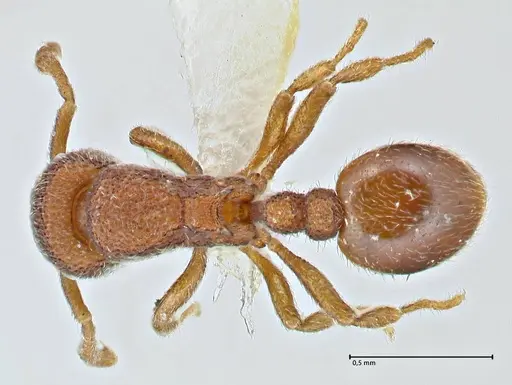
Literature
Loading distribution map...Loading products...