
Rogeria micromma
- Sci. Name
- Rogeria micromma
- Tribe
- Solenopsidini
- Subfamily
- Myrmicinae
- Author
- Kempf, 1961
- Distribution
- Found in 5 countries
Introduction
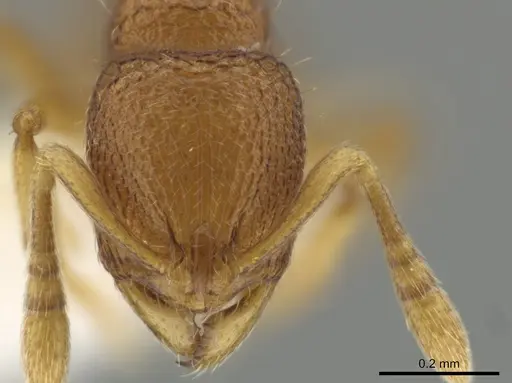
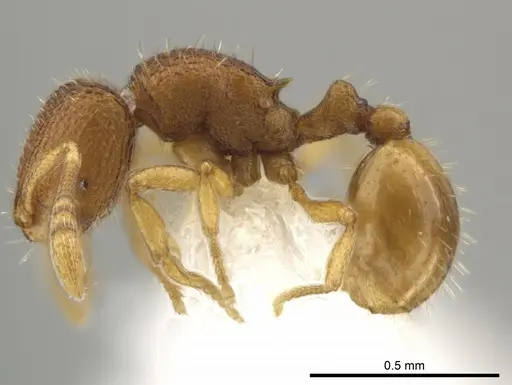
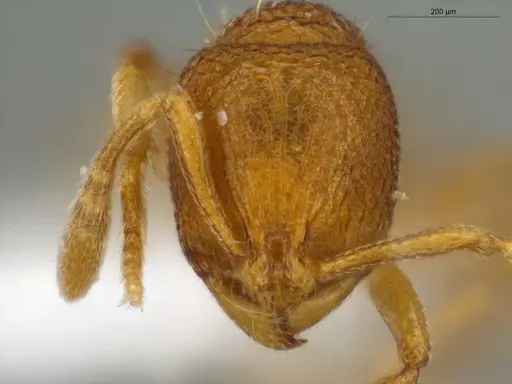
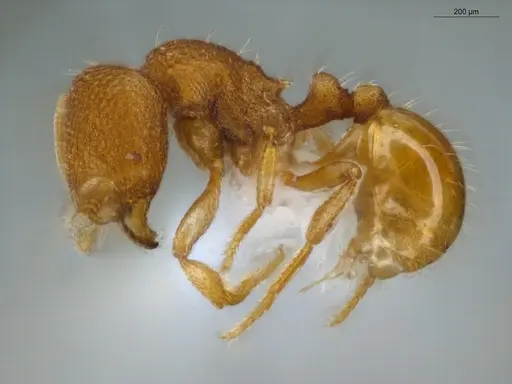
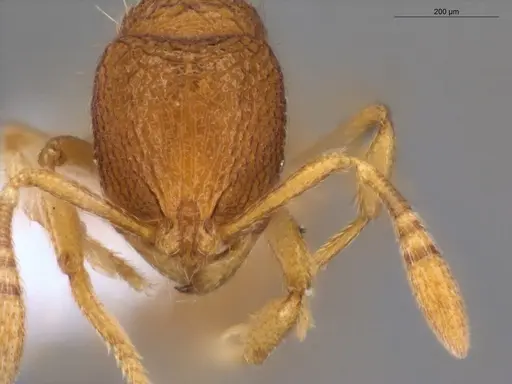
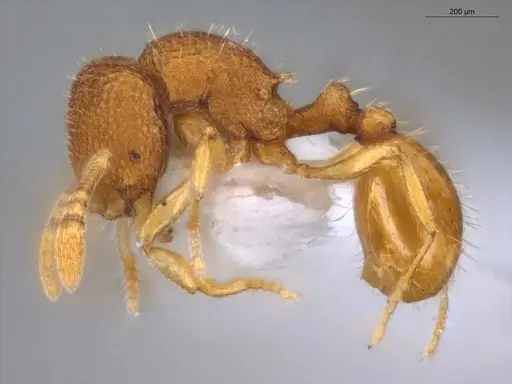
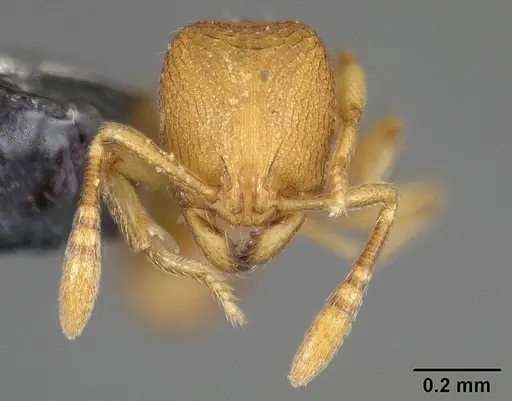
Rogeria micromma is a tiny ant measuring just 1.7-1.8mm in total length . Workers are yellowish-brown with dense microareolate sculpture that gives them a dull, granular appearance. They have tiny eyes with only 2-5 facets and sport 8-10 pairs of erect hairs on the mesosoma . This species lives in lowland rainforests of northern South America, with confirmed records from Brazil, Colombia, Ecuador, French Guiana, Guyana, and Suriname . You will find them in leaf litter and rotting wood from primary forest . The natural history of this species remains largely unknown - researchers have mostly collected workers, with only a single dealate queen ever documented .
Quick Summary
- Difficulty: Expert
- Origin & Habitat: Lowland rainforests of northern South America (Guyana, Suriname, Brazil, Colombia, Ecuador, French Guiana). Found in leaf litter and rotting wood in primary forest [2][3].
- Colony Type: Unconfirmed, only workers and a single dealate queen have been collected. Colony structure and queen number unknown [2][4].
- Size & Growth:
- Queen: Unknown, one dealate queen reported but size not documented [4]
- Worker: 1.7-1.8mm total length [1]
- Colony: Unknown, only isolated workers collected
- Growth: Unknown
- Development: Unknown, no captive breeding data exists for this species (No observations of brood or development have ever been recorded.)
- Antkeeping:
- Temperature: 24-28°C, tropical rainforest species requires warm, stable conditions. Provide a gradient using a heating cable on one side of the nest [2].
- Humidity: High humidity essential. Keep the nest substrate consistently moist but not waterlogged. Balance with good ventilation to prevent mold [1].
- Diapause: No, tropical species, no dormancy needed
- Nesting: Y-tong (AAC) nest with fine chambers or a plaster/soil nest with appropriately scaled tunnels. Provide leaf litter and small pieces of rotting wood in the outworld to simulate natural environment [1].
- Behavior: Behavior is unstudied in captivity. Based on their tiny size and Solenopsidini tribe membership, they are likely shy and secretive, avoiding confrontation with larger ants. Escape prevention is absolutely critical, at 1.7-1.8mm they can squeeze through impossibly small gaps. They have a functional stinger (subfamily Myrmicinae, tribe Solenopsidini).
- Common Issues: escape prevention is critical, they are tiny enough to escape through standard barrier gaps, no captive breeding data exists, establishing a colony may be extremely difficult, high humidity requirements can lead to mold if ventilation is inadequate, lack of natural history data means trial-and-error is required for feeding and care, wild-caught colonies may contain parasites that can decimate the colony
Housing and Escape Prevention
Housing Rogeria micromma is tricky due to their extreme small size of just 1.7-1.8mm [1]. Standard ant-keeping equipment may allow these tiny ants to escape. You must use excellent escape prevention, their size alone makes them flight risks. Use test tubes with firmly packed cotton plugs. If using formicaria, seal all connections and gaps with barriers like Fluon on the inner rim of the outworld lid. Even a millimeter gap is enough for them to squeeze through. Consider nests with no larger chambers than necessary, these tiny ants feel secure in tight spaces. The outworld should have fine mesh covering any ventilation holes.
Feeding and Diet
The diet of Rogeria micromma is completely unstudied. Being a member of the Solenopsidini tribe, they are likely omnivorous with predatory tendencies. In captivity, start with small live prey, pinhead crickets, fruit flies, and tiny arthropods like springtails are appropriate sizes. Since they are so small, even springtails may need to be pre-killed or offered as very small pieces. Sugar sources may be accepted, offer a drop of honey water or sugar water, but monitor to avoid mold. Remove any uneaten prey within 24-48 hours to prevent mold in the humid conditions they require.
Temperature and Humidity
As a tropical lowland rainforest species from northern South America, Rogeria micromma requires warm and humid conditions year-round [2]. Maintain temperatures around 24-28°C, with a slight gradient so workers can self-regulate. Place a heating cable on top of the nest, not underneath, to avoid excessive drying. High humidity is essential, keep the nest substrate consistently damp but never waterlogged. If you see standing water, you have overdone it. These ants live in humid rainforest leaf litter where moisture is constant. Inadequate humidity will stress and kill them quickly. However, balance this with adequate ventilation to prevent mold.
Acquiring This Species
Acquiring Rogeria micromma is extremely difficult since they have never been successfully bred in captivity and no established colonies exist in the ant-keeping hobby [2][4]. The only specimens ever collected are workers and a single dealate queen from field samples in South America [2][4]. No one has documented nuptial flights or colony founding behavior. If you obtain wild-caught specimens, they will likely be lone workers or small colony fragments. Be extremely cautious, wild-caught colonies often contain parasites that can wipe out your entire collection. Also, ensure you comply with all local laws regarding ant collection and export. Given the complete lack of captive breeding success and natural history data, this species is truly expert-level territory and should only be attempted by those with extensive experience keeping difficult, data-deficient species.
Understanding the Challenge
Rogeria micromma represents one of the most challenging ant species to keep simply because we know almost nothing about them. The scientific literature explicitly states that their natural history remains unknown [2]. This means you will be pioneering all aspects of captive care through careful observation and experimentation. There are no established protocols, no breeding guides, and no experienced keepers to consult. Every aspect of their care, from founding to feeding to colony growth, will require your own research and adaptation. This is not a species for beginners or even intermediate ant-keepers. You should only attempt this species if you have a genuine research interest and the patience to document your findings. Success with this species would be a genuine contribution to ant-keeping knowledge.
Frequently Asked Questions
How long does it take for Rogeria micromma to go from egg to worker?
This is completely unknown. No eggs, larvae, or pupae have ever been documented for this species. There is no captive breeding data whatsoever. Any timeline would be pure speculation [2].
Can I keep Rogeria micromma in a test tube?
Yes, a test tube can work as a founding setup, but you must use excellent escape prevention. At 1.7-1.8mm, these ants are tiny enough to potentially squeeze past standard cotton plugs. Use tightly packed cotton and consider additional barriers [3].
Are Rogeria micromma good for beginners?
Absolutely not. This species is expert-level only. There is zero captive breeding data, no established care protocols, and colony structure is unknown. You would be pioneering all aspects of their care through experimentation [2].
How big do Rogeria micromma colonies get?
Unknown. Only isolated workers and a single dealate queen have been collected in the wild. No one has documented colony size or structure for this species [2][4].
What do Rogeria micromma eat?
Unknown with certainty, but likely small live prey and sugar sources. Start with tiny live prey like springtails or fruit flies, and offer a drop of honey water or sugar water. Monitor acceptance and remove uneaten food promptly.
Do Rogeria micromma need hibernation?
No. This is a tropical rainforest species from northern South America that does not experience cold winters. No diapause or hibernation period is required [2].
Can I keep multiple queens together?
We do not know. Only one dealate queen has been documented, there is no information on colony structure, queen behavior, or whether multiple queens are tolerated [2][4].
Why are my Rogeria micromma dying?
Without established care protocols, diagnosing problems is extremely difficult. Common issues include: escape through tiny gaps, humidity too low, temperature too low, mold from poor ventilation, or stress from handling. Document your conditions carefully and adjust incrementally.
What is the best nest type for Rogeria micromma?
A Y-tong (AAC) nest with very fine chambers, or a plaster/soil nest with appropriately scaled tiny tunnels, works best. The chambers should be small and tight, these tiny ants feel secure in compact spaces. Ensure the nest material can hold moisture well.
Where is Rogeria micromma found in the wild?
In lowland rainforests of northern South America, specifically Guyana, Suriname, Brazil, Colombia, Ecuador, and French Guiana. They are found in leaf litter and rotting wood samples from primary forest [2][4].
Is Rogeria micromma aggressive?
Unknown. Based on their tiny size and secretive leaf-litter lifestyle, they are likely shy and non-aggressive, avoiding confrontation with larger ants. However, no behavioral observations in captivity or the wild have been documented [2].
Report an Issue
The current care sheet is based fully on literature. See inconsistencies, or something that's incorrect? Please , it will be resolved after review from an admin. Contributing to the blogs tab also helps providing information, to make us be able to further improve the caresheets. Thank you for your support!
References

This caresheet is licensed under CC BY-SA 4.0 .
Community Blogs
CASENT0646090
View on AntWeb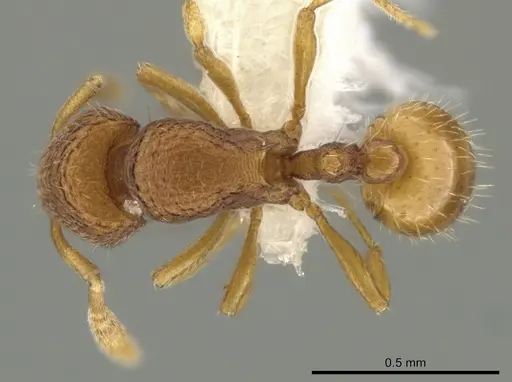
ECOFOG-CSG15-0265-15
View on AntWeb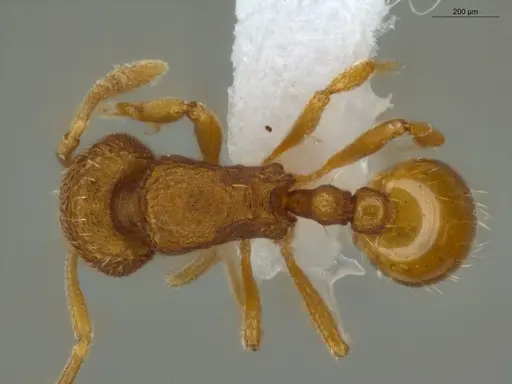
ECOFOG-TR17-0196-04
View on AntWeb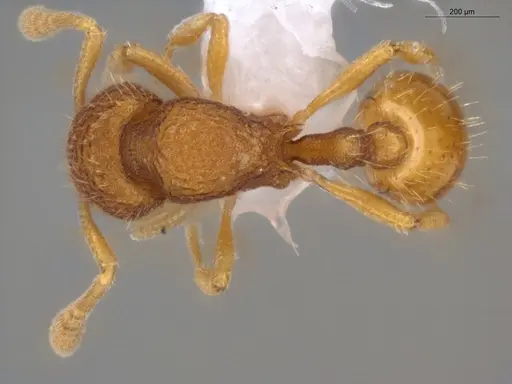
USNMENT00446021
View on AntWeb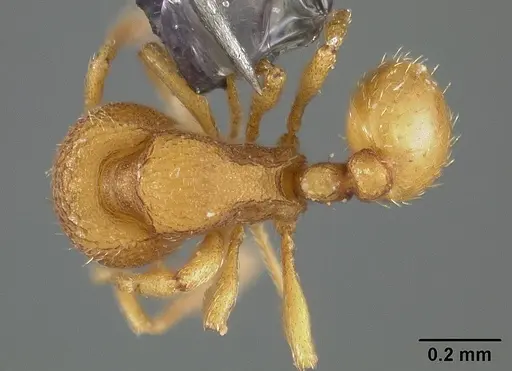
Literature
Loading distribution map...Loading products...