
Rogeria merenbergiana
- Sci. Name
- Rogeria merenbergiana
- Tribe
- Solenopsidini
- Subfamily
- Myrmicinae
- Author
- Kugler, 1994
- Distribution
- Found in 1 countries
Introduction
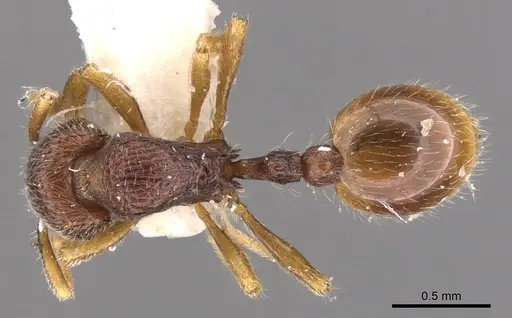
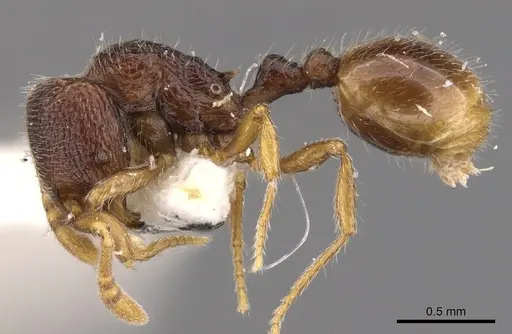
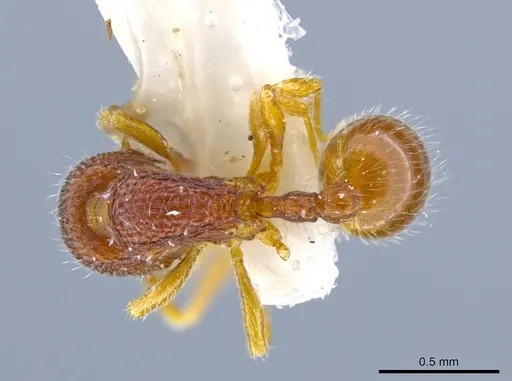
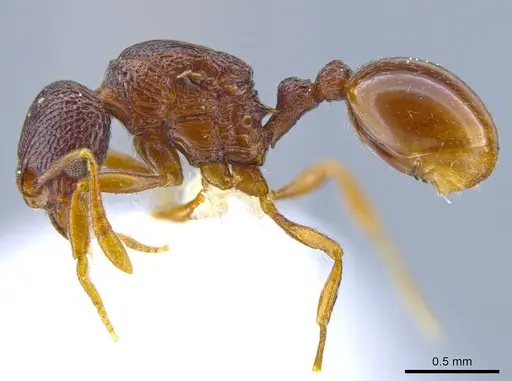
Rogeria merenbergiana is a tiny ant native to the high Andes of southern Colombia and Ecuador, found at elevations between 1300-2300 meters . Workers measure just 2.6-3.1mm in total length, making them one of the smaller ant species kept in captivity. Queens are slightly larger at 3.3-3.7mm. These ants have a dark reddish-brown to yellowish-brown coloration with lighter appendages. They belong to the creightoni species group within the genus Rogeria, characterized by their short propodeal spines and distinct metanotal profile . This species is rarely kept in captivity and has never been documented in the antkeeping hobby. They inhabit moist cloud forests and bamboo-moss forests at high elevations, where temperatures remain cool year-round. A colony was found nesting in a rotten log in a pasture at 2300m, suggesting they prefer damp, decaying wood as nesting material . Their tiny size and specialized high-elevation habitat make them a challenging species for advanced antkeepers interested in something truly unusual.
Quick Summary
- Difficulty: Expert
- Origin & Habitat: High elevations (1300-2300m) in the Andes mountains of southern Colombia and Ecuador. Found in moist broadleaf cloud forest and bamboo-moss forest [1].
- Colony Type: Colony structure is unconfirmed. No data on whether they are single-queen (monogyne) or multi-queen (polygyne) colonies. Males have never been collected, so nuptial flight timing and behavior are unknown [1].
- Size & Growth:
- Queen: 3.3-3.7mm [1]
- Worker: 2.6-3.1mm [1]
- Colony: Unknown, no colony size data exists for this species
- Growth: Unknown, no development data exists for this species
- Development: Unknown, no direct measurements exist. Based on their tiny size and high-elevation habitat, development may be relatively fast (4-8 weeks at optimal temperature) but this is entirely estimated. (No research has documented their development timeline.)
- Antkeeping:
- Temperature: Keep cool, around 18-22°C. This is estimated from their high-elevation cloud forest habitat [1]. Avoid temperatures above 25°C. A cooling setup may be necessary.
- Humidity: High humidity required, similar to their moist cloud forest habitat. Keep substrate consistently damp but not waterlogged. Ensure good ventilation to prevent mold [1].
- Diapause: Unknown, no data exists on seasonal dormancy. High-elevation tropical species may experience some temperature variation, but specific requirements are unconfirmed.
- Nesting: In nature, they nest in rotten logs [2]. In captivity, use a moistened plaster nest or test tube setup with damp substrate. Due to their tiny size, chambers must be very small. Avoid acrylic nests.
- Behavior: No captive observations exist. As a member of the Solenopsidini tribe, they have a stinger, but their tiny size makes it negligible to humans. They are likely shy and non-aggressive. Escape prevention is critical due to their small size.
- Common Issues: escape prevention is critical, their tiny size means they can escape through gaps invisible to the human eye, no captive care information exists, all advice is estimated from habitat and related species, high humidity requirements can lead to mold problems if ventilation is poor, cool temperature requirements may be difficult to maintain in standard rooms without cooling equipment, slow or failed colony growth is likely since nothing is known about their dietary needs or development requirements
Natural History and Distribution
Rogeria merenbergiana is endemic to the high Andes, found only in southern Colombia and Ecuador at elevations between 1300-2300 meters [1]. This makes them one of the more geographically restricted ant species in the hobby. They have been collected from litter samples in moist broadleaf cloud forest and bamboo-moss forest, indicating they prefer damp, shaded microhabitats. The type colony was found in a rotten log in a pasture at 2300m elevation in the Huila department of Colombia, near Finca Merenberg [2]. Another population was documented in Las Cuevas de los Guacharos National Park at 1900-2300m [2].
The high elevation habitat is significant for antkeeping because these ants are adapted to cool, humid conditions year-round. Unlike most tropical ants that prefer warmth, R. merenbergiana likely struggles in temperatures above 25°C. The cloud forest environment also means they are accustomed to constant moisture and minimal temperature swings. Their restricted geographic range suggests they may have specialized ecological requirements that are difficult to replicate in captivity.
Identification and Morphology
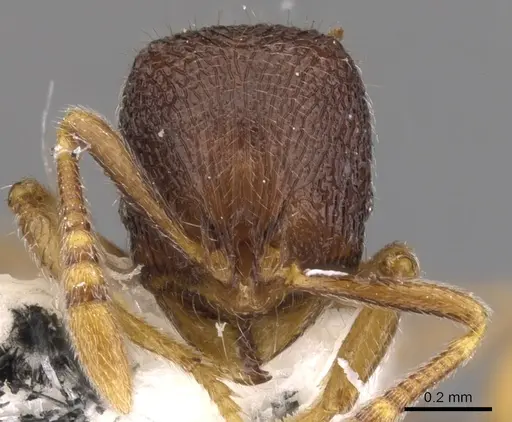
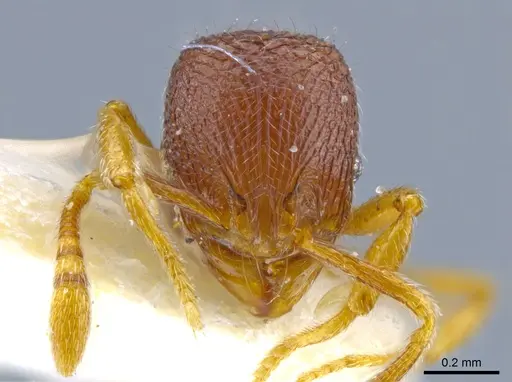
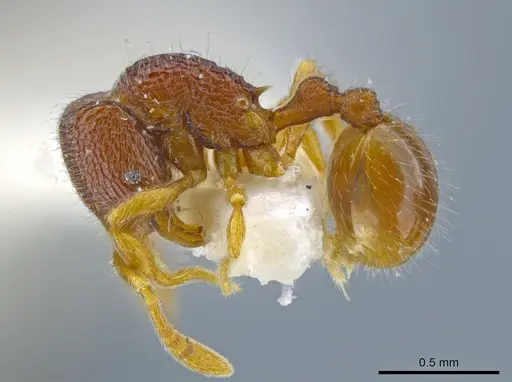
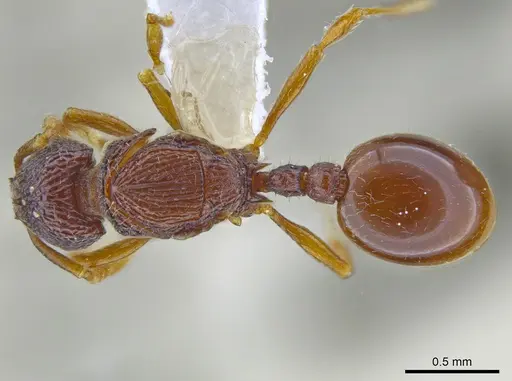
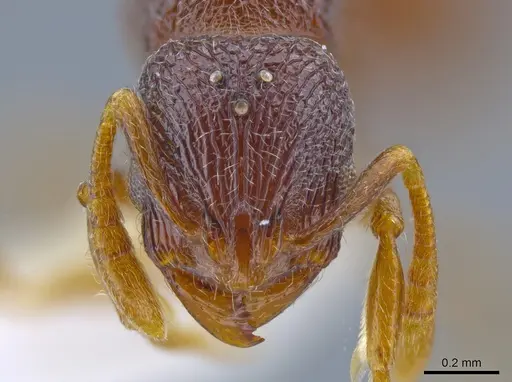
Workers of Rogeria merenbergiana are tiny, measuring only 2.6-3.1mm in total length [1]. Queens are larger at 3.3-3.7mm. They have short, straight propodeal spines, a distinct metanotal profile that creates a step in the mesosoma outline, and longitudinally rugose sculpture on the sides of the head [1].
They can be distinguished from similar species like R. unguispina (found in Venezuela mountains) by their shorter, straighter propodeal spines and less elongate eyes. R. alzatei from Colombia is usually smaller and lacks erect hairs on the scapes. The palpal formula is 3,2,meaning they have three maxillary and two labial palpal segments [1]. The small eye size (only 8-14 facets in workers) is another identifying feature.
Housing and Nesting
In their natural habitat, R. merenbergiana nests in rotting logs and decaying wood in moist forest environments [2]. For captivity, a naturalistic setup with damp wood pieces or a well-moistened plaster nest would likely work best. Their tiny size means chambers and passages must be very small, standard formicarium designs may be too large. Test tube setups can work if kept humid, but the small colony size means they may not need much space initially.
Because they come from a high-humidity cloud forest environment, the nest substrate should remain consistently damp but never waterlogged. Good ventilation is essential to prevent mold growth while maintaining humidity. Avoid desiccation, these ants have never been documented surviving dry conditions. The nest should be placed in a cool area of your setup, away from direct heat sources or sunlight that could cause temperature spikes.
Temperature and Seasonal Care
This is perhaps the most critical aspect of keeping Rogeria merenbergiana. Being a high-elevation cloud forest species, they require cool temperatures, likely in the range of 18-22°C. This is significantly cooler than most ant species kept in captivity. Standard room temperatures (20-25°C) may actually be too warm, and temperatures above 25°C could be lethal.
If you live in a warm climate, you may need to use a cooling setup, air conditioning, or place the colony in the coolest room of your home. Never expose them to direct sunlight or heat sources. If you notice a slowdown in activity during cooler months, a slight temperature drop (around 15-18°C) might be beneficial, but this is entirely speculative. No research supports a diapause requirement for this species. Monitor colony behavior, if workers become sluggish, the temperature may be too low, if they avoid the nest area, it may be too warm. [1]
Feeding and Diet
No specific dietary information exists for Rogeria merenbergiana. As members of the Solenopsidini tribe, they likely have a typical myrmicine diet: small insects and other arthropods for protein, plus honeydew or sugar sources. However, being tiny forest-floor ants, their prey items would be extremely small, springtails, booklice, and minute soil mites would be appropriate size-wise.
Given their unknown requirements, start with small live prey items appropriate to their size. Sugar water or honey may be accepted but should not be relied upon. Because nothing is known about their captive diet, be prepared for experimentation. The high-elevation forest floor environment suggests they are opportunistic foragers that likely consume small invertebrates and tend aphids or scale insects for honeydew. Feed small amounts and remove uneaten prey to prevent mold in the humid setup.
Challenges and Why This Species Is Expert-Only
Rogeria merenbergiana is genuinely one of the most challenging ant species to keep because absolutely no captive care information exists. Every aspect of their husbandry must be estimated from their natural habitat and what is known about related species. This makes them suitable only for experienced antkeepers who are comfortable experimenting and adapting care based on colony response.
The primary challenges are: escape prevention (they are tiny enough to slip through standard barrier materials), temperature control (they need cool conditions that most homes do not naturally provide), humidity management (high humidity with good ventilation is difficult to balance), and complete uncertainty about diet and development. There is no community knowledge to draw upon, no established protocols, and no way to know if your care is correct until the colony either thrives or dies. For these reasons, this species should only be attempted by advanced antkeepers who enjoy the challenge of keeping rare and poorly understood species.
Frequently Asked Questions
How long does it take for Rogeria merenbergiana to develop from egg to worker?
This is completely unknown, no research has documented their development timeline. Based on their tiny size (workers are only 2.6-3.1mm) and related Solenopsidini species, development may be relatively fast, possibly 4-8 weeks at optimal temperature. However, this is entirely an estimate with no supporting data.
Can I keep Rogeria merenbergiana in a test tube setup?
Yes, a test tube setup can work, but you must maintain high humidity and keep temperatures cool (around 18-22°C). The tube should be kept in a humid enclosure to prevent drying. Their tiny size means escape prevention must be excellent, use fine mesh barriers and check for gaps regularly.
What temperature do Rogeria merenbergiana need?
Keep them cool, aim for 18-22°C. This is estimated from their high-elevation cloud forest habitat (1300-2300m in the Andes) described on AntWiki. They likely cannot tolerate typical room temperatures above 25°C. A cooling setup may be necessary.
Are Rogeria merenbergiana good for beginners?
No. This is an expert-only species. No captive care information exists, and their cool temperature requirements are difficult to meet. They are tiny (escape risk is extreme), require high humidity, and nothing is known about their dietary needs or development. Only experienced antkeepers should attempt this species.
How big do Rogeria merenbergiana colonies get?
Unknown, no colony size data exists for this species. Based on their tiny worker size and the typical size of Rogeria colonies, they likely remain small, possibly under 100-500 workers. Males have never been collected, suggesting colonies may stay small or nuptial flights are extremely rare.
Do Rogeria merenbergiana need hibernation or diapause?
Unknown, no specific data exists. High-elevation tropical species may experience some temperature variation, but no research supports a diapause requirement. If you observe a slowdown in winter, a slight cooling (around 15-18°C) might be beneficial, but this is speculative. Do not attempt deep cold hibernation.
What do Rogeria merenbergiana eat?
Unknown, no dietary observations exist. As Solenopsidini, they likely eat small insects and arthropods plus honeydew. Start with tiny live prey (springtails, booklice) appropriate to their 2.6-3.1mm size. Sugar sources may be accepted but should not be relied upon. Expect experimentation to be necessary.
Where is Rogeria merenbergiana found in the wild?
Only in the high Andes mountains of southern Colombia (Huila department) and Ecuador, at elevations between 1300-2300 meters. They live in moist cloud forest and bamboo-moss forest, nesting in rotting logs. This is one of the most geographically restricted ant species in the hobby.
Why is Rogeria merenbergiana so rarely kept?
Several reasons: their high-elevation cloud forest habitat is difficult to replicate, they require cool temperatures that most homes cannot provide, their tiny size makes them challenging to house and feed, and absolutely no captive care information exists. They have never been documented in the antkeeping hobby, making them entirely experimental.
Report an Issue
The current care sheet is based fully on literature. See inconsistencies, or something that's incorrect? Please , it will be resolved after review from an admin. Contributing to the blogs tab also helps providing information, to make us be able to further improve the caresheets. Thank you for your support!
References

This caresheet is licensed under CC BY-SA 4.0 .
Community Blogs
Literature
Loading distribution map...Loading products...