
Rogeria gibba
- Sci. Name
- Rogeria gibba
- Tribe
- Solenopsidini
- Subfamily
- Myrmicinae
- Author
- Kugler, 1994
- Distribution
- Found in 4 countries
Introduction
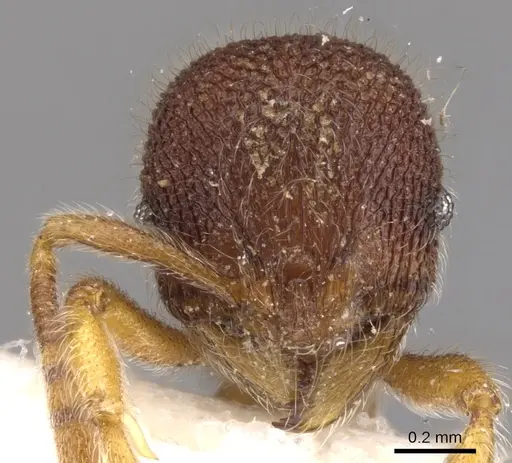
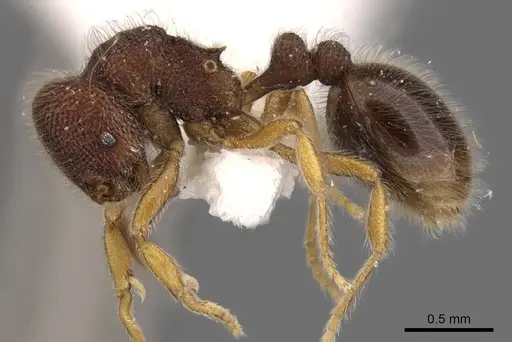
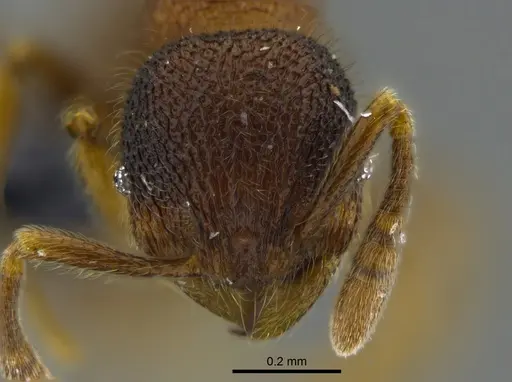
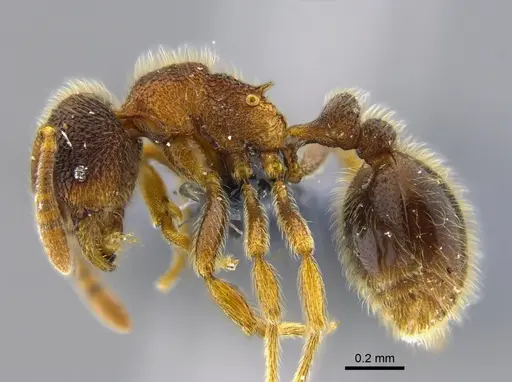
Rogeria gibba is a tiny ant native to the tropical rainforests of Costa Rica, Colombia, and Ecuador . Workers measure 3.5-3.8mm in total length and have a distinct humpbacked mesosoma profile that gives them their name 'gibba' (Latin for humpback) . They are rusty-brown with a slightly darker gaster and are densely covered in long, flexible hairs on the head, mesosoma, and waist . Queens are larger at 4.2-4.3mm . Males have not been collected . This species was described by Kugler in 1994 and belongs to the stigmatica group, similar to Rogeria ciliosa and Rogeria stigmatica . These ants live in lowland to mid-elevation tropical rainforests (under 200m in Costa Rica, up to 800m in Colombia and Ecuador) , where they inhabit the leaf litter and forest floor. They were collected by Berlese sampling, indicating they nest in soil or decaying organic matter. As members of the Solenopsidini tribe, they have a functional stinger, but due to their tiny size it is not a concern for keepers.
Quick Summary
- Difficulty: Medium
- Origin & Habitat: Tropical rainforests of Costa Rica, Colombia, and Ecuador at elevations from sea level to 800m. Found in natural forest habitats on the eastern slopes of the Colombian central cordillera, the western Andes, and coastal ranges of Ecuador [4][2][3][5].
- Colony Type: Colony structure is unconfirmed. Based on typical Rogeria patterns and the fact that no males have been collected, colonies are likely small with a single queen. Further research is needed.
- Size & Growth:
- Queen: 4.2-4.3mm [4]
- Worker: 3.5-3.8mm [4]
- Colony: Likely under 500 workers at maturity, estimated from typical genus patterns.
- Growth: Moderate, estimated based on related Solenopsidini species.
- Development: Estimated 6-10 weeks at optimal tropical temperatures (24-28°C), based on related species. (No direct data for this species. Tropical ants generally develop faster than temperate ones.)
- Antkeeping:
- Temperature: Keep at 24-28°C, these are tropical ants that need warm, stable conditions. A gradient with a warm spot (28°C) and cooler area (24°C) allows self-regulation. Inferred from natural rainforest habitat [4].
- Humidity: High humidity, think damp rainforest floor. Keep the nest substrate consistently moist but not waterlogged. Provide a water tube for drinking. Mist occasionally but ensure air flow to prevent mold.
- Diapause: No. As a tropical species from lowland to mid-elevation rainforest, they do not need hibernation. Maintain warm conditions year-round.
- Nesting: Tight chambers scaled to their tiny size. Test tubes work for founding colonies. For established colonies, use small Y-tong or plaster nests with chamber heights of 3-4mm. Avoid acrylic nests. Excellent escape prevention is essential.
- Behavior: These are small, cryptic ants that likely forage in the leaf litter. They are not aggressive and will flee rather than sting. Their tiny size (under 4mm) makes escape prevention critical, use fine mesh (0.5mm or smaller) and tight lids. They are probably nocturnal or crepuscular.
- Common Issues: escape risk is extreme due to their tiny size, use fine mesh and seal all gaps., high humidity can lead to mold if ventilation is poor., temperatures below 24°C cause colony decline, keep warm year-round., small colonies are sensitive to disturbance, check infrequently., wild-caught colonies may carry parasites, quarantine new acquisitions.
Housing and Nest Setup
Because these ants are so small (workers 3.5-3.8mm), housing must be scaled accordingly [4]. Test tubes with a water reservoir work well for founding colonies, use narrow tubes so the ants can touch both walls. For established colonies, use small Y-tong (AAC) or plaster nests with chambers no more than 3-4mm tall to prevent the ants from feeling exposed. Naturalistic setups with moist soil and decaying leaf litter mimic their natural forest floor habitat [4]. Whatever setup you choose, excellent escape prevention is essential: use fine mesh (0.5mm or tighter) on all ventilation holes and seal any gaps [4].
Temperature and Humidity
Rogeria gibba comes from tropical rainforests, so they need warm, humid conditions year-round. Keep the nest at 24-28°C, this covers their natural elevation range (under 200m in Costa Rica, up to 800m in Colombia and Ecuador) [4]. Use a heating cable on one side of the nest to create a gradient, but place it on top, not underneath, to avoid drying out the nest. Humidity should be high: the nest substrate should feel damp to the touch but not waterlogged. A water tube attached to the nest gives drinking access. Mist the outworld occasionally, but focus on keeping the nest substrate moist. Poor ventilation with high humidity leads to mold, so ensure some airflow while maintaining moisture [4].
Feeding and Diet
Based on their small size and typical Solenopsidini biology, these ants likely prey on small arthropods in the leaf litter. Offer small live prey such as springtails, fruit flies, or tiny crickets. They will probably accept protein readily. Sugar water or honey can be offered occasionally, but small ants often don't consume much sugar. Feed small amounts of protein 2-3 times per week and remove uneaten prey after 24 hours. A constant water source is more important than sugar. Observe your colony's preferences and adjust accordingly [4].
Colony Care and Growth
This species likely forms small colonies, don't expect the large worker numbers seen in some Myrmicinae. A mature colony may reach a few hundred workers at most [4]. Development from egg to worker takes an estimated 6-10 weeks at optimal temperatures (based on related Solenopsidini). The first workers (nanitics) will be smaller than mature workers. Avoid disturbing the colony during founding: leave queens sealed in their test tube until workers emerge. Once established, occasional feeding and moisture checks are enough. These are cryptic ants that don't need much space. Monitor for mold in humid setups and provide a clean outworld for foraging [4].
Frequently Asked Questions
How long does it take for Rogeria gibba to raise their first workers?
Estimated 6-10 weeks from egg to first worker at optimal tropical temperatures (24-28°C). This is based on typical Solenopsidini development, as no specific data exists for this species [4].
What do Rogeria gibba ants eat?
They likely accept small live prey like springtails, fruit flies, and tiny crickets. As small Solenopsidini, they are probably predatory or omnivorous, foraging in the leaf litter. Offer protein 2-3 times per week and provide constant water [4].
Can I keep multiple queens together in a Rogeria gibba colony?
The colony structure is unconfirmed for this species. Based on typical Rogeria patterns, single-queen colonies are likely. Combining unrelated queens is not documented and not recommended [4].
Do Rogeria gibba ants need hibernation?
No, they are tropical ants from lowland rainforests in Costa Rica, Colombia, and Ecuador. They do not need hibernation and should be kept warm year-round (24-28°C) [4].
How big do Rogeria gibba colonies get?
Based on typical genus patterns, colonies likely remain small, probably under 500 workers at maturity. They are cryptic ants that live in the forest floor litter [4].
What is the best nest type for Rogeria gibba?
Small test tubes work well for founding colonies. For established colonies, use small Y-tong or plaster nests with tight chambers scaled to their tiny size (3-4mm chamber height). Naturalistic setups with moist soil also work. Excellent escape prevention is essential due to their very small size [4].
Why are my Rogeria gibba dying?
Common causes include: temperatures below 24°C (tropical species decline in cool conditions), low humidity causing desiccation, mold from poor ventilation, or escape from inadequate barriers. Also check for parasites in wild-caught colonies. These tiny ants are sensitive to environmental stress [4].
Report an Issue
The current care sheet is based fully on literature. See inconsistencies, or something that's incorrect? Please , it will be resolved after review from an admin. Contributing to the blogs tab also helps providing information, to make us be able to further improve the caresheets. Thank you for your support!
References

This caresheet is licensed under CC BY-SA 4.0 .
Community Blogs
CASENT0900962
View on AntWeb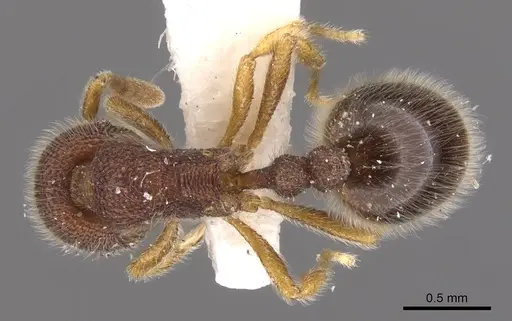
CBUMAGENT40425
View on AntWeb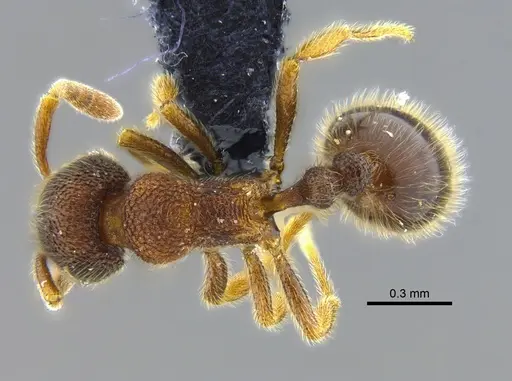
Literature
Loading distribution map...Loading products...