
Rogeria blanda
- Sci. Name
- Rogeria blanda
- Tribe
- Solenopsidini
- Subfamily
- Myrmicinae
- Author
- Smith, 1858
- Distribution
- Found in 9 countries
Introduction
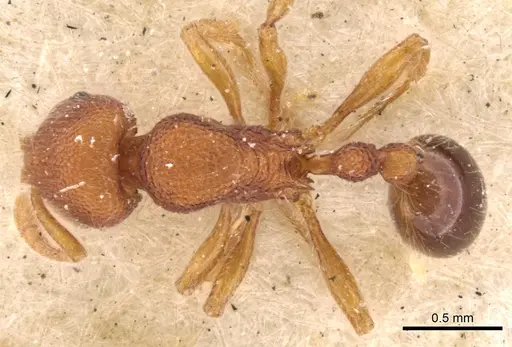
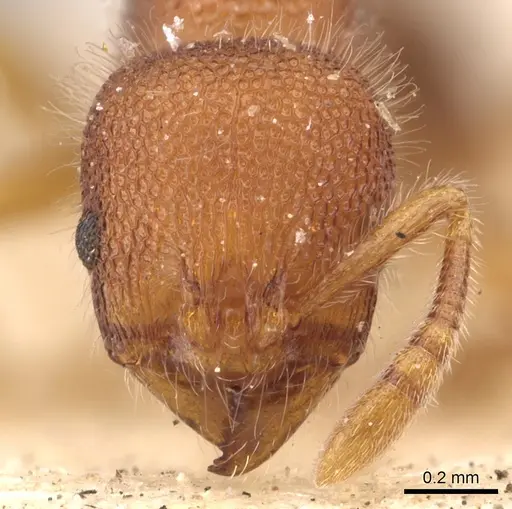
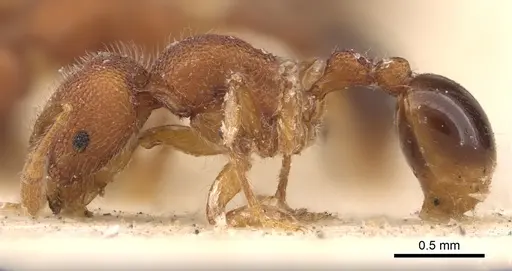
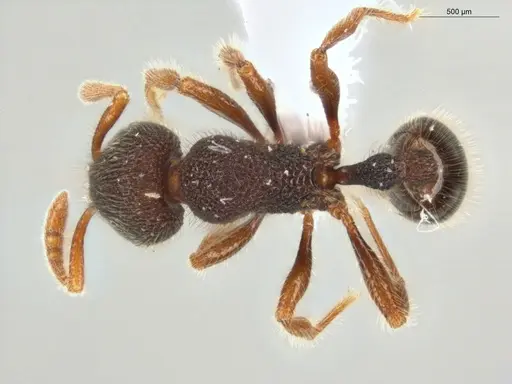
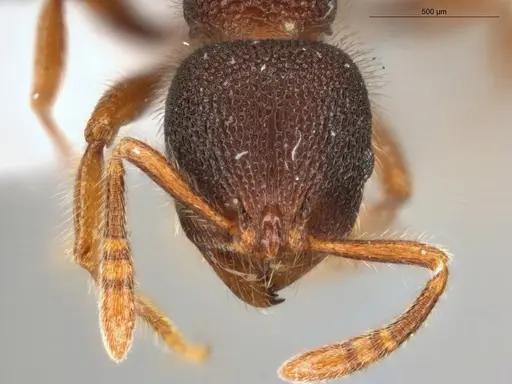
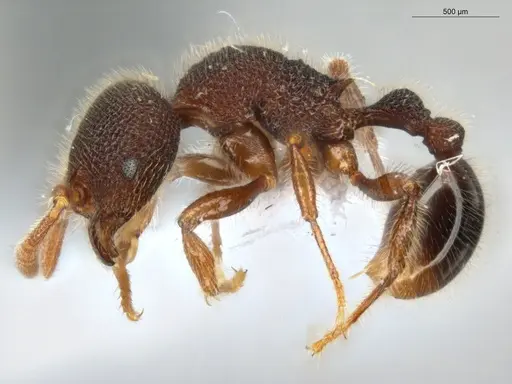
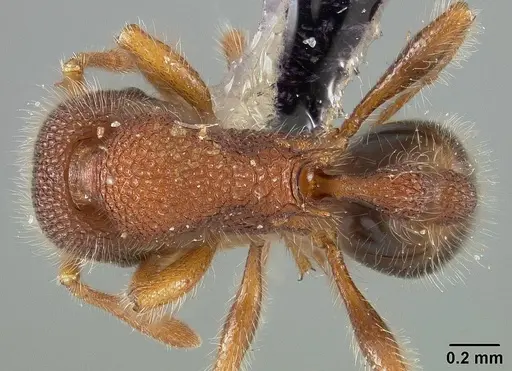
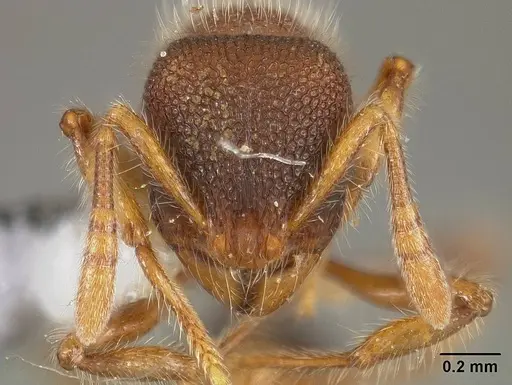
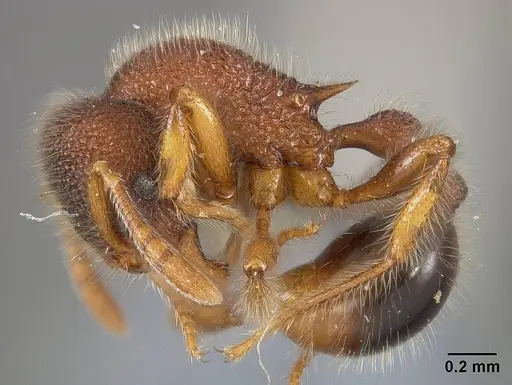
Rogeria blanda is a small, slender myrmicine ant native to the Neotropics, ranging from Costa Rica down to southern Brazil . Workers are 3.0-4.0mm and covered in long, fine, soft erect hairs that give them a somewhat fuzzy appearance . Body color ranges from black to yellowish-brown, with the gaster typically darker than the head and mesosoma . They have relatively long propodeal spines, a low and elongated petiolar node, and large oval eyes . Queens are slightly larger at 3.6-4.1mm and differ from workers mainly in typical queen morphology . This species shows arboreal tendencies - nests have been found in cacao tree trunks in Costa Rica and in a small rotten log suspended about 50cm above ground in Peru . They are ground-foraging generalist scavengers that feed on small insects and carrion . A queen and immatures have also been found inside termite mound cavities in Brazil, suggesting they may use pre-existing cavities for colony founding .
Quick Summary
- Difficulty: Medium
- Origin & Habitat: Neotropical region, found from Costa Rica through South America to southern Brazil, including Colombia, Ecuador, French Guiana, Guyana, Suriname, Trinidad, and Venezuela [1][5]. Inhabits lowland to mid-elevation forests from 50m to 1000m elevation. Nests in rotting wood, including cacao tree trunks and suspended logs [1].
- Colony Type: Colony structure is not well documented. Presumed single queen (monogyne) based on typical genus patterns, but unconfirmed. Queens have been found inside termite mound cavities in Brazil, suggesting they may utilize pre-existing cavities for colony founding [4].
- Size & Growth:
- Queen: 3.6-4.1mm [2]
- Worker: 3.0-4.0mm [2]
- Colony: Unknown, colony size not documented in scientific literature.
- Growth: Unknown, no data available.
- Development: Unknown, no specific data for this species. Based on typical Myrmicinae development in warm conditions, estimated 5-8 weeks at 24-28°C. (Direct development data not available. Tropical species generally develop faster than temperate ones.)
- Antkeeping:
- Temperature: Keep at warm temperatures typical of their tropical habitat, roughly 24-28°C. They can likely tolerate 22-30°C for short periods. Avoid prolonged exposure below 20°C [1][5].
- Humidity: Keep the nest substrate consistently moist but not waterlogged. Their tropical forest habitat suggests moderate to high humidity, but no specific data available.
- Diapause: No true diapause expected given their tropical distribution [1]. They may show reduced activity during cooler or drier seasons, but captive colonies likely remain active year-round if kept warm.
- Nesting: They nest in rotting wood, including cacao tree trunks and suspended logs [1]. In captivity, use a Y-tong (AAC), plaster, or 3D-printed nest with chambers sized for 3-4mm workers. A test tube setup works for founding. Because of their small size, escape prevention is critical, use fine mesh (0.5mm or smaller) on all openings and apply fluon or petroleum jelly to outworld rims.
- Behavior: These are small, docile ants that forage individually or in small groups in leaf litter [3]. They are generalist scavengers that feed on small insects, carrion, and likely honeydew [3]. They are not aggressive and rarely sting, their primary defense is fleeing. Their large eyes suggest they may be crepuscular or nocturnal [2]. Escape prevention is critical due to their tiny 3-4mm size.
- Common Issues: escape prevention is critical, they are very small and can squeeze through standard barrier gaps, use fine mesh and fluon, they require small prey items (fruit flies, springtails, pinhead crickets) due to their tiny size, colony growth data is absent, so patience is needed, wild-caught colonies may carry parasites, quarantine new colonies, overheating can be fatal, keep away from direct heat sources and sunlight
Housing and Nest Setup
Rogeria blanda is a small ant that requires appropriately scaled housing. Use a Y-tong (AAC), plaster, or 3D-printed nest with narrow chambers sized for their 3-4mm workers, too large and they may feel exposed. They naturally nest in rotting wood cavities, so enclosed spaces work well [1]. Use a test tube setup for founding colonies, then transition to a small formicarium once the colony outgrows it. Because of their tiny size, escape prevention is critical: use fine mesh (0.5mm or smaller) on all openings and apply fluon or petroleum jelly to the rim of the outworld. Check all connections between nest and outworld for gaps.
Feeding and Diet
These ants are generalist scavengers in the wild, foraging in leaf litter and feeding on small insects, carrion, and likely honeydew [3]. In captivity, offer a varied diet including small live prey like fruit flies, springtails, or tiny crickets. They will likely accept sugar sources like honey water or sugar water. Feed small prey 2-3 times per week for established colonies, and keep a constant sugar water supply. Remove uneaten prey after 24-48 hours to prevent mold. Prey items should be no larger than their head width.
Temperature and Seasonal Care
As a tropical species from Central and South America, Rogeria blanda prefers warm temperatures around 24-28°C [1][5]. They can likely tolerate brief periods at 22°C or up to 30°C, but prolonged exposure outside this range should be avoided. No hibernation or diapause is required, as they come from regions without cold winters. Keep them at stable temperatures away from drafts, air conditioning vents, and direct sunlight. A small heating cable on one side of the nest can help maintain warmth if room temperature is below optimal.
Behavior and Colony Dynamics
This is a relatively docile species that forms small to moderate colonies, though exact colony size is unknown. Workers forage individually or in small groups in leaf litter, searching for small insects and honeydew [3]. They are not aggressive and rarely sting, their primary defense is fleeing. They belong to the Solenopsidini tribe and possess a functional sting, but their small size and docile nature mean they rarely use it on humans. Queens have been found in association with termite mounds, suggesting they may use pre-existing cavities for colony founding rather than excavating their own chambers from scratch [4].
Handling and Observation
Due to their small size and docile nature, Rogeria blanda is best observed rather than handled. They are not a species that will defend their colony aggressively, making them relatively safe to work with. However, their tiny size makes them fragile and easy to crush accidentally. When working with them, use soft brushes or allow them to walk onto a piece of paper. Their large eyes suggest they may be more visually oriented than many ants, and they may be more active during dawn/dusk hours [2].
Frequently Asked Questions
How long does it take for Rogeria blanda to produce first workers?
No specific data is available for this species. Based on typical Myrmicinae development at warm temperatures (24-28°C), expect first workers approximately 5-8 weeks after the queen lays eggs. This is an estimate.
Can I keep Rogeria blanda in a test tube?
Yes, test tubes work well for founding colonies. Use a small test tube with a cotton-plugged water reservoir. The colony will need a small outworld for foraging once workers emerge. Transition to a small formicarium when the colony outgrows the test tube.
What do Rogeria blanda eat?
They are generalist scavengers. Feed small live prey like fruit flies, springtails, or tiny crickets. They also accept sugar sources like honey water or sugar water. Remove uneaten prey after 24-48 hours to prevent mold [3].
Are Rogeria blanda good for beginners?
They are moderate difficulty. Their small size makes escape prevention critical, and they require small prey items. They are docile and do not require hibernation, but their tropical nature means they need consistent warmth. They may be challenging for complete beginners due to their tiny size.
How big do Rogeria blanda colonies get?
Colony size is not documented in scientific literature. It is unknown but likely not very large based on related small Rogeria species.
Do Rogeria blanda need hibernation?
No, they do not require hibernation. As a tropical species from Central and South America, they remain active year-round if kept warm. Maintain temperatures around 24-28°C for optimal colony health [1][5].
Why are my Rogeria blanda escaping?
Their tiny 3-4mm size means they can squeeze through very small gaps. Use fine mesh (0.5mm or smaller) on all ventilation holes and apply fluon or petroleum jelly to the rim of the outworld. Check all connections between the nest and outworld for gaps.
When should I move Rogeria blanda to a formicarium?
Move them when the colony outgrows the test tube, typically around 20-30 workers. They prefer smaller, appropriately scaled chambers, so use a small formicarium.
Can I keep multiple Rogeria blanda queens together?
Combining unrelated queens has not been documented for this species. It is not recommended based on typical Myrmicinae behavior. Start with a single queen colony for best success.
Report an Issue
The current care sheet is based fully on literature. See inconsistencies, or something that's incorrect? Please , it will be resolved after review from an admin. Contributing to the blogs tab also helps providing information, to make us be able to further improve the caresheets. Thank you for your support!
References

This caresheet is licensed under CC BY-SA 4.0 .
Community Blogs
Literature
Loading distribution map...Loading products...