
Rhytidoponera wilsoni
- Sci. Name
- Rhytidoponera wilsoni
- Tribe
- Ectatommini
- Subfamily
- Ectatomminae
- Author
- Brown, 1958
- Distribution
- Found in 1 countries
Introduction
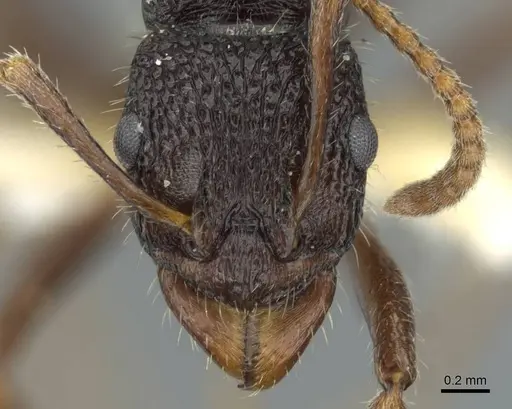
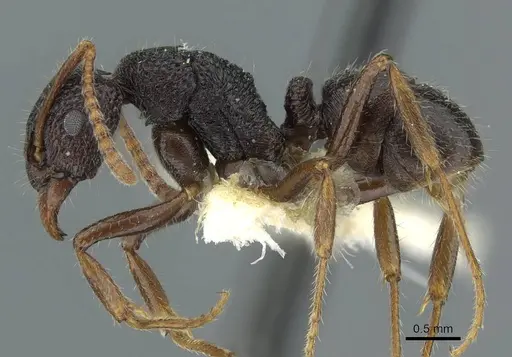
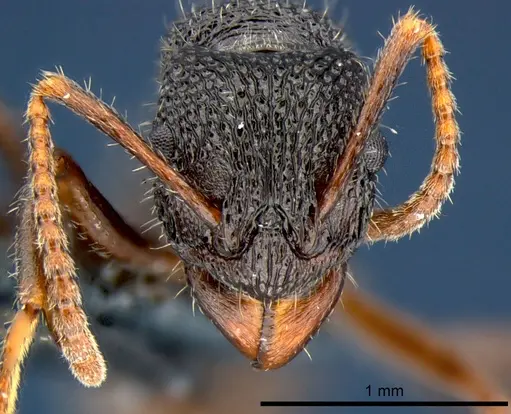
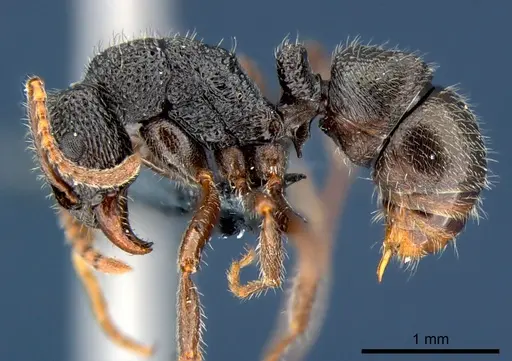
Rhytidoponera wilsoni is a small, dark ant native to New Caledonia in the southwestern Pacific. Workers are about 5.2 mm long, with a very dark brown to black body and orange-brown legs, mandibles, and antennae. The head has a broad, concave rear margin, and the petiole node is strongly compressed from front to back. These ants forage during the day on foliage and over rocks on the forest floor . They nest under stones and in leaf litter . Described by Brown in 1958 and named after the myrmecologist E.O. Wilson, who collected the type specimens on Mount Mou, New Caledonia. It is closely related to Rhytidoponera numeensis but differs in its more compressed petiole node and coarser body sculpture. The species is only known from New Caledonia, at elevations of 90-400 m in forest habitats .
Quick Summary
- Difficulty: Medium
- Origin & Habitat: New Caledonia, a tropical island in the southwestern Pacific. Workers have been collected from forest floors at 90-400 m elevation, foraging on foliage and rocks during daylight. Nests are found under stones and in leaf litter [1].
- Colony Type: Unconfirmed, no data on queen number or social structure for this species.
- Size & Growth:
- Queen: Unconfirmed, no queen specimens described in available literature.
- Worker: Approximately 5.2 mm total length [1].
- Colony: Unknown, no colony size data available.
- Growth: Unknown, no published data on colony growth for this species.
- Development: No published data, estimates based on related species are not reliable. (Development time has not been documented for Rhytidoponera wilsoni.)
- Antkeeping:
- Temperature: No published temperature data. As a tropical species from New Caledonia, keep the nest warm (likely 22-26°C) and avoid temperatures below 20°C for long periods. Create a gentle temperature gradient using a heating cable.
- Humidity: High humidity is essential. These ants live in damp forest floor leaf litter, so keep the nest substrate consistently moist but not waterlogged. Provide a drier area for the ants to choose [1].
- Diapause: Unlikely, New Caledonia has a mild tropical climate without true winter. However, activity may decrease during cooler months.
- Nesting: Provide a humid nest setup such as Y-tong (AAC), plaster, or a naturalistic soil nest. The nest should mimic their natural habitat under stones and in leaf litter, use a substrate that retains moisture well. Avoid dry, airy setups [1].
- Behavior: Rhytidoponera wilsoni is diurnal, it forages during daylight on foliage and rocks [1]. Workers are likely omnivorous hunters. They belong to the subfamily Ectatomminae and have a functional sting, but they are not known to be aggressive toward keepers. As 5.2 mm ants, standard escape barriers are usually adequate, but secure the outworld.
- Common Issues: humidity management is critical, too dry will kill the colony, too wet invites mold., wild-caught colonies may carry parasites or pathogens from the wild., tropical species need stable warmth, they struggle in cool climates without supplemental heating., the lack of captive care data means keepers must experiment and observe carefully., finding queens is difficult, almost all available colonies are wild-caught, which may stress them initially.
Housing and Nest Setup
For Rhytidoponera wilsoni, use a nest that holds moisture well, Y-tong (AAC), plaster, or a naturalistic soil setup. They naturally nest under stones and in leaf litter, so a substrate that stays damp is important [1]. Include a layer of leaf litter on the surface to mimic the forest floor. The outworld can have small rocks, moss, and some vertical climbing surfaces, as they forage on foliage. Keep the nest in indirect light, these diurnal ants are active during daylight but don't need direct sun.
Feeding and Diet
No specific dietary studies exist for this species. Based on typical Rhytidoponera behavior, they are likely predatory or omnivorous. Offer small live prey like fruit flies, pinhead crickets, or tiny mealworm pieces. Provide sugar water or honey water as a carbohydrate source. Place food in the outworld during daylight hours, matching their natural foraging time. Remove uneaten prey after 24 hours to prevent mold. Feed every 2-3 days, adjusting to the colony's appetite.
Temperature and Seasonal Care
No published temperature requirements. Since Rhytidoponera wilsoni is from a tropical island (New Caledonia), keep the nest warm, roughly 22-26°C, and avoid prolonged temperatures below 20°C. Use a heating cable on one side to create a gradient, this lets the ants choose their preferred temperature. True hibernation is not needed, but activity may drop in cooler months. Maintain stable conditions and avoid sudden temperature swings.
Behavior and Observation
These ants are diurnal foragers, they search for food on foliage and over rocks during daylight [1]. Watching them explore is a highlight of keeping this species. They likely hunt small invertebrates and scavenge. Like other Ectatomminae, they have a functional sting, but they are not particularly aggressive toward keepers. They may use their sting when the nest is disturbed. Diurnal activity makes them easy to watch under normal day-night cycles. Their foraging trails and food discovery are engaging to observe.
Colony Establishment
Starting a colony is challenging because queens have not been described and founding behavior is unknown. If you manage to obtain a queen, no data exists on how she founds, do not disturb her and provide high humidity and warmth. The first workers may take an unknown time to appear. Wild-caught colonies may be stressed initially, give them peace, stable conditions, and time to adjust. Monitor foraging and brood to gauge colony health. A well-settled colony will have workers patrolling the outworld during daylight.
Frequently Asked Questions
How long does it take for Rhytidoponera wilsoni to produce first workers?
No published data exists for this species. Egg-to-worker development time is unknown. Keep conditions stable and be patient, do not disturb a queen during the founding stage.
Can I keep Rhytidoponera wilsoni in a test tube setup?
A test tube may work for a founding queen, but it dries out quickly. This species requires high humidity, so a Y-tong or plaster nest that holds moisture better is more suitable. If using a test tube, monitor humidity closely and move the colony as soon as it outgrows the tube.
Do Rhytidoponera wilsoni ants sting?
Yes, they belong to the subfamily Ectatomminae, which has a functional sting. They are not known to be aggressive, but may sting if the nest is disturbed. The sting is not dangerous to humans but may cause mild irritation.
What temperature do Rhytidoponera wilsoni need?
No published data. As a tropical species, keep the nest around 22-26°C and avoid temperatures below 20°C for long. Provide a heat gradient using a heating cable.
How often should I feed Rhytidoponera wilsoni?
Offer food every 2-3 days, with a mix of small live prey (fruit flies, tiny crickets) and sugar water. Remove uneaten food after 24-48 hours. Adjust based on appetite, a hungry colony will feed eagerly.
Are Rhytidoponera wilsoni good for beginners?
This species is rated medium difficulty. Because almost nothing is known about its captive care, it is best suited for keepers with some experience who can maintain high humidity and stable warmth. Beginners may struggle with the unknowns.
Do Rhytidoponera wilsoni need hibernation?
No, hibernation is not required. New Caledonia has a mild tropical climate. Activity may slow in cooler months, but keep temperatures stable above 20°C year-round.
Why are my Rhytidoponera wilsoni not foraging during the day?
This species is diurnal, so lack of daytime activity may indicate stress. Check temperature (should be warm), humidity (should be high), and ensure the colony is settled. Also verify that lighting follows a normal day-night cycle.
How big do Rhytidoponera wilsoni colonies get?
Unknown, no colony size data exists. Similar Rhytidoponera species may reach several hundred workers, but this is speculative. Expect slow, gradual growth.
Report an Issue
The current care sheet is based fully on literature. See inconsistencies, or something that's incorrect? Please , it will be resolved after review from an admin. Contributing to the blogs tab also helps providing information, to make us be able to further improve the caresheets. Thank you for your support!
References

This caresheet is licensed under CC BY-SA 4.0 .
Community Blogs
CASENT0911235
View on AntWeb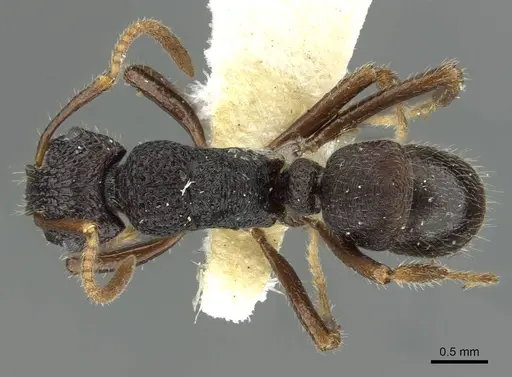
CSIRONC0121
View on AntWeb
Literature
Loading distribution map...Loading products...