
Rhytidoponera punctigera
- Sci. Name
- Rhytidoponera punctigera
- Tribe
- Ectatommini
- Subfamily
- Ectatomminae
- Author
- Crawley, 1925
- Distribution
- Found in 1 countries
Introduction
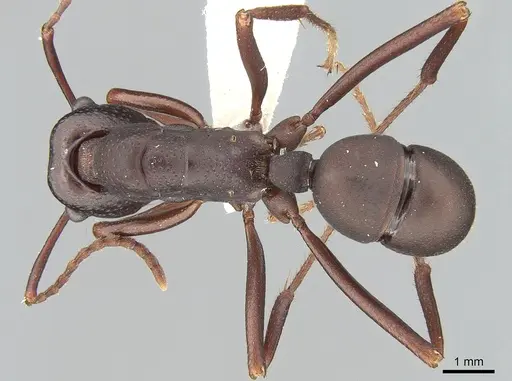
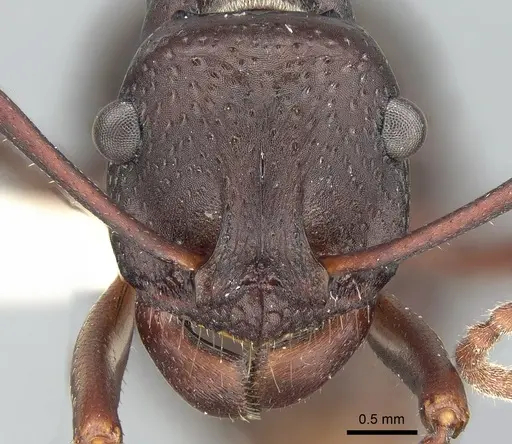
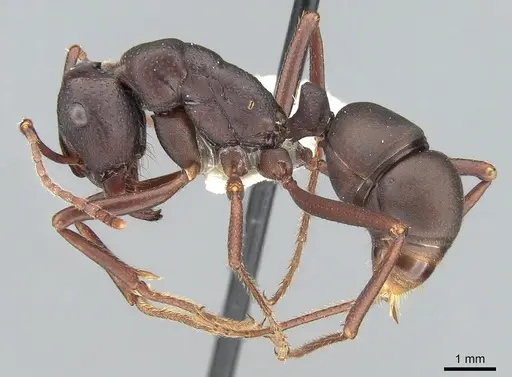
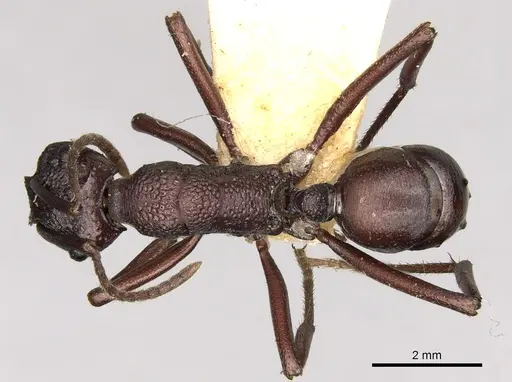
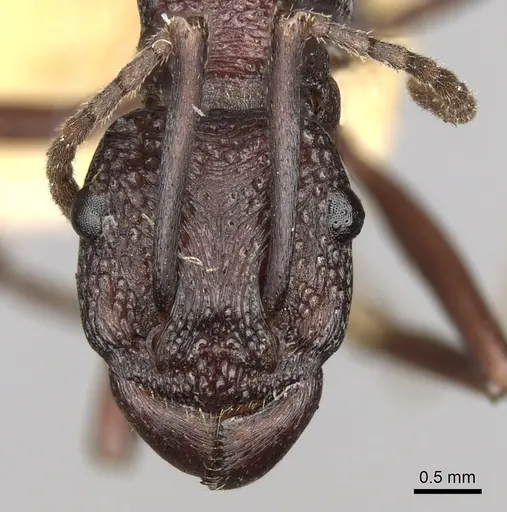
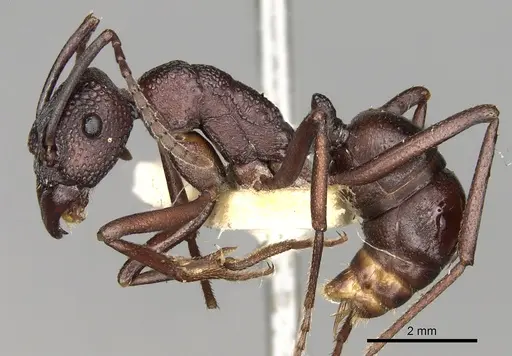
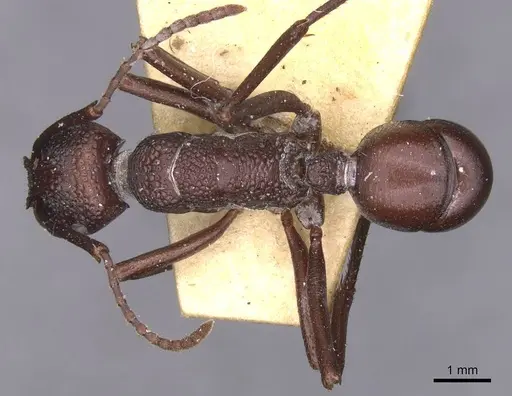
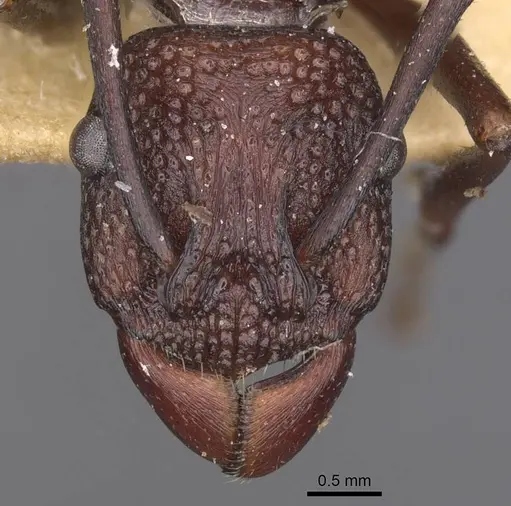
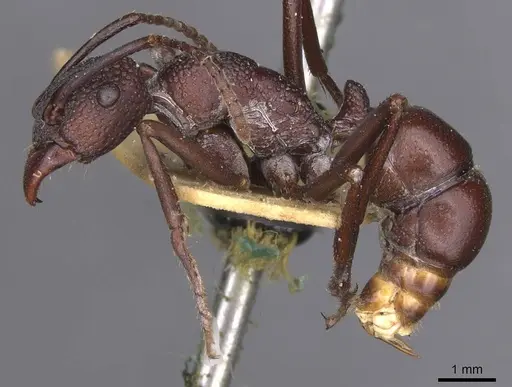
Rhytidoponera punctigera is a large, dark reddish-brown ant from Western Australia. Workers reach 9.5 mm in length and have a shiny, almost hairless body with a darker gaster and reddish legs and antennae. This species belongs to the Ectatomminae subfamily, so it possesses a functional stinger. It is found mainly in the wetter areas of the Darling Range and Swan coastal plain . This ant is not well studied in captivity, so much of its biology is unconfirmed. Its large size and striking appearance make it interesting for experienced keepers, but its sting and unknown rearing requirements mean it is not a beginner species.
Quick Summary
- Difficulty: Hard
- Origin & Habitat: Western Australia, primarily in wetter areas of the Darling Range and Swan coastal plain [2]. Likely inhabits forest and woodland where the soil stays moist.
- Colony Type: Unconfirmed, no published data on queen number or social structure.
- Size & Growth:
- Antkeeping:
- Temperature: Keep at 22-26°C during active season. Provide a gradient so workers can choose. Avoid long periods below 18°C outside of winter rest.
- Humidity: Keep nest substrate moist but not waterlogged. These ants come from wetter regions, so the nest should retain some moisture without flooding.
- Diapause: Likely required, Western Australian temperate ants typically need a winter rest period. Provide 2-3 months at 10-15°C during Southern Hemisphere winter.
- Nesting: Soil-based or Y‑tong/plaster nest with moisture retention. A deep substrate (5 cm+) allows natural tunnelling. Keep one area slightly drier to offer choice.
- Behavior: Moderately aggressive. Workers have a functional stinger and will use it if threatened. They are active foragers, ground‑dwelling, and not strong climbers, but standard escape prevention (fluon on rim edges) is still recommended given their size.
- Common Issues: stinger, these ants can inflict a painful sting, avoid handling with bare skin., limited availability, queens and colonies are rarely offered in the hobby., unknown colony structure, founding and social dynamics are undocumented, captive protocol must be guessed from related species., no established care guidelines, most advice is inferred, expect to experiment., winter mortality, improper hibernation conditions can kill the colony.
Housing and Nest Setup
Since Rhytidoponera punctigera is a ground‑dwelling ant from moist habitats, a naturalistic setup with a soil chamber or a Y‑tong/plaster formicarium works best. For founding colonies, a test tube setup with a water reservoir is fine. Once the colony grows, provide at least 5 cm of substrate so they can dig tunnels. Include a water source in the outworld and a small dish for sugar water.
Feeding and Diet
These ants are predatory and should be offered small insects such as fruit flies, small crickets, or mealworms. They will also take sugar water or honey for carbohydrates. Feed protein 2-3 times per week for an established colony, and keep sugar water always available. Remove uneaten prey after 24-48 hours to prevent mould.
Temperature and Seasonal Care
Maintain 22-26°C during the active season. A temperature gradient lets workers pick their preferred spot. In winter (roughly May to August in the Southern Hemisphere), lower the temperature to 10-15°C for a 2-3 month rest period. This diapause is likely important for colony health. Keep the nest slightly drier during hibernation and do not feed.
Behavior and Handling
Rhytidoponera punctigera workers are moderately aggressive and have a functional stinger. They can deliver a painful sting, so use tools (forceps, aspirator) for transfers and never let ants walk on bare skin. Workers are active foragers and will search for food in the outworld. Their size (9.5 mm) makes them easier to contain, but standard barrier methods (fluon) are still wise. [1]
Colony Establishment
Founding behavior is unconfirmed for this species. Based on many Ectatomminae, the queen may be claustral (sealing herself in a chamber and raising the first brood on stored reserves). If you obtain a queen, keep her in a dark, quiet test tube setup at 22-26°C. Do not disturb or feed her until the first workers appear. First workers are estimated to emerge after 6-10 weeks.
Frequently Asked Questions
Does Rhytidoponera punctigera sting?
Yes. As an Ectatomminae ant, it has a functional stinger and can give a painful sting. Handle with care.
How long does it take for the first workers to emerge?
There is no published data. Based on related species, expect 6-10 weeks at 22-26°C if the queen is claustral.
Can I keep multiple queens together?
Not recommended. The colony structure is unknown, and mixing unrelated queens would likely cause aggression.
What do Rhytidoponera punctigera eat?
They accept small insects (fruit flies, crickets, mealworms) as protein and sugar water or honey for energy.
Do they need hibernation?
Likely yes. Western Australian temperate ants usually need a winter rest. Provide 2-3 months at 10-15°C.
Are Rhytidoponera punctigera good for beginners?
No. Their stinger, unknown care requirements, and rarity make them suitable only for experienced keepers.
How big do colonies get?
Unknown. No reliable data exists for this species in the wild or captivity.
When should I move them to a formicarium?
No specific data. A general rule for unknown species: wait until the colony has 10-15 workers before offering a larger nest.
What temperature is ideal for this species?
Aim for 22-26°C during the active season. Provide a gradient so ants can thermoregulate.
Why is my colony dying?
Common causes include incorrect temperature or humidity, starvation, mould from overfeeding, or stress. Since care is unconfirmed, monitor closely.
Report an Issue
The current care sheet is based fully on literature. See inconsistencies, or something that's incorrect? Please , it will be resolved after review from an admin. Contributing to the blogs tab also helps providing information, to make us be able to further improve the caresheets. Thank you for your support!
References

This caresheet is licensed under CC BY-SA 4.0 .
Community Blogs
Literature
Loading distribution map...Loading products...