
Rhytidoponera nitidiventris
- Sci. Name
- Rhytidoponera nitidiventris
- Tribe
- Ectatommini
- Subfamily
- Ectatomminae
- Author
- Ward, 1984
- Distribution
- Found in 1 countries
Introduction
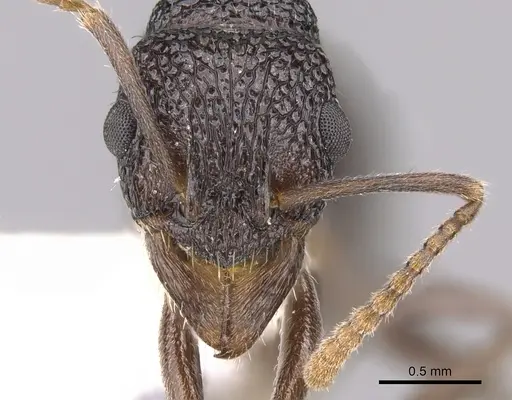
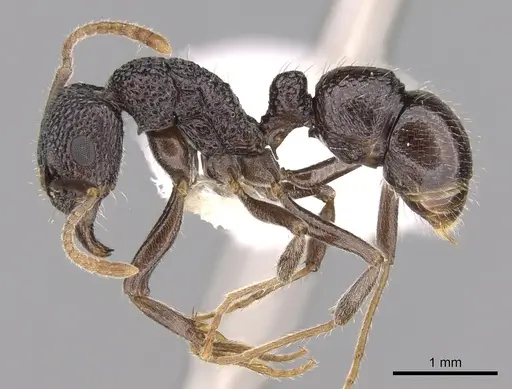
Rhytidoponera nitidiventris is a medium-sized ant species endemic to the rainforests of New Caledonia . Based on the type locality, these ants nest in soil at the base of saplings at low elevations (around 40m) . Size data is limited, but based on related species in the genus, workers are likely around 5-7 mm . Like other members of the subfamily Ectatomminae, this species has a functional sting used for prey capture and defense - it can deliver a noticeable sting if the colony is disturbed. This species is poorly represented in scientific studies and almost unknown in captivity, so most care guidelines are inferred from genus-level patterns.
Quick Summary
- Difficulty: Medium
- Origin & Habitat: Endemic to New Caledonia, recorded from low-elevation rainforest. Nests in soil at the base of saplings [1][2].
- Colony Type: Unknown, inferred to be monogyne (single queen) based on typical Rhytidoponera biology, but no specific data is available. Verification needed.
- Size & Growth:
- Queen: Size unknown, inferred from Rhytidoponera genus, queens likely around 6-8 mm.
- Worker: Size unknown, inferred from Rhytidoponera genus, workers likely around 5-7 mm.
- Colony: Unknown, no data for this species. Related Rhytidoponera reach a few hundred workers.
- Growth: Moderate (inferred from related species)
- Development: Unknown, estimated 6-10 weeks based on related Ectatomminae, but not confirmed. (No direct data. Development time likely depends on temperature and humidity.)
- Antkeeping:
- Temperature: Unknown, inferred from tropical rainforest habitat: aim for warm, stable conditions around 22-26°C. Avoid drops below 18°C.
- Humidity: Unknown, likely high due to rainforest origin. Keep the substrate moist but not waterlogged. Provide a humidity gradient.
- Diapause: Probably not required, New Caledonia has a tropical climate. A slight cool period in winter may be natural but is not needed. Avoid temperatures below 18°C.
- Nesting: Nests in soil [2]. Provide a naturalistic setup with moist, loose substrate for digging. Y-tong or plaster nests with high moisture retention are appropriate.
- Behavior: Rhytidoponera ants are generally alert and defensive. This species has a functional sting and will defend its nest if disturbed. Escape risk is moderate, standard barriers work, but they can climb smooth surfaces. Avoid direct handling.
- Common Issues: very limited information available, most care parameters are inferred from related species and may not be accurate., wild-caught colonies may carry parasites or pathogens that can cause captive failures., stinging potential requires careful maintenance, use long forceps and avoid disturbing the nest excessively., rare in the hobby, obtaining a colony is difficult and may require importation, which carries legal risks.
Housing and Nest Setup
As a soil-nesting species, a naturalistic setup with moist substrate is recommended. Provide a container filled with a mix of coco fiber and sand where the colony can excavate chambers. Alternatively, plaster or Y-tong nests with a water reservoir maintain stable humidity. Avoid dry acrylic nests, as they do not hold moisture well. Ensure the nest is kept in a warm area (around 22-26°C) and that the substrate stays evenly damp, not soaked. A small water tube connected to the nest can help maintain moisture. Provide an outworld for feeding with a secure lid and ventilation.
Feeding and Diet
Based on typical Rhytidoponera predatory behavior, offer small live invertebrates such as fruit flies, small crickets, and mealworms. They will also accept sugar sources like honey water or sugar water. Feed protein 2-3 times per week and keep a sugar source available at all times. Remove uneaten prey after 24 hours to prevent mold. A varied diet supports healthy colony development, but specific nutritional needs for this species are unknown.
Temperature and Humidity Requirements
Specific requirements are unknown, but based on the rainforest habitat, aim for warm conditions (22-26°C) and high humidity. Keep the nest substrate consistently moist, it should feel damp but not waterlogged. Avoid letting the nest dry out. A temperature gradient can be created with a heating pad on one side of the nest. Good ventilation is important to prevent mold while keeping humidity high. Monitor condensation: if it pools, reduce sealing or increase ventilation.
Colony Establishment and Growth
Founding behavior is unconfirmed. If the queen is claustral (which is likely for the genus), she will seal herself into a small chamber and raise the first workers on stored reserves. Do not disturb her during this period, wait until the first nanitics appear (estimated 4-10 weeks). Once workers emerge, establish a small outworld with food. Growth is likely slow at first, avoid expanding the nest too quickly. Provide consistent warmth and humidity throughout founding.
Behavior and Defense
Rhytidoponera nitidiventris is alert and will defend its nest actively. Workers have a functional sting and may use it if the colony is threatened. The sting is not exceptionally potent but can be painful. Observe through red film to reduce stress during nest checks. They are moderately fast and can climb smooth surfaces, so all gaps must be sealed. Do not rely on barriers alone, use fluon or talc on the inside rim of the outworld.
Frequently Asked Questions
How long does it take for Rhytidoponera nitidiventris to produce first workers?
Unknown for this species. Based on related Rhytidoponera, the first workers (nanitics) likely emerge 6-10 weeks after founding, depending on temperature. No specific data is available.
Do Rhytidoponera nitidiventris ants sting?
Yes, like all Ectatomminae, this species has a functional sting. It is not as potent as that of Paraponera, but it can cause localized pain and irritation. Handle nests gently and avoid direct contact.
What do I feed Rhytidoponera nitidiventris?
Offer a variety of small live insects (fruit flies, baby crickets, mealworms) and a constant supply of sugar water or honey. Protein should be provided 2-3 times per week. Remove uneaten prey after 24-48 hours to prevent mold.
Can I keep multiple queens together?
Unknown, this species is inferred to be monogyne, but polygyny cannot be ruled out. It is safest to house queens individually. Do not attempt to combine unrelated queens.
What humidity level do they need?
Exact humidity is unknown. Based on the rainforest habitat, keep the nest substrate consistently moist, aim for 70-85% relative humidity if possible. Avoid dry conditions.
Do they need hibernation or diapause?
Probably not, New Caledonia has a tropical climate with mild winters. No diapause is expected. Keep temperatures above 18°C year-round to avoid stressing the colony.
Are Rhytidoponera nitidiventris good for beginners?
This species is rated Medium due to the lack of specific care data and the need to maintain high humidity. It is not recommended for absolute beginners. Keepers with some experience will have better success with inferred care guidelines.
How big do colonies get?
Unknown, no data for this species. Related Rhytidoponera species can reach a few hundred workers. The maximum colony size is likely under 500 workers.
When should I move them to a formicarium?
Wait until the colony has at least 30-50 workers. Then move to a setup that maintains high humidity, consider a Y-tong or plaster nest. Avoid dry formicaria. Ensure the new nest has stable moisture levels.
Why is my colony growing slowly?
Slow growth could be due to suboptimal conditions. Ensure temperature is 22-26°C, substrate is moist, and protein is offered regularly. Colonies of this species likely grow slowly by nature, patience is required. Avoid overfeeding, which can cause mold and kill small colonies.
Report an Issue
The current care sheet is based fully on literature. See inconsistencies, or something that's incorrect? Please , it will be resolved after review from an admin. Contributing to the blogs tab also helps providing information, to make us be able to further improve the caresheets. Thank you for your support!
References

This caresheet is licensed under CC BY-SA 4.0 .
Community Blogs
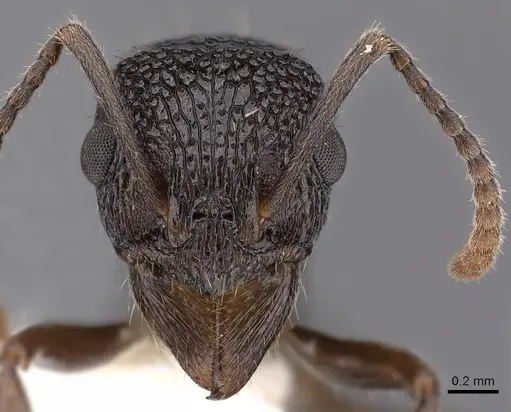
CASENT0281325
View on AntWeb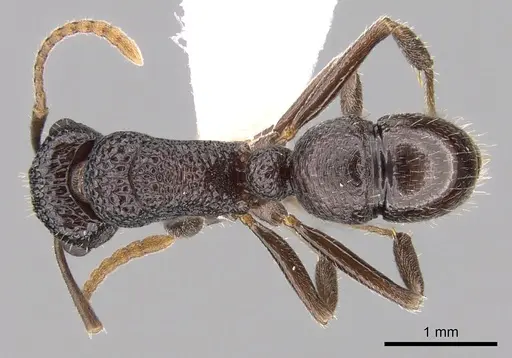
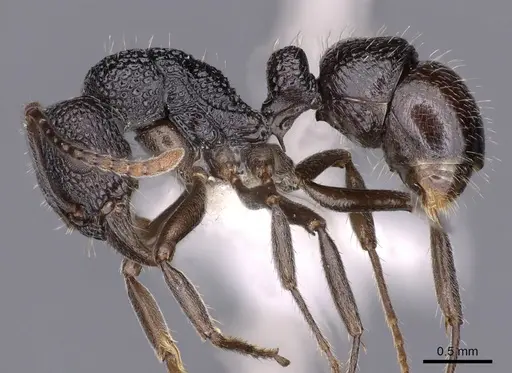
CASENT0900539
View on AntWeb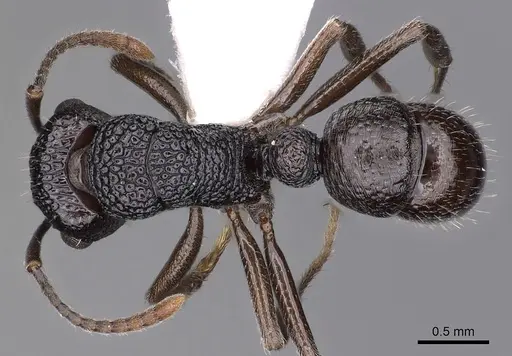
Literature
Loading distribution map...Loading products...