
Rhytidoponera litoralis
- Sci. Name
- Rhytidoponera litoralis
- Tribe
- Ectatommini
- Subfamily
- Ectatomminae
- Author
- Ward, 1984
- Distribution
- Found in 1 countries
Introduction
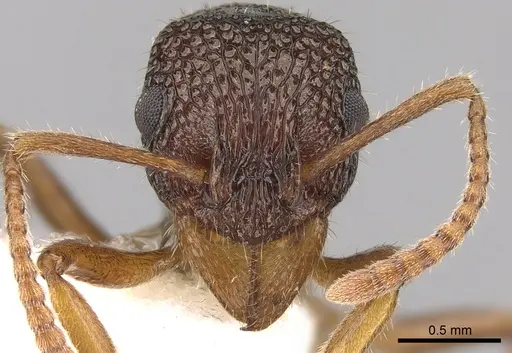
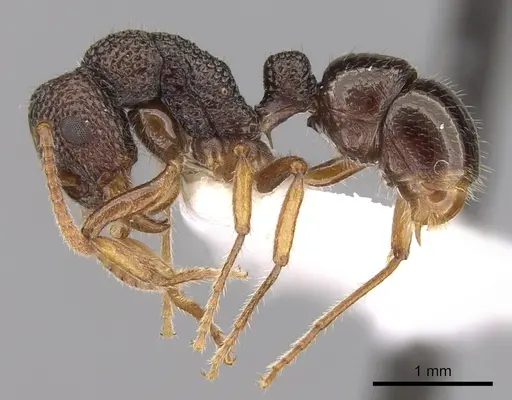
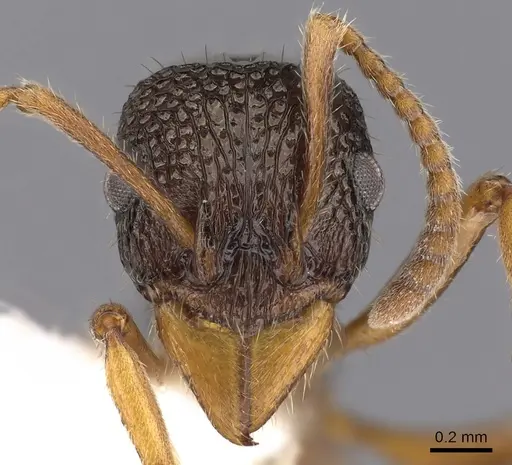
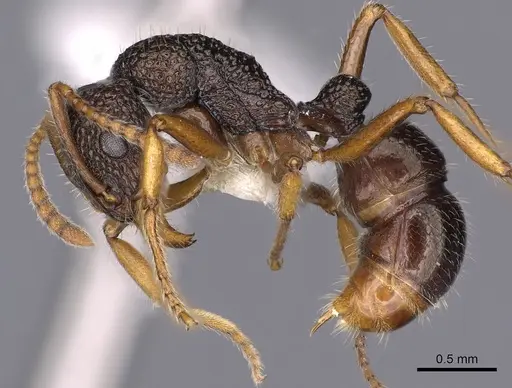
Rhytidoponera litoralis is an ant species native to New Caledonia, described by Ward in 1984 . Workers are dark brown to black with a metallic sheen, a common trait in this genus. They are found exclusively in lowland rainforests, where they nest in rotting logs and decaying wood on the forest floor . The species belongs to the subfamily Ectatomminae, a group known for predatory behavior and functional stingers. Due to its restricted range and limited data, R. litoralis is rare in the antkeeping hobby.
Quick Summary
- Difficulty: Medium
- Origin & Habitat: New Caledonia, an island in the South Pacific. In the wild, these ants inhabit lowland rainforests at elevations below 10 meters, nesting in rotting logs and decaying wood [1][2]. The environment is warm, humid, and shaded with consistent moisture.
- Colony Type: Unconfirmed, no specific data on queen number or social structure exists for this species.
- Size & Growth:
- Queen: Size data unavailable, no reliable body measurements are documented.
- Worker: Size data unavailable, no reliable body measurements are documented.
- Colony: Unknown, no data on colony size is available.
- Growth: Unknown
- Development: Unknown, no specific development data exists. Based on typical Ectatomminae patterns, development may take 6-10 weeks at warm temperatures, but this is unconfirmed. (All timeline information is inferred from related taxa, no species-specific data.)
- Antkeeping:
- Temperature: Maintain warm conditions around 24-28°C, matching their tropical rainforest habitat. Use a heating cable on one side of the nest to create a gradient. Based on habitat inference.
- Humidity: Keep the nest substrate consistently moist but not waterlogged. Mimic the damp conditions of rotting logs. Ensure good ventilation to prevent mold. Based on habitat inference.
- Diapause: Does not require hibernation, New Caledonia has a tropical climate with minimal seasonal variation. No cooling period is necessary.
- Nesting: Naturalistic setups work best: use containers with moist substrate mixed with rotting wood pieces. Y-tong (AAC) or plaster nests with a water reservoir can also work if kept humid. Provide dark, damp spaces.
- Behavior: As members of the Ectatomminae subfamily, workers are active predators with a functional sting. They hunt small invertebrates and scavenge. Their temperament in captivity is undocumented, but related species are generally not aggressive toward keepers. Since size is unknown, use fine mesh on all openings as a precaution against escapes.
- Common Issues: high humidity is required but can lead to mold, balance ventilation with moisture retention., dry conditions will kill the colony quickly, never let the nest substrate dry out., unknown biology means care requirements are based on habitat inference rather than confirmed data., wild-caught colonies may carry parasites or diseases, quarantine new colonies., escape risk is uncertain, use fine mesh and seal all connections.
Housing and Nest Setup
Based on their natural habitat (rotting logs in rainforest), provide a setup that mimics damp, dark wood. A naturalistic container with moist substrate (a mix of soil and rotting wood) works well. Alternatively, use a Y-tong (AAC) or plaster nest with a water reservoir to maintain humidity. Cover the nest to keep it dark. The outworld can be simple, provide a water source (test tube with cotton plug) and a small dish for sugar water. Ensure all openings are sealed with fine mesh, as the workers' size is unknown but they may be small enough to escape through standard gaps. Specific nest preferences in captivity are undocumented.
Feeding and Diet
Like other Ectatomminae, R. litoralis is likely omnivorous with a strong predatory instinct. Offer small live prey such as fruit flies, pinhead crickets, or small mealworms. They will also accept sugar sources, a drop of honey water or sugar water. In the wild, they likely hunt small insects and may collect honeydew. Feed small prey 2-3 times per week and keep a constant sugar source available. Remove uneaten prey after 24 hours to prevent mold. Diet preferences specific to this species are not documented.
Temperature and Humidity Management
Maintain temperatures in the 24-28°C range using a heating cable on one side of the nest to create a gradient. Humidity must be high, the nest substrate should feel consistently damp but not waterlogged. Check moisture daily and rehydrate when needed. Good ventilation is crucial to prevent mold, but avoid placing the nest in direct airflow that will dry it out. These requirements are inferred from their rainforest habitat, no precise laboratory data exists.
Colony Development and Growth
Founding behavior has not been documented for this species. Based on related Rhytidoponera, queens may be claustral (sealing themselves in a chamber without leaving to forage), but this is unconfirmed. After the first workers emerge, growth rate and colony size are unknown. Most Rhytidoponera species have moderate colony sizes (several hundred workers), but this is speculation. Monitor the colony closely and adjust care as you learn its specific needs.
Seasonal Care and Wintering
No hibernation is required. R. litoralis comes from a tropical environment with minimal seasonal temperature change. Maintain stable warm conditions year-round. Do not allow temperatures to drop below 20°C. Continue feeding normally throughout the year, as there is no dormancy period.
Frequently Asked Questions
How long does it take for Rhytidoponera litoralis to produce first workers?
No specific data exists. Based on typical Ectatomminae development, first workers might emerge in 6-10 weeks at 24-28°C, but this is an unconfirmed estimate.
Do Rhytidoponera litoralis ants sting?
Yes, as members of Ectatomminae, they have a functional sting. There are no specific reports on their sting in captivity, but related species use it defensively. It is likely mild and not a major concern for keepers.
What do Rhytidoponera litoralis ants eat?
They likely eat small live prey like fruit flies, crickets, and mealworms, plus sugar sources such as honey water. This is inferred from related species, specific dietary data is lacking.
Can I keep Rhytidoponera litoralis in a test tube?
A test tube may work for a founding queen, but high humidity is hard to maintain. A naturalistic setup with moist substrate is recommended for long-term success. No specific studies on captive housing exist.
Are Rhytidoponera litoralis ants good for beginners?
This species is rated medium difficulty due to unknown requirements. Beginners may struggle with maintaining high humidity and warm temperatures consistently. Better to gain experience with better-documented species first.
How big do Rhytidoponera litoralis colonies get?
Unknown. Related Rhytidoponera species often reach several hundred workers, but no data exists for this species. Expect a moderate-sized colony if conditions are good.
Do Rhytidoponera litoralis need hibernation?
No. They come from tropical New Caledonia and do not require a cooling period. Keep them warm year-round.
When should I move my colony to a formicarium?
Since growth rate is unknown, move when the current setup becomes visibly cramped. A naturalistic formicarium with high humidity is recommended. There are no specific guidelines for this species.
Why is my Rhytidoponera litoralis colony dying?
Most likely causes are dry conditions (substrate too dry), low temperatures (below 20°C), or mold from poor ventilation. Check humidity and temperature first. Unknown parasites from wild-caught colonies are also possible.
Can I keep multiple queens together?
There is no evidence that this species accepts multiple queens. It's safest to assume single-queen colonies. Do not attempt pleometrosis without documented success.
Report an Issue
The current care sheet is based fully on literature. See inconsistencies, or something that's incorrect? Please , it will be resolved after review from an admin. Contributing to the blogs tab also helps providing information, to make us be able to further improve the caresheets. Thank you for your support!
References

This caresheet is licensed under CC BY-SA 4.0 .
Community Blogs
CASENT0281322
View on AntWeb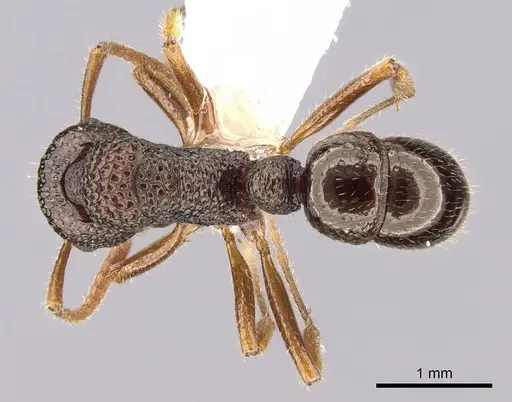
CASENT0900540
View on AntWeb
Literature
Loading distribution map...Loading products...