
Rhytidoponera inornata
- Sci. Name
- Rhytidoponera inornata
- Tribe
- Ectatommini
- Subfamily
- Ectatomminae
- Author
- Crawley, 1922
- Distribution
- Found in 1 countries
Introduction
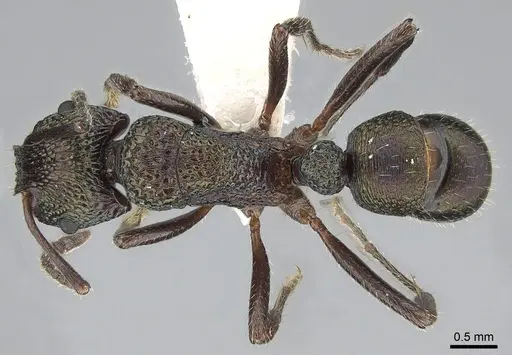
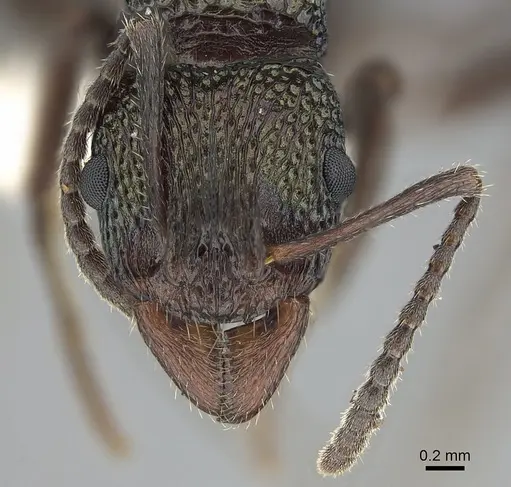
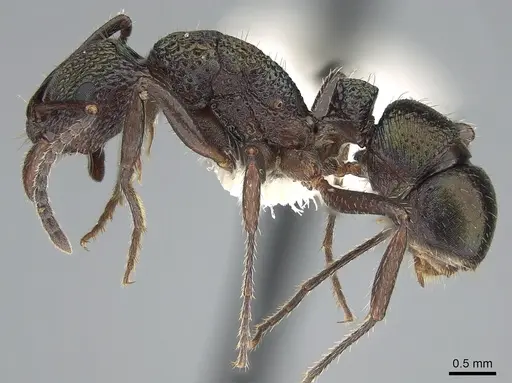
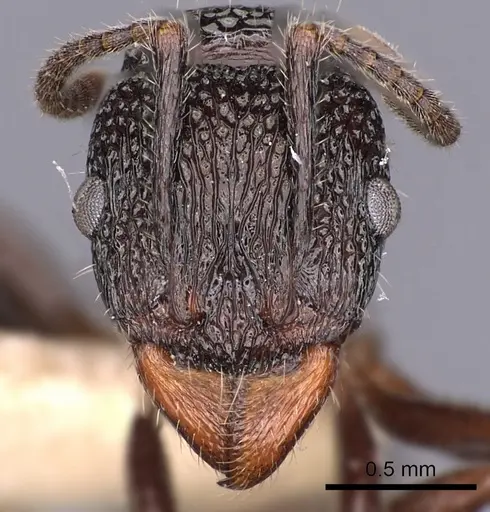
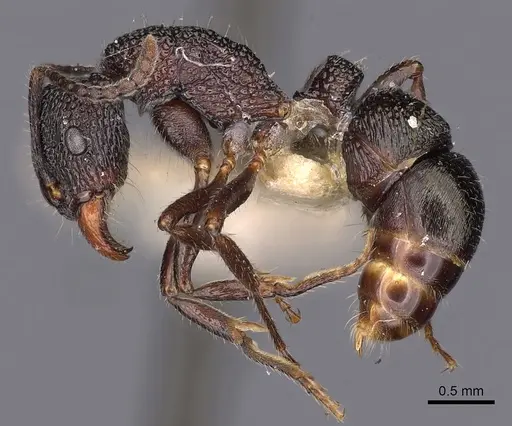
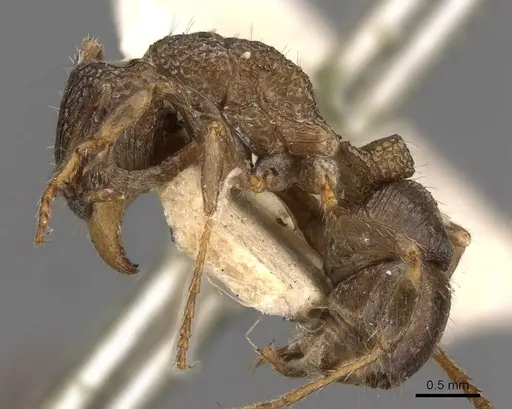
Rhytidoponera inornata is a medium-sized ant native to southwestern Australia, common around Perth and along the south coast to Esperance . Workers are dark, non-iridescent and look matte black to dark brown, unlike the greenish-blue sheen of its close relative R. metallica . Colonies average about 200 workers in the wild and the species is an important seed disperser in its ecosystem - it collects seeds with elaiosomes and helps create clumped clusters of seedlings around its nests .
Quick Summary
- Difficulty: Medium
- Origin & Habitat: Coastal areas of southwest Western Australia, from Perth along the south coast at least as far as Esperance. Found in both natural habitats and urban areas, preferring wetter parts of the Southwest Botanical Province [3][1].
- Colony Type: Functional queens are present and can disperse by air, suggesting a single-queen social structure (inferred from related Rhytidoponera metallica [5]). Unlike some other Rhytidoponera that rely on worker reproduction, this species probably has true queens.
- Size & Growth:
- Queen: unknown, likely ~7-8 mm based on genus patterns
- Worker: unknown, likely ~6-7 mm based on genus patterns
- Colony: Up to about 200 workers in the wild (mean 197.6) [1]
- Growth: Moderate
- Development: Unknown, no species‑specific data available (Development time has not been documented for this species.)
- Antkeeping:
- Temperature: Keep at 22-26°C. They are diurnally active and forage most during early afternoon in winter, the warmest part of the day [1]. Use a gentle temperature gradient.
- Humidity: Moderate, they nest in soil with channels about 25 cm deep [1]. Keep the nest substrate consistently moist but not waterlogged.
- Diapause: Uncertain, no documentation exists. As a southwestern Australian species, they may slow down in winter but a full hibernation is not confirmed.
- Nesting: Soil‑nesting species. In captivity use a naturalistic soil nest, plaster nest, or 3D‑printed nest that holds moisture. They prefer finer substrate channels [1].
- Behavior: Generally docile but can sting if the nest is threatened. Workers are opportunistic foragers, they hunt small invertebrates and collect seeds [1]. They are important elaiosome collectors and seed dispersers in their native habitat, and their middens contain about 8% seeds along with arthropod fragments [1][4]. Because they are moderate‑sized ants, standard escape barriers work well. Avoid frequent disturbances.
- Common Issues: unknown founding behavior, queen may need specific conditions to start a colony, so buying a young colony or wild nest may be more reliable., slow growth, this species stays relatively small, so don’t expect rapid colony expansion., moisture mismanagement, too dry will desiccate the colony, too wet causes mold in soil nests., wild‑caught colonies may carry parasites or pathogens that hurt captive success., limited captive care information, you’ll need to observe and adapt.
Housing and Nest Setup
Rhytidoponera inornata nests in soil, digging shallow burrows about 25 cm deep with finer side channels than other Rhytidoponera species [1]. For captive care, use a naturalistic soil nest or a plaster/3D‑printed nest with good moisture retention. Keep the substrate fine (no coarse gravel) and provide a water reservoir connected to the nesting area to maintain humidity. A test‑tube setup can work for starting a colony, but once you have 30-50 workers, move them to a more spacious formicarium. Standard chambers 5-10 mm tall suit these moderate‑sized ants.
Feeding and Diet
Wild workers are opportunistic foragers. Their middens contain about 8% seeds, the rest being arthropod fragments, so they eat both small prey and seeds [1]. In captivity, offer small live insects (fruit flies, small crickets, mealworms) 2-3 times a week, plus sugar water or honey always available. Seeds with elaiosomes (fat bodies) can also be given, this mimics their natural seed‑dispersal role. Remove any uneaten prey after 24 hours to stop mould.
Temperature and Seasonal Care
Keep the nest at 22-26°C. This species is diurnally active and forages most during early afternoon in winter, the warmest part of the day [1]. They like moderate warmth and will move to preferred areas if you create a temperature gradient with a heating cable on one side. In cooler months, activity may drop. How much they need a real diapause is unknown, so just reduce feeding if they slow down and don’t let temperatures fall below 15°C.
Behavior and Temperament
Workers are relatively calm and not aggressive, but they can sting if you disturb the nest. They forage both on the ground and possibly in low vegetation, and they play an important role in seed dispersal, they collect elaiosome‑bearing seeds and help cluster seedlings near their nests [1][4]. Because they are not the fastest movers, standard barrier methods work fine. Avoid shaking or flooding the nest to keep stress low.
Colony Growth and Development
In the wild, a nest averages about 200 workers [1]. Males and female alates are also present (about 45 males and 30 females per colony). Growth is moderate, don’t expect a big colony in a few months. The founding method hasn’t been documented, so it’s safest to start with a small colony from a reputable keeper rather than trying to raise a queen from scratch. Be patient: this species naturally stays small.
Frequently Asked Questions
How long does it take for Rhytidoponera inornata to get their first workers?
That’s unknown. No species‑specific data on development time exists, so you’ll just have to wait and see. Keep the queen warm and undisturbed.
What do Rhytidoponera inornata ants eat?
They eat small insects (fruit flies, crickets, mealworms) and collect seeds [1]. Offer protein 2-3 times a week and keep sugar water always available. Seeds with elaiosomes are also taken.
Can I keep multiple queens of Rhytidoponera inornata together?
Probably not. Related species are monogyne, and there’s no evidence of multi‑queen colonies [5]. Stick to one queen per nest.
Do Rhytidoponera inornata ants sting?
Yes, they have a functional sting and can use it if threatened, but they are generally docile and will only sting when the nest is handled roughly. The sting is not dangerous to healthy humans, just mildly irritating.
How big do Rhytidoponera inornata colonies get?
Wild colonies average about 200 workers [1]. Don’t expect a huge colony, this species stays small even in good conditions.
Are Rhytidoponera inornata good for beginners?
They are rated medium difficulty. They have mild temperaments and moderate needs, but their slow growth and unknown founding behavior can be frustrating for new keepers. If you buy a small colony rather than starting from a queen, they can be manageable.
What temperature do Rhytidoponera inornata need?
Aim for 22-26°C. They forage most on warm afternoons [1]. Use a gradient so they can choose their preferred spot. Avoid prolonged temperatures below 18°C or above 30°C.
Do Rhytidoponera inornata need hibernation?
Unknown. Their natural range has mild winters, so they might just slow down. If your colony becomes less active in winter, reduce feeding and keep them slightly cooler (above 15°C). No data confirms a true diapause.
When should I move Rhytidoponera inornata to a formicarium?
Start with a test tube. Once you have 30-50 workers and the tube gets crowded, move them to a soil or plaster nest that holds moisture. They need fine substrate [1].
Why are my Rhytidoponera inornata dying?
Common causes: substrate too dry or too wet, temperature outside 22-26°C, mould from leftover food, or stress from frequent disturbance. Wild‑caught colonies may also carry parasites. Keep conditions stable and check moisture levels.
Report an Issue
The current care sheet is based fully on literature. See inconsistencies, or something that's incorrect? Please , it will be resolved after review from an admin. Contributing to the blogs tab also helps providing information, to make us be able to further improve the caresheets. Thank you for your support!
References

This caresheet is licensed under CC BY-SA 4.0 .
Community Blogs
Literature
Loading distribution map...Loading products...