
Rhytidoponera flavicornis
- Sci. Name
- Rhytidoponera flavicornis
- Tribe
- Ectatommini
- Subfamily
- Ectatomminae
- Author
- Clark, 1936
- Distribution
- Found in 1 countries
Introduction
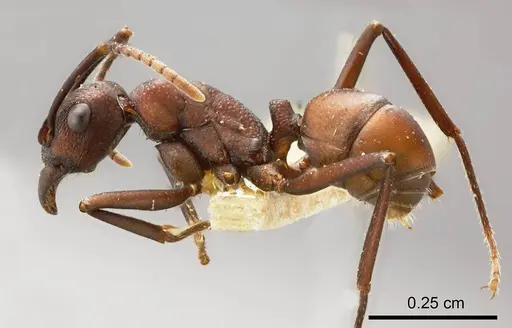
Rhytidoponera flavicornis is a small, bicoloured ant known from arid and semi-arid areas of Western Australia near Mundi Windi . Its name refers to the yellowish antennae. The body shows a two-tone coloration. It belongs to the subfamily Ectatomminae, which has functional stingers and can deliver a painful sting. As an arid-area species, it is adapted to hot, dry conditions.
Quick Summary
- Difficulty: Medium
- Origin & Habitat: Western Australia, Australia, arid and semi-arid regions [1]
- Colony Type: Unconfirmed, no reliable data on queen number or social structure.
- Size & Growth:
- Antkeeping:
- Temperature: Inferred from arid habitat: keep warm, around 24-28°C [1]. Provide a temperature gradient so workers can choose preferred zones.
- Humidity: Low, dry conditions preferred. Nest substrate should be allowed to dry out between waterings [1]. Avoid constant moisture.
- Diapause: Unknown, no specific data. If colony activity drops in winter, provide a mild cool period (10-15°C) for 2-3 months. Observe natural cues.
- Nesting: Y-tong (AAC) nests or dry sandy soil setups work well. Keep substrates porous and dry.
- Behavior: Members of Ectatomminae have functional stingers, R. flavicornis can deliver a painful sting when threatened. Defensive behavior is likely. Active foragers that hunt small invertebrates. Escape risk is moderate for its size.
- Common Issues: sting severity, these ants have functional stingers and can sting painfully, handle with care, humidity management, too much moisture can lead to mold in this arid species, uncertain hibernation needs, lack of data means keepers must observe and adjust, limited availability, this species is rarely found in the hobby
Temperature and Heating
As an arid-zone species from Western Australia, Rhytidoponera flavicornis likely prefers warm conditions. Maintain nest temperatures around 24-28°C for colony activity [1]. Use a heating cable on one side of the nest to create a gradient, allowing workers to regulate their own temperature. Avoid prolonged temperatures below 20°C outside any potential hibernation period. Consistent warmth during the active season supports foraging and brood development.
Humidity and Water Requirements
This species is adapted to arid and semi-arid environments [1]. Keep the nest relatively dry with small water reservoirs. Allow substrate to dry out significantly between waterings, desert conditions rather than rainforest. A water tube or gel hydration method works. Mist very sparingly, maybe once a week or less. Too much moisture can cause mold and harm the colony. Ensure some dry areas in the nest so ants can choose their preferred microclimate.
Feeding and Diet
Rhytidoponera ants are primarily predatory. Offer small live prey such as fruit flies, pinhead crickets, or small mealworms. Protein should form the majority of their diet. Sugar water or honey can be given occasionally but is not a primary need. Feed every 2-3 days during active periods, removing uneaten prey after 24 hours. No specific dietary data is available for this species, so these are general recommendations for similar ants.
Nesting Preferences
In captivity, these ants do well in Y-tong (AAC) nests or dry, sandy soil setups that mimic their arid habitat. Provide chambers sized for small ant species. The nest should have minimal moisture retention and good ventilation. Avoid setups that hold high humidity. Flat stones or other surface structures can be offered for nesting in naturalistic setups. These recommendations are based on general arid-zone ant care, not specific published data. [1]
Hibernation and Winter Care
Whether R. flavicornis requires diapause is unknown. Their native Western Australia has a Mediterranean climate with cool, moist winters, but specific overwintering behavior has not been documented. If your colony slows down or stops brood production in winter, provide a cool period at 10-15°C for 2-3 months. Reduce feeding to minimal (once a month or none) during this time. Do not let temperatures drop below 5°C. Gradually resume warmth and feeding in spring. This advice is precautionary.
Sting and Defense
Rhytidoponera flavicornis belongs to the subfamily Ectatomminae, which all possess a functional sting used for subduing prey and defense. The sting is reported to be painful in related species, similar to a bee sting. When working with this species, move slowly and avoid sudden movements that may trigger defensive behavior. Never grab or squish ants. If stung, wash the area with soap and water and apply a cold compress. People with insect sting allergies should exercise extra caution.
Frequently Asked Questions
Does Rhytidoponera flavicornis have a sting?
Yes. As a member of the Ectatomminae subfamily, it has a functional sting and can deliver a painful sting when threatened. Handle with care.
How long does it take for first workers to emerge?
Unknown for this species. No developmental timeline has been recorded. Under warm conditions (around 26°C) typical ectatomminine development might take 6-10 weeks, but this is speculative.
Can I keep multiple queens together?
Unknown. The social structure of this species has not been studied. It is best to assume colonies have a single queen until proven otherwise. Do not try to combine unrelated queens.
What do Rhytidoponera flavicornis eat?
Based on its predatory nature, offer small live invertebrates like fruit flies, pinhead crickets, or small mealworms. Sugar sources are not essential but can be given in moderation. No specific dietary studies exist for this species.
Do they need hibernation?
Uncertain. Western Australia has cool winters, but specific hibernation requirements have not been documented. If the colony slows down in winter, provide a cool period at 10-15°C for 2-3 months as a precaution.
Are Rhytidoponera flavicornis good for beginners?
This species is rated medium difficulty. Their sting, specific dry conditions, and uncertain care requirements make them better suited for keepers with some experience. They are also rarely available in the hobby.
What size colony do they reach?
Colony size is unknown for this species. No published data exists. Based on related Rhytidoponera, it may reach a few hundred workers, but this is guesswork.
What temperature should I keep them at?
Based on their arid habitat, keep them warm around 24-28°C [1]. Provide a thermal gradient in the nest.
How often should I feed them?
No specific data. As a general guideline for predatory ants, offer small amounts of live prey every 2-3 days during active periods. Remove leftovers after 24 hours. Reduce feeding during any cool period.
Report an Issue
The current care sheet is based fully on literature. See inconsistencies, or something that's incorrect? Please , it will be resolved after review from an admin. Contributing to the blogs tab also helps providing information, to make us be able to further improve the caresheets. Thank you for your support!
References

This caresheet is licensed under CC BY-SA 4.0 .
Community Blogs
ANTWEB1008305
View on AntWeb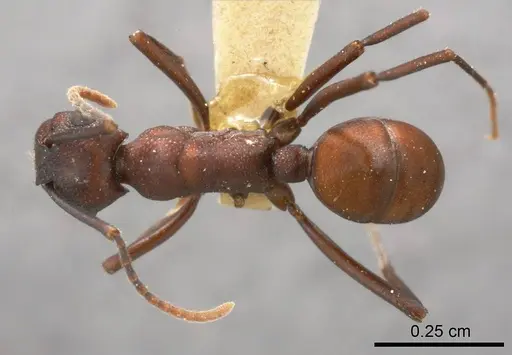
Literature
Loading distribution map...Loading products...