
Rhytidoponera confusa
- Sci. Name
- Rhytidoponera confusa
- Tribe
- Ectatommini
- Subfamily
- Ectatomminae
- Author
- Ward, 1980
- Distribution
- Found in 1 countries
Introduction
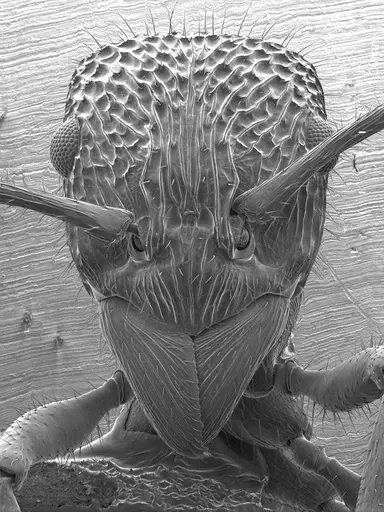
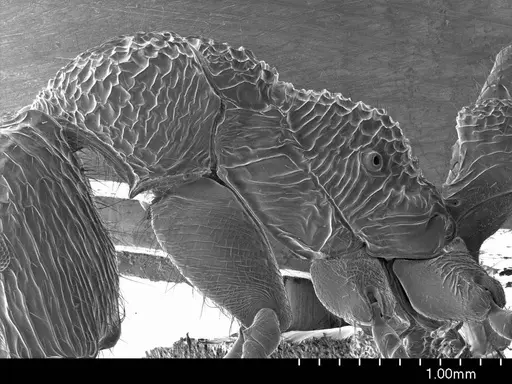
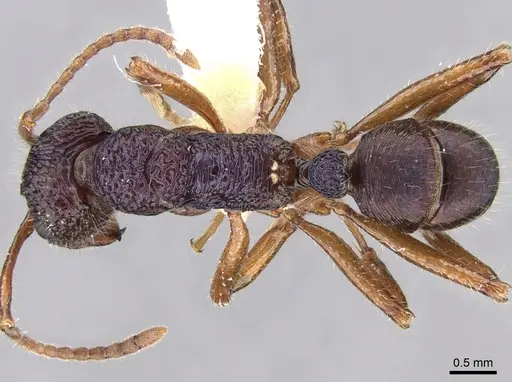
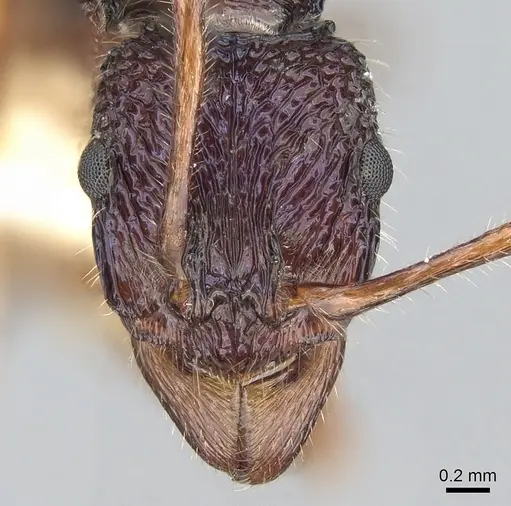
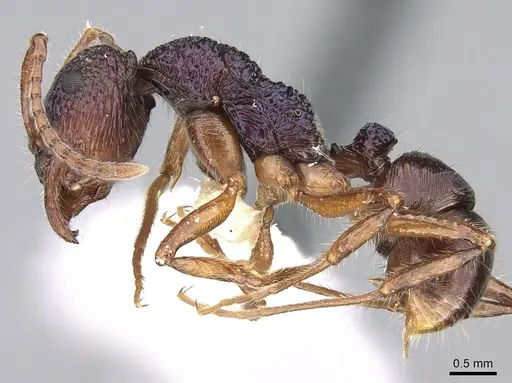
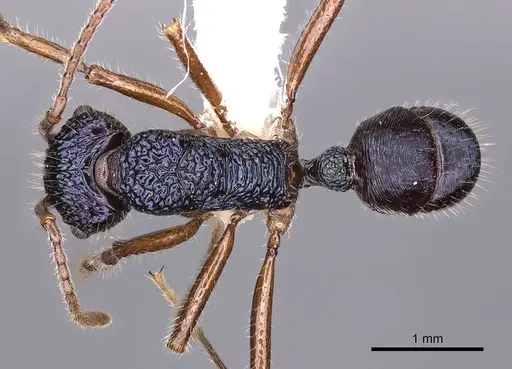
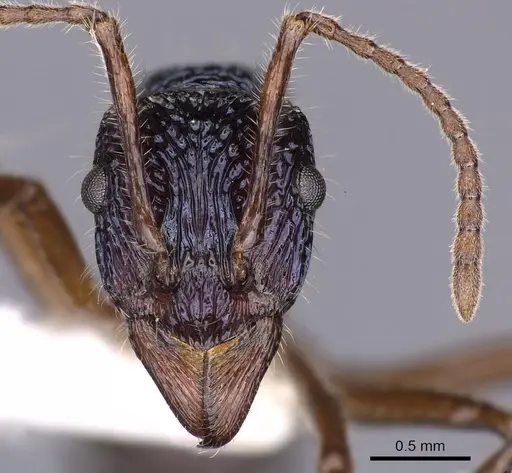
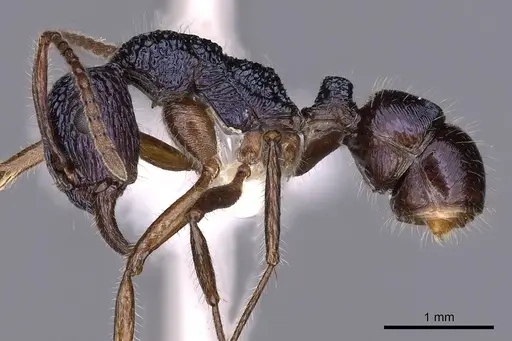
Rhytidoponera confusa is an Australian ant in the subfamily Ectatomminae. Workers are monomorphic (all the same size) ; exact body length is not documented in the available literature. This species ranges along the east coast of Australia from Queensland to Victoria (26°54'S to 37°23'S latitude), at altitudes from 10 to 1,000 meters. It inhabits temperate rainforest, wet sclerophyll forest, subtropical rainforest, and littoral rainforest, where colonies nest in rotten logs and under stones . What really sets this species apart is that two completely different social structures coexist in the same populations. Some colonies are queenright (Type A) with a single mated queen, while others are queenless (Type B) and reproduce through gamergates - regular workers that have mated and taken over egg-laying . This unusual flexibility makes Rhytidoponera confusa a standout for keepers interested in ant social evolution.
Quick Summary
- Difficulty: Medium
- Origin & Habitat: Eastern Australia (Queensland, New South Wales, Victoria) from 26°54'S to 37°23'S, altitudes 10-1,000 m. Found in temperate rainforest, wet sclerophyll forest, subtropical rainforest, and littoral rainforest [2].
- Colony Type: Two colony types occur in the same populations: Type A (queenright) with a single mated queen that produces winged queens and males, Type B (queenless) with multiple gamergates (mated workers that lay eggs). Both types coexist sympatrically [3].
- Size & Growth:
- Queen: Queens raise offspring almost as large as themselves, exact measurements not documented [4].
- Worker: Monomorphic workers, all workers are the same size. Exact body length not documented [1].
- Colony: Queenright colonies average 337±43 workers (up to about 400+). Gamergate colonies are smaller, averaging 101±14 workers [4].
- Growth: Moderate, queenright colonies grow larger and faster than gamergate colonies [4].
- Development: Not directly studied for this species, based on related ponerine ants, expect roughly 8-12 weeks at optimal temperatures. (Founding is semi-claustral: the queen must hunt insects aboveground because she raises brood nearly as large as herself [4].)
- Antkeeping:
- Temperature: Based on their natural range (temperate to subtropical forests), keep temperatures around 22-26°C [2]. A gentle gradient is beneficial.
- Humidity: Moderate to high, these ants come from damp forest habitats. Keep the nest substrate moist but not waterlogged, with some drier areas available [2].
- Diapause: Unknown, this Australian species may reduce activity in cooler months, but true diapause requirements are unconfirmed. Monitor colony behavior and reduce temperatures slightly in winter if activity drops.
- Nesting: In the wild they nest in rotten logs and under stones in humid forest habitats [2]. Provide dark, humid nest chambers, Y-tong, plaster, or soil nests work well. Avoid dry setups.
- Behavior: Rhytidoponera confusa is a predatory ponerine ant that hunts small invertebrates. Colonies vary in aggression, some are consistently more aggressive than others, a trait that stays stable over time [5]. Workers in queenright (Type A) colonies tend to be more aggressive during nest disturbance than workers in queenless (Type B) colonies [3]. They also police nestmates that develop ovaries when they shouldn't, attacking them to maintain colony order [6]. All workers have functional stingers and can deliver a painful sting, so handle with care.
- Common Issues: semi-claustral founding, founding queens must have access to live prey, or the brood will fail to develop [4]., queenless colonies (Type B) rarely produce new winged queens, if you want a queenright stock, ensure the founding queen survives [3]., colonies can be aggressive and deliver painful stings, take precautions when working near them., Type B colonies reproduce by colony fission, which can be more challenging to manage in captivity than independent founding., wild-caught colonies may carry parasites or diseases that lead to colony failure.
Understanding the Two Colony Types
Rhytidoponera confusa has one of the most unusual colony structures among ants. In the same population, you'll find Type A colonies (queenright, with a single mated queen) and Type B colonies (queenless, with several gamergates) living side by side [3]. Type A colonies average about 337 workers and produce winged queens (gynes) and males each year [4]. Type B colonies are smaller (100-200 workers) and reproduce mainly by colony fission, a single nest splits into two [7]. In Type B, there are usually 1-15 gamergates (mean 4.0), and about a quarter of these colonies appear to have only one gamergate [3]. Gamergates are morphologically identical to normal workers but have developed ovaries and lay eggs. If your queenright colony loses its queen, some workers may become gamergates and the colony can continue as Type B [3].
Feeding and Diet
As a ponerine predator, Rhytidoponera confusa hunts small invertebrates. In captivity, offer live prey such as fruit flies, pinhead crickets, small mealworms, or other tiny insects. They strongly prefer moving prey. Also provide a sugar source like honey water or sugar water. Founding queens absolutely need live prey because they are semi-claustral, they must forage aboveground to feed their brood, which develops into nearly full-sized workers [4]. Feed protein 2-3 times per week and keep sugar water available constantly.
Temperature and Humidity
Based on their natural habitats (temperate to subtropical rainforests along the Australian east coast), maintain a temperature of 22-26°C [2]. Use a heating cable on one side of the nest to create a gradient so the ants can choose their preferred spot. Avoid long periods above 30°C or below 15°C. Humidity should be moderate to high, think damp forest floor. Keep the nest substrate moist but not waterlogged, and include a water source in the outworld [2].
Reproduction and Colony Growth
Queenright (Type A) colonies produce large numbers of new queens and males each year [4]. Queens mate only once (monandrous) [3][8]. Mating can occur at any time of year, males are present and active year-round [7]. The queen then starts a new colony semi-claustrally, hunting for food. If a queenright colony loses its queen, workers may become gamergates, converting the colony to Type B [3]. In Type B colonies, gamergates share egg-laying roughly equally, and a dominance hierarchy (including 'antennal boxing') helps regulate how many workers actually reproduce [7]. The number of gamergates correlates with colony size, larger colonies can support more gamergates [7].
Behavior and Defense
Rhytidoponera confusa workers are active, predatory foragers. Colonies have consistent behavioral syndromes, some colonies are always more aggressive than others, and this trait is stable over time [5]. Interestingly, aggressive individuals tend to also lunge at or bite their own nestmates more often [5]. Workers in queenright (Type A) colonies are more aggressive during nest disturbance than workers in queenless (Type B) colonies [3]. The species also shows policing behavior: workers attack nestmates that have developed ovaries but shouldn't be reproducing [6]. Like all Ectatomminae, they possess a functional sting that can inject venom (including the neurotoxin ectatomin), handle with care.
Nesting Preferences
In the wild, Rhytidoponera confusa nests in rotten logs and under stones in damp forest habitats [2]. For captive care, provide dark, humid nest chambers. Y-tong (AAC), plaster, or naturalistic soil setups work well. Because founding queens are semi-claustral, give them some open substrate in the outworld to hunt. Avoid completely dry conditions, they need moisture for brood development [2].
Frequently Asked Questions
Is Rhytidoponera confusa good for beginners?
Rated Medium difficulty. While not the hardest species, it needs more attention than beginner-friendly ants. The semi-claustral founding means queens require live prey, and the unusual colony structure (potential transition to gamergates) requires some understanding of ant biology. Start with a more established species if you're new.
How long does it take for Rhytidoponera confusa to produce first workers?
Exact development time is not documented. Based on related ponerine species, expect roughly 8-12 weeks from egg to first worker at optimal temperatures (24-26°C). It's longer than claustral species because the queen must hunt for food while the first brood develops.
Can I keep multiple queens together?
Not recommended. Rhytidoponera confusa has both monogyne (single queen) and polygynous (multiple gamergates) colony types, but the polygynous form consists of multiple mated workers, not multiple founding queens. If you have multiple queens, house each one separately. They will likely fight in close quarters [3].
Do Rhytidoponera confusa ants sting?
Yes. As an ectatomminine ant, they have a functional sting that delivers venom containing neurotoxins like ectatomin. The sting is painful but not dangerous to healthy humans. Always handle with care and ensure proper escape prevention.
Why did my colony lose its queen?
If your queenright colony loses its queen, don't give up immediately. Some workers may become gamergates (mated egg-layers) and the colony can continue as a Type B colony [3]. Not all colonies will do this, but wait a few weeks to see if any workers develop into gamergates before assuming the colony is doomed.
What do I feed Rhytidoponera confusa?
Provide small live insects (fruit flies, pinhead crickets, small mealworms) as protein 2-3 times a week. They prefer moving prey. Also supply honey water or sugar water constantly. Founding queens must have access to live prey, they are semi-claustral and cannot raise brood without hunting [4].
How big do Rhytidoponera confusa colonies get?
Queenright colonies average about 337 workers, with some exceeding 400. Gamergate colonies are smaller, averaging about 100 workers [4]. This is moderate compared to many ant species.
Do Rhytidoponera confusa need hibernation?
Diapause requirements are not well documented for this Australian species. It comes from temperate to subtropical regions along Australia's east coast [2]. In captivity, you can reduce temperatures slightly in winter (to around 15-18°C) if the colony becomes less active, but full hibernation may not be necessary. Monitor your colony's behavior and adjust accordingly.
What's the difference between Type A and Type B colonies?
Type A colonies have a functional queen that produces winged queens and males each year. They are larger (around 337 workers) and grow faster. Type B colonies are queenless, they have gamergates (mated workers) that lay eggs. These colonies are smaller (around 100 workers) and reproduce by colony fission rather than producing winged queens [3][7]. Both types occur in the same populations.
Report an Issue
The current care sheet is based fully on literature. See inconsistencies, or something that's incorrect? Please , it will be resolved after review from an admin. Contributing to the blogs tab also helps providing information, to make us be able to further improve the caresheets. Thank you for your support!
References

This caresheet is licensed under CC BY-SA 4.0 .
Community Blogs
Literature
Loading distribution map...Loading products...