
Rhopalothrix andersoni
- Sci. Name
- Rhopalothrix andersoni
- Tribe
- Attini
- Subfamily
- Myrmicinae
- Author
- Longino & Boudinot, 2013
- Distribution
- Found in 1 countries
Introduction
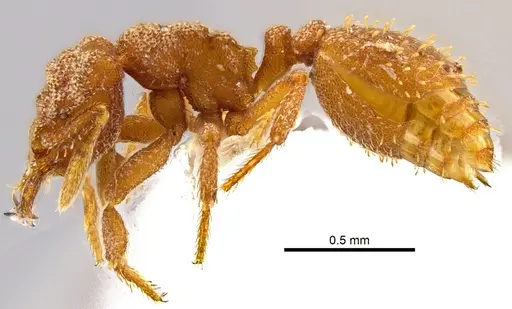
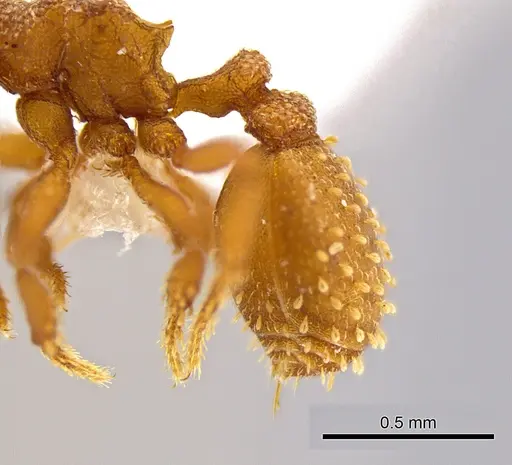
Rhopalothrix andersoni is an extremely rare ant known only from cloud forests in Honduras, at elevations of 1300-1440 meters . Workers are tiny, only head width measurements are available (0.63-0.70 mm ), and belong to the Attini tribe of Myrmicinae, a group that includes all fungus-growing ants . The species was described in 2013 from just three worker specimens collected by sifting leaf litter . No queen or male has ever been found, so almost nothing is known about its colony structure or reproduction . It has been recorded at only two sites: Sierra de Agalta (eastern Honduras) and Cusuco National Park (northwestern Honduras) .
Quick Summary
- Difficulty: Expert
- Origin & Habitat: Cloud forests in Honduras at 1300-1440 m elevation. Collected from sifted leaf litter in tropical montane forest and mixed hardwood forest [1].
- Colony Type: Unknown, queen and male have never been described. As a member of the Attini tribe, colonies likely contain a single queen, but this is unconfirmed [1].
- Size & Growth:
- Queen: Unknown, queen has not been described [1]
- Worker: Size data unavailable. Only head width documented (0.63-0.70 mm) [1]
- Colony: Unknown, only three worker specimens have ever been collected [1]
- Growth: Unknown
- Development: Unknown, no breeding colonies have ever been established (This species has never been kept in captivity. All development data is theoretical.)
- Antkeeping:
- Temperature: Likely 18-22°C based on cloud forest origin at 1300-1440 m elevation. Start cool and monitor colony activity, but keeping this species is currently impossible.
- Humidity: High humidity required, cloud forest habitat suggests consistently damp conditions. Keep substrate moist but not waterlogged.
- Diapause: Unknown, no data on overwintering requirements. Cloud forests experience mild seasonal variation.
- Nesting: Tiny leaf litter ants likely nest in small cavities within rotting wood, under stones, or in dense leaf litter. A tight, humid setup like a plaster nest or small test tube setup would be most appropriate.
- Behavior: Extremely poorly known. Like other Myrmicinae, workers possess a functional stinger but are too small (head width
- Common Issues: This species has never been kept in captivity, there is no established care protocol, Queens have never been found or described, making colony establishment from wild-caught queens impossible, The specific fungal crop this species cultivates is unknown, Attini ants cannot survive without their fungus, Only three specimens have ever been collected, indicating extreme rarity in the wild, Extremely small size means escape prevention must be exceptional
Why This Species Is Extremely Challenging
Rhopalothrix andersoni represents one of the most difficult ants to keep in captivity, possibly impossible with current knowledge. The species was only described in 2013 from three worker specimens collected in Honduras [1]. No queen or male has ever been found, so we do not know how colonies are founded (claustral vs semi-claustral), what their colony structure is (monogyne vs polygyne), how they reproduce, or what their exact dietary needs are. The genus is part of the Attini tribe, fungus-growing ants that cultivate a fungal crop for food [2]. Without knowing their specific fungal symbiont, keeping them alive would be nearly impossible even if you could obtain a queen. This species should be considered a 'wishlist' ant for advanced researchers, not a keeper species.
Natural History and Habitat
Rhopalothrix andersoni is known only from cloud forests in Honduras between 1300 and 1440 meters elevation [1]. Cloud forest environments are characterized by constant high humidity, cool stable temperatures, and dense vegetation. Specimens were collected using Winkler extraction, a method where leaf litter is sifted and placed in funnels to extract tiny arthropods over time, indicating the ants live deep within the leaf litter layer, not on the surface. They have been found in both tropical montane forest and mixed hardwood forest [1]. The species is sympatric with Rhopalothrix therion in Sierra de Agalta, meaning they share the same geographic area [1]. The fact that only three specimens have been collected across multiple intensive sampling efforts suggests this is either a genuinely rare species or one with very specific microhabitat requirements that make it difficult to find.
Taxonomy and Identification
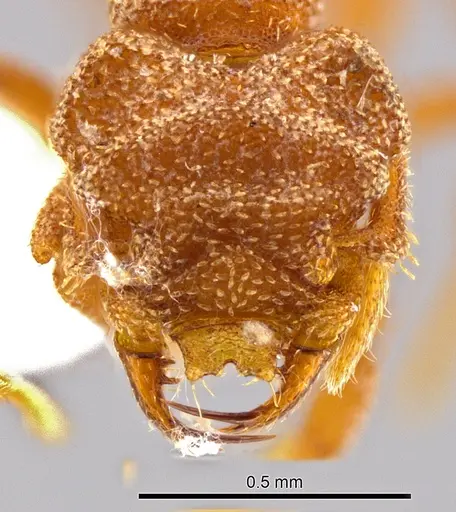
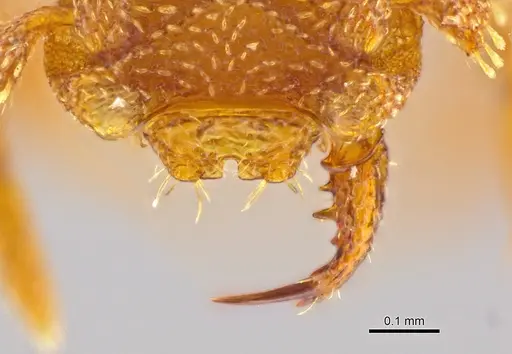
Rhopalothrix andersoni belongs to the Myrmicinae subfamily and Attini tribe [2]. The Attini tribe contains all the fungus-growing ants, including the famous leafcutter ants (Atta and Acromyrmex). Within Rhopalothrix, this species is part of the monophyletic R. isthmica clade, which is restricted to the Neotropics with its center of diversity in Central America [2]. Workers are identified by their distinctive features: mandibles with three teeth (the second tooth from the base is largest), a bilobed labrum (upper lip) with the lateral lobe longer than the medial lobe, and abundant short scale-like setae covering the first gastral segment [1]. The head width of 0.63-0.70 mm [1] makes them extremely small, comparable to some of the smallest ants in the world.
Related Species and Comparative Biology
The genus Rhopalothrix contains rare leaf litter ants that are poorly studied. They form a geographic replacement series with R. triumphalis and R. atitlanica, meaning these species replace each other in different geographic areas while sharing similar morphology [1]. All Rhopalothrix species belong to the Attini tribe, indicating they are fungus-growers. However, different genera within Attini have different agricultural specializations: some cultivate yeast, others grow fuzzy fungal gardens, and leafcutters (Atta and Acromyrmex) cut and process fresh leaves. The specific fungal crop of Rhopalothrix is unknown, it may be a specialized symbiont that only grows in specific conditions. This is one of the major barriers to keeping this species. Related small Attini like some Cyphomyrmex species are occasionally kept by advanced antkeepers, but Rhopalothrix remains completely unknown in captivity.
Is It Possible to Keep This Species?
With current knowledge, keeping Rhopalothrix andersoni is not realistically possible. The primary barriers are: no described queen (cannot establish a colony), unknown fungal symbiont (Attini ants cannot survive without their specific fungus), extreme rarity (only three specimens known to science), and no established breeding protocols. Even if a queen were somehow discovered, the specialized fungal requirements would likely make captive breeding impossible without the specific fungal culture. This species is best appreciated as a fascinating example of how little we still know about tropical ant diversity. For antkeepers interested in rare Attini, consider more commonly kept fungus-growing ants like Cyphomyrmex species or, for the more experienced, basic leafcutter ants (Atta), though these have their own significant challenges. [1][2]
Frequently Asked Questions
Can I keep Rhopalothrix andersoni ants?
No. This species has never been kept in captivity and likely cannot be kept with current knowledge. No queen has ever been described, and as an Attini (fungus-growing ant), they require a specific fungal symbiont that is unknown. Only three worker specimens have ever been collected in the wild [1][2].
Where does Rhopalothrix andersoni live?
Only in Honduras, specifically in cloud forests at 1300-1440 m elevation. Known from Sierra de Agalta in the east and Cusuco National Park in the northwest [1].
How big are Rhopalothrix andersoni workers?
Extremely tiny. Only head width is documented: 0.63-0.70 mm. Total body length is not recorded, but they are among the smallest ants in Myrmicinae [1].
What do Rhopalothrix andersoni eat?
Unknown specifically, but as an Attini (fungus-growing ant), they almost certainly cultivate a fungal crop for food. The specific fungus they cultivate has never been identified [2].
Has anyone successfully bred Rhopalothrix andersoni?
No. This species has never been bred in captivity. In fact, no queen or male has ever been collected or described, only three worker specimens exist in museum collections [1].
Are Rhopalothrix andersoni ants dangerous?
No. These are tiny leaf litter ants. Like other Myrmicinae, they possess a functional stinger, but at their size (head width
Why is Rhopalothrix andersoni so rare?
Either the species is genuinely uncommon in the wild, or it has very specific habitat requirements that make it difficult to find. Only three specimens have been collected despite intensive leaf litter sampling in Honduras. They live deep in cloud forest leaf litter at high elevations [1].
What temperature do Rhopalothrix andersoni ants need?
Unconfirmed, but cloud forest origin suggests cool conditions around 18-22°C. However, since this species cannot be kept, temperature requirements are purely theoretical [1].
Do Rhopalothrix andersoni queens exist?
Unknown. No queen has ever been collected or described in the scientific literature. The same is true for males. Only worker specimens have been found [1].
What is the colony structure of Rhopalothrix andersoni?
Completely unknown. Without any queen or colony samples, we have no information about whether they are monogyne (single queen), polygyne (multiple queens), or have any special colony structure [1].
Can I find Rhopalothrix andersoni in the wild?
Extremely unlikely. They are only known from two locations in Honduras and have been collected only through intensive Winkler extraction of leaf litter. Even professional myrmecologists have only found three specimens [1].
Are there easier Rhopalothrix species to keep?
No Rhopalothrix species are commonly kept in captivity. The entire genus is among the rarest and least studied ants. For fungus-growing ant keepers, consider Cyphomyrmex species or, for advanced keepers, Atta leafcutter ants [2].
Report an Issue
The current care sheet is based fully on literature. See inconsistencies, or something that's incorrect? Please , it will be resolved after review from an admin. Contributing to the blogs tab also helps providing information, to make us be able to further improve the caresheets. Thank you for your support!
References

This caresheet is licensed under CC BY-SA 4.0 .
Community Blogs
CASENT0629580
View on AntWeb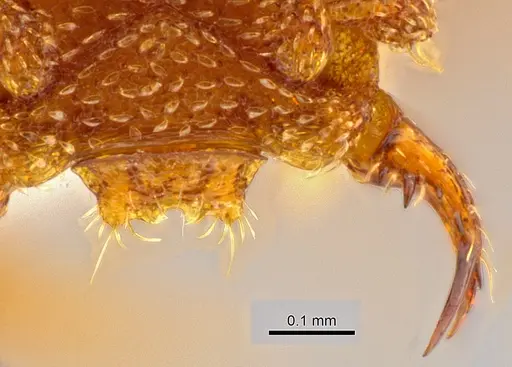
CASENT0629582
View on AntWeb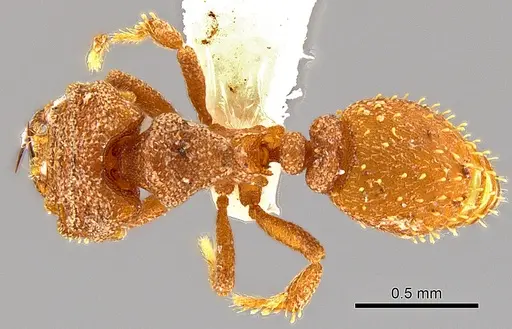
Literature
Loading distribution map...Loading products...