
Recurvidris pickburni
- Sci. Name
- Recurvidris pickburni
- Tribe
- Crematogastrini
- Subfamily
- Myrmicinae
- Author
- Bolton, 1992
- Distribution
- Found in 1 countries
Introduction
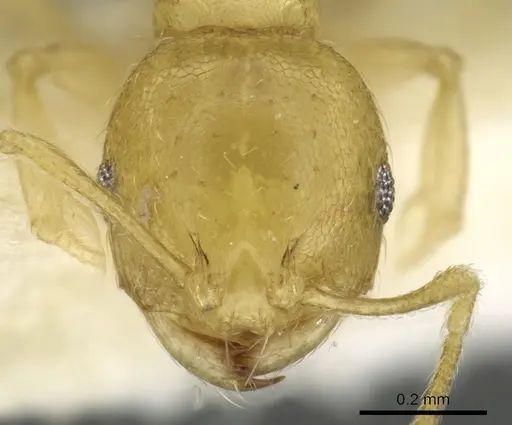
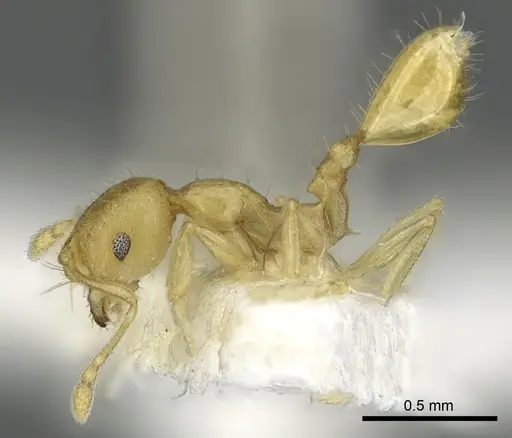
Recurvidris pickburni is a tiny yellow ant species from Sri Lanka and parts of India. Workers are 1.9-2.1 mm in total length, making them one of the smaller ant species . They belong to the Myrmicinae subfamily and have distinctive 4-toothed mandibles with an enlarged, sharply pointed basal tooth . The head has broadly rounded occipital corners that form a smooth arc when viewed from the front, and the body is uniformly yellow . Described by Bolton in 1992,this species was named after Bernerd Pickburn, a friend of the describer . Records come from Sri Lanka's central highlands near Kandy at 600-700 meters elevation, and more recently from Uttar Pradesh in northern India . Their biology in the wild is poorly studied, so captive care is based on inference from related Myrmicinae species and general antkeeping principles.
Quick Summary
- Difficulty: Medium
- Origin & Habitat: Sri Lanka (Kandy,600-700 m elevation) and India (Uttar Pradesh). Found in tropical to subtropical forested regions [1][3].
- Colony Type: Unconfirmed. Whether colonies have one queen or multiple has not been documented.
- Size & Growth:
- Queen: Unknown, queens have not been described in scientific literature.
- Worker: 1.9-2.1 mm total length [1].
- Colony: Unknown, no colony size data from research.
- Growth: Unknown, no development data exists for this species.
- Development: Unconfirmed. Based on typical small tropical Myrmicinae, estimate 4-8 weeks at optimal temperature, but this is speculative. (No direct studies exist for this species. Estimates from genus-level patterns.)
- Antkeeping:
- Temperature: Based on Sri Lankan highland origin, aim for 24-28°C. Avoid temperatures below 20°C. Provide a gentle temperature gradient if possible.
- Humidity: Moderate to high humidity. Keep nest substrate slightly moist but not waterlogged. Provide a water source in the outworld.
- Diapause: No true hibernation needed, a tropical species. Slight temperature reduction (by 2-4°C) during winter may be appropriate, but maintain at least 20°C.
- Nesting: Natural nesting sites unknown. Based on related small Myrmicinae, they likely nest in soil, under stones, or in decaying wood. In captivity, use a test tube setup for starting colonies, then a Y-tong or plaster nest with small chambers.
- Behavior: Defense mechanism: smear, they use a modified stinger to wipe venom onto enemies rather than piercing. As a small Myrmicinae, they are likely docile and non-aggressive. Their tiny size (under 2 mm) means excellent escape prevention is essential. Foraging likely includes nectar, honeydew, and small insects.
- Common Issues: tiny size leads to easy escapes without fine mesh barriers and tight seals, lack of documented care requires experimentation to find optimal conditions, slow colony growth is normal, avoid overfeeding or overhandling, wild-caught colonies may have parasites or stress from collection, need very small prey (fruit flies, springtails) due to their small size
Housing and Nest Setup
Due to their extremely small size (under 2 mm), Recurvidris pickburni needs careful housing. A small test tube with a water reservoir (cotton plug) works well for founding colonies. Keep it dark and quiet. For established colonies, use a Y-tong or plaster nest with narrow chambers, larger commercial formicaria for big ants are unsuitable. Escape prevention is critical: use fine mesh on ventilation holes and seal all connections. A small outworld allows observation and feeding without disturbing the nest [1].
Feeding and Diet
Their wild diet is unknown, but as small Myrmicinae they likely take nectar, honeydew, and small arthropods. In captivity, offer sugar sources (honey water, sugar water) and small live prey like fruit flies, pinhead crickets, or springtails. Commercial ant foods may also be accepted, test small amounts. Feed every few days and remove leftovers to prevent mold. Always provide fresh water (damp cotton or water tube) [1].
Temperature and Humidity
As a tropical species from Sri Lanka, keep them warm (24-28°C). A heating cable on one side creates a gradient for self-regulation. Avoid prolonged temperatures below 20°C. Aim for moderate to high humidity (keep nest substrate slightly moist but not wet). Use a water source in the outworld to raise ambient humidity. During winter, you can lower temperatures by 2-4°C but maintain at least 20°C, no true hibernation is needed [1].
Colony Establishment and Growth
Since founding behavior is undocumeted, the best approach is to find a mated queen after a nuptial flight or take part of an existing colony. If you have a queen, place her in a test tube setup with water, dark, and quiet. Do not disturb during founding. Eggs should appear within weeks. Nanitics (first workers) will be very small and take several weeks to months to emerge, depending on temperature. Growth will be slow. Be patient, once 10-20 workers are present, you can move them to a permanent nest [1].
Behavior and Temperament
Specific behavioral data is lacking, but Recurvidris pickburni, like other Recurvidris species, is likely docile. Their defense mechanism is smearing venom with a modified stinger, typical of the tribe Crematogastrini. They do not bite or sting in a painful way. Their tiny size makes them difficult to observe in detail, but they show standard ant behaviors: foraging, brood care, and responding to threats. They are not aggressive toward keepers [1][2][4].
Seasonal Care
Being from a tropical region without pronounced winters, this species does not require hibernation. You may see reduced activity during cooler months. In captivity, you can simulate slight seasonal change by lowering temperatures by 2-4°C during winter, but keep above 20°C. Reduce feeding frequency slightly, but always provide water. Year-round warm conditions (24-28°C) are ideal for active growth [1].
Frequently Asked Questions
How long does it take for Recurvidris pickburni to produce first workers?
The exact timeline is unknown for this species. Based on small tropical Myrmicinae, estimate 4-8 weeks from egg to worker at 26°C. This is speculative. The first nanitics will be very small.
What do Recurvidris pickburni ants eat?
Their specific diet is undocumented. They likely accept sugar water and small live prey like fruit flies, springtails, or pinhead crickets. Commercial ant foods may work. Remove uneaten food to prevent mold.
Can I keep Recurvidris pickburni in a test tube?
Yes, a test tube setup is ideal for starting colonies. Use a small tube with a cotton water plug. Keep it dark and quiet. Escape prevention is crucial, ensure the cotton is tight and cover any gaps with fine mesh.
Do Recurvidris pickburni ants sting?
They do not have a functional stinger for piercing. Their defense is to smear venom using a modified stinger, typical of the tribe Crematogastrini. This is not painful to humans.
What temperature do Recurvidris pickburni need?
Keep them warm at 24-28°C, based on their Sri Lankan origin. Avoid below 20°C. A heating cable can provide a gradient. Room temperature (20-24°C) may work but warmer is better for activity.
Are Recurvidris pickburni good for beginners?
This species is rated Medium difficulty. They are small and docile, but lack of documented care requires experimentation. Prior experience with small Myrmicinae is helpful. They can be interesting for dedicated keepers.
How big do Recurvidris pickburni colonies get?
Colony size is not documented. Based on their tiny worker size and related species, colonies likely stay under a few hundred workers. Growth is slow.
Do Recurvidris pickburni need hibernation?
No, being a tropical species from Sri Lanka, they do not need true hibernation. Keep warm year-round. If you want to simulate seasons, lower temperature by 2-4°C during winter but maintain at least 20°C.
Why are my Recurvidris pickburni escaping?
Their tiny size (under 2 mm) lets them squeeze through very small gaps. Check all connections, ventilation holes, and lid seals. Use fine mesh (0.5 mm or smaller). Ensure tight cotton plugs in test tubes.
When should I move Recurvidris pickburni to a formicarium?
Wait until the colony has at least 20-30 workers and is actively foraging. Use a Y-tong or plaster nest with small chambers. Avoid moving too early to reduce stress.
Report an Issue
The current care sheet is based fully on literature. See inconsistencies, or something that's incorrect? Please , it will be resolved after review from an admin. Contributing to the blogs tab also helps providing information, to make us be able to further improve the caresheets. Thank you for your support!
References

This caresheet is licensed under CC BY-SA 4.0 .
Community Blogs
CASENT0902055
View on AntWeb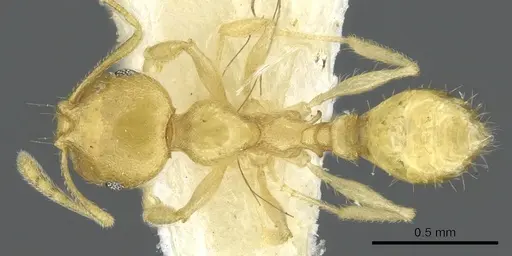
Literature
Loading distribution map...Loading products...