
Pseudomyrmex beccarii
- Sci. Name
- Pseudomyrmex beccarii
- Tribe
- Pseudomyrmecini
- Subfamily
- Pseudomyrmecinae
- Author
- Menozzi, 1935
- Distribution
- Found in 8 countries
Introduction
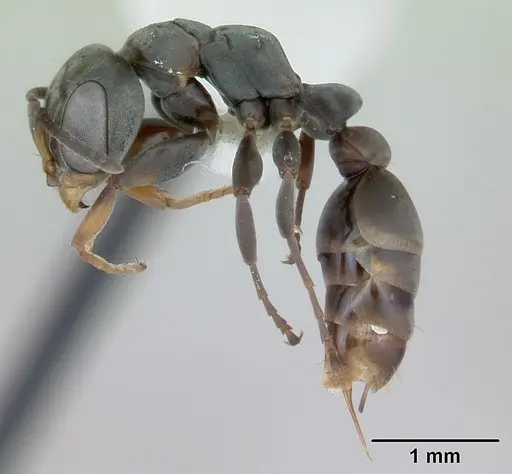
Pseudomyrmex beccarii is a slender, elongated ant from the subfamily Pseudomyrmecinae. Workers are around 5-6 mm in total length (inferred from the genus), with long legs and a gradually rounded propodeum. The petiolar node usually lacks erect hairs, though pale golden setae may rarely appear . This species is native to the Neotropics, with records from Brazil (Pará), French Guiana, Guyana, Peru (San Martín), and Colombia (Magdalena) . Little is known about its specific biology, but like other Pseudomyrmex, it likely nests in hollow twigs and dead branches in the forest canopy.
Quick Summary
- Difficulty: Medium
- Origin & Habitat: Neotropical rainforests of South America, confirmed in Brazil (Pará state, multiple locations), French Guiana, Guyana, Peru (San Martín), and Colombia (Magdalena). They inhabit tropical forest environments, typically nesting in hollow twigs, dead branches, and plant cavities in the canopy [2][3][4][5].
- Colony Type: Colony structure is unconfirmed. Based on other Pseudomyrmex species, colonies are likely monogyne (single queen), but this has not been verified for P. beccarii.
- Size & Growth:
- Queen: Unknown, no measurements available for this species.
- Worker: Approximately 5-6 mm in total length, inferred from the genus Pseudomyrmex. Direct measurements are not available in the literature.
- Colony: Unknown, no colony size data available for this species.
- Growth: Unknown, no growth rate data available for this species.
- Development: Unconfirmed, no direct development data exists. Based on typical Pseudomyrmecinae patterns, expect 6-10 weeks at tropical temperatures, but this is an estimate. (Development timeline is unconfirmed for this specific species.)
- Antkeeping:
- Temperature: Keep at tropical room temperature, aim for 24-28 °C. This range aligns with their Neotropical forest origin. A slight gradient is beneficial if possible.
- Humidity: Moderate to high humidity, keep the nest substrate slightly moist but not waterlogged. Provide a water tube in the outworld. Avoid letting the substrate dry out completely.
- Diapause: No, these are tropical ants that do not require hibernation. Maintain consistent temperatures year‑round.
- Nesting: Arboreal specialists, they naturally nest in hollow twigs, dead branches, and plant stems. In captivity, Y‑tong (AAC) nests or plaster nests with narrow, tight chambers work well. Provide vertical elements such as twigs or cork bark in the outworld to mimic their natural arboreal habitat.
- Behavior: Pseudomyrmex ants are active, fast‑moving foragers with good vision. They hunt actively for small prey and may also collect honeydew. Workers have a well‑developed sting (typical of the subfamily) and will defend their nest if threatened, but they are not particularly aggressive toward keepers. Their small size (≈5-6 mm) means excellent escape prevention is necessary, they can squeeze through tiny gaps. They are diurnal foragers.
- Common Issues: limited species‑specific data makes care recommendations uncertain, this is a poorly documented species., escape prevention is critical due to their small size and active nature., arboreal requirements mean they need vertical space and appropriate nesting options., tropical conditions must be maintained, they cannot tolerate prolonged cool temperatures., diet preferences are unknown, keepers may need to experiment with accepted foods.
Natural History and Distribution
Pseudomyrmex beccarii is a Neotropical ant species with a distribution spanning northern South America. Specimens have been recorded from multiple locations in Brazil's Pará state, including Belém, Almeirim, Jacundá, Melgaço, Oriximiná, Parauapebas, São João de Pirabas, and Vitória do Xingu [2]. The species has also been documented in Peru's San Martín region [3], Colombia's Magdalena area [4][1], French Guiana, and Guyana [5]. This wide but patchy distribution across the Amazon basin suggests it thrives in tropical rainforest, likely in canopy or forest‑edge habitats where nesting sites in dead wood are abundant.
Identification and Morphology
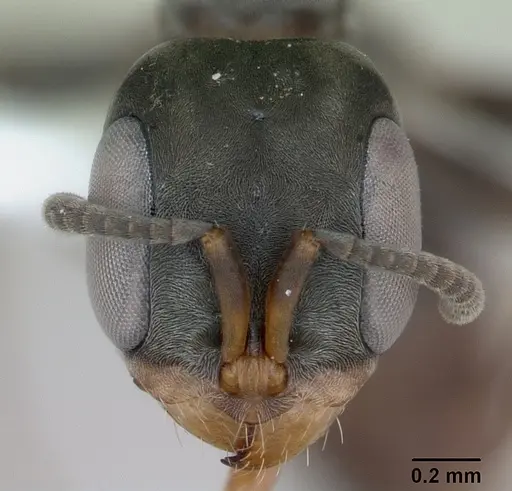
Workers of Pseudomyrmex beccarii are among the larger species in the genus, based on morphological measurements [1]. The species is identified by its gradually rounded propodeum (the dorsal face runs smoothly into the posterior face without sharp angles) and a petiolar node that usually lacks erect hairs (occasionally pale golden setae may appear) [1]. Like all Pseudomyrmecinae, they have a slender, elongated body with long legs and large eyes, adapted for active foraging.
Housing and Nesting
Pseudomyrmex ants are arboreal by nature, nesting in hollow twigs, dead branches, and plant stems in the forest canopy. For captive care, provide a Y‑tong (AAC) nest or plaster formicarium with chambers scaled to their size (≈5-6 mm). The nest should have narrow, tight chambers that mimic the enclosed spaces they would naturally use. In the outworld, include vertical elements like twigs, branches, or cork bark to satisfy their arboreal instincts. A water tube should be provided for humidity. They do not need large spaces, a modest outworld with proper climbing structures works well. Ensure excellent escape prevention, as they are active and can squeeze through very small gaps.
Temperature and Humidity
As tropical ants, P. beccarii requires warm, humid conditions. Maintain temperatures between 24-28 °C, avoiding prolonged drops below 22 °C. Room temperature in most homes will suffice, but a heating cable on one side of the nest can help if your space runs cool. Humidity should be moderate to high, keep the nest substrate slightly moist but not waterlogged. A water tube provides a constant humidity source. These ants do not need diapause or winter cooling, they are active year‑round in their tropical habitat.
Feeding and Diet
Specific dietary preferences for P. beccarii have not been documented. However, Pseudomyrmex ants are typically active predators and foragers. Offer a varied diet including sugar water or honey as an energy source, and protein sources such as small insects (fruit flies, small crickets, mealworms). Live prey is likely preferred given their active foraging nature. Start with small prey items and observe what they accept. Sugar water should always be available. Feed every 2-3 days, removing uneaten prey after 24 hours to prevent mold.
Colony Establishment
Colony founding behavior for P. beccarii has not been directly documented. If you obtain a founding queen, provide a small test tube setup with water (via a cotton plug) and place it in a warm, humid location. Do not feed the founding queen, wait until the first workers (nanitics) emerge before offering food. Colony growth is expected to be gradual, with initial broods taking several weeks to develop, but no specific timeline is confirmed.
Frequently Asked Questions
How long does it take for Pseudomyrmex beccarii to produce first workers?
The exact development timeline for this species is unconfirmed. Based on typical Pseudomyrmecinae patterns, expect 6-10 weeks from egg to first worker at optimal tropical temperatures (24-28 °C). However, this is an estimate.
What size colony does Pseudomyrmex beccarii reach?
Colony size data is not available for this species. Pseudomyrmex colonies are typically moderate in size, but specific maximum worker counts for P. beccarii have not been documented.
Do Pseudomyrmex beccarii ants sting?
Pseudomyrmex ants belong to the subfamily Pseudomyrmecinae, which possesses a well‑developed sting. Given their small size (≈5-6 mm), the sting is mild and may not penetrate human skin effectively. They are not considered aggressive toward keepers but may defend their nest if threatened.
Can I keep multiple Pseudomyrmex beccarii queens together?
The colony structure for this species is unconfirmed. Most Pseudomyrmex species are monogyne (single queen), but polygyny (multiple queens) has been documented in some related species. Without specific data for P. beccarii, it is not recommended to combine unrelated foundress queens, as fighting may occur.
What is the best nest type for Pseudomyrmex beccarii?
Y‑tong (AAC) nests or plaster formicaria work well for this species. They prefer tight, enclosed chambers scaled to their body size (≈5-6 mm). Their arboreal nature means they will benefit from vertical elements in the outworld, such as twigs or cork bark. Avoid large, open spaces.
Do Pseudomyrmex beccarii need hibernation?
No, these are tropical ants from the Neotropical region and do not require hibernation or winter cooling. Maintain consistent temperatures of 24-28 °C year‑round.
What do Pseudomyrmex beccarii eat?
Specific dietary data is not documented. Based on genus patterns, they likely accept sugar sources (honey, sugar water) and small protein prey (fruit flies, small crickets, mealworms). Offer sugar water constantly and protein prey every 2-3 days.
Are Pseudomyrmex beccarii good for beginners?
This species is rated as Medium difficulty. The limited species‑specific data means care is somewhat uncertain. They have specific arboreal nesting needs and require tropical conditions. Beginners should ensure they can maintain warm, humid conditions consistently before attempting this species.
How big are Pseudomyrmex beccarii workers?
Workers are approximately 5-6 mm in total length, based on inference from the genus Pseudomyrmex. Direct measurements for this species are not available in the literature.
Where is Pseudomyrmex beccarii found?
This species is found across the Neotropical region including Brazil (Pará state, multiple locations), French Guiana, Guyana, Peru (San Martín), and Colombia (Magdalena) [2][3][4][5]. They inhabit tropical rainforest environments.
Report an Issue
The current care sheet is based fully on literature. See inconsistencies, or something that's incorrect? Please , it will be resolved after review from an admin. Contributing to the blogs tab also helps providing information, to make us be able to further improve the caresheets. Thank you for your support!
References

This caresheet is licensed under CC BY-SA 4.0 .
Community Blogs
INBIOCRI002728271
View on AntWeb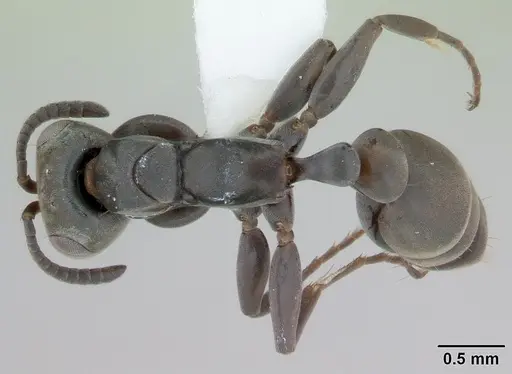
Literature
Loading distribution map...Loading products...