
Pseudolasius amblyops
- Sci. Name
- Pseudolasius amblyops
- Tribe
- Lasiini
- Subfamily
- Formicinae
- Author
- Forel, 1901
- Distribution
- Found in 1 countries
Introduction
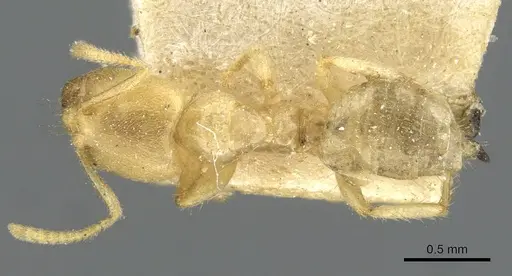
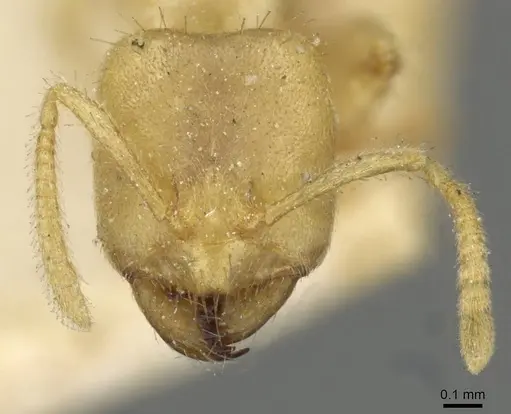
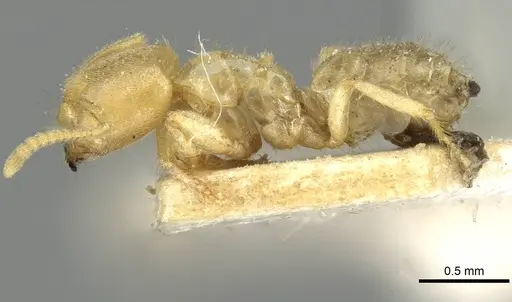
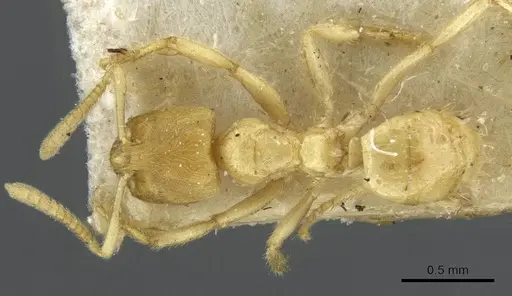
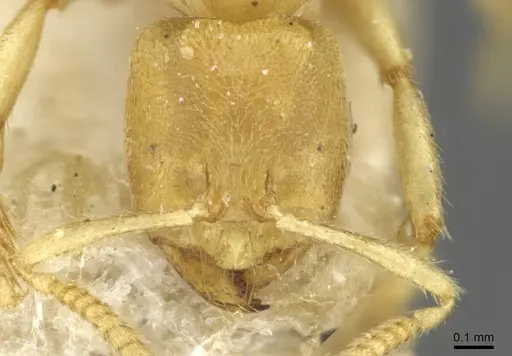
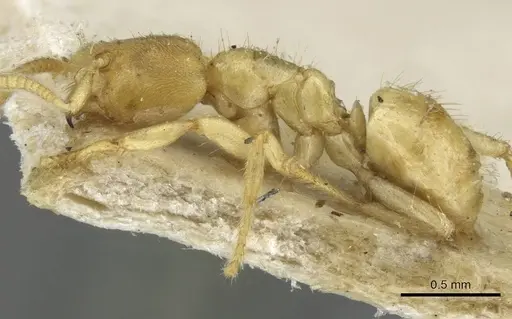
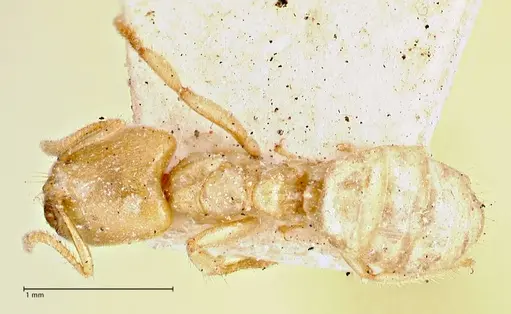
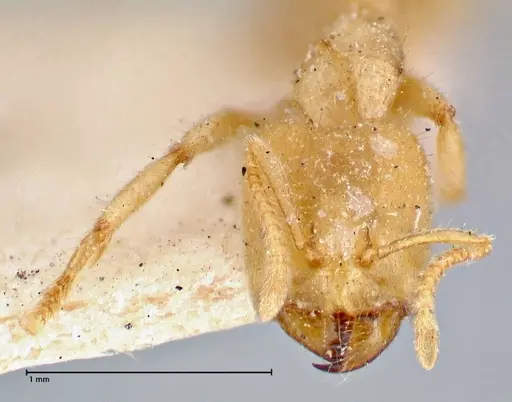
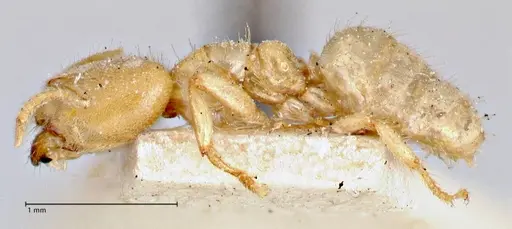
Pseudolasius amblyops is a small ant in the subfamily Formicinae, first described by Forel in 1901 from the Bismarck Archipelago . It is known from New Guinea and specifically New Britain . The species is poorly documented - almost no biological, behavioral, or ecological data is available beyond its taxonomy and distribution. Workers are typical of the tribe Lasiini: small, soft-bodied, and unremarkable in appearance. Due to the lack of research, nearly all aspects of its captive care are inferred from related genera.
Quick Summary
- Difficulty: Hard
- Origin & Habitat: Native to the Bismarck Archipelago and New Guinea, recorded from New Britain [1]. Inhabits tropical forests, but specific microhabitat details are unknown.
- Colony Type: Unknown, not documented. Based on genus patterns, likely single-queen (monogyne) but unconfirmed.
- Size & Growth:
- Queen: No data available, inferred from genus Pseudolasius (typically ~5-7 mm)
- Worker: No data available, inferred from genus Pseudolasius (typically ~2-3 mm)
- Colony: Unknown, estimated up to several hundred workers based on related species
- Growth: Unknown, estimated moderate
- Development: No data available, estimated 6-8 weeks at warm temperatures based on related Lasiini (All development times are speculative, no species‑specific measurements exist.)
- Antkeeping:
- Temperature: Unknown, as a tropical species, likely needs warmth (24-28 °C). Avoid temperatures below 22 °C, but this is an estimate.
- Humidity: Unknown, likely requires high humidity (moist substrate) typical of tropical forest floors. Provide a gradient from damp to drier areas.
- Diapause: Unknown, as a tropical species, probably does not require hibernation, but may slow during cool periods.
- Nesting: Unknown, likely nests in soil or under stones, as typical for Pseudolasius. Use naturalistic setups with soil or AAC/plaster nests with moisture retention.
- Behavior: Behavior undocumented. As a Formicinae, it likely secretes formic acid but defensiveness is unknown. Escape risk is moderate due to small size, gaps under 2 mm should be sealed.
- Common Issues: extremely limited availability in the hobby, no species‑specific care data, all advice is estimated from related ants, tropical humidity needs may cause mold if ventilation is poor, slow colony growth may test patience, wild‑caught colonies may carry unknown parasites or diseases
Housing and Nest Setup
Because so little is known about Pseudolasius amblyops, housing suggestions come from general tropical Formicinae patterns. Start with a test‑tube setup: fill one end with water held by a cotton plug. For larger colonies, use a AAC (Y‑tong), plaster, or soil nest with narrow chambers to retain moisture. Avoid completely dry setups. A small outworld allows foraging. Since nothing is certain, monitor the colony closely and adjust based on their activity.
Feeding and Diet
Like most Formicinae, Pseudolasius amblyops probably accepts sugary liquids (honey water, sugar water) and small insects. Offer a constant carbohydrate source and provide protein two or three times a week (e.g., fruit flies, small crickets, or mealworms). Remove uneaten prey after 24 hours to avoid mold. Ensure fresh drinking water is always available. No specific dietary preferences are known for this species.
Temperature and Heating
A tropical ant, P. amblyops likely needs a warm environment. Aim for 24-28 °C, below 22 °C may slow them down. Use a heating cable or mat on one side of the nest to create a gradient. Place the heat source on top of the nest (not underneath) to avoid drying the substrate too fast. If your room stays in the low‑to‑mid‑20s °C, additional heating may not be needed, but watch for sluggishness.
Humidity Management
Maintain a high but not waterlogged humidity level, the substrate should feel damp. Provide a water tube in the outworld for drinking. Mist the interior of the nest occasionally, but let surfaces dry between mistings to discourage mold. Good ventilation is critical: without it, the damp conditions can quickly become deadly. The goal is a consistently moist nest with air movement.
Colony Development
Colony growth is expected to be slow to moderate. After mating, the queen probably seals herself underground (claustral founding) and begins laying eggs. First workers (nanitics) may appear about 6-8 weeks later at optimal temperatures, but this is a guess. The colony will likely remain small for the first year, gradually building to perhaps a few hundred workers over 1-2 years. Be patient, rushing development can kill them.
Frequently Asked Questions
How long does it take for Pseudolasius amblyops to produce first workers?
No data is available. Based on related species, first workers might appear 6-8 weeks after egg‑laying at warm temperatures, but this is speculative.
What temperature do Pseudolasius amblyops ants need?
Unknown. Likely 24-28 °C, as it is a tropical species, avoid temperatures much below 22 °C.
Is Pseudolasius amblyops a good species for beginners?
No. Information is very scarce, and there is no established care protocol. Beginners should start with better‑documented species like Lasius niger.
How big do Pseudolasius amblyops colonies get?
Unknown, possibly up to several hundred workers, but no colony size has been recorded.
What do Pseudolasius amblyops eat?
Expected diet: sugary liquids and small insects, typical for Formicinae. No specific studies exist.
Do Pseudolasius amblyops need hibernation?
Unknown. As a tropical species, it probably does not require a winter diapause, but this is unconfirmed.
Can I keep multiple Pseudolasius amblyops queens together?
Not documented. Most Pseudolasius are thought to be monogyne, so keep queens separate unless you observe tolerance in your colony.
Where is Pseudolasius amblyops found in the wild?
It is native to the Bismarck Archipelago and New Guinea, specifically recorded from New Britain [1].
Why is Pseudolasius amblyops so rarely available?
The species has very limited scientific documentation, is endemic to a small region (New Britain), and is rarely collected for the ant trade.
Report an Issue
The current care sheet is based fully on literature. See inconsistencies, or something that's incorrect? Please , it will be resolved after review from an admin. Contributing to the blogs tab also helps providing information, to make us be able to further improve the caresheets. Thank you for your support!
References

This caresheet is licensed under CC BY-SA 4.0 .
Community Blogs
Literature
Loading distribution map...Loading products...