
Prolasius pallidus
- Sci. Name
- Prolasius pallidus
- Tribe
- Melophorini
- Subfamily
- Formicinae
- Author
- Clark, 1934
- Distribution
- Found in 1 countries
Introduction
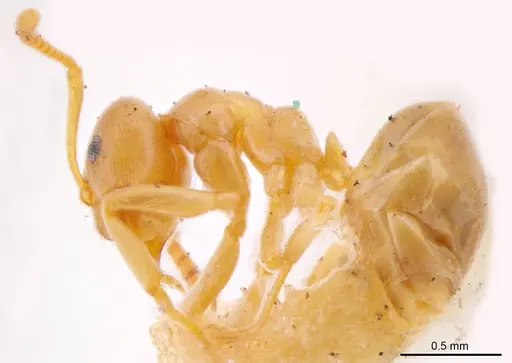
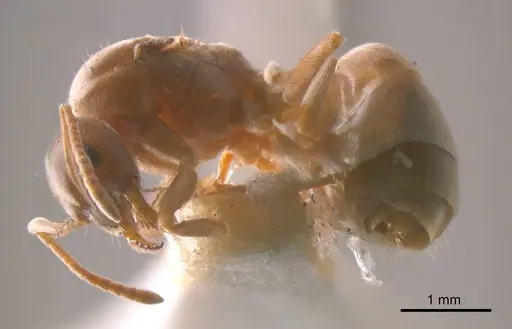
Prolasius pallidus is an ant native to Australia, belonging to the subfamily Formicinae and tribe Melophorini. Workers are yellowish in color , and the species is found across Australia, particularly in eastern regions including eastern Melbourne. It inhabits Eucalyptus regnans forests and has been observed increasing in abundance after high-intensity wildfires . Size data is unavailable for this species. As a seed harvester, it plays a role in forest ecosystems by collecting and storing seeds .
Quick Summary
- Difficulty: Medium
- Origin & Habitat: Eastern Australia, especially in Eucalyptus regnans forests, with documented presence in eastern Melbourne. This species thrives in forest environments and responds to fire events [2].
- Colony Type: Colony structure is not well documented in scientific literature. Based on typical Melophorini patterns, colonies are likely monogyne (single queen), but this remains unconfirmed.
- Size & Growth:
- Queen: Size data unavailable, no total length measurements provided in research.
- Worker: Size data unavailable, no total length measurements provided in research.
- Colony: Unknown, no data on colony size available.
- Growth: Estimated moderate based on related harvester ant species, but unconfirmed for this species.
- Development: Unconfirmed, no specific data available for this species. (Development timeline is not studied, related species may develop faster in warm conditions.)
- Antkeeping:
- Temperature: Keep warm, around 22-28°C, based on Australian forest habitat and related species patterns [2]. Provide a temperature gradient for self-regulation.
- Humidity: Allow substrate to dry partially between waterings, as this species is forest-dwelling but not rainforest-adapted [2].
- Diapause: Unknown, based on temperate distribution, a winter rest period may be beneficial, but no specific data exists.
- Nesting: Natural nesting involves underground chambers. In captivity, use dry test tube setups or Y-tong nests with sand or soil substrate for seed storage [3].
- Behavior: Workers are active foragers, generally peaceful compared to many Formicinae. They defend by spraying formic acid, not stinging. Escape risk is moderate due to their size, standard precautions are recommended.
- Common Issues: seed storage behavior can lead to mold if substrate stays too wet, warm temperature needs may be challenging to maintain in cooler climates, winter dormancy requirements are not fully understood, which may cause colony issues if not addressed
Housing and Nest Setup
You can use a test tube setup for founding colonies, with the queen sealing herself in a dark chamber. Once the colony is established, transition to a small formicarium using Y-tong or plaster nests. Provide a dry substrate to match their natural forest habitat [2]. Ensure escape prevention with fine barriers, as workers can squeeze through small gaps [3].
Feeding and Diet
As a seed harvester, offer small seeds like millet or birdseed. Provide sugar water or honey for energy, and protein from small insects like fruit flies. Remove uneaten seeds to prevent mold [2][3].
Temperature and Seasonal Care
Maintain warm temperatures around 22-28°C during active seasons. Use a heating cable for a gradient. During winter, reduce temperatures to simulate natural dormancy, but specific duration is unconfirmed [2].
Behavior and Defense
Workers are yellowish and active foragers, not highly aggressive. They defend by spraying formic acid, which can irritate but is not dangerous to humans. Communication occurs through chemical trails [1][3].
Colony Development
Founding behavior is unconfirmed. Growth rate is estimated moderate, but no specific timeline is documented. Colonies may expand slowly under good conditions [3].
Frequently Asked Questions
How long does it take for Prolasius pallidus to get first workers?
The exact timeline is unconfirmed for this species. No specific data is available, so estimates from related species are not reliable.
What do Prolasius pallidus ants eat?
They are seed harvesters, so offer seeds, sugar water, and small insects for protein [2][3].
Can I keep Prolasius pallidus in a test tube?
Yes, test tubes work well for founding colonies. Once established, move to a formicarium [3].
Do Prolasius pallidus need hibernation?
Diapause is unconfirmed, but based on temperate distribution, a winter rest may be beneficial. Reduce temperatures for 2-3 months if possible [2].
Are Prolasius pallidus good for beginners?
This species is rated medium difficulty due to rare availability and specific temperature needs. Not ideal for complete beginners [3].
How big do Prolasius pallidus colonies get?
Colony size is unknown, as no data is available for this species.
Why are my Prolasius pallidus dying?
Common causes include temperatures too cold, excessive humidity, mold from seeds, or lack of protein. Ensure warm, dry conditions and varied diet [3].
When should I move Prolasius pallidus to a formicarium?
Move when the colony is established and the test tube becomes crowded, typically after workers are active. Ensure dry conditions in the new nest [3].
Can I keep multiple Prolasius pallidus queens together?
This is not recommended, as combining unrelated queens may cause aggression. Single-queen colonies are typical [3].
Report an Issue
The current care sheet is based fully on literature. See inconsistencies, or something that's incorrect? Please , it will be resolved after review from an admin. Contributing to the blogs tab also helps providing information, to make us be able to further improve the caresheets. Thank you for your support!
References

This caresheet is licensed under CC BY-SA 4.0 .
Community Blogs
ANTWEB1008272
View on AntWeb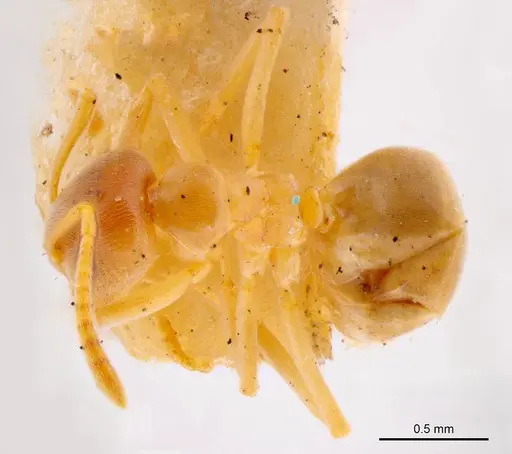
ANTWEB1008276
View on AntWeb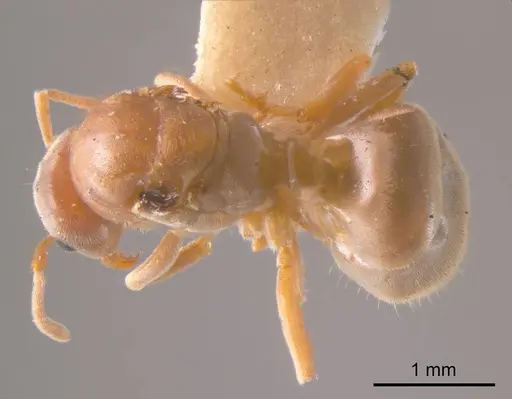
Literature
Loading distribution map...Loading products...