
Procryptocerus impressus
- Sci. Name
- Procryptocerus impressus
- Tribe
- Attini
- Subfamily
- Myrmicinae
- Author
- Forel, 1899
- Distribution
- Found in 3 countries
Introduction
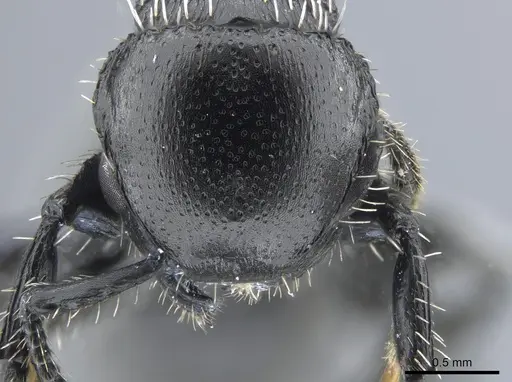
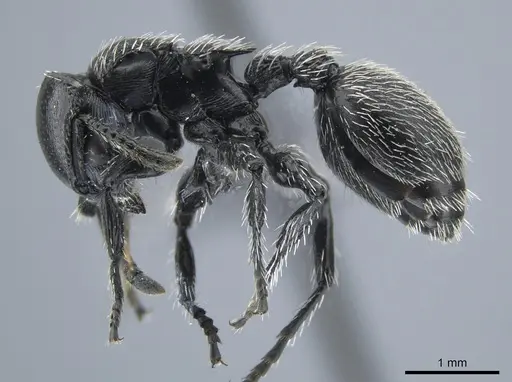
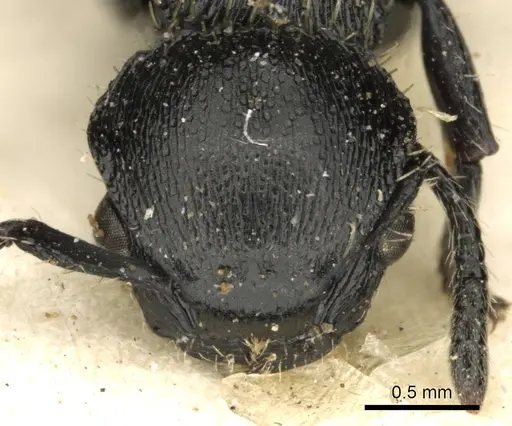
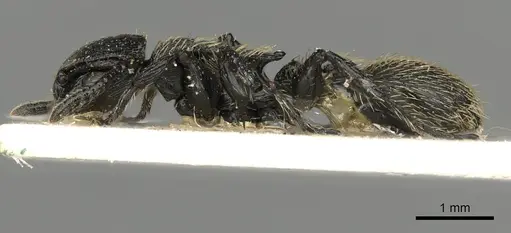
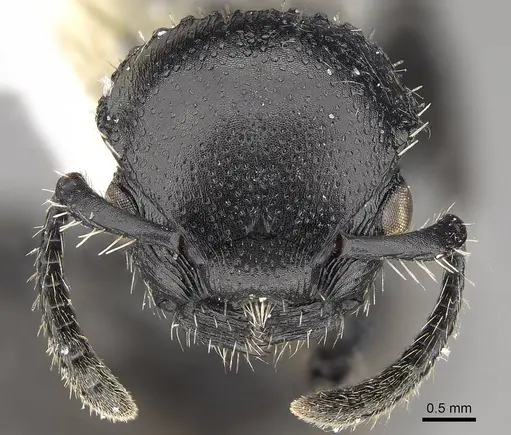
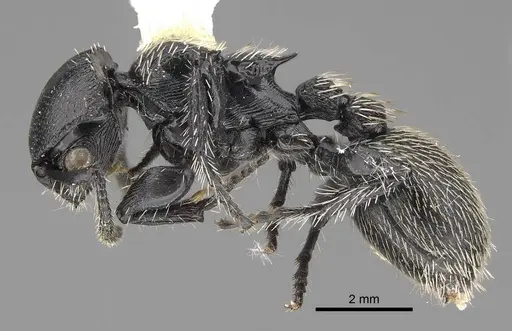
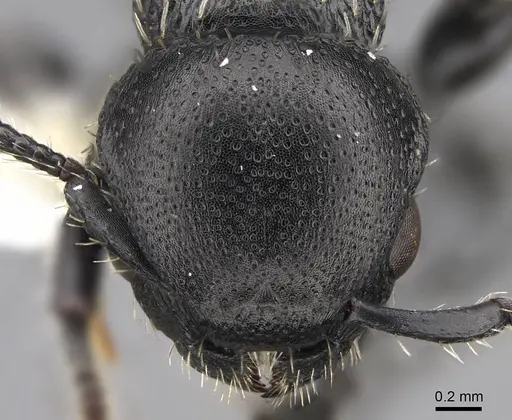
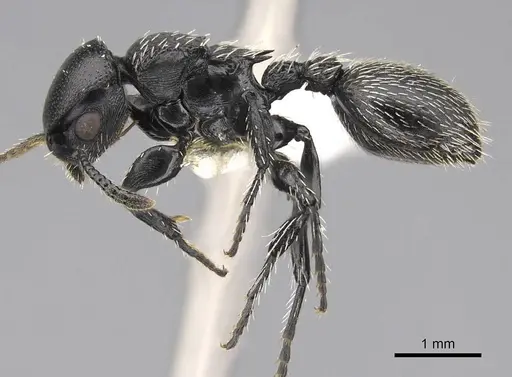
Procryptocerus impressus is a small, distinctive myrmicine ant native to Central American and northern South American rainforests. Its morphology includes a concave vertex, crenate frontovertexal margin, and strongly compressed, disc-shaped femora that fit into grooves on the pronotum . The body is entirely black with dense, yellowish-white setae, and the gaster shows distinctive longitudinal striation . This species inhabits primary rainforest where workers are found on low vegetation and in treefalls, suggesting they are cryptic canopy-dwelling ants . They are much more common in primary forests than secondary forests . In Costa Rica, they live alongside two very similar species, P. paleatus and P. tortuguero, which can make identification challenging .
Quick Summary
- Difficulty: Hard
- Origin & Habitat: Primary rainforest of Costa Rica, Panama, Colombia (Isla Gorgona), and Ecuador [1][4][5]. Workers are encountered on low vegetation and in treefalls in pristine forest habitats [1]. Much more common in primary forests than secondary forests [3].
- Colony Type: Colony structure is unconfirmed. Based on genus-level patterns, likely single-queen colonies. No documented ergatoid (wingless replacement) queens for this species.
- Size & Growth:
- Queen: Size data unavailable, only head width measurements exist (head width ~1.64mm) [1]
- Worker: Size data unavailable, only head width measurements exist (head width ~1.5mm) [1]
- Colony: Unknown, no colony size data available
- Growth: Unknown, no development timing data available
- Development: Unknown, no direct measurements. Based on typical Attini patterns, estimate 6-10 weeks at optimal temperature. (Development timeline has not been studied. Estimates based on related Attini genera.)
- Antkeeping:
- Temperature: Keep at warm rainforest conditions, roughly 24-28°C. Provide a temperature gradient allowing workers to regulate their exposure [1].
- Humidity: High humidity is essential, these are rainforest ants. Keep nest substrate consistently moist but not waterlogged. Ensure good ventilation to prevent mold.
- Diapause: Unknown, no documented hibernation or diapause behavior. As a tropical species, they likely do not require a winter rest period.
- Nesting: In captivity, a naturalistic setup with moist substrate or a Y-tong/plaster nest works well. They naturally nest in rotting wood and on low vegetation in treefalls. Provide tight chambers scaled to their small size.
- Behavior: Workers are encountered on low vegetation, suggesting they forage on plants rather than primarily on the ground. Like other Myrmicinae, they possess a functional stinger but are not aggressive and rarely use it against humans. They likely rely on their cryptic coloration and dense setae for defense. Their small size means escape prevention is critical, use fine mesh and tight-fitting barriers. They are shy and methodical, avoiding confrontation.
- Common Issues: escape prevention is critical due to their very small size, use fine mesh and tight lids, high humidity can lead to mold if ventilation is poor, overfeeding causes contamination in humid nests, unknown founding behavior makes colony establishment challenging, growth rate and colony size are undocumented, making long-term planning difficult
Natural History and Distribution
Procryptocerus impressus is a Neotropical ant species found across Central America into northern South America. Their range extends from Panama and Costa Rica through Colombia (where they have been recorded on Isla Gorgona and in the Chocó region) to Ecuador [1][4][5]. They are strongly associated with primary rainforest habitats and are much more commonly encountered in pristine forests than in disturbed areas [3]. Workers are typically found on low vegetation and in treefalls, suggesting they are canopy-dwelling ants that forage on leaves and branches rather than on the forest floor [1]. In Costa Rica, this species is sympatric with two very similar species, P. paleatus and P. tortuguero, which were historically confused with P. impressus before Longino and Snelling's 2002 revision separated them [1]. The distinctive morphological features that separate P. impressus from its relatives include the subfoveolate frons with semicurvated costulae and the crenulate frontovertexal margin with scarce white spatulate short erect hairs [4].
Morphology and Identification
Procryptocerus impressus workers are small ants with a distinctive morphology. The most notable features include a concave vertex that is clearly differentiated from the face, a crenate (toothed) frontovertexal margin, and remarkably compressed, disc-shaped femora that fit into grooves on the pronotum [2]. The body is entirely black with dense, yellowish-white setae that are stiff and flattened on dorsal surfaces [1]. The gaster (abdomen) shows distinctive longitudinal striation, and the first gastral tergite has setae dense enough to partially obscure the underlying sculpture [1]. These morphological features, particularly the compressed femora and unique head structure, are adaptations that allow this ant to squeeze into tight spaces on vegetation. The frontovertexal corner has characteristic angulate processes, and the scapes have a flanged skirt at the base [2]. Although they belong to the tribe Attini, they are not leaf-cutters, they are thought to be predators or omnivores based on morphology.
Housing and Nest Preferences
In captivity, Procryptocerus impressus requires a setup that mimics their natural rainforest habitat. They should be kept in a naturalistic terrarium-type setup with moist substrate, or alternatively in a Y-tong or plaster nest that maintains high humidity [3]. The nest chambers should be small and tight-fitting to their tiny body size. Since workers are found on low vegetation in the wild, adding live plants or moss to the outworld can help them feel secure and encourage natural foraging behavior [1]. Use excellent escape prevention, these are very small ants that can squeeze through standard test tube cotton and tiny gaps. Fine mesh barriers and tight-fitting lids are essential. Provide a water source via a test tube with a cotton wick, and ensure the nest area stays consistently moist but never waterlogged.
Feeding and Diet
The diet of Procryptocerus impressus is not well-documented in scientific literature. As a member of the tribe Attini (which includes leaf-cutter ants), they may have omnivorous tendencies, but they are not true leaf-cutters. Based on their small size and occurrence on vegetation, they likely forage for small arthropods, honeydew, and nectar. In captivity, offer a varied diet including sugar water or honey as an energy source, and protein sources such as small live prey (fruit flies, pinhead crickets, mealworms). Start with small portions and observe acceptance. Since they are rarely kept in captivity, there is no established feeding protocol, be prepared to experiment with different foods and monitor what the colony accepts. Avoid overfeeding, as excess food leads to mold in humid setups.
Temperature and Humidity Requirements
As a tropical rainforest species from Central America, Procryptocerus impressus requires warm and humid conditions. Maintain temperatures in the range of 24-28°C, which aligns with their native understory environment [1]. A temperature gradient is recommended so workers can regulate their exposure, place a heating cable on one side of the nest to create a warm zone while allowing them to move to cooler areas if needed. Humidity should be kept high without specifying exact percentages, the nest substrate should remain consistently moist but never waterlogged. Poor ventilation combined with high humidity can lead to mold problems, so ensure adequate airflow while maintaining moisture. Monitor condensation levels in the nest as an indicator of humidity.
Behavior and Temperament
Procryptocerus impressus is a cryptic, non-aggressive species that avoids confrontation. Workers are encountered on low vegetation in the wild, suggesting they are shy foragers that move slowly and carefully through their environment [1]. Like other Myrmicinae, they possess a functional stinger, but they are not known to use it aggressively towards humans. Their dense setae may serve as a defensive mechanism, making them appear larger or less palatable to predators. Their small size and cryptic nature mean they are not active foragers in the traditional sense, they are more likely to slowly explore their territory rather than aggressively hunt. In captivity, they will establish quiet, methodical colonies that are fascinating to observe but not particularly dramatic. Provide plenty of hiding spots and visual barriers in their enclosure to reduce stress.
Frequently Asked Questions
How long does it take for Procryptocerus impressus to produce first workers?
The development timeline is unconfirmed, no scientific data exists on their egg-to-worker time. Based on typical Attini patterns, expect approximately 6-10 weeks from egg to first worker at optimal temperature (24-28°C). Patience is required as this is a rarely studied species with no established captive breeding protocols.
What do Procryptocerus impressus ants eat?
Their diet is not well-documented. Based on genus patterns, they likely accept small live prey (fruit flies, micro-arthropods), sugar sources (honey water), and possibly plant-derived foods. Start with sugar water and small protein sources, then observe what your colony accepts. Avoid overfeeding to prevent mold in their humid habitat.
Are Procryptocerus impressus good for beginners?
This species is not recommended for beginners. They require high humidity, warm temperatures, and excellent escape prevention due to their very small size. Additionally, there is limited captive breeding information available, making them challenging to maintain long-term. They are best suited for experienced antkeepers who can provide stable rainforest conditions.
Can I keep multiple Procryptocerus impressus queens together?
Colony structure is unconfirmed for this species. Based on typical Attini patterns, they likely form single-queen colonies. Combining unrelated queens has not been documented and is not recommended. If you obtain a multi-queen colony, keep them together only if they are already established as a colony.
What size colony do Procryptocerus impressus reach?
Colony size is unknown, no data exists on maximum colony size. As a cryptic rainforest species encountered individually on vegetation, colonies are likely small, but specific numbers are not documented.
Do Procryptocerus impressus need hibernation?
Diapause requirements are unknown. As a tropical species from Central American rainforests, they likely do not require a winter rest period. Maintain warm temperatures (24-28°C) year-round.
What is the best nest type for Procryptocerus impressus?
A naturalistic setup with moist substrate or a Y-tong/plaster nest works well. They naturally nest in rotting wood in treefalls. The nest must maintain high humidity while providing good ventilation to prevent mold. Chambers should be small and tight-fitting to their tiny size.
Why are my Procryptocerus impressus escaping?
Their very small size means they can squeeze through the tiniest gaps. Use excellent escape prevention including fine mesh barriers (at least 0.5mm), tight-fitting lids, and barrier tape (fluon) on edges. Check all connections and seams regularly.
Is Procryptocerus impressus invasive anywhere?
Their native range is Central America (Costa Rica, Panama) into northern South America (Colombia, Ecuador). They have not been documented as invasive. Do not release this species outside its native range.
Report an Issue
The current care sheet is based fully on literature. See inconsistencies, or something that's incorrect? Please , it will be resolved after review from an admin. Contributing to the blogs tab also helps providing information, to make us be able to further improve the caresheets. Thank you for your support!
References

This caresheet is licensed under CC BY-SA 4.0 .
Community Blogs
CASENT0651704
View on AntWeb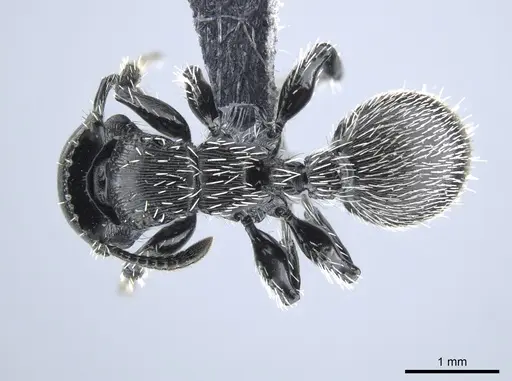
CASENT0900226
View on AntWeb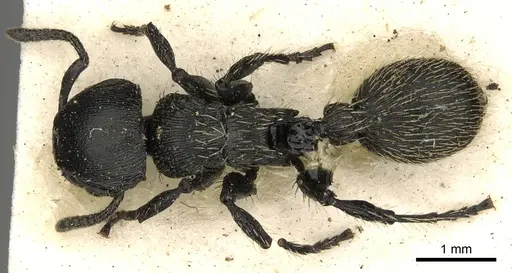
CASENT0914488
View on AntWeb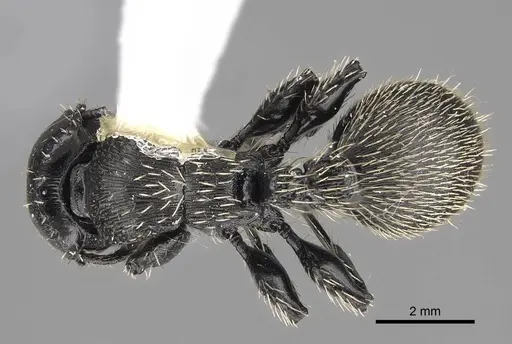
CASENT0922623
View on AntWeb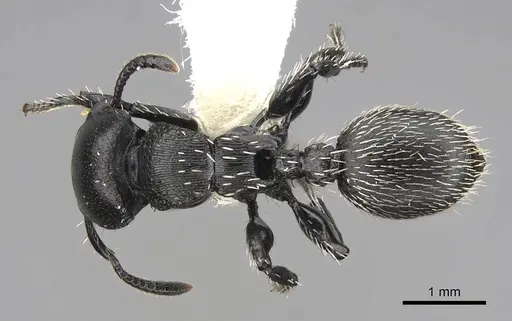
Literature
Loading distribution map...Loading products...