
Proceratium watasei
- Sci. Name
- Proceratium watasei
- Tribe
- Proceratiini
- Subfamily
- Proceratiinae
- Author
- Wheeler, 1906
- Distribution
- Found in 1 countries
Introduction
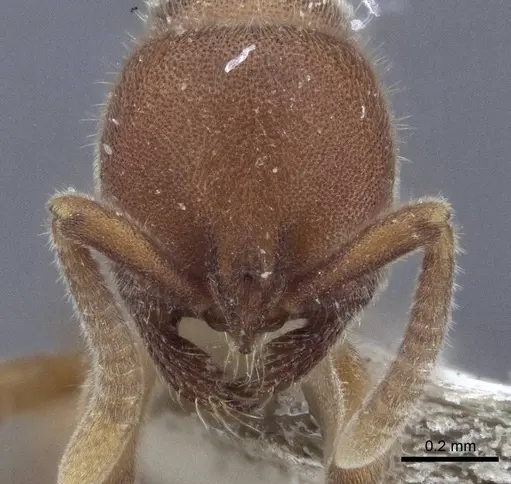
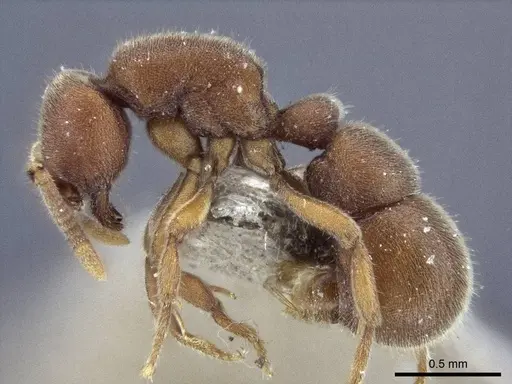
Proceratium watasei are small rusty-brown ants that live underground in the forests of Japan and Korea. Workers measure 3.5-4 mm while the queen reaches about 5.6 mm in total length , making them one of the larger species in their genus in Japan . They inhabit the soil of glossy-leaved evergreen forests across the Japanese archipelago and the Korean peninsula, occurring at extremely low densities of roughly one nest per 30 square meters . These ants are among the most secretive and rarely encountered in their native range . Their biology is poorly known, and they spend nearly their entire lives hidden in dark soil chambers, which makes them challenging for both research and keeping.
Quick Summary
- Difficulty: Expert
- Origin & Habitat: Japan and Korea, in soil of glossy-leaved evergreen forests [4][1][2]
- Colony Type: Unconfirmed, no specific data on queen number or social structure
- Size & Growth:
- Antkeeping:
- Temperature: Based on temperate distribution, keep at 20-24°C during activity periods [4][1][2]
- Humidity: Keep nest substrate consistently moist but not waterlogged, based on soil-dwelling habit [4][1]
- Diapause: Yes, likely requires a winter rest period due to temperate range [4][1][2]
- Nesting: Deep soil or sand-clay mix in complete darkness, inferred from subterranean lifestyle [4][1]
- Behavior: Secretive and slow-moving, rarely seen on surface, non-aggressive. Their tiny size means escape prevention must be excellent [3].
- Common Issues: tiny size requires excellent escape prevention, they can squeeze through very small gaps., diet is unknown, making feeding challenging in captivity., sensitive to light and disturbance due to underground lifestyle., rare in the wild, so captive stock is extremely limited.
Nest Preferences
In nature, Proceratium watasei lives in the soil of evergreen forests [4][1]. For captive colonies, recreate these underground conditions. Use a deep soil mix of sand and clay that holds moisture but allows tunneling. The nest must be completely dark, these ants are stressed by light. Avoid open acrylic nests, instead, use soil-filled containers or plaster nests buried in soil. Chambers should be small, scaled to their 4 mm body size. Provide at least 10 cm of soil depth for burrowing. Ventilation should be minimal to maintain humidity, but prevent mold growth.
Feeding and Diet
The specific diet of Proceratium watasei is unknown. Related Proceratium species are specialized predators of arthropod eggs, but this cannot be assumed for watasei. Start by offering small prey like springtails, minute insect eggs, and tiny soft-bodied insects. Observe what they accept, they may refuse standard ant foods like sugar water. Protein sources should be tiny due to their size. Remove uneaten food promptly to prevent mold in the humid nest.
Temperature and Seasonal Care
These ants come from temperate East Asia with distinct seasons. During active periods (spring through autumn), keep them at 20-24°C [4][1][2]. Provide a winter rest at 10-15°C for 3-4 months to simulate natural cycles. Cool gradually over weeks. During rest, keep soil slightly damp and reduce feeding. Return to normal temperatures in spring. Without this cycle, colonies may fail to thrive.
Behavior and Temperament
Proceratium watasei are extremely secretive. Workers are rarely above ground and move slowly when disturbed [3]. They are not aggressive and lack defenses, relying on hiding. Their small size (3.5-4 mm) means escape prevention is critical. Use fine mesh (under 0.5 mm) and barrier products like Fluon on all openings. Check lids and tubing carefully, they can squeeze through imperfect seals.
Frequently Asked Questions
Can I keep Proceratium watasei in a test tube?
Test tubes are not ideal due to their need for darkness and digging space. If used for founding, wrap in foil to block light, but plan to move to a soil nest soon.
How long until first workers for Proceratium watasei?
The egg-to-worker timeline is unknown for this species. No documented data exists, so estimates are unreliable.
What do Proceratium watasei eat?
Their specific diet is unconfirmed. Offer tiny live prey like springtails and insect eggs. Observe acceptance and remove uneaten food.
Do Proceratium watasei need hibernation?
Yes, likely. Based on their temperate distribution in Japan and Korea, provide a winter rest at 10-15°C for 3-4 months [4][1][2].
Are Proceratium watasei good for beginners?
No. They are expert-level due to specialized underground needs, unknown diet, small size, and seasonal requirements.
Do Proceratium watasei sting?
They are too small to sting humans effectively and are not aggressive. They rely on hiding rather than fighting.
How big do Proceratium watasei colonies get?
Colony size is unknown, no data on maximum size exists.
Can I keep multiple Proceratium watasei queens together?
Not recommended. Their colony structure is unconfirmed, and unrelated queens may fight or be rejected.
Report an Issue
The current care sheet is based fully on literature. See inconsistencies, or something that's incorrect? Please , it will be resolved after review from an admin. Contributing to the blogs tab also helps providing information, to make us be able to further improve the caresheets. Thank you for your support!
References

This caresheet is licensed under CC BY-SA 4.0 .
Community Blogs
CASENT0916701
View on AntWeb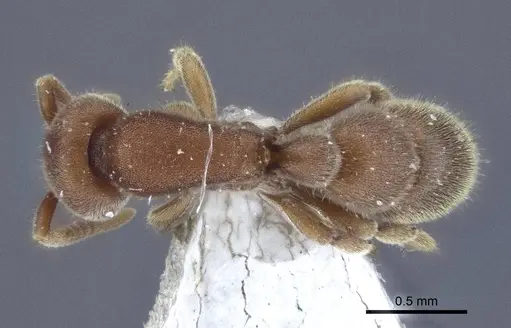
Literature
Loading distribution map...Loading products...