
Proceratium itoi
- Sci. Name
- Proceratium itoi
- Tribe
- Proceratiini
- Subfamily
- Proceratiinae
- Author
- Forel, 1918
- Distribution
- Found in 2 countries
Introduction
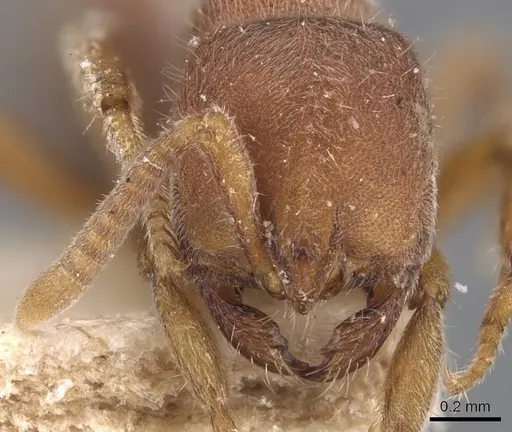
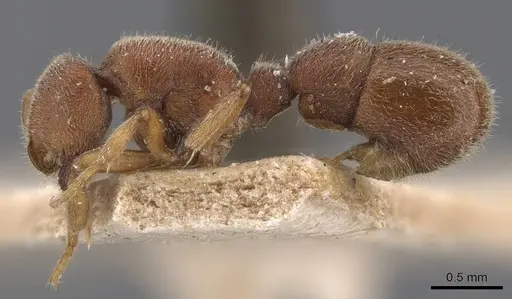
Proceratium itoi is a medium-sized ant with workers having a total length of 3.46-3.82 mm and queens 4.46-4.62 mm . They are reddish-brown in color and have well-developed frontal carinae . This species is found in Japan, South Korea, Taiwan, and Vietnam, inhabiting moist soil and rotting logs in evergreen broad-leaved forests . A key behavior of this species is larval hemolymph feeding, where the queen feeds on hemolymph from her own larvae . This is a specialized predatory strategy for arthropod eggs .
Quick Summary
- Difficulty: Expert
- Origin & Habitat: Japan, South Korea, Taiwan, and Vietnam, moist soil and rotting logs of evergreen broad-leaved forests [3][1]
- Colony Type: Single-queen colonies (monogyne) [6]. Mature colonies have up to 200 workers [1].
- Size & Growth:
- Antkeeping:
- Behavior: Workers are docile and forage underground or in leaf litter for arthropod eggs [1][4]. They use their vaulted gasters to block nest entrances [8]. Escape risk is low due to small size and docile nature.
- Common Issues: dry conditions will kill colonies, maintain high humidity [3][1], specialized diet of arthropod eggs, standard foods may be refused [4][5], slow growth is normal, do not rush colony development [4]
The Vampire Queen: Larval Hemolymph Feeding
In established colonies, the queen feeds almost exclusively on hemolymph from her fourth-instar larvae through specialized organs called hemolymph taps [4]. These are small areas on the larval abdomen with a cracked surface that the queen breaks open with her mandibles [4]. Each feeding bout lasts about 8 minutes, and the queen spends over 80% of her time on this in developed colonies [4]. Larvae survive this process, with wounds closing quickly through hemolymph coagulation [4]. For keepers, this means you must maintain a population of larvae for the queen to feed on. Small incipient colonies do not show this behavior due to insufficient larvae [4].
Feeding and Diet
Proceratium itoi are specialized predators of arthropod eggs, preying on eggs of centipedes, true bugs, and harvestmen in the wild [4][5]. In captivity, provide arthropod eggs like springtail or fruit fly eggs. They generally do not accept sugar sources [4]. Feed small amounts every few days, adjusting based on consumption. The colony needs developing larvae for the queen's feeding behavior [4].
Nest Setup and Humidity
These ants need high humidity environments. In nature, they nest in moist soil and rotting wood [3][1]. Use Y-tong or plaster nests with a water reservoir. Keep nest chambers damp but never flooded [1]. Provide a moisture gradient so ants can choose their preferred humidity [3]. Avoid dry setups entirely.
Temperature and Seasonal Care
Keep colonies at 20-24°C during the active season [1]. They prefer stable, cool conditions. During winter, reduce temperature to 10-15°C for 2-3 months for diapause, based on their temperate origin [7]. Reduce feeding during winter and allow the colony to slow down.
Colony Development and Growth
Colonies grow slowly due to larval hemolymph feeding [4]. Mature colonies reach up to 450 workers [6]. The queen begins larval hemolymph feeding when the colony has around 19 workers [4]. This transition slows larval development, which is a natural strategy [4].
Behavior and Defense
Workers are docile and forage underground for arthropod eggs [1]. They use their vaulted gasters to block nest entrances as a defense [8]. They lack a functional stinger and rely on cryptic lifestyle [1]. Escape risk is low.
Frequently Asked Questions
Do Proceratium itoi ants really drink blood?
Yes, the queen feeds on hemolymph from her own larvae through larval hemolymph feeding. She bites open special organs on the larval abdomen and drinks the fluid. Larvae survive this and develop normally [4].
What do Proceratium itoi eat in captivity?
They are specialized egg predators. Offer arthropod eggs like springtail or fruit fly eggs. They generally do not accept sugar water or honey [4][5].
How long does it take for Proceratium itoi to raise first workers?
No data is available on egg-to-worker time in the context. Larval hemolymph feeding may slow development [4].
Are Proceratium itoi good for beginners?
No, this is an expert-level species due to specialized care needs like high humidity and specific diet [7].
Do Proceratium itoi need hibernation?
Likely yes, based on their temperate origin. Reduce temperature to 10-15°C for 2-3 months in winter [7].
Can I keep multiple Proceratium itoi queens together?
No, this is a monogyne species. Multiple queens will fight. Only keep one queen per colony [6].
Do Proceratium itoi ants sting?
No, they lack a functional stinger and use chemical defenses instead [1].
Why is my queen not eating?
In established colonies, the queen should be performing larval hemolymph feeding rather than eating prey directly. If the colony has over 20 workers and plenty of larvae, this is normal [4].
How big do Proceratium itoi colonies get?
Mature colonies reach up to 450 workers [6]. In captivity, expect similar sizes with good care.
What humidity level do Proceratium itoi need?
High humidity is critical. Keep the nest substrate consistently moist but not waterlogged [3][1].
Report an Issue
The current care sheet is based fully on literature. See inconsistencies, or something that's incorrect? Please , it will be resolved after review from an admin. Contributing to the blogs tab also helps providing information, to make us be able to further improve the caresheets. Thank you for your support!
References

This caresheet is licensed under CC BY-SA 4.0 .
Community Blogs
CASENT0281853
View on AntWeb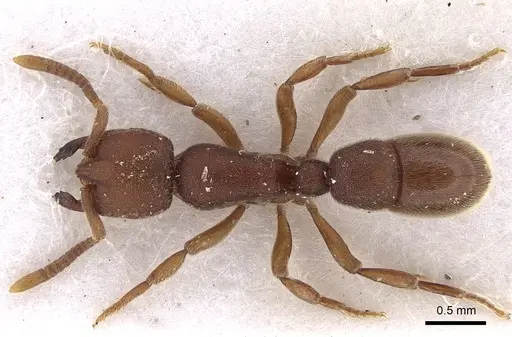
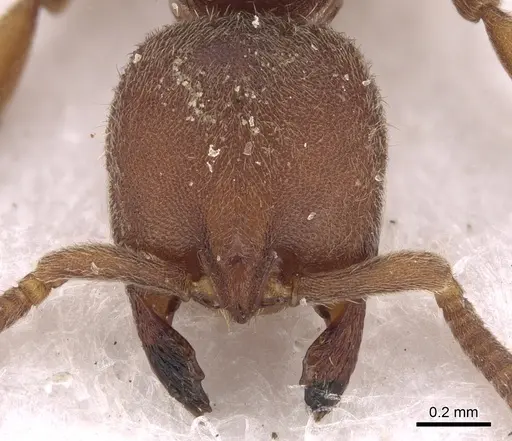
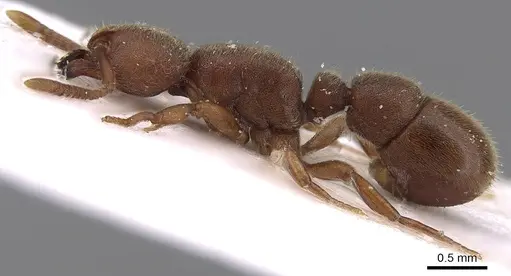
CASENT0907205
View on AntWeb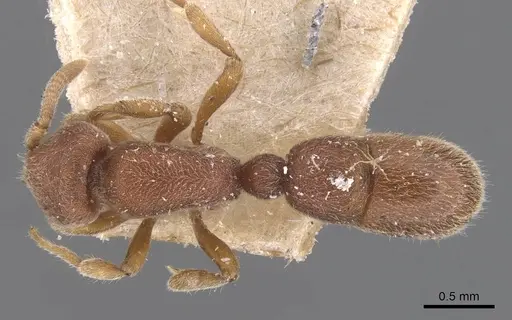
Literature
Loading distribution map...Loading products...