
Proceratium goliath
- Sci. Name
- Proceratium goliath
- Tribe
- Proceratiini
- Subfamily
- Proceratiinae
- Author
- Kempf & Brown, 1968
- Distribution
- Found in 5 countries
Introduction
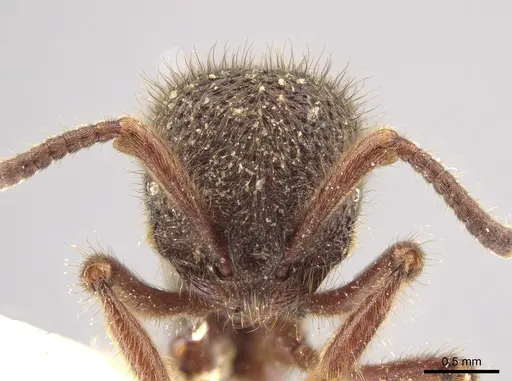
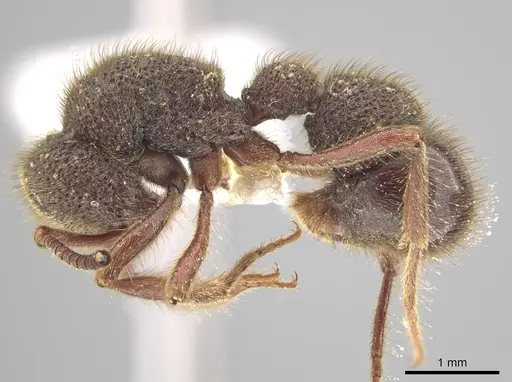
Proceratium goliath is a large ant in the subfamily Proceratiinae. Workers measure 6.22-6.72 mm in total length, making them the largest species in the stictum group . They have brownish-red coloration with lighter legs and irregular foveolate-punctate sculpture . This species lives in Costa Rica, Honduras, Nicaragua, and Colombia, inhabiting disturbed wet lowland rainforests under rotten log fragments . Proceratium goliath is distinguished from its sister species Proceratium tio by smaller propodeal teeth and a shortly triangular ventral process on the petiole .
Quick Summary
- Difficulty: Expert
- Origin & Habitat: Neotropical region, Costa Rica, Honduras, Nicaragua, and Colombia. Found in disturbed wet lowland rain forest, nesting under rotten log fragments [1][2][3][4].
- Colony Type: Colony structure is unconfirmed. No specific data on queen number or social structure is available in the research context.
- Size & Growth:
- Antkeeping:
- Temperature: Based on Neotropical lowland rainforest habitat, keep warm and stable, roughly 24-27°C [1]
- Humidity: Keep substrate consistently moist but not waterlogged, based on wet lowland rainforest habitat [1]
- Diapause: Unknown, tropical species may not require hibernation [1]
- Nesting: Prefer tight, enclosed spaces mimicking under-log microhabitat. Use Y-tong, plaster, or naturalistic setups with moist soil and rotten wood [1]
- Behavior: Proceratium goliath is cryptic and slow-moving, not aggressive. Workers possess a functional sting but are not dangerous to humans. Escape risk is moderate due to ground-dwelling nature
- Common Issues: high humidity maintenance is critical, dry conditions can kill colonies [1], growth may be slow, but data is unavailable, cryptic behavior means activity may be low, which is normal
Natural History and Distribution
Proceratium goliath is native to the Neotropical region of Central America. Its confirmed range includes Costa Rica, Honduras, and Nicaragua, with populations in Colombia (Antioquia, Caldas, Valle del Cauca) [1][2][3]. The species was described from Costa Rica, collected under rotten log fragments in wet lowland rainforest [1][5]. This ground-dwelling species inhabits disturbed forest floors with decaying wood, which provides shelter and hunting grounds [1][4].
Identification and Morphology
Proceratium goliath workers are substantial ants measuring 6.22-6.72 mm in total length, the largest in the stictum group [1]. The head is slightly longer than broad with convex sides, and the clypeus is broad with a notch [1]. Eyes are small but present, placed slightly below the midline [1]. The propodeum has broad subtriangular teeth, and the petiole has a small subtriangular ventral process, distinguishing it from Proceratium tio [1]. Coloration is brownish-red with lighter legs, and sculpture is irregularly foveolate-punctate [1].
Housing and Nesting Preferences
In captivity, provide a setup that mimics under-log microhabitats. Use Y-tong, plaster, or naturalistic nests with moist soil and rotten wood fragments [1]. Ensure tight, enclosed spaces to match their cryptic nature [1]. Maintain high humidity based on their wet lowland rainforest origin [1].
Feeding and Diet
Proceratium goliath is a predator of small invertebrates. In captivity, feed live prey like springtails or tiny arthropods. Sugar sources may be accepted occasionally, but protein is primary.
Temperature and Seasonal Care
Based on Neotropical habitat, keep temperatures warm and stable around 24-27°C [1]. A thermal gradient allows self-regulation. Avoid temperatures below 22°C or above 30°C. Diapause is unknown, but reduced activity may occur in cooler months [1].
Behavior and Temperament
Workers are cryptic and slow-moving, not aggressive. They possess a functional sting but are not dangerous to humans. Escape risk is moderate due to ground-dwelling nature. Activity levels are typically low, which is normal for this species.
Frequently Asked Questions
How long does it take for Proceratium goliath to produce first workers?
Development time is unknown for this species [1].
Can I keep Proceratium goliath in a test tube?
Test tubes can work for founding if humidity is maintained, but naturalistic setups are preferable [1].
What do Proceratium goliath ants eat?
They are predators that hunt small invertebrates. Feed live prey like springtails or tiny arthropods.
Are Proceratium goliath ants dangerous?
They possess a functional sting but are not considered dangerous to humans [1].
How big do Proceratium goliath colonies get?
Colony size is unknown, no data is available [1].
Do Proceratium goliath ants need hibernation?
Diapause is unknown for this tropical species [1].
What is the best nest type for Proceratium goliath?
Y-tong, plaster, or naturalistic nests with moist soil and rotten wood are suitable [1].
Why is my Proceratium goliath colony not growing?
Growth data is unavailable, but ensure warm temperatures and high humidity [1].
Can I keep multiple Proceratium goliath queens together?
Colony structure is unconfirmed, combining queens is not recommended [1].
Are Proceratium goliath good for beginners?
No, this is an expert-level species due to specific care requirements [1].
Report an Issue
The current care sheet is based fully on literature. See inconsistencies, or something that's incorrect? Please , it will be resolved after review from an admin. Contributing to the blogs tab also helps providing information, to make us be able to further improve the caresheets. Thank you for your support!
References

This caresheet is licensed under CC BY-SA 4.0 .
Community Blogs
CASENT0612315
View on AntWeb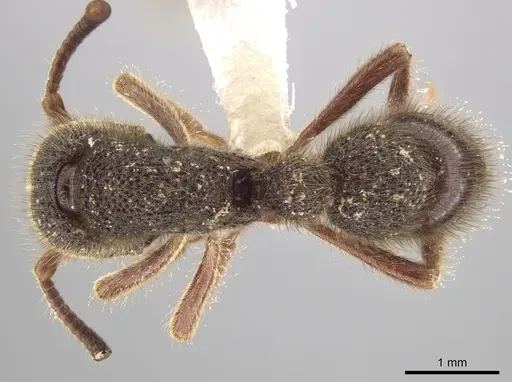
Literature
Loading distribution map...Loading products...