
Proceratium convexiceps
- Sci. Name
- Proceratium convexiceps
- Tribe
- Proceratiini
- Subfamily
- Proceratiinae
- Author
- Borgmeier, 1957
- Distribution
- Found in 2 countries
Introduction
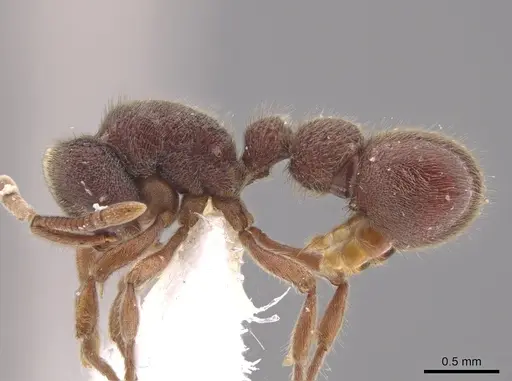
Proceratium convexiceps is a small, cryptic ant species found throughout Central America, including Mexico, Guatemala, Nicaragua, Costa Rica, and Panama . Workers measure 3.04-3.58 mm in total length and have a dark ferrugineous to brown coloration with lighter antennae and legs . This species belongs to the micrommatum clade and resembles Proceratium mexicanum, but can be distinguished by weaker propodeal sculpture . They are ground-dwelling ants collected in forest environments . Like other Proceratium species, they have impressed integument sculpture . Nothing is known about their specific biology or captive care requirements .
Quick Summary
- Difficulty: Expert
- Origin & Habitat: Central America (Costa Rica, Guatemala, Mexico, Nicaragua, Panama). Found in Neotropical forest environments at ground level [3][4].
- Colony Type: Colony structure is unconfirmed [5]. Based on genus patterns, Proceratium species typically have small colonies, but no data for this species.
- Size & Growth:
- Queen: 3.47 mm (gyne) [1]
- Worker: 3.04-3.58 mm [1]
- Colony: Unknown, no specific data exists for this species [5].
- Growth: Unknown, likely slow based on genus patterns [5].
- Development: Unknown, no development data exists for this species [5]. (No direct development data exists. Estimates based on typical Proceratium genus patterns.)
- Antkeeping:
- Temperature: Estimated 22-26°C based on Neotropical origin [1]. Start in the mid-20s and observe colony activity.
- Humidity: Keep substrate consistently moist but not waterlogged, based on forest habitat [4].
- Diapause: Unknown, Neotropical species may not require true hibernation [5].
- Nesting: Ground-nesting species [4]. Provide a naturalistic setup with moist substrate or a Y-tong/plaster nest with high humidity chambers. They prefer tight, cryptic spaces.
- Behavior: Behavior is unstudied [5]. Based on genus patterns, they are likely cryptic, slow-moving predators that forage on the forest floor. Their small size means escape prevention is critical. Temperament is unknown but Proceratium species are typically non-aggressive [5].
- Common Issues: completely unstudied biology means all care is speculative, high risk of colony failure [5]., no confirmed diet acceptance, likely requires live micro-prey like springtails [5]., escape prevention critical due to tiny 3mm worker size [5]., slow growth may lead to keeper impatience and overfeeding mistakes [5]., humidity requirements are estimated, not confirmed, wrong levels could kill colonies [5].
Understanding Proceratium convexiceps
Proceratium convexiceps is a member of the Proceratiinae subfamily, specifically belonging to the micrommatum clade [1]. This species was originally described by Borgmeier in 1957 from Costa Rica and has since been recorded throughout Central America including Guatemala, Mexico, Nicaragua, and Panama [1][2]. The species was briefly considered a junior synonym of P. micrommatum but was revived as a valid species in 2003 by Baroni Urbani and de Andrade based on morphological differences [1].
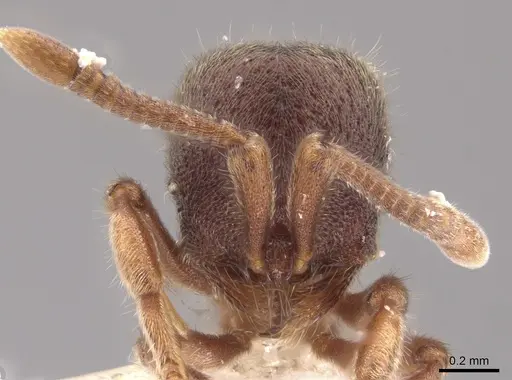
Workers are tiny at just 3.0-3.6 mm in total length with a distinctive dark ferrugineous to brown coloration [1]. Their most notable morphological features include a head that is longer than broad, a very reduced clypeus, and distinctive impressed sculpture on the head, mesosoma, petiole, and postpetiole [1]. The first gastral tergite is notably smooth compared to the rest of the body.
The gyne (queen) measures 3.47 mm and has been collected in Panama [1]. Males have been tentatively attributed to this species but require confirmation [6]. This is a ground-dwelling species that has been collected in forest environments, typically at ground level [4].
Why This Species Is Expert-Only
Proceratium convexiceps is NOT a species for beginners. This cannot be stated strongly enough. The fundamental problem is that absolutely nothing is known about this species' biology in the wild or in captivity [5]. There are no captive breeding records, no documented feeding preferences, no confirmed temperature or humidity requirements, and no development timelines.
When keeping a species where every aspect of care must be inferred from related species rather than confirmed through direct observation, you are essentially conducting an uncontrolled experiment. The risk of colony failure is extremely high. You should only attempt this species if you have extensive experience keeping difficult, slow-growing cryptic ants and are prepared for the possibility that your colony may not survive despite your best efforts.
This species is best left to advanced antkeepers who understand that sometimes colonies fail not because of keeper error, but because we simply don't know what these ants need.
Housing and Nest Setup
Based on genus-level patterns for Proceratium species, you should provide a naturalistic setup with moist substrate [5]. These are cryptic ground-dwelling ants that prefer tight, enclosed spaces rather than open foraging areas. A setup with a soil or peat-based substrate that can hold moisture is ideal.
Given their tiny 3mm size, escape prevention is absolutely critical. Use test tubes with cotton plugs that are properly secured, or formicarium setups with tight-fitting lids and no gaps larger than 1mm. Even small gaps that would not concern you with larger ants will allow these tiny workers to escape.
A Y-tong nest with small chambers or a plaster/naturalistic setup with high humidity works well. The nest should have a water reservoir to maintain humidity. Proceratium species typically do not do well in dry conditions, aim for consistently moist substrate [5].
Keep the outworld simple and easy to maintain. A small container with moist substrate for the nest area and a minimal foraging area will suffice.
Feeding and Nutrition
Feeding is the biggest challenge with this species. Proceratium species are typically predators of small soil arthropods, especially springtails [5]. However, no specific feeding data exists for P. convexiceps, this is entirely inferred from genus patterns.
Your primary food should be live springtails cultured on charcoal or in soil. These tiny prey items are appropriately sized for 3mm ants. Other micro-arthropods like pot worms, tiny mites, and small beetle larvae may also be accepted. Do not rely on sugar sources unless acceptance is confirmed, Proceratium species are not typically honeydew feeders.
Feed small amounts every few days and remove any uneaten prey after 48 hours to prevent mold. The key is patience, these ants are slow-moving and may take time to accept new food items.
Never overfeed. Excess prey that dies and rots in the nest can quickly kill a small colony of these delicate ants. Less is more with this species.
Temperature and Seasonal Care
Since this species comes from Central America, it is adapted to warm, tropical conditions. Estimate optimal temperatures in the range of 22-26°C based on Neotropical origin [1]. Room temperature in most homes (20-24°C) may be suitable, but you may need to provide gentle heating if your environment is cooler.
Use a heating cable or heating mat on one side of the nest to create a temperature gradient, allowing the ants to choose their preferred temperature. Place the heating on top of the nest, not underneath, to avoid drying out the substrate too quickly.
Regarding diapause or winter rest: Neotropical species from low elevations typically do not require true hibernation [5]. However, they may slow down during cooler periods. Do not attempt to cool them significantly below room temperature unless you observe clear signs of dormancy. If anything, maintaining stable warmth is more important than cycling temperatures.
Monitor colony behavior, if workers are clustered near the heating element, increase temperature slightly. If they avoid the heated area, reduce heat. This species is too rare and unstudied to have fixed rules.
Frequently Asked Questions
Is Proceratium convexiceps a good species for beginners?
No. This species is absolutely not suitable for beginners. Nothing is known about its biology, no confirmed diet, temperature requirements, humidity preferences, or development timeline [5]. Every aspect of care must be inferred from genus patterns, making this an experimental species with high failure risk. Only expert antkeepers with experience with difficult, cryptic species should attempt it.
What do Proceratium convexiceps eat?
Unknown, no feeding data exists for this species [5]. Based on genus patterns, they are likely predators of small soil arthropods, primarily springtails. Feed live springtails as a primary food source. Other tiny live prey may be accepted experimentally. Sugar sources are unlikely to be accepted, do not rely on honey or sugar water.
How long does it take for Proceratium convexiceps to develop from egg to worker?
Unknown, no development data exists for this species [5]. Based on typical Proceratium genus patterns for tropical species, estimate 8-12 weeks from egg to first worker at optimal temperature (around 24-26°C). This is a rough guess, not a confirmed timeline.
What size colony does Proceratium convexiceps reach?
Unknown, no colony size data exists for this species [5]. Based on genus patterns, Proceratium species typically have small colonies, likely under 100 workers. Do not expect the large colonies seen in species like Camponotus or Lasius.
Do Proceratium convexiceps ants sting?
Unknown, no documented sting or pain level exists for this species [5]. Given their tiny 3mm size, any sting would likely be imperceptible to humans. Most Proceratium species are docile and non-aggressive.
Can I keep multiple queens together?
Unknown, colony structure has not been documented for this species [5]. Proceratium species are typically monogyne (single queen), but this has not been confirmed for P. convexiceps. Do not attempt combining unrelated queens, this has not been studied and could result in fighting.
What temperature should I keep Proceratium convexiceps at?
Estimated 22-26°C based on Neotropical origin [1]. Start around 24°C and observe colony behavior. If workers cluster near heat, increase slightly. If they avoid heated areas, reduce temperature. This is an estimate, not a confirmed requirement.
Do Proceratium convexiceps need hibernation?
Unknown, likely no true hibernation required as this is a Neotropical species from low elevations [5]. They may slow down during cooler periods but should not be cooled significantly. Maintain stable warm conditions.
Why are my Proceratium convexiceps dying?
Without any confirmed biology, colony failure could result from many factors: wrong temperature, incorrect humidity, unsuitable food, or simply that we don't know what this species needs [5]. Do not feel guilty if a colony fails, this is an experimental species. Try varying conditions and observe carefully, but accept that failure is common with unstudied species.
When should I move Proceratium convexiceps to a formicarium?
Wait until the colony is established with at least 10-20 workers before moving to a formicarium. Keep them in a simple test tube setup initially. Moving too soon can stress the colony. Proceratium species prefer stable conditions and may not adapt well to major changes.
Report an Issue
The current care sheet is based fully on literature. See inconsistencies, or something that's incorrect? Please , it will be resolved after review from an admin. Contributing to the blogs tab also helps providing information, to make us be able to further improve the caresheets. Thank you for your support!
References

This caresheet is licensed under CC BY-SA 4.0 .
Community Blogs
CASENT0650687
View on AntWeb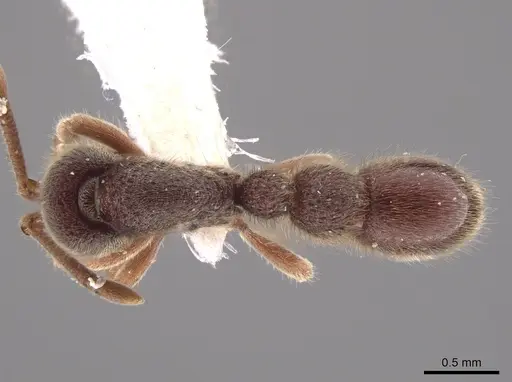
Literature
Loading distribution map...Loading products...