
Proceratium caledonicum
- Sci. Name
- Proceratium caledonicum
- Tribe
- Proceratiini
- Subfamily
- Proceratiinae
- Author
- de Andrade, 2003
- Distribution
- Found in 1 countries
Introduction
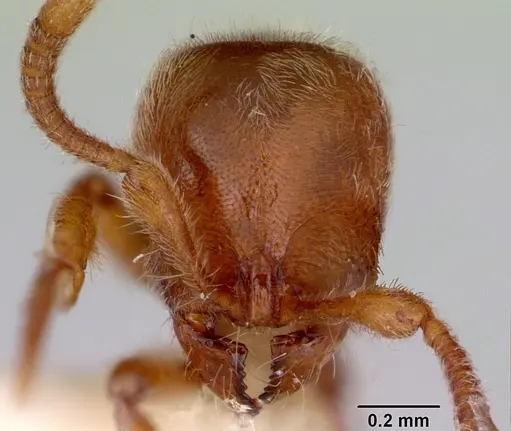
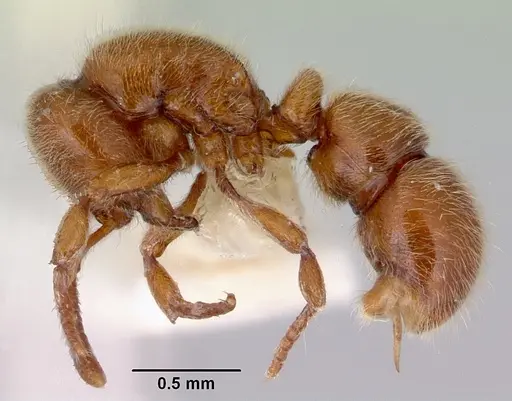
Proceratium caledonicum is a rare ant species native to New Caledonia, a French territory in the South Pacific. Workers measure 2.94mm in total length, with a yellow-light brown coloration and a largely shining body surface . This species belongs to the silaceum clade and resembles Proceratium politum and Proceratium terraealtae, distinguished by narrower frontal carinae and longer erect hairs . Only a few specimens have been collected, all from rainforest litter at Mt Koghis near Noumea at 500m elevation .
Quick Summary
- Difficulty: Expert
- Origin & Habitat: New Caledonia (Mt Koghis, near Noumea), rainforest habitat at 500m elevation, collected from rainforest litter [2][1].
- Colony Type: Unknown, colony structure has not been documented. Based on genus patterns, likely single-queen colonies [1].
- Size & Growth:
- Queen: Unconfirmed, no queen specimens described
- Worker: 2.94mm total length (TL) [1]
- Colony: Unknown, only worker specimens collected
- Growth: Unknown, estimated slow based on genus patterns [1]
- Development: Unknown, no direct data exists. Development may be slow based on genus patterns [1]. (No species-specific development data available.)
- Antkeeping:
- Temperature: Unknown for this species. Based on New Caledonia's tropical climate, aim for 22-26°C with a gradient [2][1].
- Humidity: High humidity required, rainforest species. Keep nest substrate consistently moist but not waterlogged [1].
- Diapause: Unknown, likely minimal given tropical location, but may have reduced activity in cooler months [1].
- Nesting: Natural nesting in rainforest litter. In captivity, use moist plaster or soil-based nests with tight, dark chambers [1].
- Behavior: Proceratium ants are cryptic, subterranean predators. They are not aggressive and rarely surface. Workers are slow-moving and forage through leaf litter. Escape prevention is important due to small size. They possess a functional sting but are harmless to humans. Based on genus behavior, they hunt small soil arthropods [1].
- Common Issues: wild-caught colonies may have parasites due to rarity [1], rainforest humidity requirements can lead to mold if ventilation is poor [1], slow growth means colonies take years to develop [1]
Why This Species Is Challenging
Proceratium caledonicum is not for beginners. It is rare in the antkeeping hobby, with only a handful of specimens ever collected [2][1]. There is no established care protocol, so you will experiment with conditions. Colonies grow slowly and take years to develop [1]. This makes it a species for experienced keepers who enjoy pioneering care for rare ants.
Housing and Nest Preferences
In the wild, this species lives in rainforest litter. Replicate this with a moist soil or plaster nest that holds humidity without flooding [1]. They prefer tight, dark chambers and avoid light. Keep the nest in a dark, vibration-free location. A test tube setup can work for founding colonies, but transfer to a naturalistic nest once workers emerge [1]. Maintain constant humidity with good ventilation to prevent mold.
Feeding and Diet
Based on genus behavior, Proceratium caledonicum likely preys on small soil arthropods like springtails and mites [1]. Offer small live prey such as fruit flies or pinhead crickets. They may accept honeydew but probably not sugar water. Remove uneaten prey after 24 hours to prevent mold [1].
Temperature and Humidity
New Caledonia has a tropical climate, so aim for warm, humid conditions around 22-26°C [2][1]. Use a heating cable on one side of the nest for a gradient. Humidity is critical, keep substrate moist like a damp forest floor [1]. Mist occasionally if needed, but rely on substrate moisture. Ensure good ventilation to avoid mold.
Understanding the Silaceum Clade
Proceratium caledonicum belongs to the silaceum clade, characterized by a largely shining body [1]. It resembles P. politum and P. terraealtae but has narrower frontal carinae and longer erect hairs [1]. This classification suggests shared traits like cryptic lifestyle and moist habitat preference.
Frequently Asked Questions
How hard is Proceratium caledonicum to keep?
This is an expert-level species. There is no established care protocol, colonies are rarely available, and you will experiment with conditions [1].
Where does Proceratium caledonicum come from?
It is endemic to New Caledonia, collected from rainforest litter at Mt Koghis near Noumea [2][1].
How big do Proceratium caledonicum colonies get?
Unknown, colony size has not been documented. Based on related species, colonies likely remain small [1].
What do Proceratium caledonicum ants eat?
They are likely specialized predators on small soil arthropods. Offer live prey like springtails or fruit flies [1].
Do Proceratium caledonicum ants sting?
They have a functional sting but are too small to harm humans [1].
What temperature do Proceratium caledonicum ants need?
Unconfirmed, but based on New Caledonia's climate, aim for 22-26°C [2][1].
How long does it take for Proceratium caledonicum to develop from egg to worker?
Unknown, no development data exists. Based on genus patterns, development may be slow [1].
Can I keep Proceratium caledonicum in a test tube?
A test tube can work for founding colonies, but transfer to a soil or plaster nest once workers emerge [1].
Is Proceratium caledonicum aggressive?
No, they are cryptic and non-aggressive, focusing on hunting small prey [1].
Do Proceratium caledonicum queens need to hibernate?
Unknown, unlikely given the tropical climate, but may have reduced activity in cooler months [1].
How do I establish a Proceratium caledonicum colony?
If you obtain a founding queen, keep her in a humid, minimal-disturbance setup. She may seal herself in and raise workers slowly [1].
Why is Proceratium caledonicum so rare in the hobby?
Only a few specimens have been collected from New Caledonia, and their cryptic lifestyle makes them hard to find [2][1].
Report an Issue
The current care sheet is based fully on literature. See inconsistencies, or something that's incorrect? Please , it will be resolved after review from an admin. Contributing to the blogs tab also helps providing information, to make us be able to further improve the caresheets. Thank you for your support!
References

This caresheet is licensed under CC BY-SA 4.0 .
Community Blogs
CASENT0172099
View on AntWeb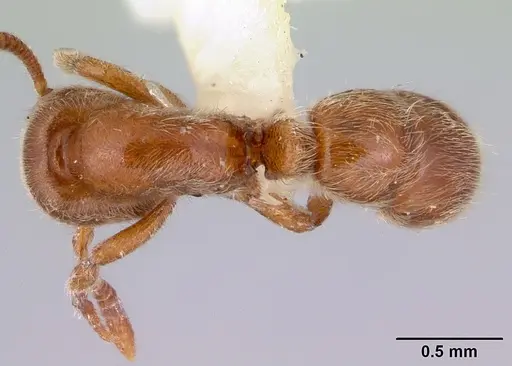
Literature
Loading distribution map...Loading products...