
Proceratium arnoldi
- Sci. Name
- Proceratium arnoldi
- Tribe
- Proceratiini
- Subfamily
- Proceratiinae
- Author
- Forel, 1913
- Distribution
- Found in 2 countries
Introduction
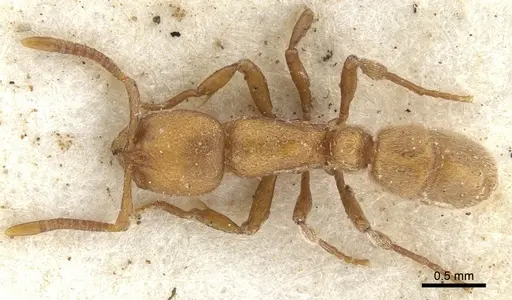
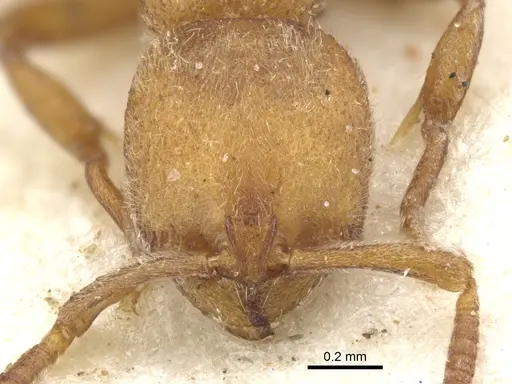
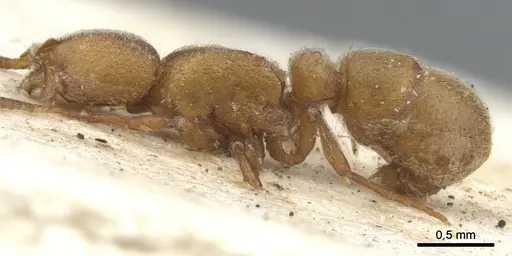
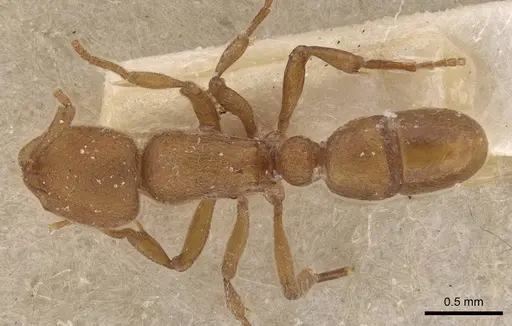
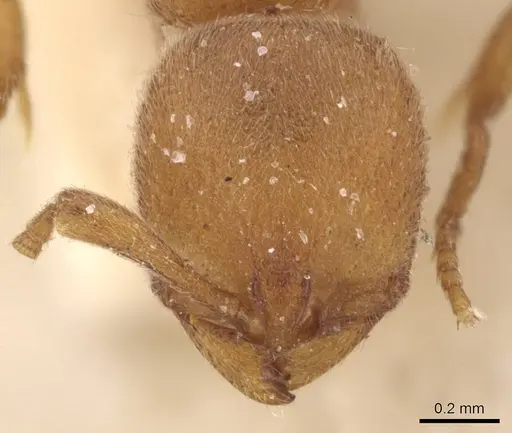
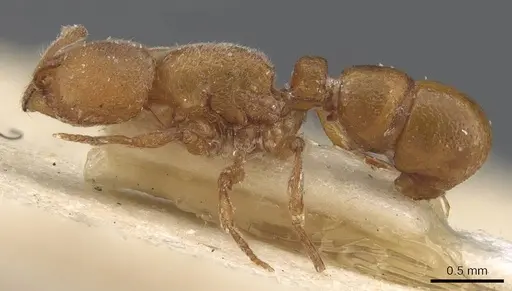
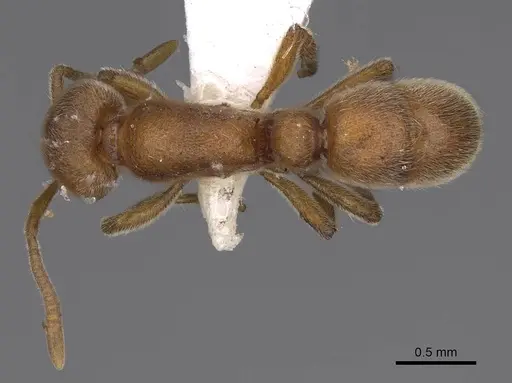
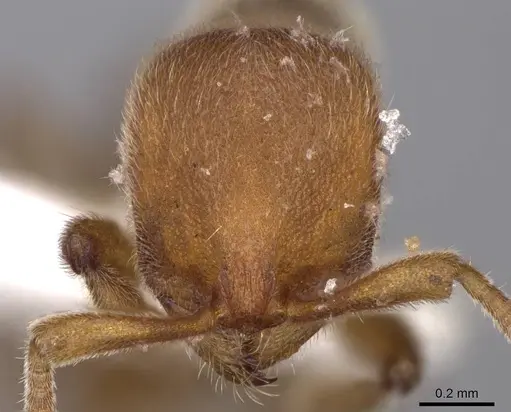
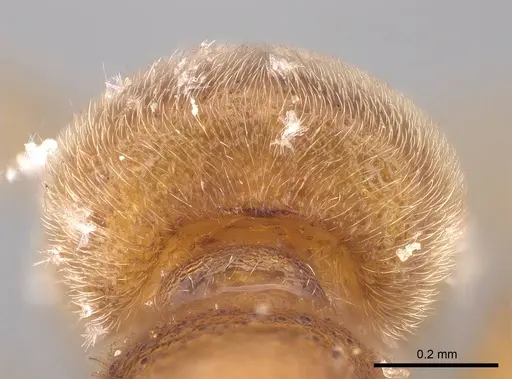
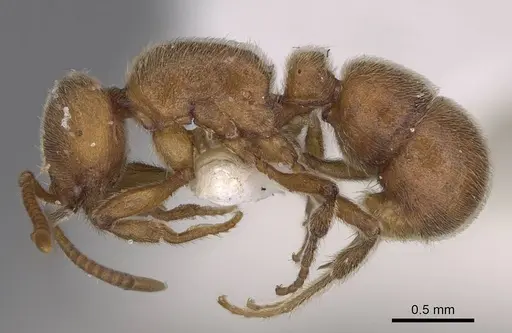
Proceratium arnoldi is a tiny, cryptic ant species known only from two widely separated localities in southern Africa: Bulawayo, Zimbabwe and an unspecified site in South Africa . Workers measure 3.24-3.29 mm in total length and are light brown with a distinctly elongated head, longer than broad . Their eyes are extremely reduced, consisting of a single dark ommatidium that is barely visible beneath the integument . This species belongs to the subfamily Proceratiinae, which are typically underground predators. Despite being described over 100 years ago, absolutely no information about its natural history, diet, nesting, colony structure, or behavior, exists in the scientific literature . What makes P. arnoldi particularly interesting is the complete mystery surrounding its biology. This ant represents a frontier for dedicated keepers: since nothing is known, any successful captive care would be genuinely new knowledge. The genus Proceratium is associated with specialized predation on springtails (Collembola), and its members are slow-moving, cryptic hunters that rely on chemical cues rather than vision . Keeping this species requires patience, experimentation, and careful documentation.
Quick Summary
- Difficulty: Expert
- Origin & Habitat: Known only from two sites: Bulawayo, Zimbabwe and an unspecified location in South Africa. Likely more widespread in the area between these localities. Afrotropical zoogeographic zone [2][1].
- Colony Type: Unconfirmed. Based on general patterns in the genus Proceratium, likely monogyne (single queen), but no direct evidence exists [1].
- Size & Growth:
- Queen: No queen specimens have been described, size unknown [1].
- Worker: 3.24-3.29 mm total length [1].
- Colony: Unknown, no colony samples have been studied. Inferred from related Proceratium species to be small (under a few hundred workers), but this is speculative [1].
- Growth: Unknown, inferred from related small Proceratium species to be slow, but no data exist [1].
- Development: Unconfirmed, no direct observations. Based on related Proceratium species, very roughly 8-12 weeks at warm temperatures, but this is entirely speculative [1]. (No developmental data is available for this species. The estimate above is a guess based on other small cryptic ants.)
- Antkeeping:
- Temperature: No specific data. Its distribution in Zimbabwe and South Africa suggests a preference for warm conditions, start with 22-26°C and provide a thermal gradient [2][1]. Avoid temperatures below 18°C.
- Humidity: No specific data. Keep the nest substrate consistently moist but not waterlogged, based on general expectations for subterranean predators. Monitor and adjust to avoid desiccation or mold.
- Diapause: Unknown, no seasonal data. The safest approach is to maintain stable temperatures year-round unless natural slowing is observed [1].
- Nesting: No natural nests have been observed. Suggested experimental setups include dark, humid spaces with small chambers, such as Y-tong (AAC) or plaster nests. Keep nesting area completely dark and undisturbed.
- Behavior: Proceratium arnoldi workers are cryptic, slow-moving, and not aggressive. They rely on chemical and tactile cues because of their reduced eyes. Escape risk is moderate due to their small size, but they are not prone to frantic escape attempts. Provide tight barriers to prevent loss. Observation is best under red light to avoid stress [1].
- Common Issues: no natural history data exists, keepers must experiment to discover what works, extremely small size makes escape prevention important despite low activity, prey acceptance is unknown, may require live springtails or micro-arthropods, humidity requirements are uncertain, both under- and over-watering could be fatal
Housing and Nest Setup
Since no natural nest observations exist for Proceratium arnoldi, any setup is purely experimental [1]. Suggested prototypes include a Y-tong (AAC) nest with small, tight chambers or a moist plaster/soil nest that maintains high humidity. Darkness is essential, these ants are sensitive to light and will avoid exposed areas. An outworld with a simple, clean substrate (e.g., plaster or clay) can be used for feeding. Provide a moisture gradient by keeping one area damp and another slightly drier, but avoid any standing water. Because the workers are tiny, all junctions must be escape-proof (e.g., fluon or baby powder barriers).
Feeding and Diet
The diet of Proceratium arnoldi is completely unknown [1]. Based on what is known about other Proceratium species, they are likely specialized predators of tiny soil arthropods like springtails (Collembola) [1]. Offer live prey: springtails, pot worms (Enchytraeidae), or very small species of fruit flies. Avoid sugar sources, as Proceratium are not reported to forage on sweet liquids. Feeding should be infrequent and monitored, remove any uneaten prey after a few days to prevent mold. Because the ants are cryptic, you may not see active hunting, place prey directly in the outworld and check after 24 hours.
Temperature and Seasonal Care
No specific thermal requirements have been studied [1]. The species is known from Zimbabwe and South Africa, which experience warm summers and mild winters [2][1]. A starting range of 22-26°C is reasonable. Provide a heat gradient by warming only one side of the nest, allowing ants to move to cooler spots. Avoid temperatures below 18°C. Winter dormancy is not documented, the safest strategy is to maintain stable conditions year-round unless you observe a natural slowdown in activity during cooler months. If you attempt a diapause, use a mild, short period (e.g.,8 weeks at 15-18°C) and monitor closely, but this is experimental.
Handling and Observation
Proceratium arnoldi is not a display species. These ants are secretive and spend most of their time in darkness. Expect minimal visible foraging. Workers move slowly and deliberately, they rely on vibrations and chemical cues rather than vision. Use red light or dim lighting for observation, and avoid vibrations or sudden movements near the nest. Disturbing the nest should be minimized. Because virtually nothing is known about this ant, you are advised to keep detailed notes on your colony, as any observations may be the first recorded. This species is best suited for keepers interested in discovery rather than active interaction [1].
Frequently Asked Questions
How long does it take for Proceratium arnoldi to produce first workers?
This is completely unconfirmed, no captive breeding records exist [1]. Based on typical small Proceratium species, a very rough guess is 8-12 weeks at 24-26°C, but this is entirely speculative. The queen may found claustrally, but this is also unconfirmed [1].
What do Proceratium arnoldi eat?
No feeding observations have been made [1]. Based on related species, offer live springtails (Collembola), pot worms, or other micro-arthropods. Sugar water or large prey items are unlikely to be accepted. Start with springtails as a primary food source.
Can I keep Proceratium arnoldi in a test tube setup?
A test tube setup can work for founding, provided the water reservoir is not too large. Cover the tube with a dark sleeve to mimic subterranean conditions. However, once the colony grows, you may need to transition to a nest that offers more humidity control and tight spaces, such as a Y-tong or plaster nest.
Are Proceratium arnoldi good for beginners?
No. This species is rated Expert because no natural history information exists [1]. There are no care guides, feeding protocols, or successful captive records. Keeping it requires experimentation and careful observation. Only experienced keepers should attempt this species [1].
Do Proceratium arnoldi ants sting?
Proceratium species possess a stinger, but they are not aggressive and rarely use it. Given their cryptic, slow nature, they pose no threat to handlers. The stinger is a defensive tool, but the ants are not inclined to sting [1].
How big do Proceratium arnoldi colonies get?
No colony size data exists [1]. Based on related Proceratium species, expect small colonies, likely under a few hundred workers. They are not large colony formers. This is a guess, not a known fact [1].
What temperature should I keep Proceratium arnoldi at?
No specific data exists. Based on its distribution in Zimbabwe and South Africa [2][1], start with 22-26°C. Provide a thermal gradient so ants can self-regulate. Avoid temperatures below 18°C. Observe activity and adjust.
Do Proceratium arnoldi need hibernation?
Unknown, no seasonal data exists. The species is from southern Africa, where winters are mild. The safest approach is to maintain stable temperatures year-round unless you observe natural slowing. Some keepers may experiment with a mild, short diapause, but this is unconfirmed [1].
Why can't I find any information about keeping Proceratium arnoldi?
This species is extremely rare in both the wild and in antkeeping. It was described in 1913 but its natural history has never been studied [1]. No scientific papers document its behavior, diet, or captive care. You have the opportunity to become a pioneer and record the first observations [1].
Can I keep multiple queens together?
Not documented. Based on typical Proceratium patterns, single-queen colonies are likely, but this is unconfirmed [1]. Combining unrelated queens is not recommended and could result in aggression. House a founding queen alone.
Report an Issue
The current care sheet is based fully on literature. See inconsistencies, or something that's incorrect? Please , it will be resolved after review from an admin. Contributing to the blogs tab also helps providing information, to make us be able to further improve the caresheets. Thank you for your support!
References

This caresheet is licensed under CC BY-SA 4.0 .
Community Blogs
Literature
Loading distribution map...Loading products...