
Pristomyrmex simplex
- Sci. Name
- Pristomyrmex simplex
- Tribe
- Crematogastrini
- Subfamily
- Myrmicinae
- Author
- Wang, 2003
- Distribution
- Found in 1 countries
Introduction
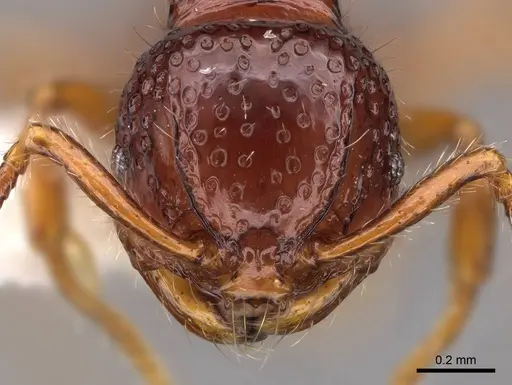
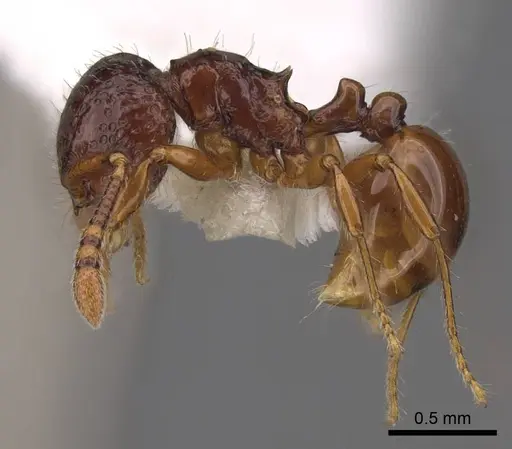
Pristomyrmex simplex is a rainforest ant native to New Guinea and the Philippines. Workers measure 2.4-2.7 mm in total length . They have reddish-brown coloration, small eyes with usually five ommatidia, mandibles with four teeth without a gap, and a high petiole node . This species is closely related to Pristomyrmex levigatus and Pristomyrmex obesus, and can be distinguished by its eye structure and foveolate punctures on the alitrunk .
Quick Summary
- Difficulty: Medium
- Origin & Habitat: Found in the Australasian region (New Guinea) and Indomalaya region (Philippines), in rainforest habitats from leaf litter samples [1][2].
- Colony Type: Colony structure is unconfirmed. No specific data on queen number for Pristomyrmex simplex.
- Size & Growth:
- Queen: ~2.51-2.84 mm [2]
- Worker: ~2.42-2.64 mm [2]
- Colony: Unknown, no colony size data available [1].
- Growth: Unknown, no development data available.
- Development: Estimated 6-10 weeks, based on typical Myrmicinae development at tropical temperatures. (Actual development time is unconfirmed for this species.)
- Antkeeping:
- Temperature: Keep warm, roughly 24-28°C, as this is a tropical species from rainforest habitats.
- Humidity: Keep nest substrate consistently moist but not waterlogged, mimicking rainforest conditions [2].
- Diapause: No, this is a tropical species with no diapause requirement.
- Nesting: Use small-scale setups like Y-tong nests with narrow chambers, or moist substrate nests. Ensure passages are appropriately scaled for tiny ants.
- Behavior: Workers are active foragers, likely predatory on small arthropods based on genus habits [2]. They are not aggressive but will defend the nest. Their small size requires excellent escape prevention [1].
- Common Issues: escape prevention is critical, their tiny size (2.4-2.7 mm) means they can slip through small gaps, so use fine mesh and tight-fitting lids [1]., slow growth is common, without documented development data, colonies may take longer than expected to establish., overheating is dangerous, being from rainforest understory, they prefer stable warmth rather than high temperatures., wild-caught colonies may struggle with captivity, litter-dwelling ants are often sensitive to habitat changes., small colony size means fewer workers to maintain humidity and tend brood, be patient during founding.
Housing and Nest Setup
Because Pristomyrmex simplex is tiny (2.4-2.7 mm) [1], housing requires attention to scale. Use narrow chambers and short tunnels in Y-tong nests or moist substrate setups [2]. A test tube setup works for founding colonies, use a small test tube with a cotton ball for water access. Ensure there are no gaps larger than 1mm, these ants can escape through small seams [1]. Cover all connections with tape or barrier gel.
Feeding and Diet
Pristomyrmex ants are predatory by nature, feeding on small arthropods in the wild [2]. In captivity, offer small live prey like fruit flies or springtails. Sugar sources may be accepted occasionally, but live protein should be the primary food. Feed small amounts every 2-3 days and remove uneaten prey after 24 hours to prevent mold.
Temperature and Humidity
This is a tropical species from rainforest habitats [2], so warmth is important. Keep the nest area at roughly 24-28°C consistently. For humidity, aim for moist substrate conditions, the nest material should feel damp but not have standing water. Mist occasionally and check that condensation doesn't disappear too quickly.
Colony Establishment and Growth
Starting a colony requires patience. If you obtain a founding queen, keep her in a small test tube setup with constant access to water. Expect 4-6 weeks for the first eggs to develop into workers, though this is an estimate based on typical Myrmicinae development. The first workers will be very small, and growth tends to be slow initially.
Behavior and Observation
These ants are active foragers that search through the substrate for prey. Workers are small but numerous in established colonies, and you'll see them patrolling and hunting. They're not aggressive toward keepers but will defend the nest if threatened. Their small eye size (usually five ommatidia) suggests they rely on chemical communication [1].
Frequently Asked Questions
How long does it take for Pristomyrmex simplex to have first workers?
Expect an estimated 6-10 weeks from founding to first workers, based on typical Myrmicinae development. Actual time may vary due to lack of specific data.
What do Pristomyrmex simplex ants eat?
They are predatory ants that hunt small arthropods. Feed them small live prey like fruit flies or springtails [2].
Do Pristomyrmex simplex ants sting?
Given their tiny size, they likely have a stinger but it's too small to penetrate human skin effectively. They're not considered dangerous to keepers.
Are Pristomyrmex simplex ants good for beginners?
This species is rated as Medium difficulty. The lack of documented care information and their tiny size mean they're better suited for keepers with some experience.
What temperature do Pristomyrmex simplex ants need?
Keep them warm at roughly 24-28°C, as this is a tropical species.
How big do Pristomyrmex simplex colonies get?
The maximum colony size is unknown, no published data exists on natural colony sizes for this species [1].
Do Pristomyrmex simplex ants need hibernation?
No hibernation is required. This is a tropical species with no diapause requirement.
Can I keep multiple Pristomyrmex simplex queens together?
The natural colony structure is unconfirmed for this species. Without documented information, combining unrelated queens is not recommended.
Why are my Pristomyrmex simplex ants escaping?
Their tiny size (2.4-2.7 mm) means they can escape through small gaps. Check all connections and use fine mesh [1].
When should I move Pristomyrmex simplex to a formicarium?
Wait until you have at least 30-50 workers and the test tube setup is crowded. For this tiny species, small formicariums or Y-tong nests work well.
Report an Issue
The current care sheet is based fully on literature. See inconsistencies, or something that's incorrect? Please , it will be resolved after review from an admin. Contributing to the blogs tab also helps providing information, to make us be able to further improve the caresheets. Thank you for your support!
References

This caresheet is licensed under CC BY-SA 4.0 .
Community Blogs
CASENT0901729
View on AntWeb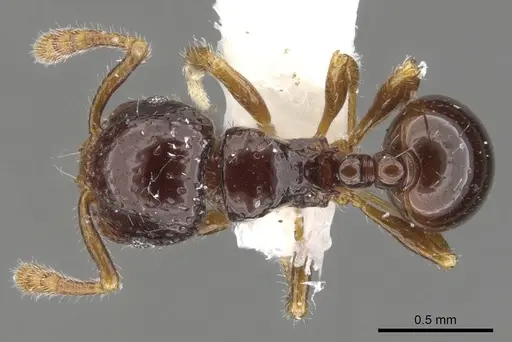
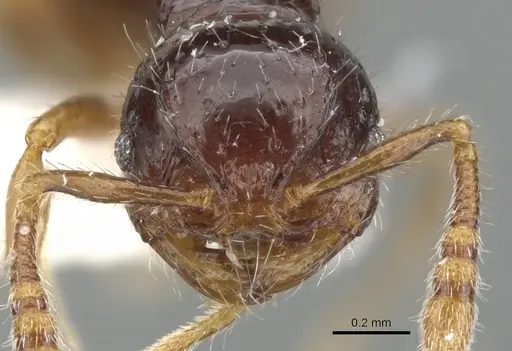
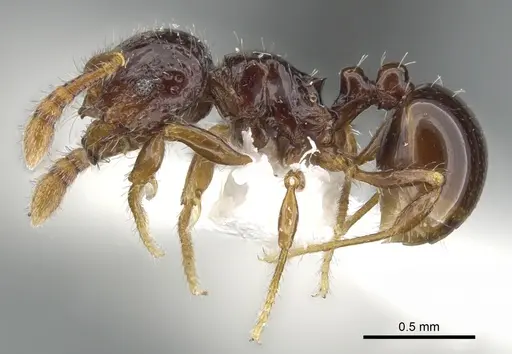
CASENT0923001
View on AntWeb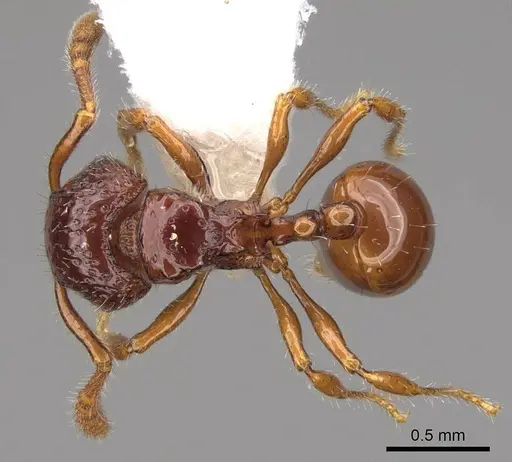
Literature
Loading distribution map...Loading products...