
Pristomyrmex mandibularis
- Sci. Name
- Pristomyrmex mandibularis
- Tribe
- Crematogastrini
- Subfamily
- Myrmicinae
- Author
- Mann, 1921
- Distribution
- Found in 2 countries
Introduction
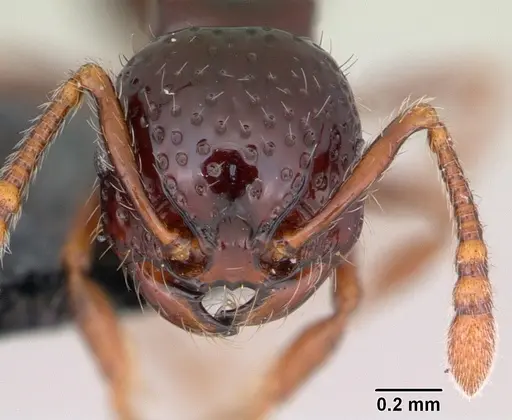
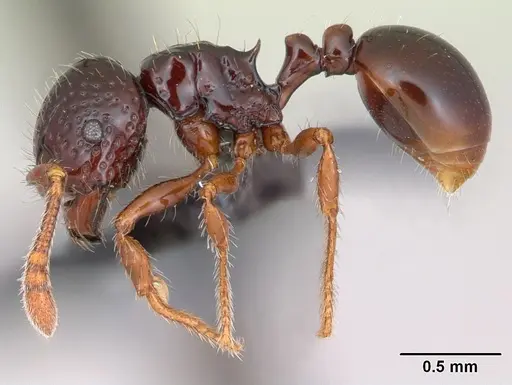
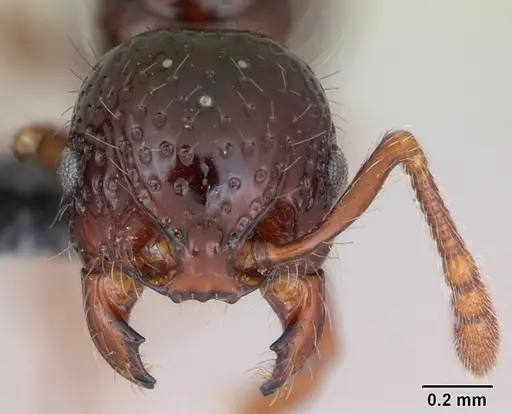
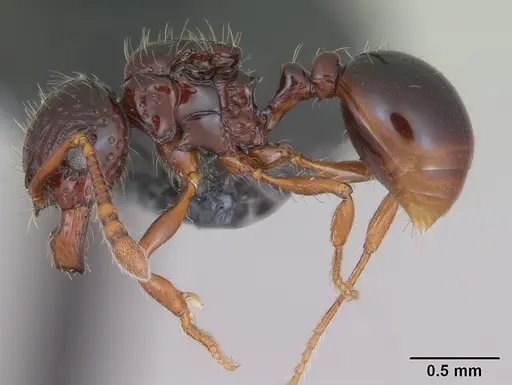
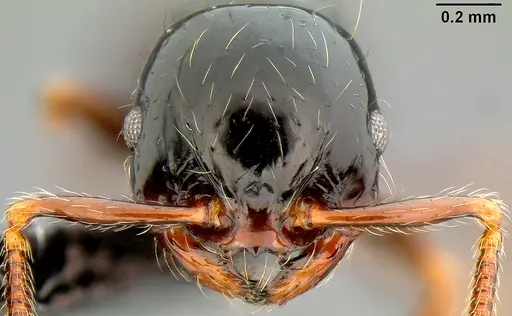
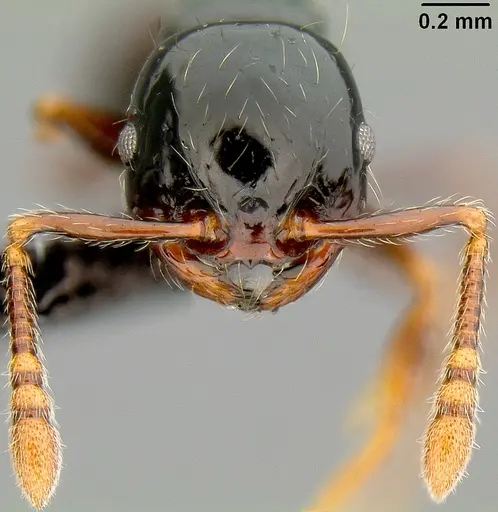
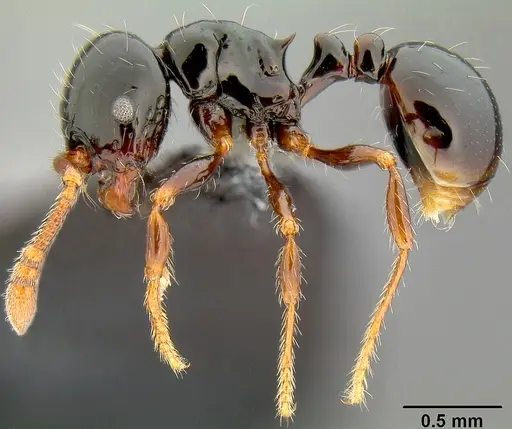
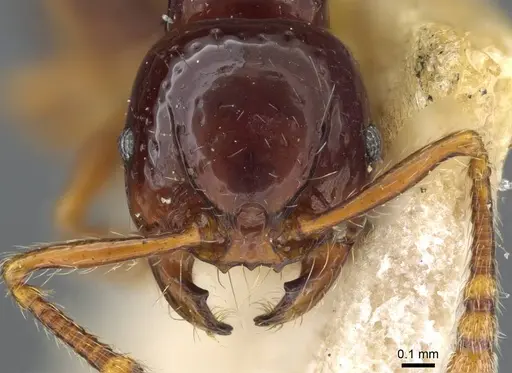
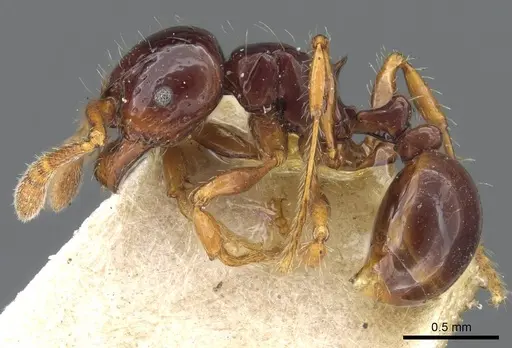
Pristomyrmex mandibularis is a small, shiny ant endemic to the Fiji Islands. Workers have a total length of 2.68-3.49 mm , alate queens 3.22-3.65 mm , and ergatoid queens approximately 3.32-3.40 mm . Color ranges from reddish-brown to blackish-brown, with variation across islands . The species has propodeal spines and is one of only two Pristomyrmex species in Fiji . A unique trait is the presence of ergatoid (wingless) queens with a single ocellus, which can serve as replacement reproductives . Colonies are small and nest under stones or in rotting logs in rainforest habitats .
Quick Summary
- Difficulty: Medium
- Origin & Habitat: Endemic to Fiji Islands, found on multiple islands including Viti Levu, Taveuni, and Ovalau. Inhabits rainforest environments, with workers collected from litter sifting and colonies nesting under stones or in rotting logs [3][2][4].
- Colony Type: Monogyne (single-queen) with ergatoid replacement reproductives documented [1].
- Size & Growth:
- Queen: Alate queens 3.22-3.65 mm [2], ergatoid queens ~3.32-3.40 mm [1].
- Worker: 2.68-3.49 mm [1].
- Colony: Up to 100 workers.
- Growth: Unknown, no development data available.
- Development: Unconfirmed, no direct data. Based on typical Myrmicinae patterns in tropical species, estimate 4-8 weeks at optimal temperature. (Development timeline has not been directly studied for this species.)
- Antkeeping:
- Temperature: Tropical species, aim for 22-27°C, inferred from Fiji's climate.
- Humidity: Keep nest substrate consistently moist but not waterlogged, as they inhabit rainforests [3][2].
- Diapause: No, tropical species does not require hibernation.
- Nesting: Prefer naturalistic setups with flat stones over moist substrate or Y-tong/plaster nests with narrow chambers, based on wild nesting habits [3][2].
- Behavior: Workers are active foragers. Defense mechanism is smear-based from subfamily Myrmicinae, using a modified stinger to wipe venom. Escape risk is moderate due to small size, use standard barrier methods.
- Common Issues: small colony size means slower growth, patience is required, tropical species may struggle if temperatures drop below 20°C, no specific diet research, experimental feeding may be needed, field-collected colonies may have parasites or stress
Natural History and Distribution
Pristomyrmex mandibularis is endemic to Fiji, found on islands including Viti Levu, Taveuni, Vanua Levu, Ovalau, Kadavu, Koro, Lakeba, Moala, and Gau [3]. Workers are collected through litter sifting, and colonies nest under stones or in rotting logs [3][2]. Morphological variation occurs across islands, with reddish specimens tending to have more foveate faces and darker specimens smoother [3]. Ergatoid queens with one ocellus serve as replacement reproductives [1].
Housing and Nest Preferences
In the wild, this species nests under stones or in rotting logs in rainforest litter [3][2]. For captivity, use a naturalistic setup with moist soil and flat stones, or a Y-tong nest with narrow chambers. Keep the nest substrate moist but not waterlogged to mimic rainforest humidity.
Feeding and Diet
Specific dietary requirements are not documented. Based on typical Pristomyrmex behavior, they likely accept small insects for protein and sugar sources like honey water. Offer varied diet and observe colony preferences.
Temperature and Seasonal Care
As a tropical species, maintain temperatures around 22-27°C year-round. No hibernation is needed. Use a heating cable if room temperature is cooler, but provide a gradient for ants to regulate.
Colony Structure and Reproduction
Colonies are monogyne with ergatoid queens that can replace lost reproductives [1]. Alate queens and males are produced for nuptial flights, males are smaller (2.55-3.22 mm) [2]. Colony size remains small, up to 100 workers.
Behavior and Temperament
Workers are active foragers. Defense uses a smear mechanism from subfamily Myrmicinae. Temperament is not aggressive, but standard escape prevention is needed due to small size.
Frequently Asked Questions
How long does it take for Pristomyrmex mandibularis to develop from egg to worker?
No direct data exists. Based on typical Myrmicinae patterns, estimate 4-8 weeks at optimal temperature.
What do Pristomyrmex mandibularis eat?
Diet is not documented, but they likely accept small insects and sugar sources.
Do Pristomyrmex mandibularis ants sting?
They use a smear defense mechanism from subfamily Myrmicinae, but are not dangerous to humans.
What temperature do Pristomyrmex mandibularis need?
Aim for 22-27°C, as they are tropical.
How big do Pristomyrmex mandibularis colonies get?
Colonies are small, up to 100 workers.
Can I keep multiple queens together?
This species is monogyne, combining queens is not recommended [1].
What humidity do Pristomyrmex mandibularis require?
Keep nest substrate moist but not waterlogged, as they inhabit rainforests [3][2].
Are Pristomyrmex mandibularis good for beginners?
Rated medium difficulty due to tropical requirements and slow growth.
What type of nest should I use for Pristomyrmex mandibularis?
Naturalistic setups with stones over moist substrate or Y-tong nests work well [3][2].
Where is Pristomyrmex mandibularis found in the wild?
Endemic to Fiji Islands, found on multiple islands in rainforest habitats [3][4].
Report an Issue
The current care sheet is based fully on literature. See inconsistencies, or something that's incorrect? Please , it will be resolved after review from an admin. Contributing to the blogs tab also helps providing information, to make us be able to further improve the caresheets. Thank you for your support!
References

This caresheet is licensed under CC BY-SA 4.0 .
Community Blogs
CASENT0171044
View on AntWeb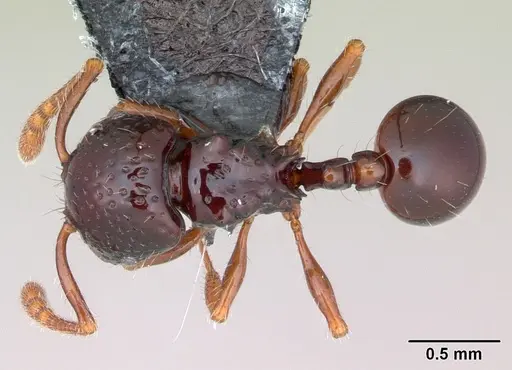
CASENT0171100
View on AntWeb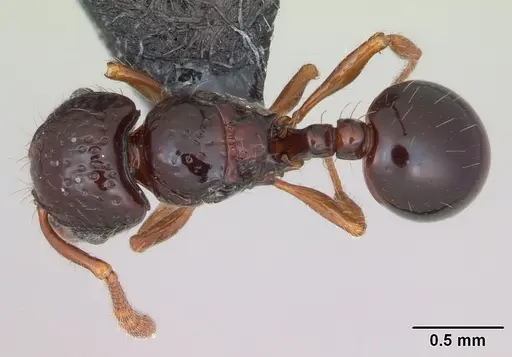
CASENT0171142
View on AntWeb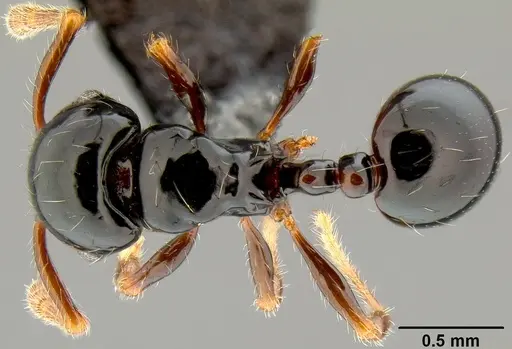
CASENT0905848
View on AntWeb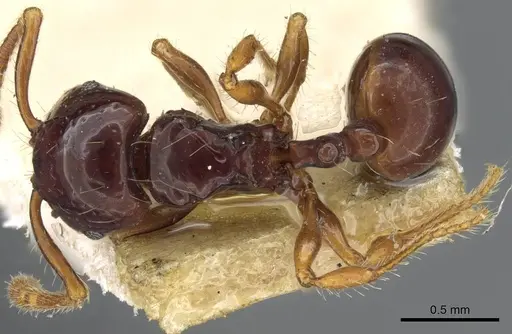
Literature
Loading distribution map...Loading products...