
Prenolepis lakekamu
- Sci. Name
- Prenolepis lakekamu
- Tribe
- Lasiini
- Subfamily
- Formicinae
- Author
- Williams & LaPolla, 2018
- Distribution
- Found in 1 countries
Introduction
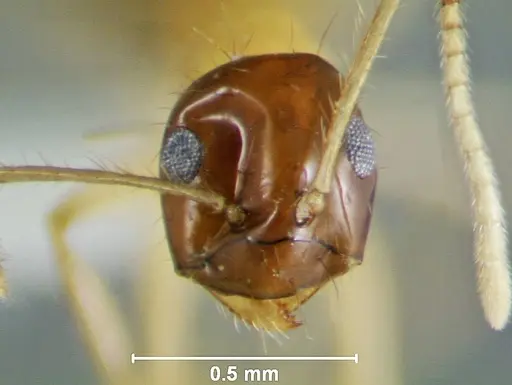
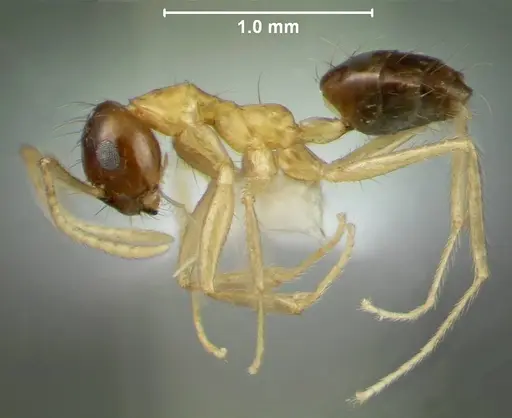
Prenolepis lakekamu is a tiny ant species from Papua New Guinea. Workers measure 2.38-2.45 mm in total length . They have a two-tone color pattern: yellow mesosoma, legs, and antennae, with medium to dark brown head and gaster . The cuticle is smooth and shiny, with long erect hairs . This species was described in 2018 and is the first Prenolepis recorded east of Wallace's Line . The species name comes from the Lakekamu Basin in Papua New Guinea, where it was discovered .
Quick Summary
- Difficulty: Unknown, no captive husbandry data exists
- Origin & Habitat: Gulf Province, Papua New Guinea, Lakekamu Basin at 120m elevation [1].
- Colony Type: Unknown, no data on colony structure
- Size & Growth:
- Antkeeping:
- Temperature: Based on genus patterns, likely warm temperatures around 24-28°C [2][3]. Provide a gentle gradient.
- Humidity: Based on lowland tropical habitat, likely moderate to high humidity. Keep substrate consistently moist but not waterlogged [1].
- Diapause: Unknown, no seasonal data exists
- Nesting: No specific data, based on genus patterns, likely prefer humid enclosed spaces like test tube setups [2][3].
- Behavior: Based on genus patterns, likely docile and not aggressive [2][3]. Their very small size means high escape risk, use fine mesh barriers.
- Common Issues: escape risk due to tiny size, use fine mesh to prevent losses, unknown requirements may lead to colony failure, monitor closely and adjust care, no development data means growth may be slow or problematic, keep detailed notes
Species Discovery and Identification
Prenolepis lakekamu was described in 2018 by Williams and LaPolla [1]. It was found in the Lakekamu Basin, Papua New Guinea, at 120 meters elevation [1]. This was the first Prenolepis species recorded east of Wallace's Line [1]. Workers have a yellow mesosoma, legs, and antennae, with a dark brown head and gaster [1]. The cuticle is smooth and shiny with long erect hairs [1].
Appearance and Size
Workers are tiny, measuring 2.38-2.45 mm in total length [1]. They have a two-tone color pattern: yellow mesosoma, legs, and antennae, with medium to dark brown head and gaster [1]. The body is smooth and shiny with long erect hairs [1]. In profile, the mesosoma is slender, and the propodeum has a flattened, elongated profile [1].
Known Distribution
Prenolepis lakekamu is only known from its type locality in the Lakekamu Basin, Gulf Province, Papua New Guinea [1]. This is a lowland tropical location at 120 meters elevation [1]. It resembles other Prenolepis species from maritime Indomalaya but is the only one found east of Wallace's Line [1].
Keeping an Undescribed Species
Since no biology data exists, you will be pioneering care for this species. Start with a test tube setup for humidity [2][3]. Aim for warm temperatures around 24-28°C based on genus patterns [2][3]. Offer sugar sources and small protein prey. Monitor closely and adjust based on colony behavior.
Related Species and Inferences
Based on Prenolepis genus patterns, species are typically docile and form moderate colonies [2][3]. Founding is often claustral, but this is unconfirmed for P. lakekamu. Lowland tropical species like this may not require hibernation [2][3]. These are inferences only, your observations will contribute new data.
Frequently Asked Questions
How long does it take for Prenolepis lakekamu to produce first workers?
Unknown, no development timeline has been documented [1]. Based on related species, it may take 6-10 weeks at optimal temperatures, but this is an estimate.
What do Prenolepis lakekamu ants eat?
Feeding behavior is not documented. Based on genus patterns, they likely prefer sugar sources like honeydew or nectar, and will accept small protein prey [2][3].
Are Prenolepis lakekamu good for beginners?
No, this species has no captive husbandry data and is not recommended for beginners [1]. Keeping newly described species requires experience and adaptability.
What temperature do Prenolepis lakekamu need?
Temperature requirements are unconfirmed. Based on genus patterns as a lowland tropical species, aim for 24-28°C [2][3]. Provide a gradient for choice.
Do Prenolepis lakekamu need hibernation?
Diapause requirements are unknown. As a lowland tropical species, they likely do not require formal hibernation [2][3].
How big do Prenolepis lakekamu colonies get?
Maximum colony size is unknown, no data exists [1].
Can I keep multiple Prenolepis lakekamu queens together?
Colony structure is unconfirmed. It is safest to keep one queen per setup until more is known.
What is the best nest type for Prenolepis lakekamu?
No specific nesting data exists. Based on genus patterns, a test tube setup or small humid nest is appropriate [2][3].
Why is my Prenolepis lakekamu colony not growing?
Without benchmarks, slow growth may be normal or indicate problems. Ensure proper humidity, temperature, and varied food. Monitor closely due to unknown requirements.
Report an Issue
The current care sheet is based fully on literature. See inconsistencies, or something that's incorrect? Please , it will be resolved after review from an admin. Contributing to the blogs tab also helps providing information, to make us be able to further improve the caresheets. Thank you for your support!
References

This caresheet is licensed under CC BY-SA 4.0 .
Community Blogs
USNMENT01126705
View on AntWeb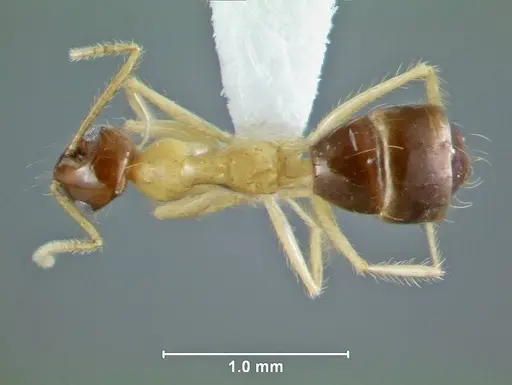
Literature
Loading distribution map...Loading products...