
Prenolepis angularis
- Sci. Name
- Prenolepis angularis
- Tribe
- Lasiini
- Subfamily
- Formicinae
- Author
- Zhou, 2001
- Distribution
- Found in 1 countries
Introduction
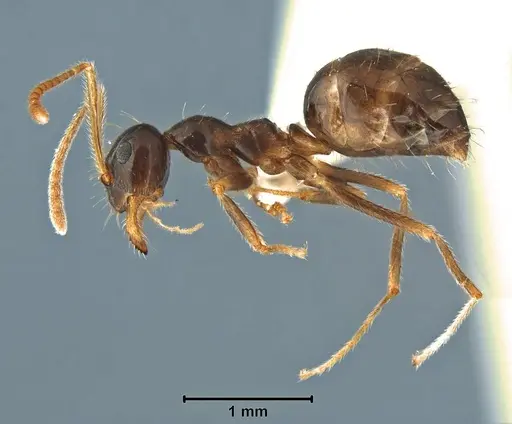
Prenolepis angularis is a small ant species native to southern and eastern China, first described by Zhou in 2001. Workers measure 2.9-3.1 mm in total length . They are medium to dark brown with a distinctive light blue cuticular iridescence, a trait shared only with Prenolepis naoroji . Their most recognizable features are the obtusely angled propodeum and erect hairs on antennae and legs . This species is found in China's Guangxi, Hunan, Zhejiang, and Yunnan provinces . Little is known about their biology in the wild. The AntWiki explicitly states that nothing is known about the biology of this species .
Quick Summary
- Difficulty: Unknown, no captive husbandry data exists [2]
- Origin & Habitat: Southern and eastern China (Guangxi, Hunan, Zhejiang, Yunnan provinces). Found in subtropical to temperate forest habitats at elevations around 900-1000 m [1][3].
- Colony Type: Unknown, colony structure has not been documented [2]
- Size & Growth:
- Antkeeping:
- Behavior: Not studied, no behavioral observations are documented in scientific literature [2]. Their small size (under 4 mm) means escape prevention should be taken seriously, they can slip through tiny gaps.
- Common Issues: no captive husbandry data exists for this species, so it may not be established in the antkeeping hobby, unknown colony structure means you may not know if your setup is appropriate, lack of development data makes it hard to assess if your colony is growing properly, potential hibernation requirements are unconfirmed, wrong seasonal care could harm the colony, very limited availability, this species is rarely kept and may not be available from suppliers
Appearance and Identification
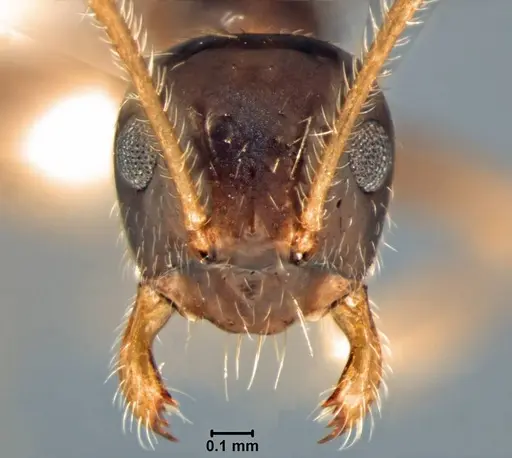
Prenolepis angularis workers are tiny ants measuring 2.9-3.1 mm in total length [1]. They are medium to dark brown with a distinctive light blue cuticular iridescence that gives them an almost metallic sheen [2]. Their body is relatively smooth and shiny, with the most distinctive feature being the obtusely angled propodeum [1]. They have erect hairs on their antennae and legs, and abundant long erect macrosetae on their head, mesosoma, and gaster [1]. Their compound eyes are moderately large and convex but do not extend beyond the sides of the head in full-face view [1].
This species can be distinguished from its closest relative Prenolepis naoroji by several traits: P. angularis has a smaller, obtusely angled propodeum, smaller compound eyes, shorter body hairs, and is generally less hairy overall. The blue iridescence is unique to these two species within the entire genus Prenolepis [2].
Distribution and Habitat
Prenolepis angularis is known from southern and eastern China. The type locality is Mao'er Mountain Natural Reserve in Guangxi Province, at an elevation of approximately 934.5 meters. Additional records exist from Hunan and Zhejiang provinces, and the species was newly recorded from Yunnan Province in 2020 [1][3].
The species inhabits subtropical to warm temperate forest environments at moderate elevations. While specific microhabitat preferences are undocumented, related Prenolepis species typically nest in soil or decaying wood in shaded forest locations [1].
What We Don't Know
Almost nothing is known about the biology of Prenolepis angularis. The AntWiki explicitly states that nothing is known about the biology of this species [2]. No scientific papers document their colony structure, founding behavior, development timeline, diet preferences, seasonal activity patterns, or any other aspect of their natural history [2].
This means any care advice must be considered highly speculative. Keepers should approach this species as essentially unknown from a husbandry perspective.
Related Species and What They Tell Us
While P. angularis specifically is unstudied, we can look at the broader genus Prenolepis for clues. The genus contains about 20 species distributed primarily through Asia, with some species extending into North America. Most Prenolepis species are ground-nesting ants that form moderate-sized colonies, typically with a single queen. They are not known to be particularly aggressive or specialized in their diet [4].
Prenolepis species are in the subfamily Formicinae, which includes familiar genera like Lasius, Camponotus, and Formica. Most Formicinae are claustral founders, the queen seals herself in a chamber and raises the first workers entirely on stored body fat without leaving to forage. This is likely true for P. angularis as well, though not confirmed.
Starting a Colony - Best Guesses
No specific starting advice exists for this species. Based on general antkeeping practices, you might try a test tube setup for founding, but this is unconfirmed. For established colonies, use a nest that holds moisture well, a Y-tong nest or plaster nest with a water reservoir works. Provide a foraging area where you can offer sugar water and protein sources. Given their small size, ensure your setup has no gaps that workers could escape through. However, all care recommendations are speculative due to lack of data.
Frequently Asked Questions
How long does it take for Prenolepis angularis to go from egg to worker?
No species-specific development data exists [2].
What do Prenolepis angularis eat?
No specific diet studies exist for this species [2]. Based on related Prenolepis and general Formicinae behavior, they likely accept sugar sources and small protein items, but this is unconfirmed.
Can beginners keep Prenolepis angularis?
This is not recommended for beginners. No captive husbandry information exists for this species, making it essentially an unknown in the antkeeping hobby [2].
Do Prenolepis angularis need hibernation?
No data on diapause requirements exists [2].
How big do Prenolepis angularis colonies get?
Unknown, no colony size data exists [2].
What is the best nest type for Prenolepis angularis?
No established recommendations exist. Based on general practices, use a test tube for founding, then transition to a Y-tong or plaster nest with moderate humidity. Their small size means tight-fitting connections are essential [2].
Is Prenolepis angularis available in the antkeeping hobby?
This species is rarely, if ever, kept in captivity. It was only described in 2001 and has not been documented in the antkeeping hobby [2].
What temperature should I keep Prenolepis angularis at?
No thermal data exists [2].
Can I keep multiple Prenolepis angularis queens together?
Unknown, colony structure has not been documented [2]. Without data, combining unrelated queens is not recommended.
Report an Issue
The current care sheet is based fully on literature. See inconsistencies, or something that's incorrect? Please , it will be resolved after review from an admin. Contributing to the blogs tab also helps providing information, to make us be able to further improve the caresheets. Thank you for your support!
References

This caresheet is licensed under CC BY-SA 4.0 .
Community Blogs
USNMENT00755068
View on AntWeb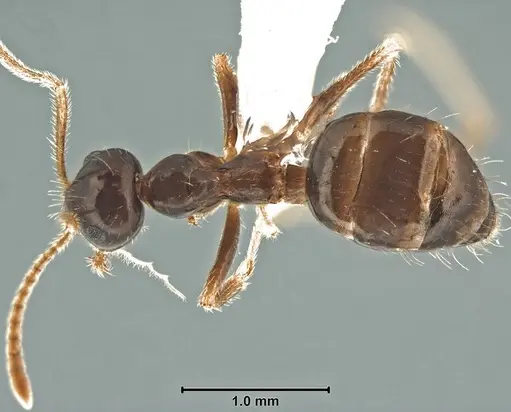
Literature
Loading distribution map...Loading products...