
Poneracantha ingeborgae
- Sci. Name
- Poneracantha ingeborgae
- Tribe
- Ectatommini
- Subfamily
- Ectatomminae
- Author
- Brown, 1993
- Distribution
- Found in 1 countries
Introduction
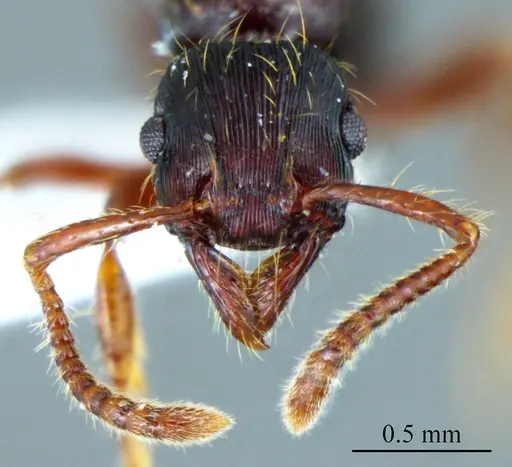
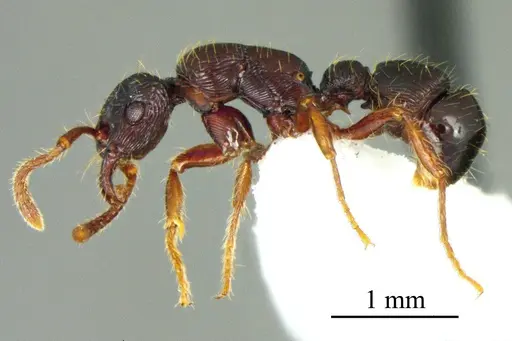
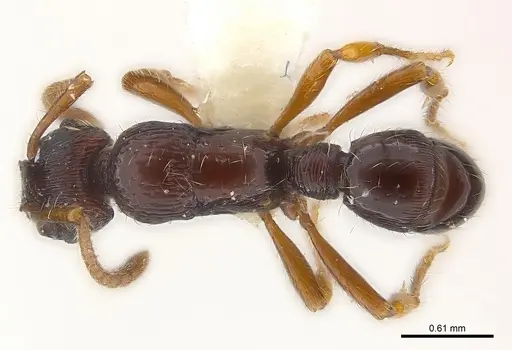
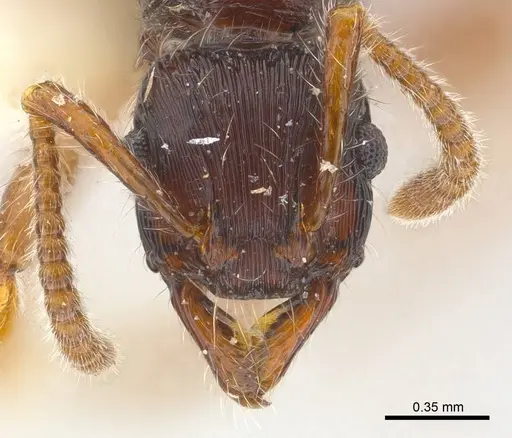
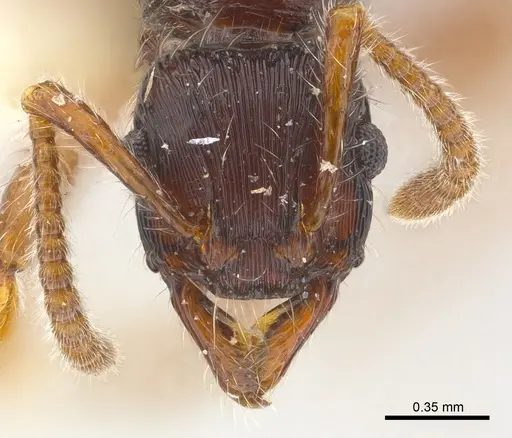
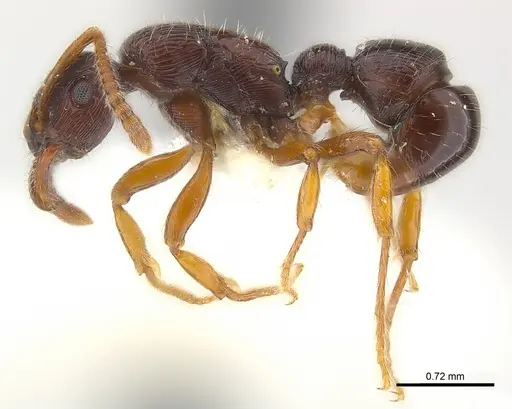
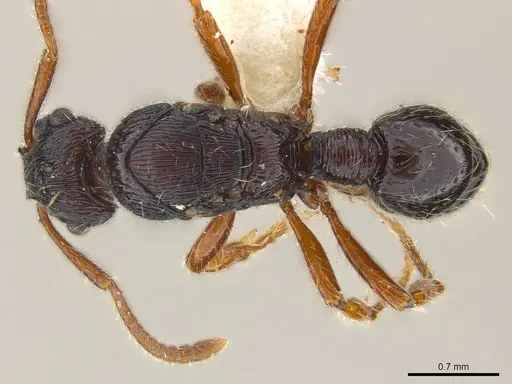
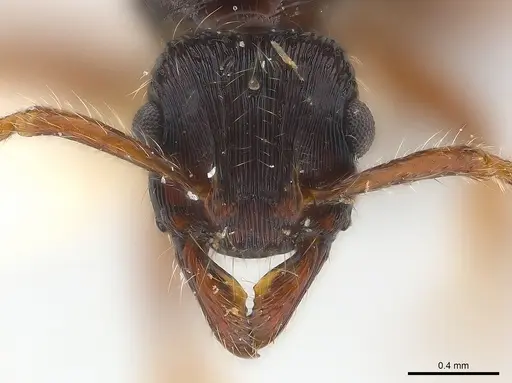
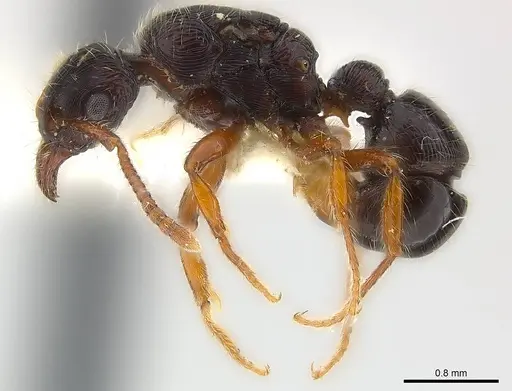
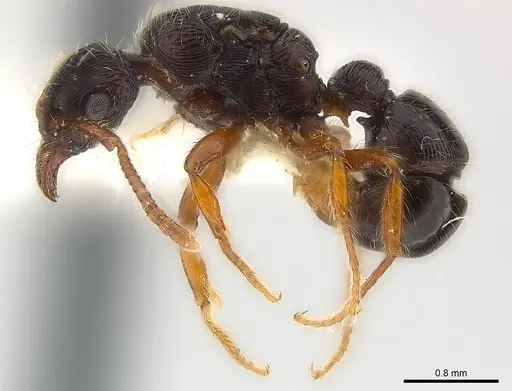
Poneracantha ingeborgae is a small ant from the humid forests of Colombia. Workers are about 4.1-4.9 mm long and queens are 4.7-5.8 mm long, with reddish-brown coloration and ridged sculpture on the body . They nest in decomposing wood on the forest floor . This species is a specialized predator that hunts and feeds on millipedes, particularly polydesmid species like Oxidus gracilis .
Quick Summary
- Difficulty: Expert
- Origin & Habitat: Humid forests in Colombia (Cundinamarca, Meta, Putumayo departments) at elevations around 1100 m. Nests in decomposing wood on the forest floor [1][2][5].
- Colony Type: Single-queen colonies (monogyne). The type series nest had 15 workers and one queen [1].
- Size & Growth:
- Antkeeping:
- Temperature: Keep warm, roughly 22-26°C, based on their tropical habitat [1].
- Humidity: Keep nest substrate consistently moist but not waterlogged, based on humid forest habitat [1].
- Diapause: No, as a tropical species, they do not require hibernation [1].
- Nesting: Provide decomposing wood pieces or a plaster nest with high humidity. They prefer tight, humid spaces similar to their natural nesting sites [1][2].
- Behavior: Workers are active foragers that hunt millipedes using a stereotyped sequence: they sting the prey, wait for defensive chemicals to dissipate, then transport it to the nest. They have a functional stinger for defense [4]. Escape risk is moderate due to their small size.
- Common Issues: specialized diet makes feeding difficult, they require live millipedes [3][4]., small colony size means slow growth and high vulnerability [1]., tropical species requires warm, humid conditions year-round [1]., stinging, they have a functional stinger and may use it defensively., wild-caught colonies may have parasites or fail to adapt to captivity.
Feeding and Diet - The Millipede Specialist
Poneracantha ingeborgae is a specialized millipede predator. In captivity, you must provide live small millipedes, such as Oxidus gracilis [3][4]. Workers hunt using a stereotyped sequence: they approach millipedes, sting them at intersegmental membranes, wait 10-60 minutes for defensive chemicals to dissipate, then transport the prey to the nest [4]. At the nest, workers remove the millipede's head and place larvae on the body to feed [4]. This species will likely refuse sugar water or other insect prey [3].
Nest Preferences and Housing
In the wild, this species nests in decomposing wood on the forest floor in humid, shaded areas [1][2]. For captivity, provide small pieces of decaying wood or cork bark on moist substrate. A plaster nest with small chambers also works, but ensure high humidity [1][2]. Avoid dry conditions, these are forest floor ants from humid environments.
Temperature and Humidity Requirements
As a species from humid Colombian forests, keep temperatures warm, roughly 22-26°C [1]. Humidity is critical: keep the nest substrate moist but not waterlogged [1]. Provide a water source and mist occasionally if needed. They do not require diapause [1].
Behavior and Defense
Workers are methodical foragers that hunt millipedes individually [4]. They have a functional stinger and will use it defensively if threatened. The hunting behavior is ritualized: they grasp millipedes from behind, sting at intersegmental membranes, and wait before processing [4]. They are attracted to defensive chemicals of polydesmid millipedes but averse to quinone from julids [4].
Colony Structure and Growth
Poneracantha ingeborgae forms small, monogyne colonies. The type series had 15 workers and one queen [1]. Queens are slightly larger than workers and lose wings after dealation [1]. Colony growth is slow due to specialized diet [1][3].
Frequently Asked Questions
What do Poneracantha ingeborgae ants eat?
They are specialized millipede predators. In captivity, you must provide live small millipedes, such as Oxidus gracilis [3][4].
How difficult is Poneracantha ingeborgae to keep?
This is an expert-level species due to its specialized diet. You cannot keep them like typical ants, they require live millipedes, high humidity, and warm temperatures year-round [1][3].
Do Poneracantha ingeborgae ants sting?
Yes, they have a functional stinger as members of the Ectatomminae subfamily. However, they are small and their sting is not medically significant to humans. They will sting defensively if threatened [4].
How big do Poneracantha ingeborgae colonies get?
Small. The type series nest had only 15 workers. Wild colonies likely remain under 20 workers [1].
Can I keep multiple queens together?
No. This is a monogyne (single-queen) species. Multiple queens have not been documented in wild colonies [1].
Do they need hibernation?
No. As a tropical species from Colombia, they do not require diapause or winter cooling. Keep them warm and humid year-round [1].
What temperature should I keep them at?
Keep them warm, roughly 22-26°C, based on their tropical habitat. Avoid temperatures below 20°C [1].
How long does it take for eggs to become workers?
The exact development timeline is unknown for this species. No direct data is available from research [1].
What kind of nest should I use?
A naturalistic setup with decaying wood pieces on moist substrate works best, or a plaster nest with small chambers. They need high humidity and tight spaces [1][2].
Where is Poneracantha ingeborgae from?
Colombia, specifically the departments of Cundinamarca, Meta, and Putumayo. They live in humid forests at around 1100 m elevation and nest in decomposing wood on the forest floor [1][5][6].
Report an Issue
The current care sheet is based fully on literature. See inconsistencies, or something that's incorrect? Please , it will be resolved after review from an admin. Contributing to the blogs tab also helps providing information, to make us be able to further improve the caresheets. Thank you for your support!
References

This caresheet is licensed under CC BY-SA 4.0 .
Community Blogs
Literature
Loading distribution map...Loading products...