
Poneracantha bispinosa
- Sci. Name
- Poneracantha bispinosa
- Tribe
- Ectatommini
- Subfamily
- Ectatomminae
- Author
- Emery, 1890
- Distribution
- Found in 3 countries
Introduction
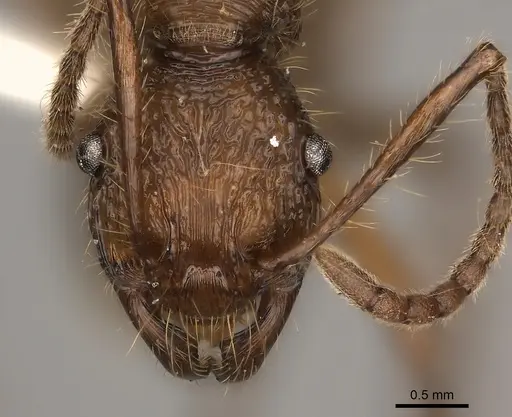
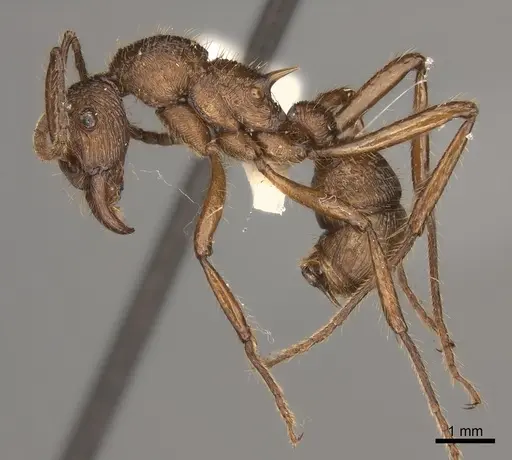
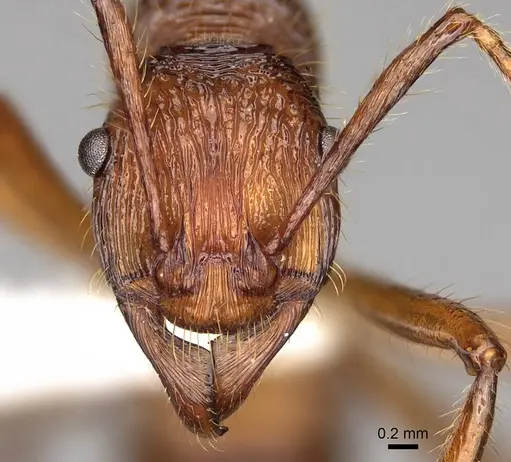
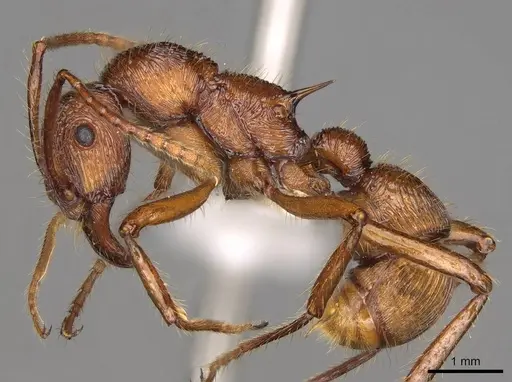
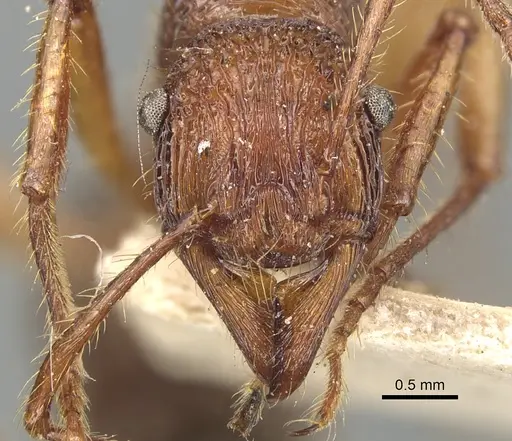
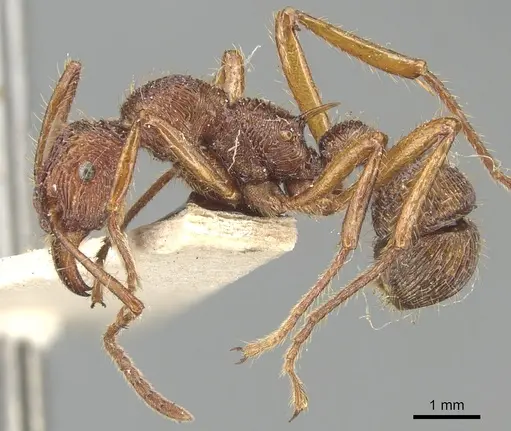
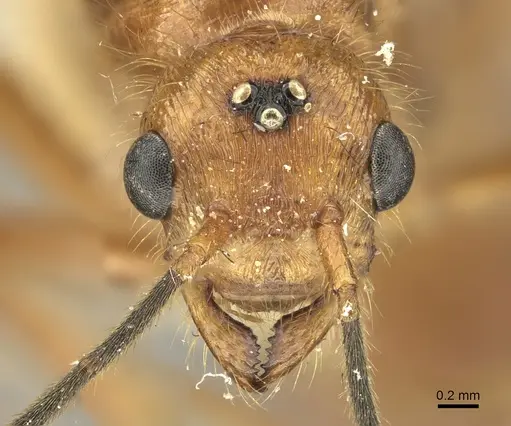
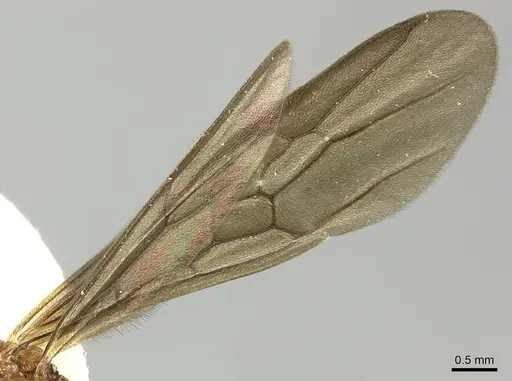
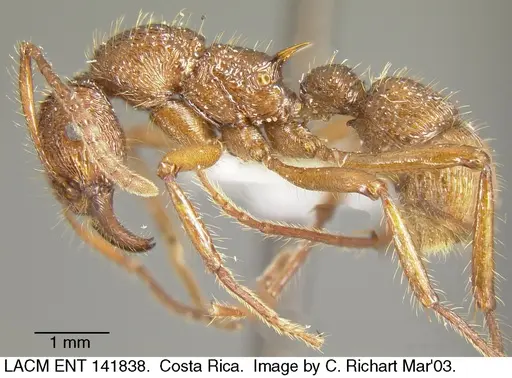
Poneracantha bispinosa is a neotropical ant known for its specialized millipede-hunting behavior. Workers have a distinctive rusty ferruginous coloration and a rough, rugose texture on the head, mesosoma, and postpetiole . They have prominent semi-globose eyes, long antennae that extend past the back of the head, and smooth, toothless mandibles . This species inhabits wet forests from Costa Rica through Panama to Colombia, typically found at elevations between 800-2,100 meters . P. bispinosa is a dietary specialist that almost exclusively hunts millipedes (Diplopoda), using coordinated group raids to tackle prey much larger than individual workers .
Quick Summary
- Difficulty: Expert
- Origin & Habitat: Wet forests of Costa Rica, Panama, and Colombia (Cundinamarca, Valle del Cauca, Chocó) at 800-2,100m elevation [1][3]
- Colony Type: Unconfirmed, colony structure has not been extensively documented in scientific literature
- Size & Growth:
- Queen: Size data unavailable, no total length measurements provided in research
- Worker: Size data unavailable, no total length measurements provided in research
- Colony: Colony size unknown, but raids involve up to 50 workers [1]
- Growth: Unknown, no data on colony growth rate
- Development: Unknown, no specific data on development time (Development time not studied, estimate based on tropical ant patterns)
- Antkeeping:
- Temperature: Keep at stable temperatures similar to wet forest habitats, specific requirements unknown [1][3]
- Humidity: High humidity required, as they inhabit wet forests, keep substrate consistently moist but not waterlogged [1][3]
- Diapause: Unknown, tropical species may not require diapause [1]
- Nesting: In nature, nest in rotting wood and soil in humid forests, in captivity, use moist substrate nests with high humidity and a spacious outworld for hunting [1][3]
- Behavior: Workers forage in columns and conduct coordinated raids on millipedes, sometimes involving nearly 50 ants [1][4]. They sting prey and pull on legs to subdue them, then carry paralyzed millipedes back to the nest. Raids occur during daylight hours, around 11:00 AM in observed cases [1]. Workers have functional stingers and can deliver painful stings when threatened. They are active foragers but not escape artists if containment is secure.
- Common Issues: specialized diet, they require live millipedes or related arthropods and refuse standard ant foods, making feeding challenging., high humidity needs, dry conditions can quickly stress and kill colonies., stinging defense, workers have functional stingers and can deliver painful stings, requiring careful handling., slow colony growth, their specialized lifestyle may result in slower development, but no specific data exists.
Housing and Nest Setup
You need a naturalistic setup that mimics wet forest habitats. Use a formicarium with moist substrate like soil and sand, or a plaster nest that maintains high humidity. Keep the nest chamber dark and humid, while the outworld provides space for hunting behavior. A large outworld is essential for coordinated raids. Maintain humidity with a water reservoir or misting system. Ensure excellent escape prevention, while not tiny, they are active foragers [1][3].
Feeding and Diet
This species is a dietary specialist that almost exclusively hunts millipedes (Diplopoda) [1][4][5]. In the wild, they target genera like Trichomorpha and Epinannolene [1]. In captivity, you must provide live millipedes, which can be difficult to source. Centipedes (Chilopoda) are also documented prey but should not be the primary food source [5][6]. They will not accept sugar water, honey, or commercial ant foods. This makes them challenging for beginners, ensure a reliable millipede source before acquiring [1][4].
Temperature and Humidity
Keep ants at stable temperatures similar to their wet forest habitat, specific requirements are unknown [1][3]. Use a heating cable for a gradient but avoid overheating. Humidity is critical, maintain a moist substrate without waterlogging. Both temperature and humidity should remain stable to prevent stress [1][3].
Predatory Behavior
Workers forage in columns and conduct organized raids on millipedes, sometimes involving nearly 50 ants [1][4]. During attacks, some workers sting the millipede while others pull on its legs to immobilize it. Once subdued, the paralyzed millipede is carried back to the nest. Documented raids cover distances of 6-10 meters from the nest [1]. This behavior requires ample outworld space for natural hunting expressions.
Defense and Handling
Workers belong to the tribe Ectatommini, which have functional stings used for defense [1]. When threatened, they will sting and cause local pain. Handle with extreme caution using tools rather than bare hands, especially as colonies grow. Keep the formicarium secure away from pets and children.
Frequently Asked Questions
Can Poneracantha bispinosa eat standard ant food like sugar water or protein bars?
No. This species is an extreme dietary specialist that only accepts live millipedes (Diplopoda) and occasionally centipedes (Chilopoda) [5][6]. They will not accept sugar water, honey, fruits, or commercial ant foods. You need a reliable source of live millipedes before getting this species.
How difficult is Poneracantha bispinosa to keep?
This is an expert-level species. The primary challenge is their extreme dietary specialization, they require live millipedes which are difficult to source. Additionally, they need high humidity and stable temperatures based on their wet forest habitat [1][3]. They are not suitable for beginners.
Do Poneracantha bispinosa ants sting?
Yes. Workers have functional stingers and belong to the Ectatommini tribe, known for painful stings [1]. They will sting when threatened or handled. Handle with extreme caution using tools.
How long does it take for Poneracantha bispinosa to develop from egg to worker?
Exact development time has not been scientifically documented. Based on tropical ant patterns, it may take several weeks, but no specific data exists.
Can I keep multiple Poneracantha bispinosa queens together?
Colony structure is unconfirmed, but based on typical ant patterns, it is likely single-queen. Do not attempt to keep multiple unrelated queens together.
What size colony does Poneracantha bispinosa reach?
Colony size is unknown, but raids involve up to 50 workers [1]. Full colony size at maturity has not been documented.
Where is Poneracantha bispinosa found in the wild?
This neotropical species is found in Costa Rica, Panama, and Colombia (Cundinamarca, Valle del Cauca, Chocó) at elevations of 800-2,100 meters in wet forests [1][3][7].
Do Poneracantha bispinosa need hibernation or diapause?
Unknown. Being a tropical species from high-elevation wet forests, they may not require diapause, but no specific data exists [1].
What makes Poneracantha bispinosa unique compared to other ants?
P. bispinosa is one of the few ant species that specializes almost exclusively in hunting millipedes [1][4]. They conduct coordinated group raids with up to 50 workers to tackle prey much larger than individual ants.
When can I move my Poneracantha bispinosa colony to a formicarium?
Wait until the colony is well-established with several workers. This species prefers naturalistic setups with moist substrate. Ensure you have a reliable millipede food source before acquiring the colony.
Report an Issue
The current care sheet is based fully on literature. See inconsistencies, or something that's incorrect? Please , it will be resolved after review from an admin. Contributing to the blogs tab also helps providing information, to make us be able to further improve the caresheets. Thank you for your support!
References

This caresheet is licensed under CC BY-SA 4.0 .
Community Blogs
CASENT0217483
View on AntWeb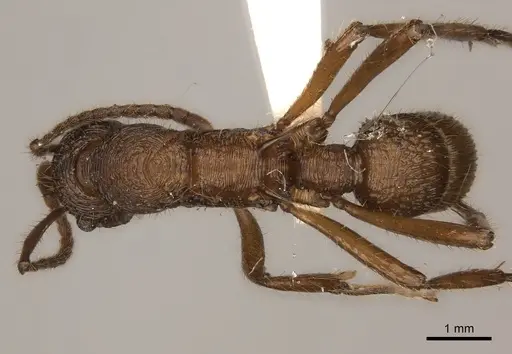
CASENT0281520
View on AntWeb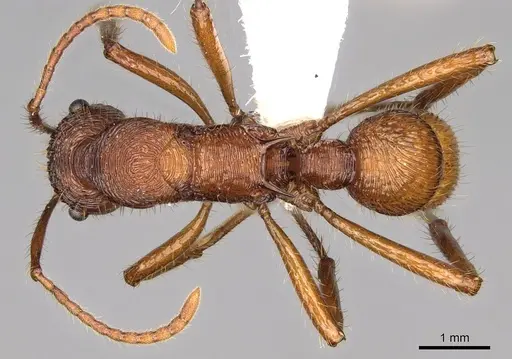
CASENT0903843
View on AntWeb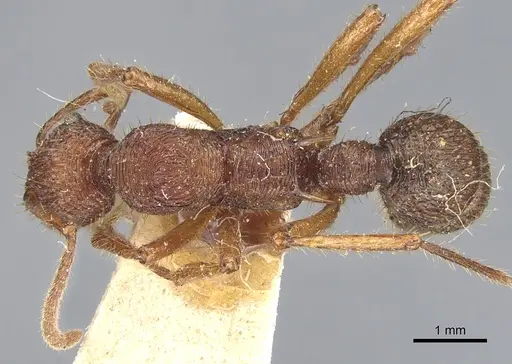
INBIOCRI001237308
View on AntWeb
LACMENT141838
View on AntWeb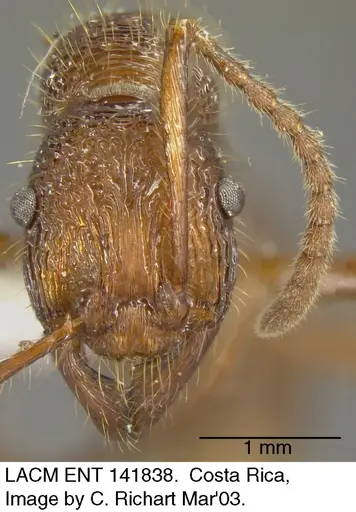
Literature
Loading distribution map...Loading products...