
Ponera taipingensis
- Sci. Name
- Ponera taipingensis
- Tribe
- Ponerini
- Subfamily
- Ponerinae
- Author
- Forel, 1913
- Distribution
- Found in 0 countries
Introduction
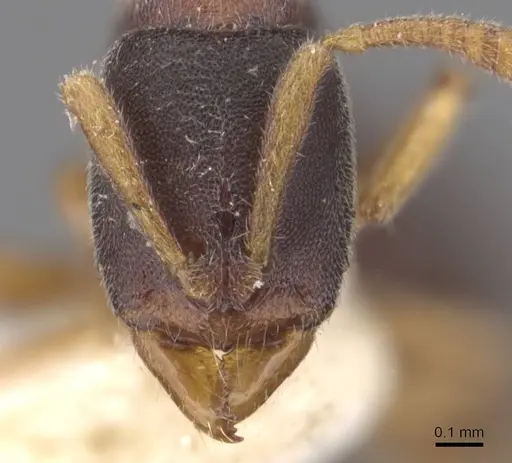
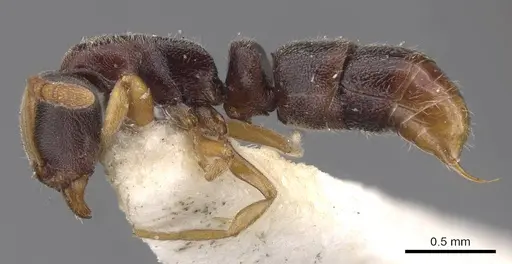
Ponera taipingensis is a small ponerine ant native to Peninsular Malaysia. Workers have a distinct median clypeal tooth and a thick petiolar node . The species was first described from specimens collected at Maxwell's Hill near Taiping at 1200m elevation, from a rotting branch . Total body length data is unavailable, but the species is among the smaller ants in its genus . Little is known about the biology of Ponera taipingensis, as only worker specimens have been documented .
Quick Summary
- Difficulty: Hard
- Origin & Habitat: Peninsular Malaysia (Maxwell's Hill near Taiping) at 1200m elevation in tropical forest habitats, collected from a rotting branch [1][2]
- Colony Type: Unknown, colony structure has not been documented. No sexuals or colony samples have been studied [1][2]
- Size & Growth:
- Queen: Size data unavailable, no queens have been documented [1][2]
- Worker: Size data unavailable, total body length not measured [1]
- Colony: Unknown, only the original type workers have been documented [1]
- Growth: Unknown
- Development: Unknown, this species has never been reared in captivity. Based on typical Ponera patterns, expect around 2-3 months at optimal temperature, but this is an estimate only (No development data exists for this species. Related Ponera species typically take 2-3 months from egg to worker.)
- Antkeeping:
- Temperature: Aim for moderate temperatures around 22-26°C. The collection site at 1200m elevation suggests tolerance for slightly cooler conditions [1]
- Humidity: Keep the nest substrate consistently moist but not waterlogged, as they were collected from a rotting branch in humid forest [1]
- Diapause: Unknown, no data on seasonal behavior. Given tropical origin, diapause may not be required
- Nesting: Prefer humid, wood-based environments. Use Y-tong or plaster nests with high humidity chambers [1]
- Behavior: Behavior is unstudied in captivity. Based on typical Ponera genus traits, they are likely predatory and relatively docile. Their small size means escape prevention is critical
- Common Issues: escape risk is high due to small size, humidity maintenance is critical to prevent desiccation, diet is unconfirmed, so feeding may require experimentation, colony founding behavior is unknown, making raising from queen challenging, no established care protocols exist for this species
Why This Species Is Challenging
Ponera taipingensis is one of the least-studied ant species in the hobby. We know almost nothing about their basic biology, no one has ever documented a queen, observed colony founding, or recorded their diet in captivity. They exist in scientific literature only as a handful of worker specimens collected nearly a century ago. This makes them an experimental species where you will essentially be pioneering all aspects of captive care. If you're looking for a species with established care protocols, this is not it. However, if you're an advanced antkeeper who enjoys the challenge of figuring out a species from scratch, this could be a unique opportunity [1][2]
Housing and Nest Setup
Based on their natural collection from a rotting branch, these ants clearly prefer humid, wood-based environments. A Y-tong (AAC) nest or a plaster formicarium with high humidity chambers works best. The chambers should be relatively small and tight-fitting, these are tiny ants. Keep the nest substrate consistently moist. A water reservoir or regular misting helps maintain humidity. Because they are so small, excellent escape prevention is essential, even tiny gaps in tubing or lid seals can allow escapes. Use fine mesh barriers on any outworld connections [1]
Feeding and Diet
Diet is completely unconfirmed for this species. Based on typical Ponera genus behavior, they are likely predatory on small invertebrates like springtails, mites, and other micro-arthropods. Ponera ants typically have stingers but are too small to penetrate human skin effectively. Start by offering live springtails and other tiny live prey. You might experiment with small pieces of mealworm or other protein sources, but acceptance is uncertain. Sugar sources are unlikely to be accepted, Ponera species are not typically honeydew feeders. Offer prey 2-3 times per week and remove any uneaten items within 24 hours to prevent mold
Temperature and Seasonal Care
Aim for temperatures in the 22-26°C range. The type locality at 1200m elevation suggests they can tolerate slightly cooler conditions than true lowland tropical ants, but don't let temperatures drop below 20°C. A gentle heat gradient allows the ants to choose their preferred temperature. Humidity is more critical than temperature, never let the nest dry out. Regarding winter care, their tropical origin means a true hibernation is probably not necessary, but you might reduce temperatures slightly (by 2-3°C) during winter months to simulate seasonal slowing. Watch colony activity levels to guide adjustments [1]
Frequently Asked Questions
How do I care for Ponera taipingensis ants?
This is one of the most challenging species you could choose, virtually no captive care information exists. Provide a humid Y-tong or plaster nest at 22-26°C, keep the substrate consistently moist, and offer small live prey like springtails. Be prepared to experiment with feeding and humidity levels since no established protocols exist [1]
What do Ponera taipingensis eat?
Diet is unconfirmed, but based on typical Ponera behavior, they likely eat small live invertebrates. Start with springtails and other micro-arthropods. They probably do not accept sugar sources
How long does it take for Ponera taipingensis to develop from egg to worker?
Unknown, this species has never been documented in captivity. Based on related Ponera species, expect roughly 2-3 months at optimal temperature, but this is only an estimate
Are Ponera taipingensis good for beginners?
No. This species is not recommended for beginners. No one has successfully established a captive colony that we know of, and there are no established care protocols. Choose a better-documented species like Lasius niger or Messor structor for your first colony
What size colony does Ponera taipingensis reach?
Unknown, only 2-4 workers have ever been documented in scientific literature. The maximum colony size is completely unstudied [1]
What temperature do Ponera taipingensis need?
Keep them at 22-26°C. The elevated collection site (1200m in Malaysia) suggests they can tolerate slightly cooler conditions than typical tropical ants, but don't drop below 20°C [1]
Do Ponera taipingensis need hibernation?
Unknown, no data on seasonal behavior exists. Their tropical origin suggests a true diapause is probably not required, but a slight temperature reduction (2-3°C) during winter may be beneficial
Can I keep multiple queens together?
Unknown, colony structure has never been documented for this species. Do not attempt combining unrelated queens until more is known about their social structure
Where does Ponera taipingensis come from?
Peninsular Malaysia, specifically Maxwell's Hill near Taiping at 1200m elevation. They were collected from a rotting branch [1][2]
Why is so little known about this ant?
They are known only from the original type specimens collected in 1913. No sexuals, colonies, or biological observations have ever been documented. This is one of the least-studied ant species in existence [1][2]
Is Ponera taipingensis available in the ant keeping hobby?
Extremely unlikely. This species has never been documented in the antkeeping hobby, and no one has successfully collected or shipped queens. You are unlikely to find this species for sale
Report an Issue
The current care sheet is based fully on literature. See inconsistencies, or something that's incorrect? Please , it will be resolved after review from an admin. Contributing to the blogs tab also helps providing information, to make us be able to further improve the caresheets. Thank you for your support!
References

This caresheet is licensed under CC BY-SA 4.0 .
Community Blogs
CASENT0907326
View on AntWeb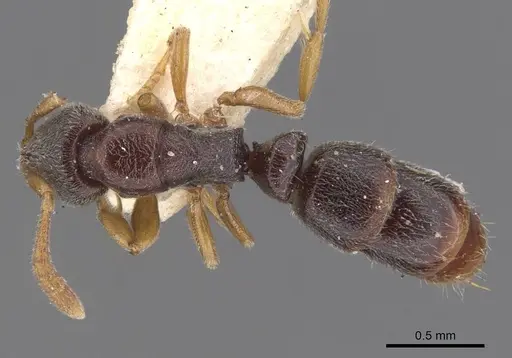
Literature
Loading distribution map...Loading products...