
Ponera nangongshana
- Sci. Name
- Ponera nangongshana
- Tribe
- Ponerini
- Subfamily
- Ponerinae
- Author
- Xu, 2001
- Distribution
- Found in 2 countries
Introduction
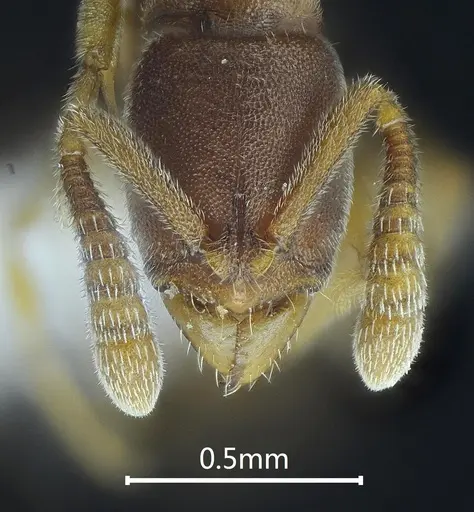
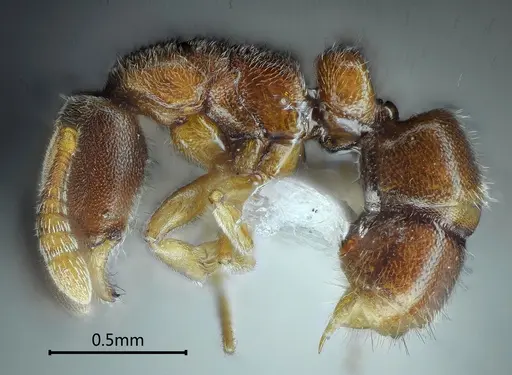
Ponera nangongshana is a tiny predatory ant endemic to Yunnan Province, China. Workers are just 2.4-2.8 mm long and yellowish brown to reddish brown . It belongs to the subfamily Ponerinae, which have a functional sting. The species is known from primary monsoon evergreen broad‑leaf forest at 1525-1620 m elevation, where they nest in soil or leaf litter . What makes this ant special is its extreme habitat specialization: it has only been found in primary forest and never in secondary forest or rubber plantations . This makes it a true forest specialist that requires very specific conditions in captivity.
Quick Summary
- Difficulty: Hard
- Origin & Habitat: Endemic to Yunnan Province, China. Recorded only from primary monsoon evergreen broad‑leaf forest at elevations of 1525-1620 m [1][3]. Never found in secondary forest or human‑modified habitats [2].
- Colony Type: Likely monogyne (single queen), inferred from typical Ponera patterns, but not confirmed by research. Colony size is small, based on the genus, probably under 200 workers.
- Size & Growth:
- Queen: Unknown, the queen has not been described [1]
- Worker: 2.4-2.8 mm [1]
- Colony: Unknown, estimated under 200 workers based on the Ponera genus
- Growth: Slow
- Development: Estimated 6-10 weeks based on other Ponera species, no data for this species (Development time is inferred from related species and may vary with temperature.)
- Antkeeping:
- Temperature: Specific data unavailable. Based on high‑elevation origin (1620 m), likely moderate temperatures around 20-22 °C. Avoid overheating above 28 °C. Observe colony behavior to fine‑tune.
- Humidity: High humidity required because their natural habitat is monsoon forest. Keep the nest substrate consistently moist but not waterlogged. Provide a humidity gradient so ants can choose their preferred zone.
- Diapause: Unknown. Yunnan has distinct seasons, so a cool period may be beneficial, but it is not confirmed. If you attempt diapause, keep the nest at 10-15 °C for 2-3 months and monitor the colony.
- Nesting: Use a naturalistic setup with moist soil/peat mix, or a well‑humidified Y‑tong/plaster nest. Keep the nest dark. In nature they nest in soil, so substrate‑based setups work best [1].
- Behavior: These ants are cryptic and secretive. Workers are slow‑moving and spend most of their time hunting small prey in the substrate. As a Ponerinae, they have a functional sting, but their tiny size makes stinging humans unlikely. They are not aggressive. Foraging happens mainly in darkness. Escape risk is moderate due to their small size, they can fit through tiny gaps.
- Common Issues: high humidity management is critical: too dry and the colony desiccates, too wet and mold becomes a problem, colonies grow very slowly, which can frustrate keepers expecting visible progress, they are extremely habitat‑specific, wild‑caught colonies may struggle to adapt to captive conditions, tiny size means careful escape prevention is needed despite their slow movement, they need live prey, they cannot survive on sugar alone
Housing and Nest Setup
Ponera nangongshana needs a setup that mimics its natural forest floor habitat. The type material was collected from a soil sample in monsoon evergreen broad‑leaf forest [1], so a naturalistic terrarium with moist soil and peat mixture works best. The substrate should be kept consistently moist but not waterlogged, aim for the feel of a damp forest floor. Add leaf litter, small stones, and pieces of rotting wood to provide hunting grounds and hiding spots.
Alternatively, you can use a Y‑tong or plaster nest with good humidity control, as long as the chambers stay moist. Place the nest in a dark location or cover it, these ants prefer darkness and are more active when not exposed to light. A small outworld for feeding completes the setup.
Because the ants are tiny (2.4-2.8 mm), they can squeeze through very small gaps. Use tight‑fitting lids and seal any cracks. Despite their size, they are not aggressive escape artists, but prevention is still important.
Feeding and Diet
Ponera ants are obligate predators of small invertebrates. In captivity, offer live prey such as springtails, fruit flies, tiny mealworms, and other micro‑arthropods. They need moving prey to trigger hunting behavior, they will not eat dead or stationary food.
Feed small amounts 2-3 times per week, removing any uneaten prey after 24 hours. As the colony grows, increase the amount accordingly.
Sugar sources like honey or sugar water are not accepted, these ants get all their carbohydrates from the bodily fluids of prey. Do not rely on sugar solutions.
Temperature and Seasonal Care
Keep your colony at moderate temperatures, likely around 20-22 °C based on their high‑elevation origin (1620 m). Avoid temperatures above 28 °C. There is no specific data for this species, so monitor your ants: if workers cluster near the cooler area, the nest may be too warm, and vice versa.
Seasonal care is uncertain. Yunnan has distinct seasons, so a mild winter cooling period may be beneficial, but it is not experimentally confirmed. If you choose to provide a dormant period, gradually lower the temperature to 10-15 °C for 2-3 months (roughly November-February in the Northern Hemisphere). Many keepers keep related species active year‑round at room temperature with mixed results. The safest approach is to observe your colony and adjust based on their behavior. [1]
Handling and Temperament
Ponera nangongshana workers are docile and not aggressive. They have a functional sting (a trait of the Ponerinae subfamily), but given their tiny size it is unlikely to penetrate human skin. They rarely sting unless roughly handled.
These ants are not great for observation, they spend most of their time hidden in the substrate or nest. If you want to watch them hunt, use a setup with a clear section or a thin layer of substrate.
When maintaining the colony, use gentle movements and avoid disturbing the nest often. Like many specialized ants, they can be stressed by excessive disturbance and may abandon brood.
Colony Growth and Development
Growth is slow. A newly mated queen likely takes 6-10 weeks to produce her first workers (nanitics) based on other Ponera species, no specific data exists for this ant. The first workers may be smaller than mature workers.
Colony size stays small. Based on the Ponera genus, a mature colony probably contains fewer than 200 workers. Growth is gradual, with only a few new workers appearing each month. Do not expect fast expansion, this is normal for the genus.
The queen likely lays eggs intermittently. Development times depend heavily on temperature, cooler conditions slow everything down. Maintain stable, moderate temperatures for best results.
Frequently Asked Questions
How long does it take for Ponera nangongshana to produce first workers?
No direct data. Based on other Ponera species, expect 6-10 weeks from egg to worker at 20-22 °C.
Can I keep Ponera nangongshana in a test tube setup?
A test tube can work for a founding queen, but a naturalistic or Y‑tong setup with moist substrate is better long‑term. These ants naturally live in soil and need space to hunt. Test tubes dry out too quickly and do not provide proper hunting grounds.
What do Ponera nangongshana ants eat?
They are predators that need live small invertebrates. Feed springtails, fruit flies, tiny mealworms, or other micro‑arthropods 2-3 times per week. They do not accept sugar or honey, they get nutrients from prey.
Are Ponera nangongshana good for beginners?
No. They are considered hard difficulty because they require very specific conditions (high humidity, live prey, moderate temperatures) and are extremely habitat‑specialized. Beginners should start with more resilient species.
How big do Ponera nangongshana colonies get?
Colony size is unknown, but based on the genus, it likely stays under 200 workers at maturity. Growth is slow.
Do Ponera nangongshana need hibernation?
Unknown. Yunnan has distinct seasons, so a mild dormant period may be beneficial, but it has not been confirmed. If you attempt hibernation, keep the nest at 10-15 °C for 2-3 months. Many keepers keep related species active year‑round at room temperature with mixed results.
Why is my Ponera nangongshana colony dying?
Common causes include: too dry conditions (they need high humidity), wrong temperature (too hot or too cold), lack of live prey, or stress from excessive disturbance. Wild‑caught colonies often struggle in captivity due to their specialized habitat requirements [2]. Check these factors and adjust accordingly.
Can I keep multiple queens together?
Not recommended. Ponera species are typically monogyne (single queen). Combining unrelated queens has not been studied for this species and could result in fighting. If you acquire a colony, assume it is single-queen.
When should I move Ponera nangongshana to a formicarium?
Wait until the colony has at least 20-30 workers and is actively foraging in an outworld. Moving too early stresses the colony. A naturalistic setup with substrate is preferred over pure formicarium setups for this soil‑dwelling species.
Report an Issue
The current care sheet is based fully on literature. See inconsistencies, or something that's incorrect? Please , it will be resolved after review from an admin. Contributing to the blogs tab also helps providing information, to make us be able to further improve the caresheets. Thank you for your support!
References

This caresheet is licensed under CC BY-SA 4.0 .
Community Blogs
ANTWEB1060522
View on AntWeb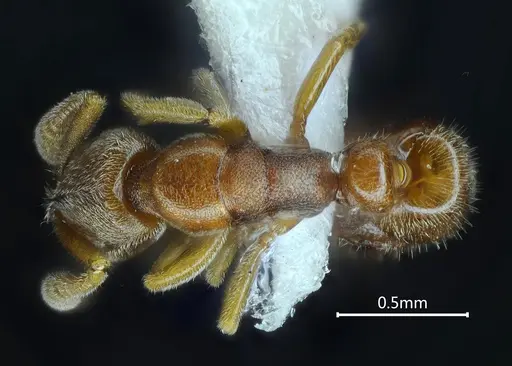
Literature
Loading distribution map...Loading products...