
Ponera longlina
- Sci. Name
- Ponera longlina
- Tribe
- Ponerini
- Subfamily
- Ponerinae
- Author
- Xu, 2001
- Distribution
- Found in 1 countries
Introduction
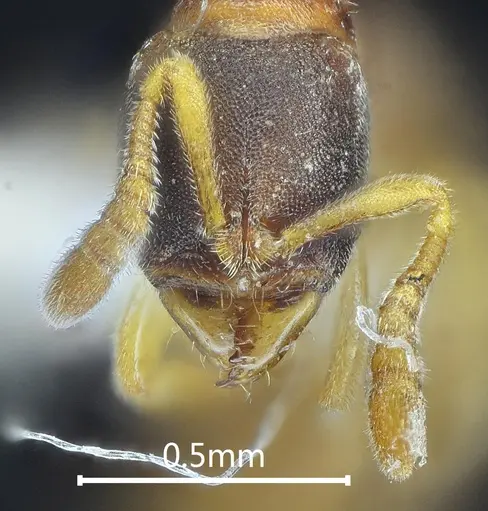
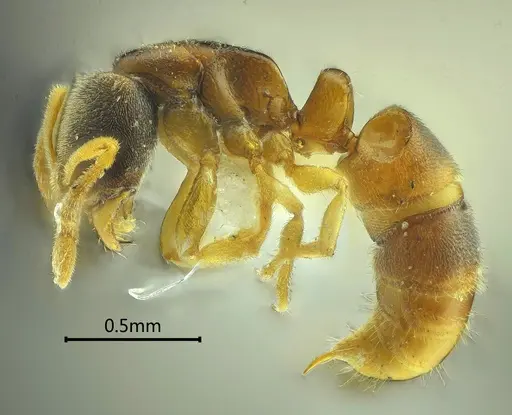
Ponera longlina is a tiny, cryptic ant species endemic to Yunnan Province, China . Workers measure 2.2mm in total length . They have a reddish-brown body, black head, and yellowish-brown appendages . The most notable feature is their extremely reduced eye with just a single facet, indicating adaptation to dark microhabitats . This species was described in 2001 from specimens collected in mountain rainforest at 1050m elevation in Longlin Village, Mengla County . The genus Ponera consists of small, slow-moving ants that live in cryptic colonies under stones or in soil. As a Yunnan endemic from mountain rainforest, this species likely prefers cool, humid conditions. Their tiny size and reduced eyes make them a challenging species for experienced antkeepers who can provide stable, humid environments.
Quick Summary
- Difficulty: Hard
- Origin & Habitat: Endemic to Yunnan Province, China, found in mountain rain forest at around 1050m elevation [2][1].
- Colony Type: Based on Ponera genus patterns, likely monogyne colonies with a single queen.
- Size & Growth:
- Queen: Size data unavailable, inferred from Ponera genus as ~3-4mm total length.
- Worker: 2.2mm total length [2]
- Colony: Up to 300 workers, inferred from Ponera genus patterns.
- Growth: Slow
- Development: Estimated 8-12 weeks. (Development is slow, expect several months from founding to first workers.)
- Antkeeping:
- Temperature: Keep cool, around 18-22°C. Based on mountain rainforest origin, they prefer cooler temperatures.
- Humidity: High humidity is essential, keep nest substrate consistently moist but not waterlogged.
- Diapause: Likely requires a winter diapause of 2-3 months at 10-15°C.
- Nesting: Provide a humid nest with fine substrate, such as a test tube setup or Y-tong nest.
- Behavior: Ponera longlina is cryptic and slow-moving. Workers are not aggressive but have a sting as part of Ponerinae subfamily, though it is not significant to humans due to their small size. Escape prevention is critical due to their tiny size.
- Common Issues: Escapes are likely due to very small size, use fine mesh barriers., Slow growth can lead to overfeeding and mold, feed sparingly., High humidity requirements can cause mold if ventilation is poor., Wild-caught colonies may have parasites., Founding queens are difficult to establish.
Housing and Nest Setup
Ponera longlina requires a small, humid nest setup. A test tube setup works well for founding colonies. For established colonies, a Y-tong nest or small plaster nest is suitable. Worker size is 2.2mm, so use tight-fitting barriers and fine mesh to prevent escapes [2]. Provide a small outworld for feeding, but keep it minimal due to their cryptic nature.
Feeding and Diet
Ponera longlina is predatory and should be fed small live prey such as fruit flies, springtails, or pinhead crickets. Prey should be appropriately sized, no larger than the ant itself. Feed small amounts 2-3 times per week, removing uneaten prey after 24 hours to prevent mold. Sugar sources are unlikely to be accepted.
Temperature and Seasonal Care
Keep Ponera longlina cool at 18-22°C, based on their mountain rainforest origin. Avoid heating elements that might overheat the nest. In winter, provide a diapause period of 2-3 months at 10-15°C to simulate natural cycles.
Colony Founding
Founding behavior is unconfirmed for this species. If you obtain a queen, provide a small, humid test tube chamber and keep her in darkness with minimal disturbance. Founding success rates are typically low, so expect some losses.
Behavior and Observation
Ponera longlina is cryptic and slow-moving. Workers remain hidden within the nest most of the time and are not aggressive. They have a sting as part of Ponerinae subfamily, but it is not significant to humans due to their small size. Observation is challenging but rewarding for patient keepers.
Frequently Asked Questions
How long does it take for Ponera longlina to produce first workers?
Expect 8-12 months from founding to first workers, based on typical Ponera development patterns. Patience is essential with this slow-growing species.
What do Ponera longlina ants eat?
They are predatory and need small live prey like fruit flies or springtails. Sugar sources are unlikely to be accepted.
Are Ponera longlina ants good for beginners?
No, this is a difficult species not suitable for beginners due to tiny size, high humidity needs, and slow growth.
Do Ponera longlina ants need hibernation?
Yes, a winter diapause of 2-3 months at 10-15°C is recommended based on their temperate mountain origin.
How big do Ponera longlina colonies get?
Colonies are small, reaching up to 300 workers at maximum, inferred from typical Ponera colony sizes.
Can I keep multiple Ponera longlina queens together?
Ponera are typically monogyne, so combining queens is not recommended and may result in fighting.
What temperature is ideal for Ponera longlina?
Keep them cool at 18-22°C, based on their mountain rainforest habitat.
Why are my Ponera longlina escaping?
Their tiny 2.2mm size means they can squeeze through small gaps, use fine mesh barriers and tight-fitting lids [2].
When should I move Ponera longlina to a formicarium?
Wait until the colony has at least 20-30 workers, but given their small size, a test tube setup may suffice for the entire colony life.
Report an Issue
The current care sheet is based fully on literature. See inconsistencies, or something that's incorrect? Please , it will be resolved after review from an admin. Contributing to the blogs tab also helps providing information, to make us be able to further improve the caresheets. Thank you for your support!
References

This caresheet is licensed under CC BY-SA 4.0 .
Community Blogs
ANTWEB1060520
View on AntWeb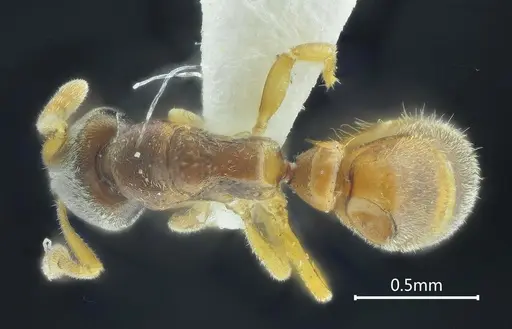
Literature
Loading distribution map...Loading products...