
Ponera augusta
- Sci. Name
- Ponera augusta
- Tribe
- Ponerini
- Subfamily
- Ponerinae
- Author
- Taylor, 1967
- Distribution
- Found in 1 countries
Introduction
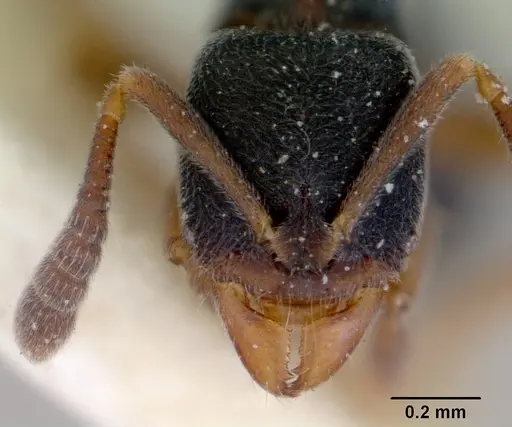
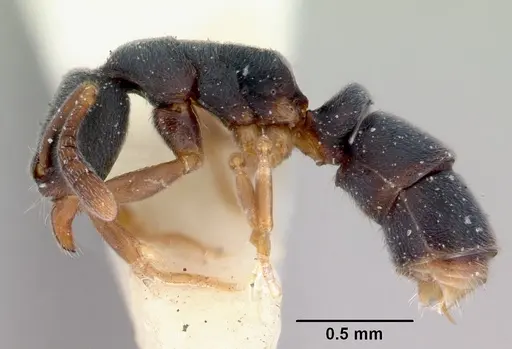
Ponera augusta is a small, dark brown ant native to the eastern highlands of New Guinea. It is identified by large eyes with 11-15 facets, a broad head, and long antennae that exceed the occipital border. The body surface is coarsely punctate and opaque . This species is known only from Aiyura in New Guinea's Eastern Highlands at 1900m elevation, found in leafmold from disturbed rainforest . Almost nothing is known about its biology, colony structure, or behavior, making it one of the most poorly documented Ponera species .
Quick Summary
- Difficulty: Hard
- Origin & Habitat: Eastern highlands of New Guinea, found at 1900m elevation in leafmold from disturbed rainforest floor [1][2]
- Colony Type: Unknown, colony structure has not been documented
- Size & Growth:
- Queen: Unknown, queen has not been described
- Worker: Size data unavailable, body length not measured in available literature [1].
- Colony: Unknown, no colony data exists
- Growth: Unknown
- Development: Unknown, development has not been studied (No data available for this species.)
- Antkeeping:
- Temperature: Inferred from high-elevation habitat: aim for cool temperatures around 20-24°C with a gradient [1].
- Humidity: Inferred from habitat: keep substrate consistently moist but not waterlogged [2].
- Diapause: Unknown, no seasonal data [1].
- Nesting: Inferred: naturalistic setup with moist substrate, such as a terrarium-style formicarium [2].
- Behavior: Inferred from genus patterns: cryptic and secretive, likely predatory on small invertebrates. As a member of Ponerinae, they have a sting and can inject venom, but no specific data on aggression for this species. Escape prevention should be moderate due to small size [2].
- Common Issues: lack of biological data makes care challenging, small size increases escape risk if not properly contained, no confirmed founding or colony growth information
Discovery and Distribution
Ponera augusta was first described by Robert W. Taylor in 1967 from specimens collected at Aiyura in the Eastern Highlands of New Guinea. The type series came from a Berlese funnel sample of leafmold taken from the floor of disturbed rainforest at approximately 1900 meters elevation [1]. This makes it a highland species adapted to cooler conditions. The species appears to be sympatric with Ponera elegantula at this location [1]. Notably, P. augusta has not been recorded from any other location since its initial discovery [2].
Identification and Morphology
This species is distinctive among Ponera ants due to several unique physical characteristics. The most notable are its unusually large eyes for the genus, containing 11-15 facets [1]. The head is broad with a cephalic index of 90-93 [1]. The antennae are long, with the scapes clearly exceeding the occipital border [1]. The body surface has coarse, closely-spaced punctures that give it an opaque appearance [1]. The mesometanotal suture is distinctly incised [1].
Housing and Nesting
Since nothing is known about this species' nesting preferences in captivity, we must infer based on where they were found in the wild. They were collected from leafmold on the rainforest floor, suggesting they prefer moist, organic-rich substrate [2]. A naturalistic setup with damp soil or coco fiber substrate would be a good starting point. Include leaf litter and hiding spaces to mimic their natural habitat.
Feeding and Diet
The diet of Ponera augusta has not been documented. Based on typical Ponera species, they are predatory on small invertebrates like springtails and mites [2]. In captivity, offer small live prey such as springtails or fruit flies.
Temperature and Seasonal Care
This species comes from a highland tropical environment at 1900m elevation, suggesting they prefer cooler temperatures. Based on this, aim for temperatures in the range of 20-24°C with a gradient [1]. Avoid overheating above 28°C. Since nothing is known about seasonal patterns, maintain stable temperatures and observe for changes.
Behavior and Temperament
The behavior of Ponera augusta has not been studied. Based on typical Ponera genus patterns, they are cryptic and non-aggressive [2]. As a member of Ponerinae, they have a sting and can inject venom, but no specific data on aggression for this species. Workers likely forage singly and spend most time hidden in substrate.
Frequently Asked Questions
How long does it take for Ponera augusta to produce first workers?
This is unknown, the development timeline has not been studied for this species. Based on related Ponera species, expect approximately 6-10 weeks from egg to worker at optimal temperatures around 24°C [2].
What do Ponera augusta ants eat?
Their diet is unconfirmed, but Ponera species are typically predatory on small invertebrates. In captivity, offer small live prey like springtails or fruit flies [2].
Can I keep multiple Ponera augusta queens together?
This is unknown, colony structure has not been documented for this species. It is not recommended to combine unrelated queens since this has not been studied.
What temperature should I keep Ponera augusta at?
Based on their highland New Guinea habitat, aim for cool to moderate temperatures around 20-24°C. Avoid temperatures above 28°C [1].
How big do Ponera augusta colonies get?
This is unknown, no colony size data exists for this species. Based on related species, colonies are likely small, but no estimates are available.
What type of nest should I use for Ponera augusta?
A naturalistic setup with moist substrate works best since they were found in leafmold. Include leaf litter and hiding spaces [2].
Do Ponera augusta need hibernation or diapause?
This is unknown, no seasonal data exists for this species. Maintain stable temperatures year-round and observe for changes in activity.
Are Ponera augusta good for beginners?
Difficulty is hard due to the complete lack of husbandry information. They are not recommended for beginners until more care information becomes available.
Why is so little known about Ponera augusta?
This species is known only from the original type collection in 1962 from a single location in New Guinea's Eastern Highlands. It has rarely been encountered since, and no scientific studies have examined its biology or behavior [1][2].
Report an Issue
The current care sheet is based fully on literature. See inconsistencies, or something that's incorrect? Please , it will be resolved after review from an admin. Contributing to the blogs tab also helps providing information, to make us be able to further improve the caresheets. Thank you for your support!
References

This caresheet is licensed under CC BY-SA 4.0 .
Community Blogs
CASENT0172424
View on AntWeb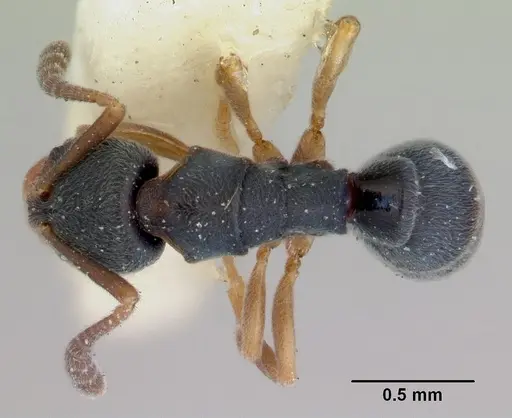
Literature
Loading distribution map...Loading products...