
Polyrhachis ypsilon
- Sci. Name
- Polyrhachis ypsilon
- Tribe
- Camponotini
- Subfamily
- Formicinae
- Author
- Emery, 1887
- Distribution
- Found in 4 countries
Introduction
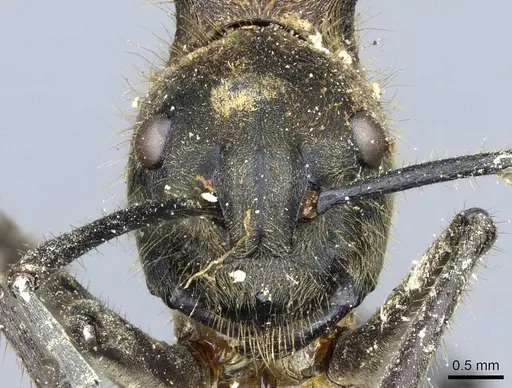
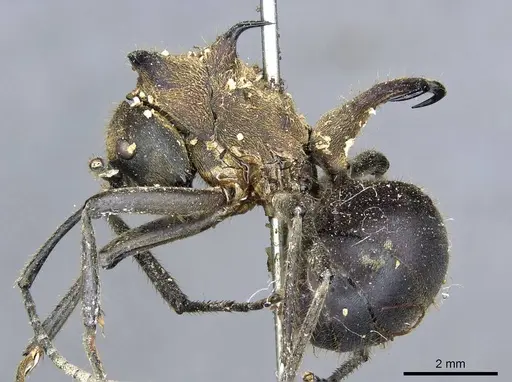
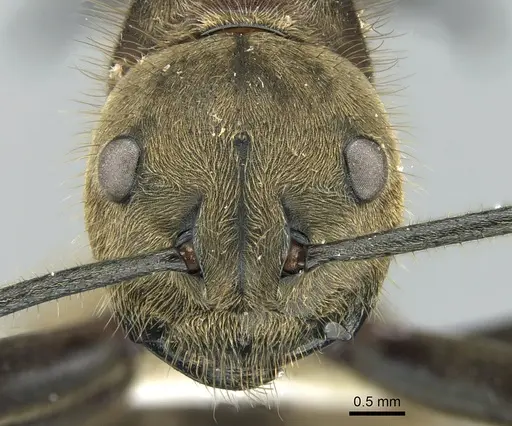
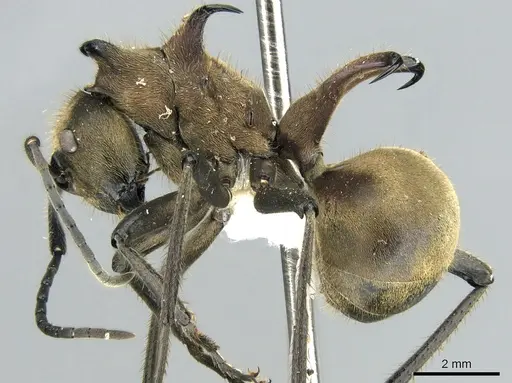
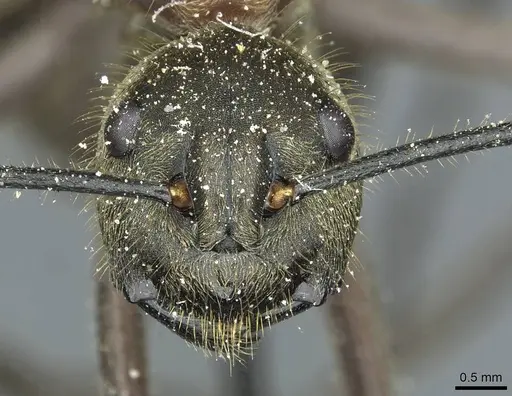
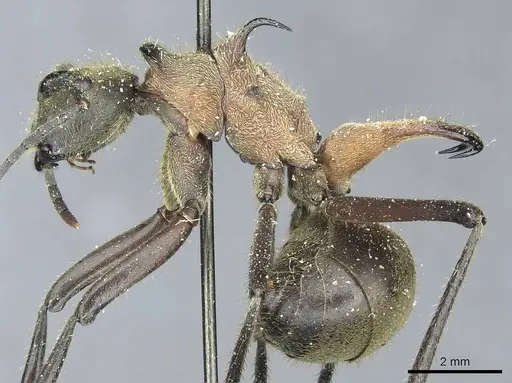
Polyrhachis ypsilon is a large, striking arboreal ant native to Southeast Asian rainforests. Workers measure 12.10-13.10 mm and queens 13.25-14.82 mm, making it one of the largest species in its subgenus . They are easily recognized by their massive, black pronotal spines and widely diverging petiolar spines, plus a body densely covered in long golden hairs and rich golden pubescence that gives a beautiful sheen . Native to peninsular Malaysia, Singapore, Borneo, and Sumatra, these ants are canopy dwellers that build nests in tree hollows and use larval silk to line their chambers . They are diurnal, aggressive, and behaviorally dominant in their environment, often outcompeting other ants for food and space .
Quick Summary
- Difficulty: Medium
- Origin & Habitat: Native to peninsular Malaysia, Singapore, Borneo, and Sumatra [1]. Inhabits tropical rainforests, foraging and nesting high in the canopy [3][6]. Often found in trees with smaller trunk diameter and lower epiphyte cover [7].
- Colony Type: Unconfirmed. Based on genus patterns, likely monogyne (single queen).
- Size & Growth:
- Queen: 13.25-14.82 mm [1]
- Worker: 12.10-13.10 mm [1]
- Colony: Unknown. Related species suggest several hundred workers at maturity.
- Growth: Moderate
- Development: Estimated 6-8 weeks at tropical temperatures (25-28°C), based on related large Formicinae. Direct data unavailable. (Pupae develop in cocoons [3]. Queen is physogastric once established.)
- Antkeeping:
- Temperature: Keep at 24-28°C year-round. This is a tropical species, avoid any prolonged drop below 22°C. Use a gentle gradient with a heat mat on one side if needed [1].
- Humidity: High humidity – keep the nest substrate moist but not waterlogged. Ensure good ventilation to prevent mold. Mist occasionally if the setup dries out.
- Diapause: No – tropical species, maintain warm conditions year-round.
- Nesting: Arboreal setup with cork bark or wood branches is essential. They nest in tree hollows and use larval silk to line chambers [3][8]. A formicarium with elevated chambers and natural wood mimics their canopy home.
- Behavior: Diurnal foragers that run on arboreal trails [5]. They are behaviorally and numerically dominant over other ant species, quickly recruiting to food and displacing competitors [4]. They are aggressive toward unfamiliar ants – attacks and kills species like Dolichoderus thoracicus – and share trails only with select species [4]. Workers are monomorphic (all the same size) [9]. They have excellent vision from large compound eyes [10]. Escape risk is moderate due to size, but they are agile climbers, so secure all openings.
- Common Issues: tropical temperature requirements – struggling in cool rooms or air-conditioned spaces, aggressive toward other ants – must be housed alone, high humidity needs can lead to mold if ventilation is poor, arboreal nesting – they may not accept underground test tubes, provide elevated cork/wood setup, larger workers need wide passages and spacious outworld, they need silk for nest construction – include fibrous materials like dried leaves or soft wood
Housing and Nest Setup
Polyrhachis ypsilon needs an arboreal setup that mimics their natural canopy habitat. Unlike ground-nesting ants, they prefer elevated spaces with cork bark or soft wood. They use larval silk to line and strengthen their nests – provide fibrous materials like dried leaves, soft wood shavings, or fine mesh to encourage this behavior [3][8]. Place the nest in the upper part of the enclosure with branches or twigs for foragers to run on. Use a water test tube as a humidity source, positioned so condensation forms in the nest area. Make sure all connections between nest and outworld are at least 15 mm wide to accommodate their large workers (12-13 mm). A spacious outworld (minimum 30x30 cm for a growing colony) is essential for their diurnal foraging.
Feeding and Diet
In the wild, Polyrhachis ypsilon tends hemipterans (aphids, scale insects) for honeydew and also hunts small insects [11][5]. They are aggressive foragers that recruit quickly to sugar and protein baits, displacing other ants [4]. In captivity, offer sugar water or honey water constantly for newly founded colonies. Provide protein 2-3 times per week – small crickets, mealworms, or fruit flies. They are diurnal, so feed during daylight hours for best results. Remove uneaten prey after 24-48 hours to avoid mold.
Temperature and Humidity
As a true tropical species from Southeast Asian rainforests, Polyrhachis ypsilon requires warm, stable conditions year-round. Keep temperatures at 24-28°C. A small heat mat on one side of the nest (on top, not underneath) can create a helpful gradient. Never let the temperature drop below 22°C – they are adapted to canopy microclimates with minimal fluctuation [1][7]. Humidity should be high: keep the nest substrate consistently moist but ensure good airflow to prevent mold. Misting the outworld occasionally can help maintain humidity. Avoid drafts and air conditioning.
Behavior and Colony Dynamics
Polyrhachis ypsilon is diurnal and highly active. They patrol arboreal trails and are behaviorally dominant in their ecosystem. Research shows they recruit quickly to food sources, attack and kill other ants (e.g., Dolichoderus thoracicus), and are significantly more aggressive toward unfamiliar ants than familiar ones [4]. They share trails with Colobopsis saundersi but fight over food [4]. Workers are monomorphic (all the same size) [9]. Their large compound eyes and ocelli give them good vision for navigation in the canopy [10]. The dramatic pronotal and petiolar spines likely deter predators [9]. They use larval silk to build their nests – a rare behavior in ants [3][8].
Growth and Development
Direct data on development times for Polyrhachis ypsilon are unavailable, so the following is estimated from related large Formicinae. At 25-28°C, expect eggs to develop through larval and pupal stages to first workers in about 6-8 weeks. The first workers (nanitics) will be smaller than mature ones. Larvae spin silk cocoons during pupation [3]. The queen becomes physogastric once the colony is established. Growth rate is moderate, patience is needed. Workers are long-lived for an ant – several months to a year.
Frequently Asked Questions
How long does it take for Polyrhachis ypsilon to produce first workers?
Approximately 6-8 weeks after the queen lays eggs under optimal conditions (25-28°C). This is an estimate based on related large species, as direct data for Polyrhachis ypsilon is unavailable.
What do Polyrhachis ypsilon ants eat?
They accept both sugar and protein. Provide constant access to sugar water or honey water, and offer feeder insects (small crickets, mealworms) 2-3 times per week. In the wild they also tend hemipterans for honeydew [11].
Do Polyrhachis ypsilon ants need hibernation?
No. As a tropical species from Southeast Asian rainforests, they do not hibernate. Keep them warm (24-28°C) year-round.
Are Polyrhachis ypsilon good for beginners?
They are rated medium difficulty. They need consistent tropical warmth, high humidity, and an arboreal nest setup. They are also aggressive and must be housed alone. Not recommended for first-time keepers unless you have some experience with warmth-requiring species.
What type of nest is best for Polyrhachis ypsilon?
An arboreal nest with cork bark or soft wood chambers is ideal. They naturally nest in tree hollows and use larval silk to line the nest [3][8]. Avoid standard test tubes for the long term – they prefer elevated, wooden nesting spaces.
How big do Polyrhachis ypsilon colonies get?
Workers reach 12-13 mm, queens 13-15 mm [1]. Total colony size is unknown but likely several hundred workers based on related species.
Can I keep Polyrhachis ypsilon with other ants?
No. They are highly aggressive and dominant. They will attack and kill other ant species, even those they share trails with in the wild (like Colobopsis saundersi) if resources are at stake [4]. Keep them in a separate enclosure.
Why are my Polyrhachis ypsilon dying?
Check temperature first – prolonged below 22°C will weaken them. Low humidity (dry nest) and poor airflow (mold) are also common killers. Make sure they have an arboreal nest structure, as they dislike ground-level setups.
When should I move my Polyrhachis ypsilon to a formicarium?
Start with a test tube setup for the queen. Once you have 15-20 workers, you can move them to a small arboreal formicarium with cork bark chambers. Use a gentle transition, e.g., connect the test tube to the new nest and let them move voluntarily.
Report an Issue
The current care sheet is based fully on literature. See inconsistencies, or something that's incorrect? Please , it will be resolved after review from an admin. Contributing to the blogs tab also helps providing information, to make us be able to further improve the caresheets. Thank you for your support!
References

This caresheet is licensed under CC BY-SA 4.0 .
Community Blogs
ANTWEB1060646
View on AntWeb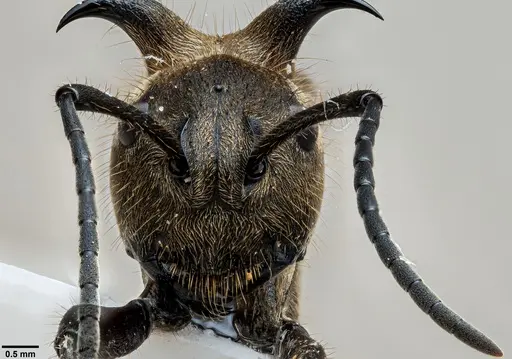
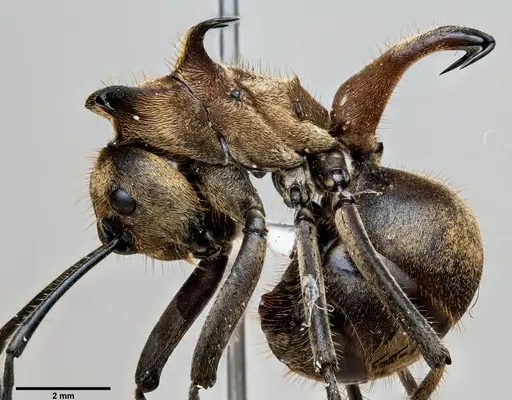
CASENT0905548
View on AntWeb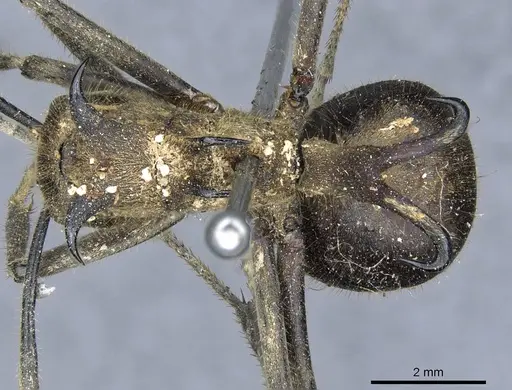
CASENT0906320
View on AntWeb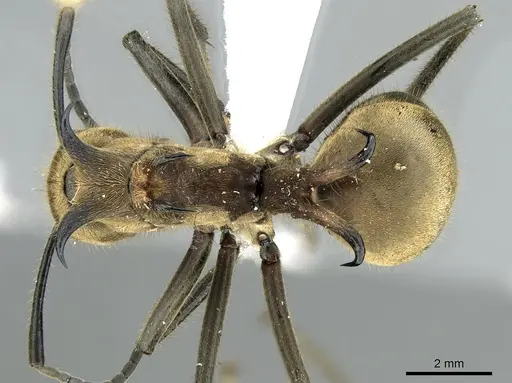
CASENT0912166
View on AntWeb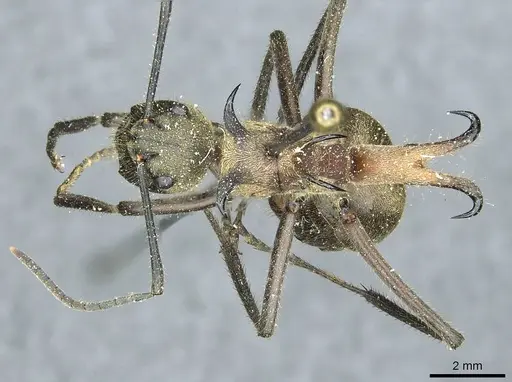
Literature
Loading distribution map...Loading products...