
Polyrhachis viehmeyeri
- Sci. Name
- Polyrhachis viehmeyeri
- Subgenus
- Myrmhopla
- Tribe
- Camponotini
- Subfamily
- Formicinae
- Author
- Emery, 1921
- Distribution
- Found in 1 countries
Introduction
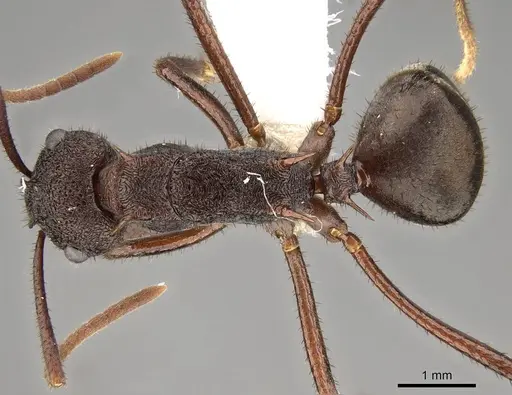
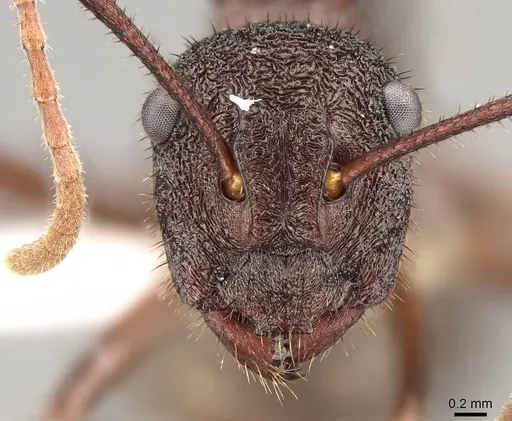
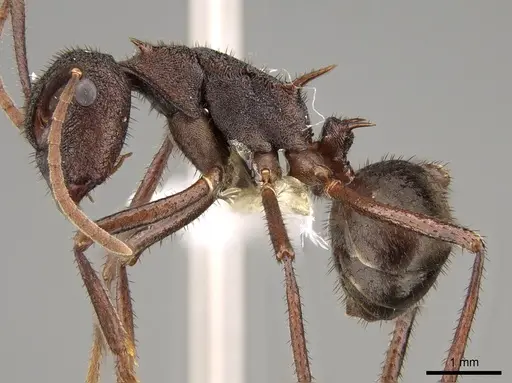
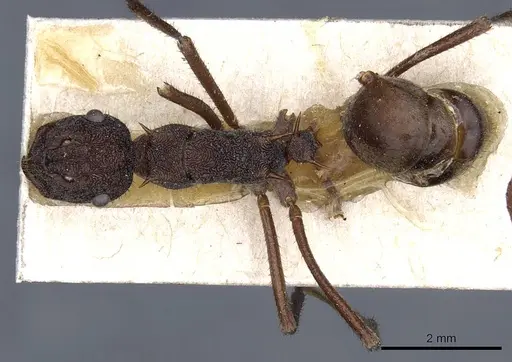
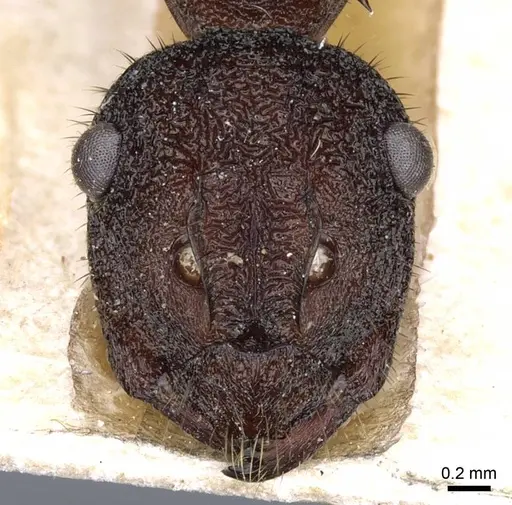
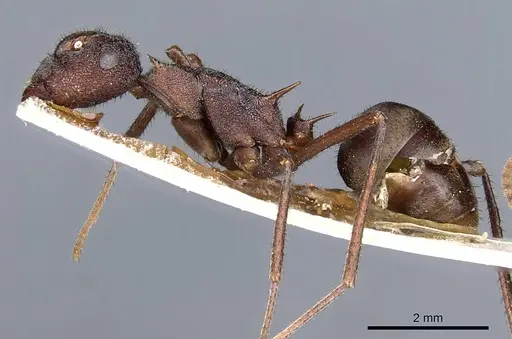
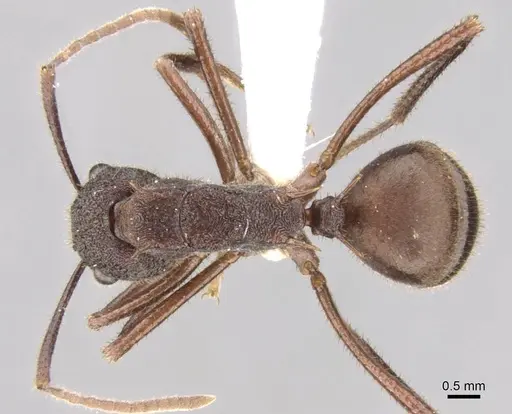
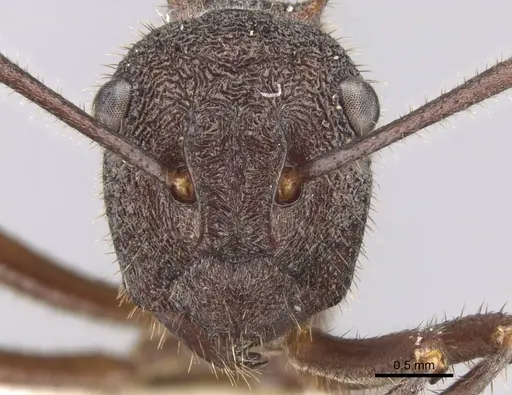
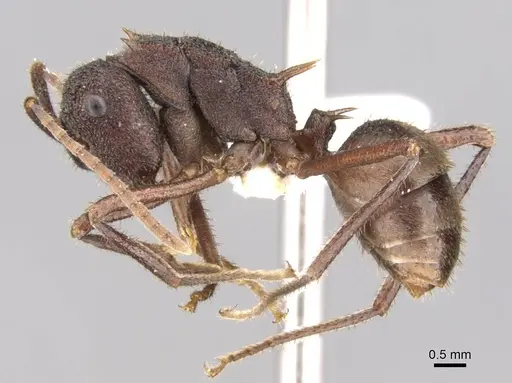
Polyrhachis viehmeyeri is a medium-sized ant species native to New Guinea and Papua New Guinea. Workers measure 7.5-8.5mm (TL 7.46-8.52mm) and queens measure 8.5-8.9mm (TL 8.47-8.87mm) . They have distinctive long, slender spines on the pronotum, propodeum, and petiole, and are mostly reddish-brown with abundant bristle-like hairs . This species is found in tropical rainforest environments at elevations around 1100 feet in northeastern New Guinea . As a tropical Polyrhachis species, they are likely arboreal or semi-arboreal based on genus patterns, nesting in elevated locations like vegetation or hollow twigs . They are active foragers with a moderate growth rate.
Quick Summary
- Difficulty: Medium
- Origin & Habitat: New Guinea and Papua New Guinea, tropical rainforest environments at low to mid elevations (around 1100 ft/335m) [1].
- Colony Type: Colony structure is unconfirmed. Based on typical Polyrhachis patterns, likely single-queen colonies but further research needed.
- Size & Growth:
- Antkeeping:
- Temperature: Keep warm, roughly 24-28°C, based on tropical origin [2]. A heating cable can create a gradient.
- Humidity: Keep nest substrate consistently moist but not waterlogged, based on tropical rainforest habitat [2].
- Diapause: No diapause required, as a tropical species [2].
- Nesting: Provide Y-tong or plaster nests with climbing structures, based on semi-arboreal preferences [2].
- Behavior: Generally peaceful as Formicinae. They lack a stinger but may spray formic acid when threatened. Active foragers and good climbers. Use barriers for escape prevention.
- Common Issues: high humidity maintenance is critical, dry conditions can cause colony decline [2], temperatures below 22°C can stress the colony [2], semi-arboreal nature requires climbing structures, avoid flat setups [2], wild-caught colonies may have parasites affecting survival, slow initial growth may lead to overfeeding problems
Housing and Nest Setup
Polyrhachis viehmeyeri is likely semi-arboreal, so provide a setup with climbing structures. Use Y-tong (AAC) or plaster nests, and add twigs, artificial plants, or cork bark vertically in the outworld [2]. The outworld should be escape-proof with barriers on the rim [2].
Feeding and Diet
These ants are omnivorous. Offer sugar water or honey constantly for energy, and protein sources like fruit flies or small insects 2-3 times per week [2]. Remove uneaten prey after 24-48 hours to prevent mold.
Temperature and Heating
Keep the nest area warm, roughly 24-28°C, based on their tropical origin [2]. Use a heating cable on one side to create a gradient if room temperature is insufficient.
Humidity and Water
Keep the nest substrate consistently moist but not waterlogged, as they come from humid environments [2]. Provide a water source in the outworld, like a test tube with cotton.
Colony Development
Queens are slightly larger than workers, with sizes as noted [1]. Founding behavior is unconfirmed. Expect slow initial growth, with first workers in 6-10 weeks at optimal temperature [2].
Frequently Asked Questions
How long does it take for Polyrhachis viehmeyeri to have first workers?
Expect 6-10 weeks from egg to first worker at optimal temperature, based on related species estimates [2]. The first workers will be smaller than mature workers.
What temperature do Polyrhachis viehmeyeri ants need?
Keep them warm, roughly 24-28°C, based on their tropical origin [2]. Avoid temperatures below 22°C.
Do Polyrhachis viehmeyeri ants need hibernation?
No, hibernation is not required as a tropical species [2]. They remain active year-round.
What do Polyrhachis viehmeyeri ants eat?
They are omnivorous. Offer sugar water or honey constantly, and protein sources like fruit flies or small insects 2-3 times per week [2].
Are Polyrhachis viehmeyeri good for beginners?
They are rated as medium difficulty. The main challenges are maintaining high humidity and warm temperatures year-round [2].
How big do Polyrhachis viehmeyeri colonies get?
Colony size is not well documented, but growth is moderate [2]. No specific data on maximum size.
Can I keep multiple Polyrhachis viehmeyeri queens together?
The colony structure is unconfirmed. It is not recommended to combine unrelated foundress queens, as fighting is likely [2].
What type of nest is best for Polyrhachis viehmeyeri?
Semi-arboreal species do well in Y-tong or plaster nests with climbing structures [2]. Avoid completely flat setups.
Why is my Polyrhachis viehmeyeri colony declining?
Common causes include temperatures below 22°C, low humidity, dry nest conditions, or overfeeding leading to mold [2]. Check environmental factors first.
Report an Issue
The current care sheet is based fully on literature. See inconsistencies, or something that's incorrect? Please , it will be resolved after review from an admin. Contributing to the blogs tab also helps providing information, to make us be able to further improve the caresheets. Thank you for your support!
References

This caresheet is licensed under CC BY-SA 4.0 .
Community Blogs
Literature
Loading distribution map...Loading products...