
Polyrhachis venus
- Sci. Name
- Polyrhachis venus
- Subgenus
- Myrmhopla
- Tribe
- Camponotini
- Subfamily
- Formicinae
- Author
- Forel, 1893
- Distribution
- Found in 1 countries
Introduction
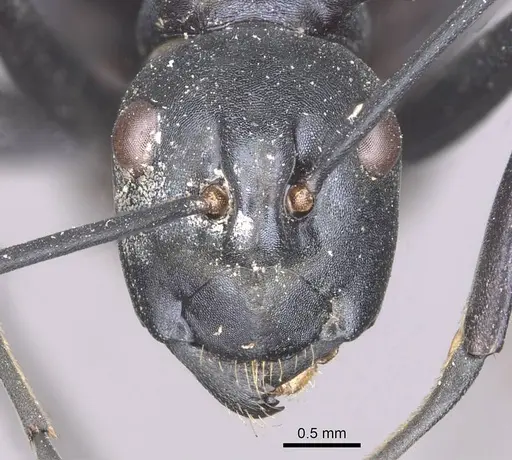
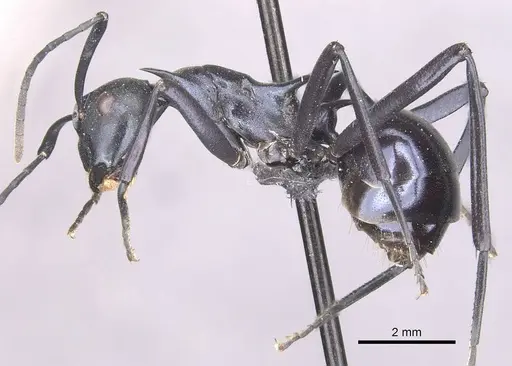
Polyrhachis venus is a tropical ant with spiny morphology and often metallic coloration. They lack a sting but spray formic acid for defense. Found in Myanmar, the Philippines, and Sumatra . As a member of the subgenus Myrmhopla, they are arboreal nesters in tropical forests .
Quick Summary
- Difficulty: Medium
- Origin & Habitat: Native to the Indomalaya region, documented in Myanmar, the Philippines, and Sumatra. Inhabits tropical forests, typically nesting in elevated locations like tree hollows or under bark [1][2].
- Colony Type: Unconfirmed, no specific data on queen number. Based on Polyrhachis patterns, likely monogyne [2].
- Size & Growth:
- Queen: Size data unavailable, inferred from Polyrhachis genus (~10-12 mm) [2]
- Worker: Size data unavailable, inferred from Polyrhachis genus (~6-9 mm) [2]
- Colony: Up to several hundred workers, estimated based on related species [2]
- Growth: Moderate, inferred from Formicinae patterns [2]
- Development: Estimated 6-8 weeks at 24-28°C, inferred from Polyrhachis development [2] (Development time may vary with temperature.)
- Antkeeping:
- Temperature: Keep at 24-28°C. Tropical species require warm conditions year-round [2]
- Humidity: Keep nest substrate consistently moist but not waterlogged, as they are forest-dwelling [2]
- Diapause: No, tropical species do not require hibernation [1][2]
- Nesting: Prefers nests with vertical space and multiple chambers, such as Y-tong or plaster nests with moisture reservoirs [2]
- Behavior: Active foragers with moderate aggression. They defend nests by spraying formic acid. Escape risk is moderate due to size, use standard barriers.
- Common Issues: tropical species requires consistent warmth, cold temperatures can slow brood development., humidity must be maintained but avoid waterlogging, mold can develop in overly damp conditions., colonies may be slow to establish initially, patience is needed during the founding phase., escape prevention is important though they are not extreme escape artists., wild-caught colonies may carry parasites, quarantine and monitor new colonies.
Housing and Nest Setup
Polyrhachis venus prefers naturalistic setups that mimic their arboreal habitat. In the wild, they nest in elevated locations like tree hollows or under bark, so provide nests with vertical space and multiple chambers [2]. Use Y-tong or plaster nests with moisture reservoirs. Connect the nest to an outworld with climbing structures like twigs for foraging.
Feeding and Diet
They are omnivores. Offer sugar sources like honey water constantly, and provide protein such as mealworms or small crickets 2-3 times per week [2]. Remove uneaten prey after 24-48 hours to prevent mold.
Temperature and Seasonal Care
Keep temperatures at 24-28°C year-round. Use a heating cable on one side of the nest to create a gradient [2]. Avoid temperatures below 22°C, as prolonged cool conditions can halt brood development.
Colony Establishment and Growth
Founding behavior is unconfirmed. If a queen is claustral, she may seal herself in a chamber and raise first workers using stored reserves. Colony growth is moderate, expect several months to reach 20-30 workers [2]. Be patient during the founding phase.
Frequently Asked Questions
How long does it take for Polyrhachis venus to produce first workers?
Expect first workers in about 6-8 weeks at 24-28°C, based on typical Polyrhachis development [2].
What temperature do Polyrhachis venus ants need?
Keep them at 24-28°C. Tropical species require warm conditions year-round [2].
Do Polyrhachis venus ants need hibernation?
No, they do not require hibernation as a tropical species [1][2].
What do Polyrhachis venus ants eat?
They are omnivores. Offer sugar water constantly and protein insects 2-3 times per week [2].
Are Polyrhachis venus good for beginners?
They are rated medium difficulty due to tropical care requirements [2].
How big do Polyrhachis venus colonies get?
Colonies can reach up to several hundred workers over time, based on related species [2].
Can I keep multiple Polyrhachis venus queens together?
This species is likely monogyne, so combining queens is not recommended [2].
What type of nest is best for Polyrhachis venus?
Naturalistic setups, Y-tong nests, or plaster nests with moisture reservoirs work well [2].
Why is my Polyrhachis venus colony not growing?
Check that temperatures are warm enough and humidity is adequate. Cold or dry conditions can slow development [2].
Report an Issue
The current care sheet is based fully on literature. See inconsistencies, or something that's incorrect? Please , it will be resolved after review from an admin. Contributing to the blogs tab also helps providing information, to make us be able to further improve the caresheets. Thank you for your support!
References

This caresheet is licensed under CC BY-SA 4.0 .
Community Blogs
CASENT0217807
View on AntWeb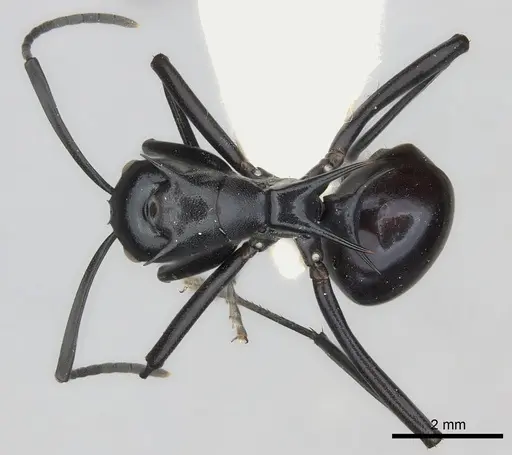
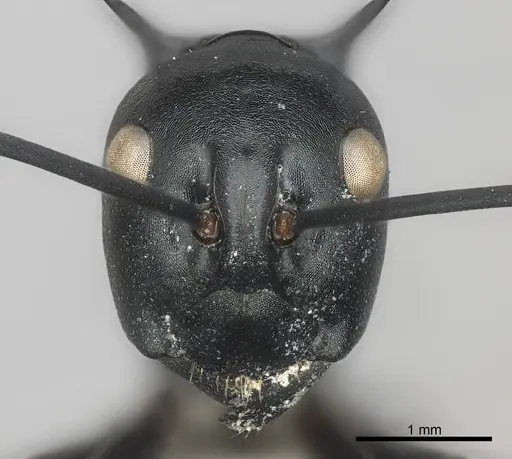
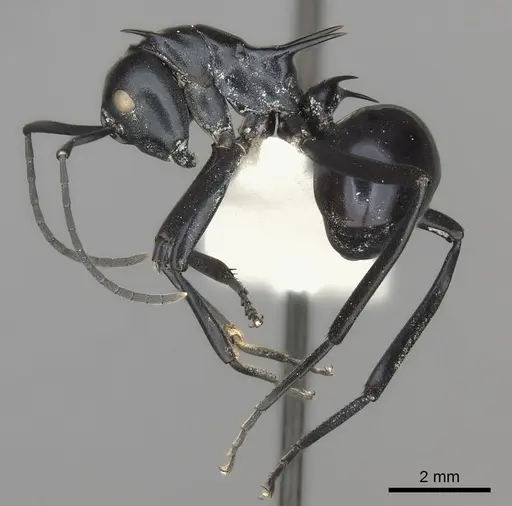
CASENT0910877
View on AntWeb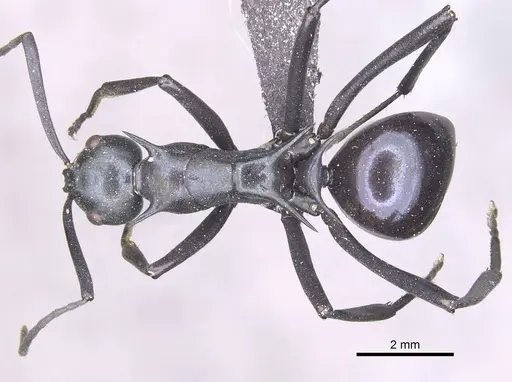
Literature
Loading distribution map...Loading products...