
Polyrhachis spitteleri
- Sci. Name
- Polyrhachis spitteleri
- Subgenus
- Myrma
- Tribe
- Camponotini
- Subfamily
- Formicinae
- Author
- Forel, 1916
- Distribution
- Found in 1 countries
Introduction
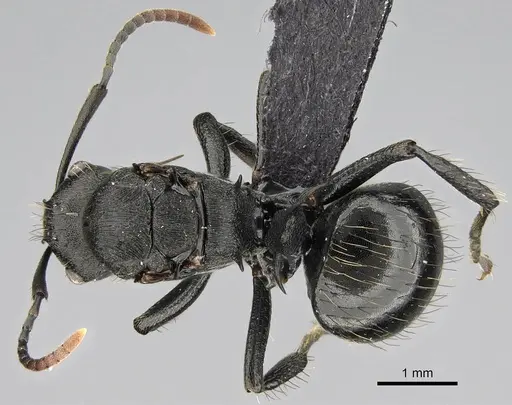
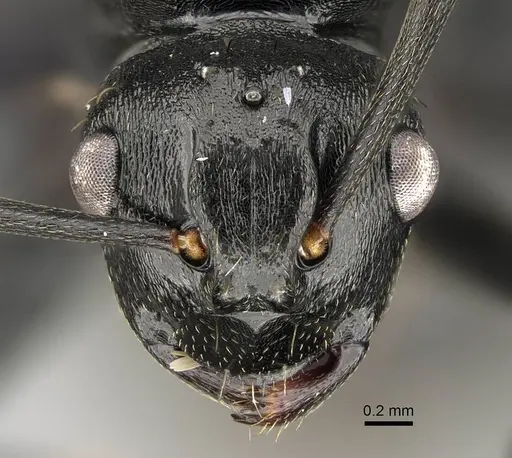
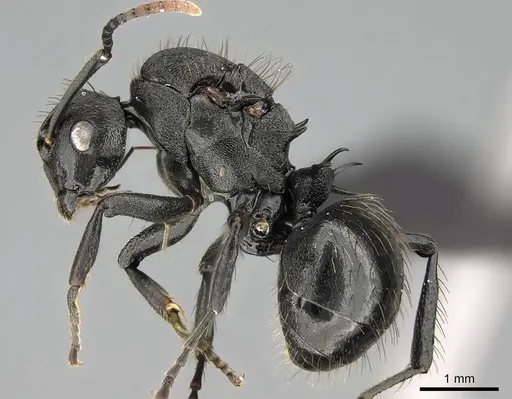
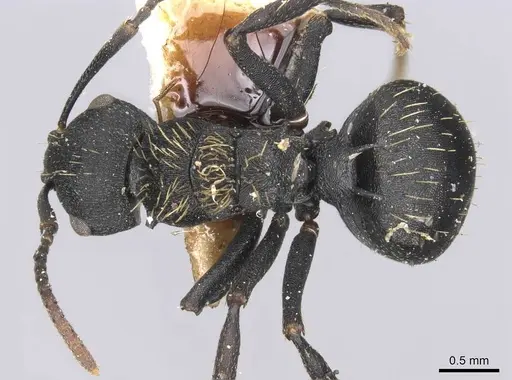
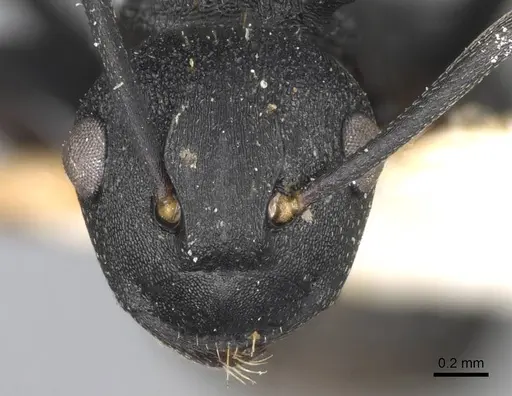
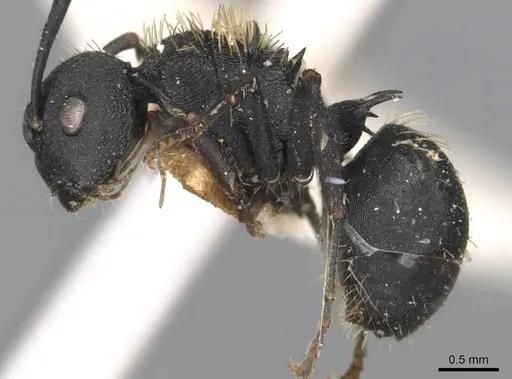
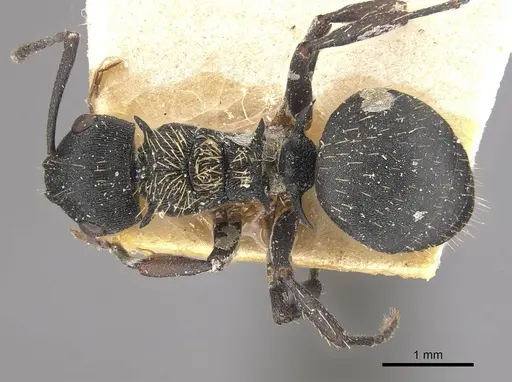
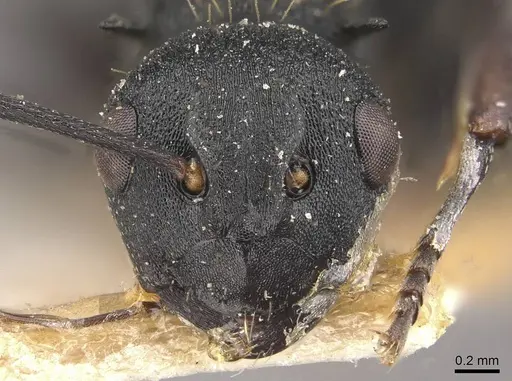
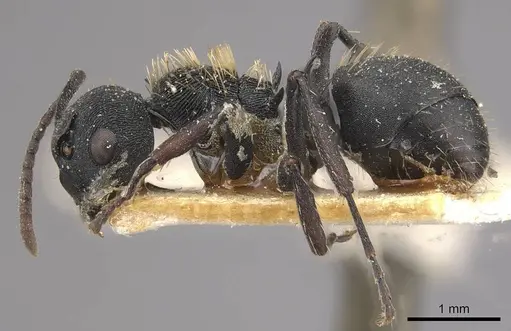
Polyrhachis spitteleri is a medium-sized arboreal ant found in Central Africa. Workers measure 4.8-5.6mm in total length and are black with lighter brownish appendages. They have spines on the pronotum and propodeum, with a median tubercle between the propodeal spines, and the petiole bears four spines. The body is covered in thick yellowish hairs. This species is completely arboreal, living in forest canopies and collected from trees using pyrethrum sampling . It belongs to the monista species-group and is closely related to Polyrhachis monista .
Quick Summary
- Difficulty: Medium
- Origin & Habitat: Central African Republic, Democratic Republic of Congo, and Ghana in the Afrotropical region, living arboreally in forest canopies [1].
- Colony Type: Colony structure is unconfirmed. No specific data on queen number or social structure.
- Size & Growth:
- Queen: Size data unavailable for queens, workers are 4.8-5.6mm [1].
- Worker: 4.8-5.6mm [1].
- Colony: Unknown for this species, no specific data on maximum colony size [1].
- Growth: Unknown, no data on growth rate for this species.
- Development: Estimated 6-10 weeks at tropical temperatures, based on genus-level patterns for Polyrhachis [1]. (Development timeline is not directly studied, estimates are inferred from related arboreal Polyrhachis species.)
- Antkeeping:
- Temperature: Keep at 24-28°C, inferred from tropical arboreal habitat. A gentle thermal gradient is recommended [1].
- Humidity: Maintain moderate to high humidity with a moisture gradient, as arboreal ants need access to water but tolerate drier conditions [1].
- Diapause: No diapause required, as the species is tropical and does not need hibernation [1].
- Nesting: Arboreal setup with vertical space is essential. Use Y-tong (AAC) nests or naturalistic structures with branches, as they do not nest in soil [1].
- Behavior: Polyrhachis spitteleri is calm and non-aggressive. Workers are active climbers and explore vertical spaces. Their main defense is body spines, not stinging. Escape risk is moderate due to their size [1].
- Common Issues: arboreal nature requires vertical setups, not standard horizontal nests., limited availability in the antkeeping hobby due to specialized collection methods., sensitive to temperature drops below 20°C, which can stress the colony., colony growth may be slow due to lack of specific care data.
Housing and Nest Setup
You need an arboreal setup for Polyrhachis spitteleri due to its tree-dwelling nature. Use a Y-tong nest or create a naturalistic setup with branches and vertical elements. Ensure adequate ventilation and humidity. Escape prevention is important, but standard barriers work for this species [1].
Feeding and Diet
Feed sugar water or honey constantly, and offer small insects like fruit flies 2-3 times per week. This is based on typical Polyrhachis omnivorous diet [1].
Temperature and Climate Care
Keep temperatures at 24-28°C with a gentle gradient. Avoid below 20°C. This is inferred from their tropical arboreal habitat [1].
Humidity Management
Maintain moderate to high humidity with a moisture gradient. Provide a water source and mist occasionally, as arboreal ants need access to moisture [1].
Behavior and Colony Dynamics
Workers are calm climbers and use body spines for defense. Colonies grow gradually, but no specific data on growth rates [1].
Frequently Asked Questions
How long does it take for Polyrhachis spitteleri to produce first workers?
Estimated 6-10 weeks at tropical temperatures, based on genus-level patterns [1].
Can I keep Polyrhachis spitteleri in a test tube setup?
Test tubes can work for founding, but move to arboreal setups once workers emerge, as they need vertical space [1].
What do Polyrhachis spitteleri ants eat?
They are omnivorous, provide sugar water constantly and small insects weekly [1].
What temperature is ideal for Polyrhachis spitteleri?
Keep at 24-28°C with a gradient, avoiding below 20°C [1].
Is Polyrhachis spitteleri good for beginners?
Rated medium difficulty due to arboreal housing needs and limited availability [1].
How big do Polyrhachis spitteleri colonies get?
Colony size is unknown for this species [1].
Do Polyrhachis spitteleri need hibernation?
No, as a tropical species, they do not require diapause [1].
Why is my Polyrhachis spitteleri colony declining?
Common causes include low temperature, low humidity, or insufficient food. Check conditions and ensure proper care [1].
Can I keep multiple queens together?
Colony structure is unconfirmed, most Polyrhachis are monogyne, so combining queens is not recommended without evidence [1].
What makes Polyrhachis spitteleri different from other ants?
It is completely arboreal, has distinctive spines and hairs, and belongs to the monista species-group [1].
When should I move my colony to a larger nest?
Move when worker count increases or space becomes limiting, using arboreal setups [1].
Report an Issue
The current care sheet is based fully on literature. See inconsistencies, or something that's incorrect? Please , it will be resolved after review from an admin. Contributing to the blogs tab also helps providing information, to make us be able to further improve the caresheets. Thank you for your support!
References

This caresheet is licensed under CC BY-SA 4.0 .
Community Blogs
Literature
Loading distribution map...Loading products...