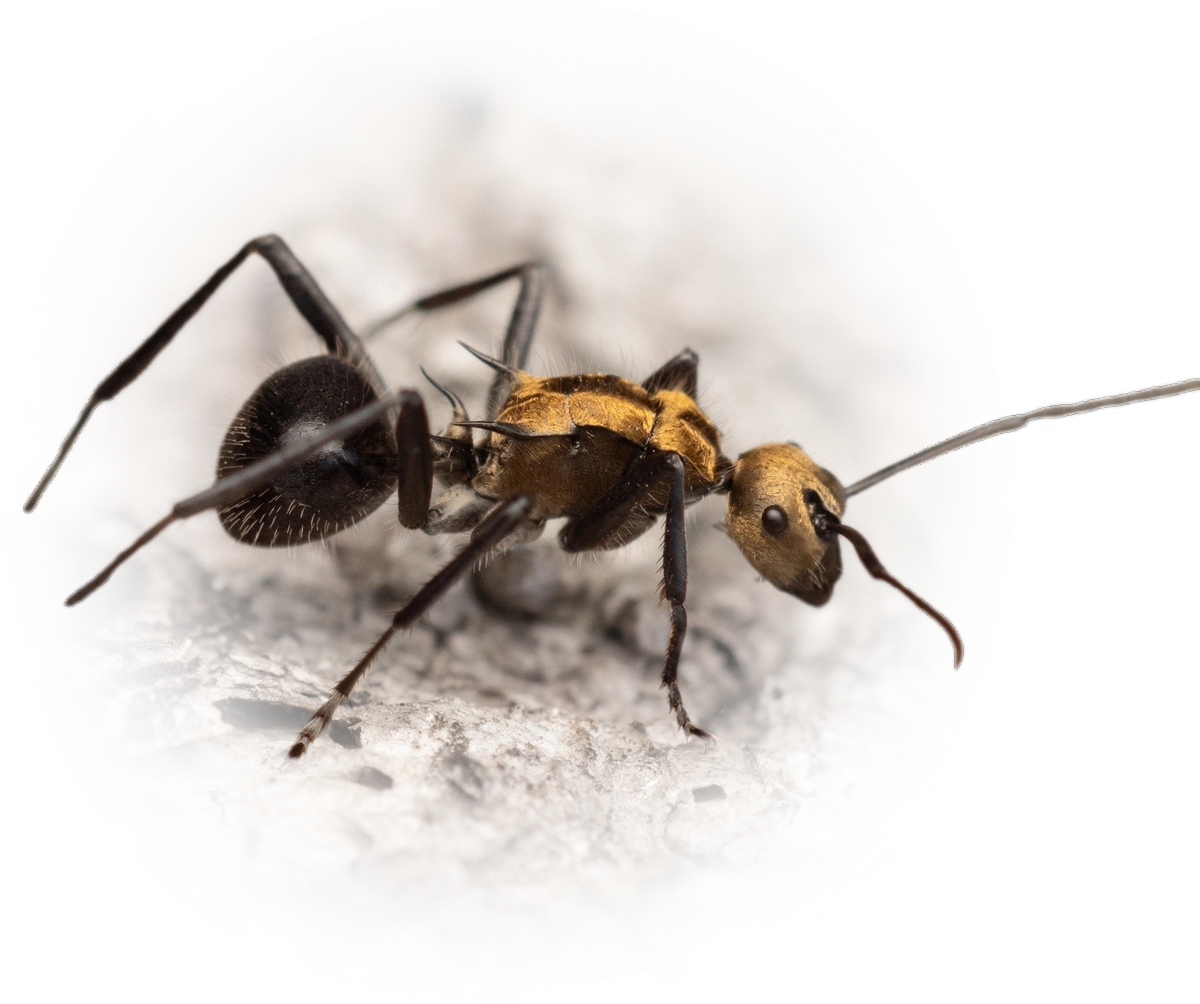
Polyrhachis semiaurata
- Sci. Name
- Polyrhachis semiaurata
- Subgenus
- Hagiomyrma
- Tribe
- Camponotini
- Subfamily
- Formicinae
- Author
- Mayr, 1876
- Distribution
- Found in 1 countries
Introduction
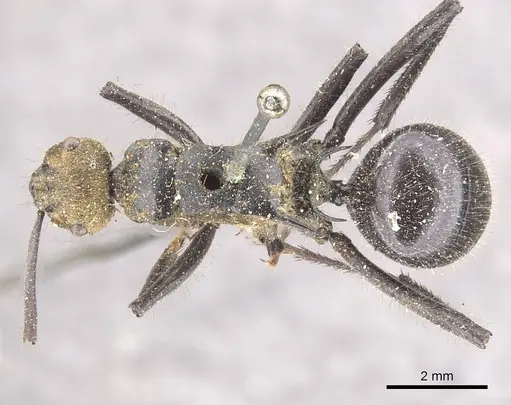
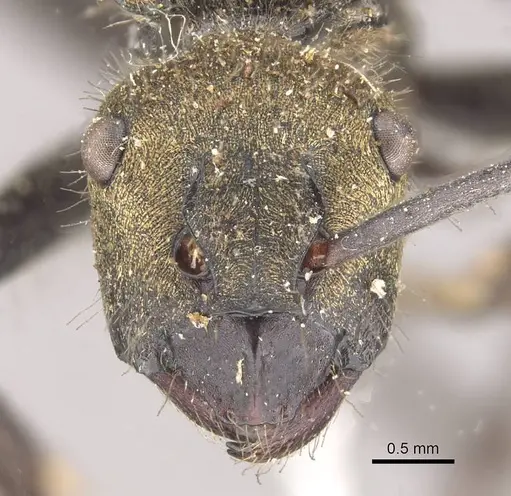
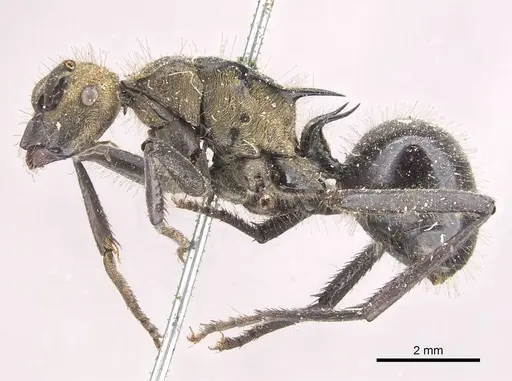
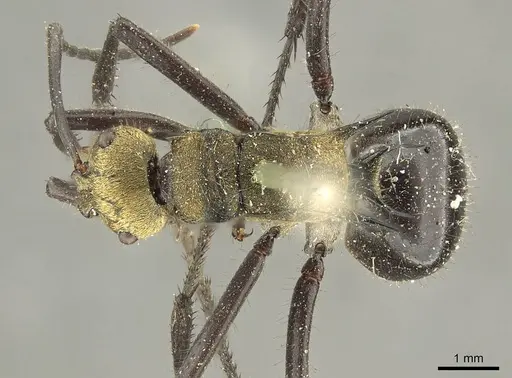
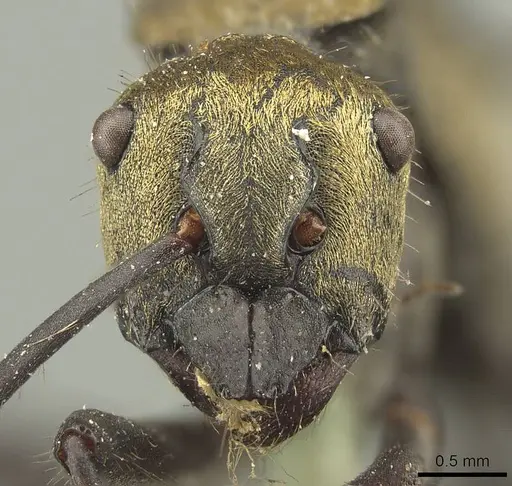
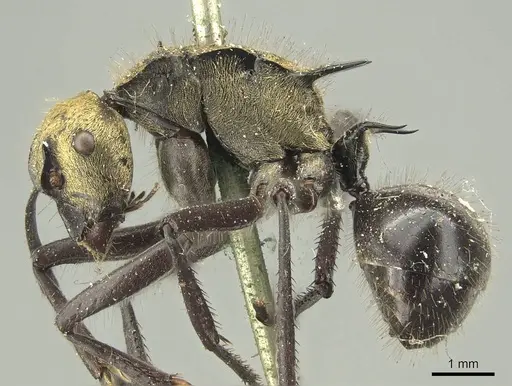
Polyrhachis semiaurata is an Australian ant species. Workers measure 9-10 mm in total length . They have rich golden pubescence on the head and mesosoma, contrasting with a black, polished gaster . They belong to the subgenus Hagiomyrma . The species ranges from central Queensland to northern Victoria . A notable feature is their nesting behavior: they are both lignicolous (wood-nesting) and terrestrial, with some colonies in burned tree trunks .
Quick Summary
- Difficulty: Medium
- Origin & Habitat: Australia, from Blackdown Tableland in central Queensland south to northern Victoria, and west to Carnarvon National Park. They nest both in wood and in soil, with some colonies in partly burned trunks of felled trees [1][3].
- Colony Type: Colony structure is unconfirmed. Based on typical Polyrhachis patterns, likely single-queen colonies, though this requires verification.
- Size & Growth:
- Antkeeping:
- Temperature: Keep at warm temperatures, around 24-28°C, based on the species' Australian distribution [1].
- Humidity: Keep substrate consistently moist but not waterlogged, based on their lignicolous and terrestrial nesting habits [2][1].
- Diapause: Likely required for temperate species, reduce temperature to 15-18°C for 2-3 months during winter [1].
- Nesting: Accept various nest types including Y-tong, plaster, or naturalistic setups, based on their flexible nesting habits [2][1].
- Behavior: Workers are active foragers with moderate alertness. They lack a sting and spray formic acid for defense, as typical for Formicinae. They also have spines on the propodeum and petiole for physical defense [1]. They are not typically aggressive toward keepers but will defend their nest if provoked. Their larger size (9-10 mm) makes escape prevention straightforward with standard barriers and tight-fitting lids. They are diurnal to crepuscular, with peak activity during warmer parts of the day.
- Common Issues: colonies may fail if kept too dry, monitor substrate moisture regularly., winter dormancy is often mishandled, ensure proper temperature reduction during hibernation., larger size means they need more space as colonies grow, upgrade nest size proactively., wild-caught colonies may have parasites, quarantine and monitor new colonies., founding phase may be slow, queens may take time to produce first workers, patience is essential.
Appearance and Identification
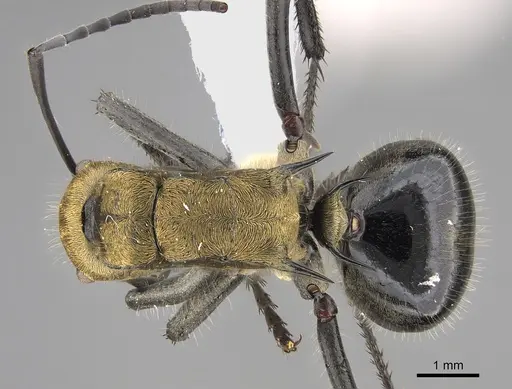
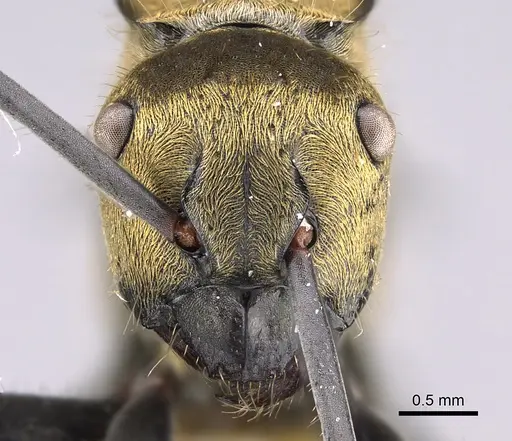
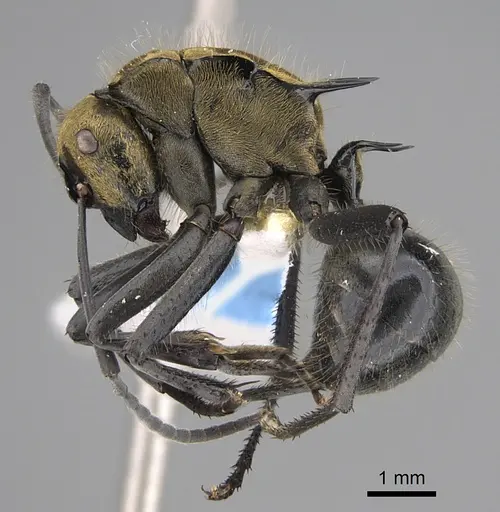
Polyrhachis semiaurata workers measure 9.02-10.38 mm in total length [1]. Their most distinctive feature is the rich golden pubescence covering the head and mesosoma, which completely hides the underlying sculpturation. This contrasts with their black, polished, virtually pubescence-free gaster [1]. The propodeum has horizontal, divergent spines that curve outward, and the petiole features elevated, sinuate spines with tips curved upward [1]. Queens are slightly smaller at 9.17-9.42 mm and very similar in appearance to workers [1].
Natural Distribution and Habitat
This species is endemic to eastern Australia, ranging from Blackdown Tableland in central Queensland south to northern Victoria, and as far west as Carnarvon National Park [1][3]. In their natural habitat, Polyrhachis semiaurata is both lignicolous (wood-nesting) and terrestrial. Some colonies nest in partly burned trunks of felled trees, showing adaptability to varied sites [1][2].
Nesting in Captivity
Polyrhachis semiaurata accepts various nest types due to their flexible natural nesting habits. Y-tong (AAC) nests, plaster nests, or naturalistic setups work well [2][1]. Because they are lignicolous, including wood elements can help them feel at home. They prefer nests with multiple connected chambers for brood placement. Ensure enough space as the colony grows.
Feeding and Diet
As a Polyrhachis species, these ants are generalist foragers. They likely accept sugar sources like honey water and protein sources like insects. Offer a varied diet: sugar water constantly available, and protein prey 2-3 times per week. Remove uneaten prey after 24-48 hours to prevent mold.
Temperature and Seasonal Care
Keep nest temperatures around 24-28°C for optimal brood development, based on the species' Australian distribution [1]. A heating cable on one side of the nest creates a gentle thermal gradient. During Australian winter, reduce temperatures to 15-18°C for a 2-3 month dormancy period [1]. Monitor colony activity to adjust conditions.
Behavior and Defense
Workers are active foragers with moderate alertness. They lack a sting and spray formic acid for defense, as typical for Formicinae. They also have spines on the propodeum and petiole for physical defense [1]. They are not typically aggressive toward keepers but will defend their nest if provoked. Their larger size makes escape prevention straightforward with standard barriers and tight-fitting lids. They are diurnal to crepuscular, with peak activity during warmer parts of the day.
Frequently Asked Questions
How long does it take for Polyrhachis semiaurata to produce first workers?
The exact timeline is unconfirmed. No specific data is available for this species [1]. Founding queens may take several months to raise their first brood, so patience is essential.
What do Polyrhachis semiaurata ants eat?
They are generalist foragers. Offer sugar water or honey water as a constant energy source, and protein prey like mealworms or crickets 2-3 times per week. Remove uneaten prey after 24-48 hours.
Do Polyrhachis semiaurata ants need hibernation?
Yes, as an Australian species from temperate regions, they likely require a winter rest period. Reduce temperatures to 15-18°C for 2-3 months during winter [1].
What size nest do Polyrhachis semiaurata need?
They accept various nest types including Y-tong, plaster, or naturalistic setups, based on their flexible nesting habits [2][1]. Ensure enough space for colony growth.
Are Polyrhachis semiaurata good for beginners?
They are rated Medium difficulty. They are larger and more forgiving than tiny ant species, but require warm temperatures and likely need winter dormancy. Their specific colony structure and founding behavior are not well-documented, which adds some uncertainty.
How big do Polyrhachis semiaurata colonies get?
Colony size data is not available for this specific species [1]. Based on Polyrhachis genus patterns, colonies may grow moderately once established.
Can I keep multiple queens together?
Colony structure (monogyne vs polygyne) has not been documented for this species. Until more information is available, it is not recommended to combine unrelated foundress queens, as fighting may occur.
What temperature should I keep Polyrhachis semiaurata at?
Keep nest temperatures around 24-28°C, based on the species' Australian distribution [1]. Use a heating cable to create a thermal gradient.
Why is my Polyrhachis semiaurata colony declining?
Common causes include: too dry substrate (keep consistently moist), temperatures too low or too high, improper hibernation, parasites from wild-caught colonies, or insufficient feeding. Review each care parameter and adjust accordingly.
Report an Issue
The current care sheet is based fully on literature. See inconsistencies, or something that's incorrect? Please , it will be resolved after review from an admin. Contributing to the blogs tab also helps providing information, to make us be able to further improve the caresheets. Thank you for your support!
References

This caresheet is licensed under CC BY-SA 4.0 .
Community Blogs
Literature
Loading distribution map...Loading products...