
Polyrhachis scissa
- Sci. Name
- Polyrhachis scissa
- Subgenus
- Hemioptica
- Tribe
- Camponotini
- Subfamily
- Formicinae
- Author
- Roger, 1862
- Distribution
- Found in 2 countries
Introduction
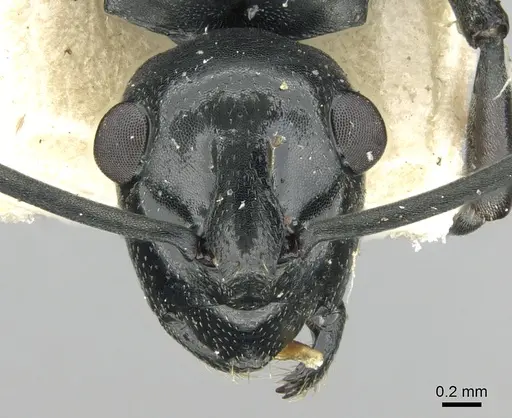
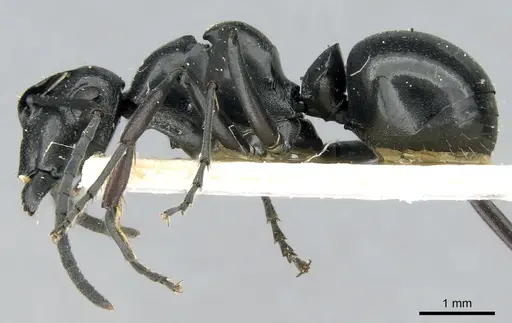
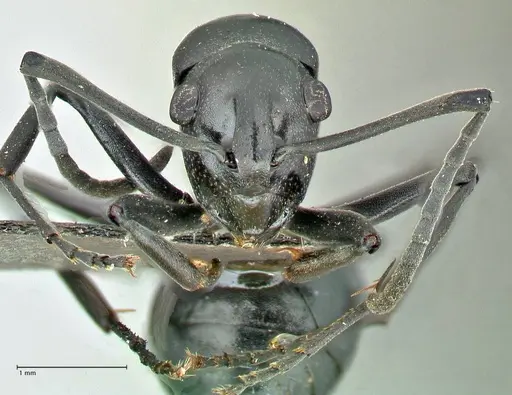
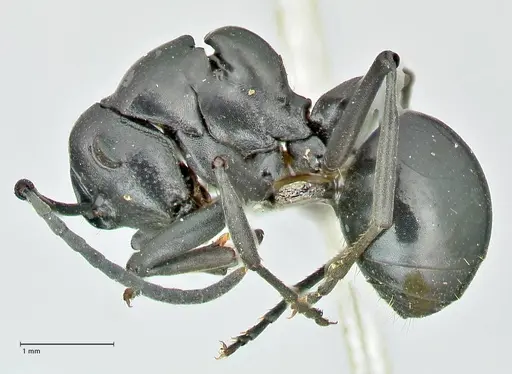
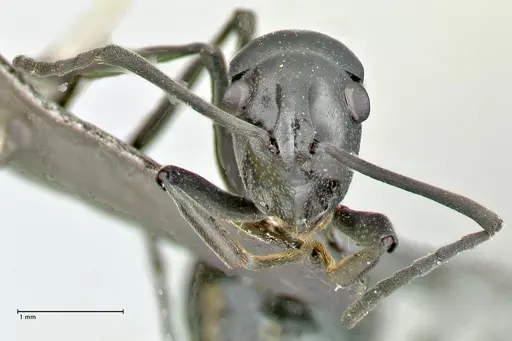
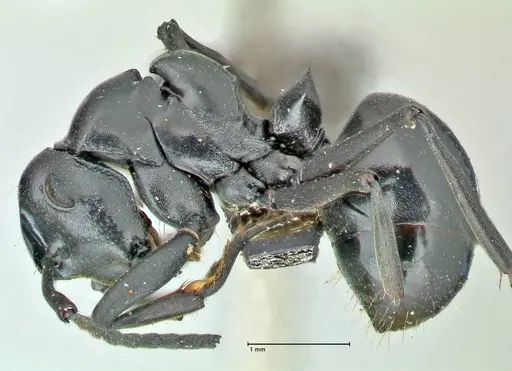
Polyrhachis scissa is a medium-sized arboreal ant native to southern India and Sri Lanka . Workers measure up to 7.21 mm and are entirely black with a distinctive semiopaque appearance on the mesosoma and characteristic spines on the petiole . This species belongs to the subgenus Hemioptica, recognized by its unique thorax structure . Queens are larger at up to 8.72 mm and closely resemble workers . What makes P. scissa special is its silk-weaving behavior - these ants construct flexible carton nests using larval silk, building them on shrubs and branches about 2 meters above ground . This arboreal nesting habit combined with their silk-weaving ability makes them a notable species for advanced antkeepers. They are found in both wet and dry zones of Sri Lanka, typically in monsoon forest habitats near forest edges .
Quick Summary
- Difficulty: Medium
- Origin & Habitat: Southern India (Karnataka, Kerala, Tamil Nadu, West Bengal) and Sri Lanka in the Indomalaya region. Found in monsoon forests and forest edges, typically nesting on shrubs and bamboo at jungle borders [1][2].
- Colony Type: Colony structure is unconfirmed, no specific data on queen number or social structure.
- Size & Growth:
- Antkeeping:
- Temperature: Keep warm, roughly 24-27°C, based on tropical origin.
- Humidity: Keep nest substrate consistently moist but not waterlogged, as they are from humid forests.
- Diapause: No, tropical species do not require diapause.
- Nesting: Arboreal specialists, need vertical space with branches for silk nests [5][6]. Use Y-tong or plaster nests connected to climbing structures.
- Behavior: Polyrhachis scissa is generally calm. When threatened, workers hide beneath leaves [3]. Escape risk is moderate due to medium size, but standard barriers work well.
- Common Issues: high humidity requirements can lead to mold if ventilation is inadequate., arboreal nesting means they need vertical space, horizontal setups often result in stressed colonies., silk-weaving behavior may be disrupted in artificial nests without suitable surfaces., wild-caught colonies may have parasites or diseases that cause colony failure., slow founding means new colonies need patience, queens may take months to raise first workers.
Nest Preferences and Housing
Polyrhachis scissa is an arboreal species that builds silk carton nests on shrubs and branches in the wild [5][6]. In captivity, you need to replicate this vertical, silk-friendly environment. The best approach is a naturalistic setup with live plants, cork bark, or twigs positioned vertically. The ants will weave silk between surfaces to create their nest structure.
For a more controlled setup, you can use a Y-tong or plaster formicarium connected to a spacious foraging area filled with branches, vines, or artificial plants for climbing. The key is providing vertical surfaces and edges where they can attach silk. Some keepers have success with cork bark leaned against the side of the enclosure, the ants will often build nests against these surfaces.
Avoid horizontal, ground-level-only setups. These ants are arboreal and become stressed without access to vertical space. The nest area should be humid while the foraging area can be slightly drier with good ventilation to prevent mold buildup.
Feeding and Diet
Like most Polyrhachis species, P. scissa is omnivorous with a preference for sugary liquids and protein. Feed them sugar water, honey, or diluted maple syrup as a constant carbohydrate source. For protein, offer small insects like fruit flies, small crickets, mealworms, or other appropriately-sized prey.
In the wild, they forage for honeydew and small invertebrates in the canopy. In captivity, they typically accept most standard ant foods. Feed protein 2-3 times per week, and keep a sugar source available at all times. Remove uneaten prey after 24-48 hours to prevent mold.
Their arboreal lifestyle suggests they may also accept honeydew substitutes more readily than some ground-nesting species. Observe your colony's preferences and adjust feeding accordingly. [3]
Temperature and Seasonal Care
Being from tropical India and Sri Lanka, P. scissa requires warm conditions year-round. Maintain temperatures between 24-27°C in the nest area. You can create a gentle temperature gradient by placing a heating cable or mat on one side of the enclosure, this allows the ants to regulate their temperature by moving between warmer and cooler areas.
Avoid temperatures below 20°C for extended periods, as this can weaken the colony. Room temperature in most homes (22-25°C) is often suitable, but monitor your colony's activity. Active colonies indicate good conditions, if workers become sluggish and cluster together, they may need more warmth.
Unlike temperate species, they likely do not require a true hibernation period. However, slight seasonal variations in activity are normal. Reduce feeding slightly during cooler months when the colony is less active, but maintain basic warmth.
Behavior and Colony Dynamics
Polyrhachis scissa workers exhibit typical Polyrhachis defensive behavior, when threatened, they retreat beneath leaves or other surfaces rather than attacking [3]. This makes them a relatively calm species to handle, though they can bite if provoked.
The colony will grow gradually from the founding stage. A newly mated queen will seal herself in a chamber and raise the first brood alone. This founding period can take several months, so patience is essential. The first workers (nanitics) will be smaller than mature workers.
As the colony grows, they will establish foraging trails and explore their environment. They are good climbers and will readily ascend branches, plants, or other structures. A well-designed enclosure with vertical elements will see the most natural behavior.
Frequently Asked Questions
Can I keep Polyrhachis scissa in a test tube?
Test tubes are not ideal for this species. P. scissa is arboreal and needs vertical space to climb and build silk nests [3]. A test tube setup would stress them and prevent natural behavior. Use a naturalistic setup with vertical structures or a Y-tong connected to a climbing-rich foraging area instead.
How long does it take for Polyrhachis scissa to raise first workers?
Exact timing is unconfirmed, as no specific data exists. Based on typical Formicinae patterns, it may take several months during claustral founding, but patience is essential.
What do Polyrhachis scissa eat?
They are omnivorous. Feed sugar water, honey, or maple syrup constantly as a carbohydrate source. Offer small insects (fruit flies, small crickets, mealworms) as protein 2-3 times per week [3].
Are Polyrhachis scissa good for beginners?
This species is rated as Medium difficulty. While not the hardest species, their arboreal nature and humidity requirements make them better suited for keepers with experience in naturalistic setups. Beginners should start with easier species.
When should I move Polyrhachis scissa to a formicarium?
Wait until the colony has a stable number of workers before moving to a formicarium. For this arboreal species, a naturalistic setup with vertical climbing structures is always preferable to a standard horizontal formicarium.
Do Polyrhachis scissa need hibernation?
Hibernation is not required. Being from tropical India and Sri Lanka, they do not experience cold winters. Maintain warm temperatures year-round.
How big do Polyrhachis scissa colonies get?
Exact colony size is unconfirmed for this species. No data on maximum colony size is available from research.
Why is my Polyrhachis scissa colony not building silk nests?
Silk weaving behavior depends on having suitable surfaces and appropriate humidity. Provide vertical surfaces like cork bark, twigs, or live plants [5][6]. Ensure humidity is high in the nest area. In artificial setups without proper surfaces, they may not exhibit full weaving behavior.
Can I keep multiple Polyrhachis scissa queens together?
Colony structure is unconfirmed for this species. Combining unrelated queens is not recommended since this has not been documented. If you acquire a colony, assume single-queen structure and house only one queen per enclosure.
Report an Issue
The current care sheet is based fully on literature. See inconsistencies, or something that's incorrect? Please , it will be resolved after review from an admin. Contributing to the blogs tab also helps providing information, to make us be able to further improve the caresheets. Thank you for your support!
References

This caresheet is licensed under CC BY-SA 4.0 .
Community Blogs
CASENT0281343
View on AntWeb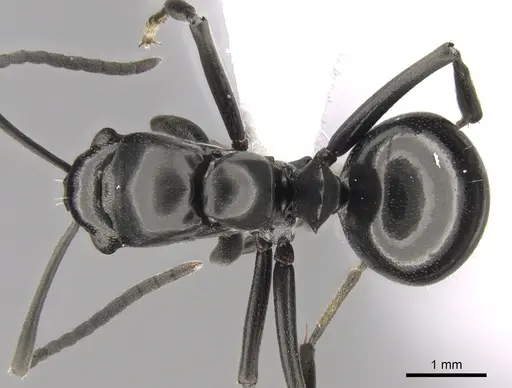
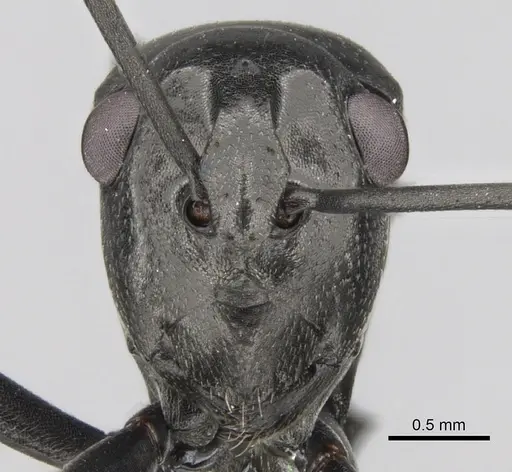
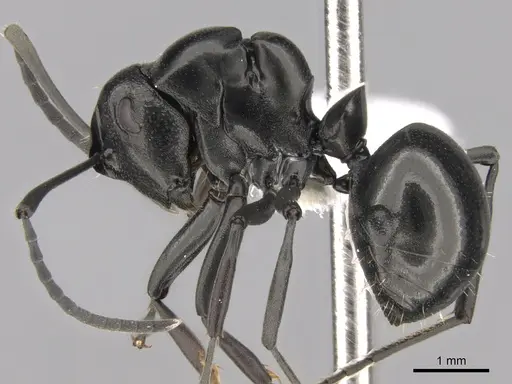
CASENT0906578
View on AntWeb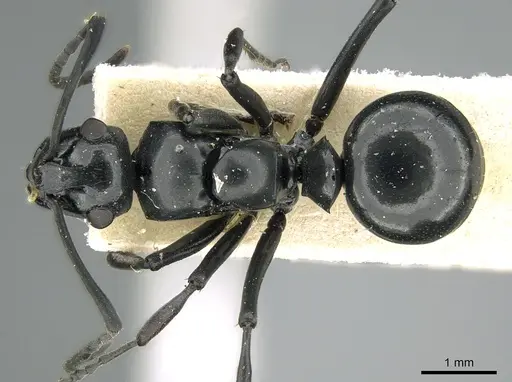
FOCOL2556
View on AntWeb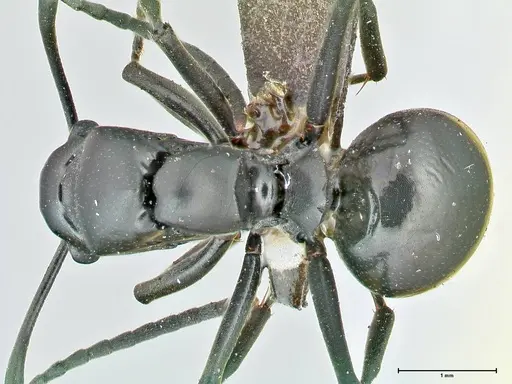
FOCOL2557
View on AntWeb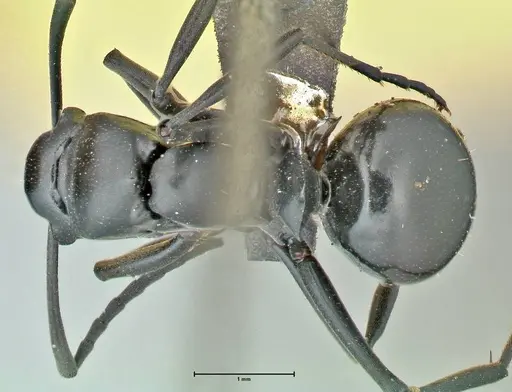
Literature
Loading distribution map...Loading products...